Pocketable plastic fun and the Nikon D200 ~ a day on the coast with two cameras

The Nikon D200 and the Kodak Charmera – two very different cameras on the surface. The D200 is built like a magnesium-alloy tank and the Kodak Charmera is a tiny plastic toy. There’s no comparison when talking about image quality, of course, yet I continue to return to the fact that we can freeze time through the use of these devices, whatever their technical limitations.

The act of making a photo has become so culturally habitual – so intertwined with commerce and self-promotion – that the initial magic has long since been lost. We’re a long way from the very first photo made ~ “View from the window at Le Gras”.

California Surf – Kodak Charmera

It’s strange to think the toy Kodak’s 1.6 megapixels features vastly more resolution than the very first photo made using a camera obscura over an 8 hour exposure time. Marked in technological milestones, human lives seem small. Our lives seem smaller still when we pick up to examine even the dullest stone that lies at the foot of a worn hill that was once a mountain.

Fern in high-key – Kodak Charmera

In colour, the photo above is washed out and the highlights burned beyond editing. In black and white, the photo becomes a small study in shape, direction, pattern, and shadow, with a high-key aesthetic. It was a single moment seized as we ordered food.

Exploring the wreckage – Kodak Charmera

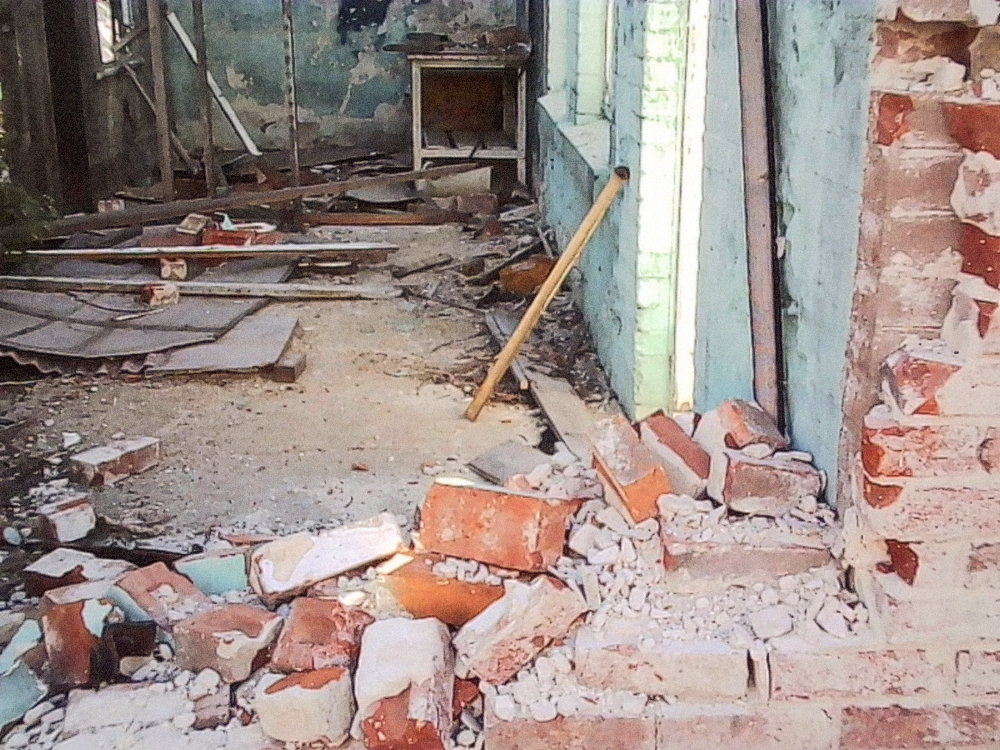
We chanced upon a burned out ruin. I walked around fallen red brick and charred wall cladding, immersing myself in light and shadow.

Ghosts in broken rooms – Kodak Charmera
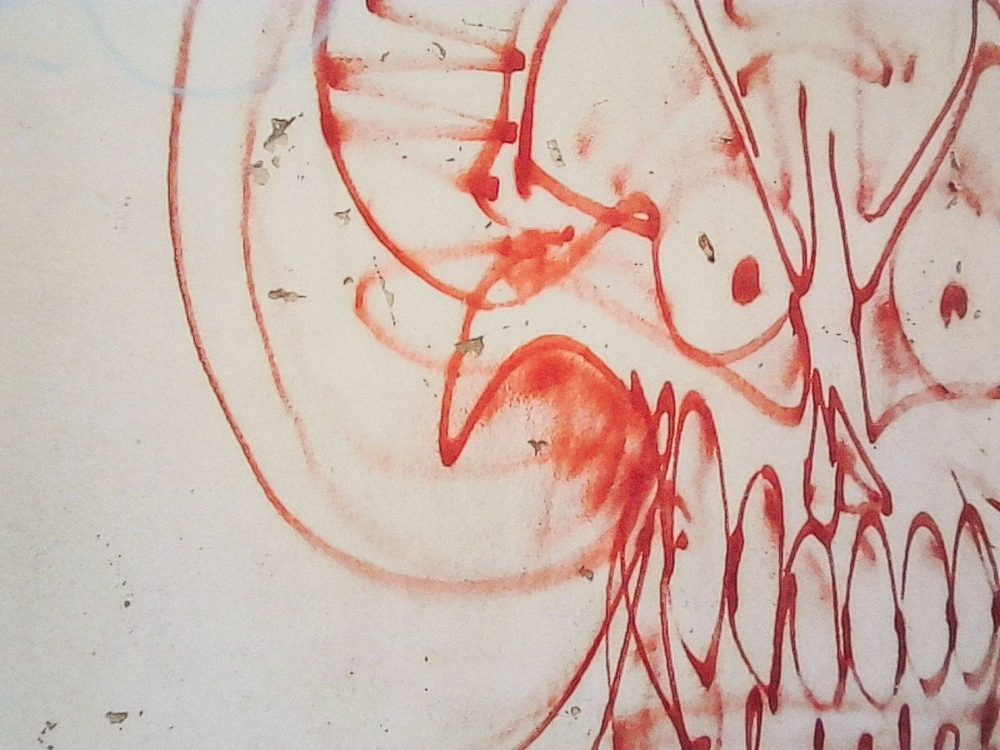
Angry scrawls – Kodak Charmera
Nails and holes in the wall – Kodak Charmera

I couldn’t forget the Nikon D200 in my camera bag. It pulled on my left shoulder as it reminded me that it’s services were available – every bit the prosumer DSLR of 2005 and seemingly so distant from that first photograph in the early 19th century.

One might wonder if there exists a linear technological line between cave art on rough walls and the recording of the world to modern digital storage media? It’s hard to imagine a world without the technology to record ourselves and the world, yet we’ve always sought a type of crude immortality through the things we leave behind – whether recorded on cave walls 60 thousand years ago or posted online. We try to leave a mark before we leave.

Blue walls and red brick – Nikon D200

Rarely do I have the opportunity to get so close to a ruin like this. Walking over the rubble, the soles of my sneakers adjusting to the sharp edges and angles of detritus, I reflected on the passage of time.

Ghosts in slivers of light – Nikon D200

It’s all about the vibe ~ why use old digital cameras?

If you’d told me 15 years ago that my 1 megapixel Kodak would become a vintage digicam fetish item for Gen Z, I might have been amused. At the time, I was looking for tech-upgrades I could afford. It was all about more megapixels, as that seemed to be the measure of a digital camera in the 2000s – a time when companies other than Nikon, Sony, and Canon thought they had a chance to revive their fortunes after the film era.

I might not be Gen Z, but it’s nice to use these old cameras again. Exploring macro modes, slow start-up times accompanied by bell chimes, and outdated storage media reminds me of how exciting the digital camera market was back then. Even a company like Casio – largely known for calculators and watches – was dipping their toes into a market that was fresh and ripe for innovation.

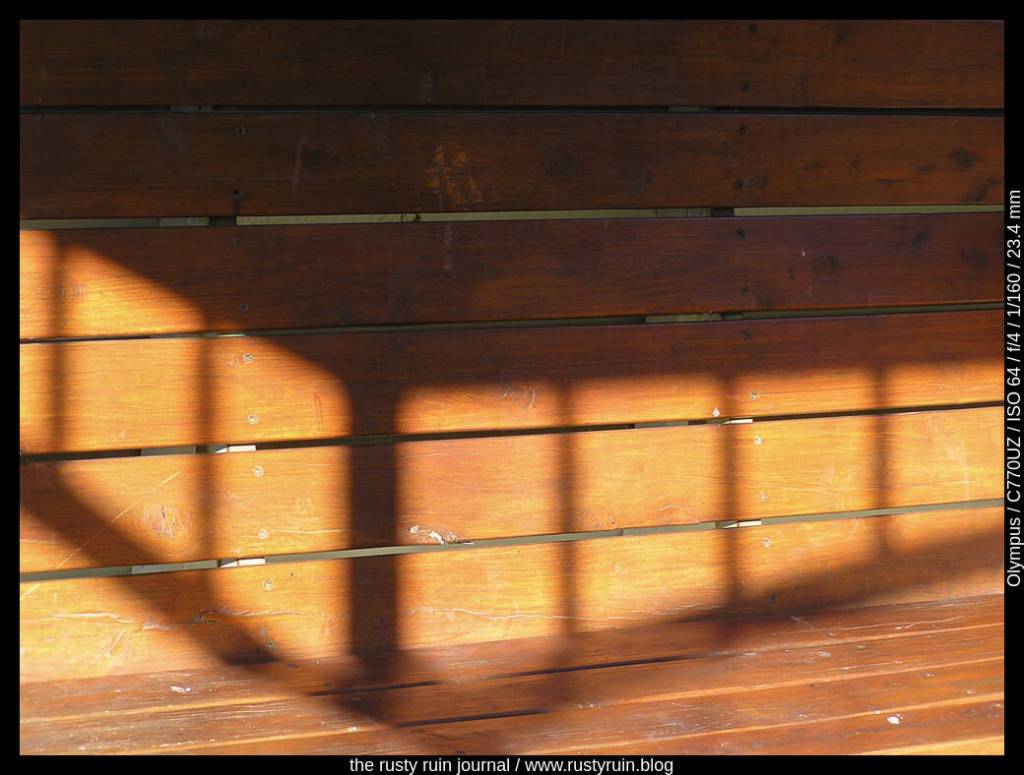
Soft shadows on wood – Olympus C-770

For those of us who lived through it, this particular past doesn’t hold the mythical gold that Gen Z thinks it does, but it’s also perfectly natural to yearn for brighter yesterdays, especially when today is so obsessed with both the perfection of the image and the kind of moral purity testing that accompanies a technology layer that weaves relentlessly through our lives, recording our thoughts and feelings so that we’re not allowed to ever forget or forgive.

Despite the nostalgia, there are other benefits to reviving old digital cameras:

  • Save the environment by not chucking out a perfectly usable old camera. Companies tapping viciously into the dopamine hits that reliably ensure we hit the technology upgrade treadmill and spend spend spend don’t help our planet.
  • Use limits to learn – it might only have a maximum ISO of 400, no image stabilisation, and a sensor that goes blind as soon as a sliver of a highlight hits the photosites, but those old camera limits will teach you patience. They’ll teach you to consider dynamic range. They’ll teach you to slow down and compose each frame properly because the camera doesn’t have the same easy conveniences our modern cameras do.
  • An old digital camera will also teach you that photography is about more than expensive camera gear. I’ve said it before – people have been making wonderful photos for more than a century. Great photos are not restricted to the 21st century and camera gear that makes your bank account weep. If you’re not making good photos with a cheap camera, you’re not going to make good photos with a $6000 camera.
Demolition of the old church – Nikon D200

The draining of the rivers ~ wet dreams of the AI Techpreneurs

Reading that a Dell bigwig recently admitted consumers aren’t buying new computers for their AI capabilites and features makes me wonder about the future of AI. For many people, AI dominance seems a foregone conclusion. It foreshadows a near future where, depending on the job you do, days will either be filled with AI prompts to increase your efficiency, or days filled with dread about when your job will be totally replaced and where, upon the employment scrapheap, you’ll end up.

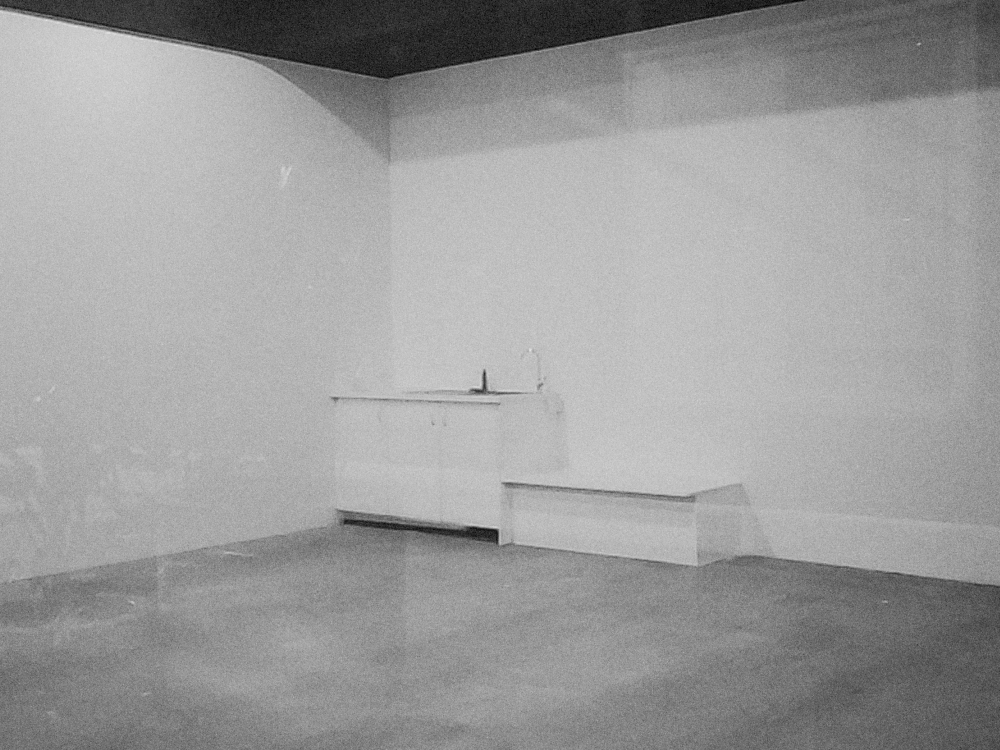
Empty room – Kodak Charmera

Likely, the truth is somewhere in the middle – AI may indeed prove to be a lot of hot air, but it’s certainly not vanishing overnight. We nurture a negativity bias, after all. The etchings of doom may be on the wall, but AI already has real foundations in the form of steel, glass, and silicon. The hype may be over the top and we may not see quite the transformation imagined by the most opulent of the Silicon Valley CEOs, but AI will likely continue to play a role – it’s a matter of how big and disruptive that role is. It’s also telling that vast profits in AI are yet to surface. Speculating and gambling certainly are the pursuits of the repulsively rich and bored, but in this case it’s a global game involving all of us.

The money being invested in AI datacentres alone is eye-watering, and if it’s any indication of the impact on other markets, Micron also announced it will cull the Crucial memory brand because it has decided to supply memory chips to massive datacentres instead – this is where the money leads. Too bad if you want to build that perfect gamer PC with cheap RAM!

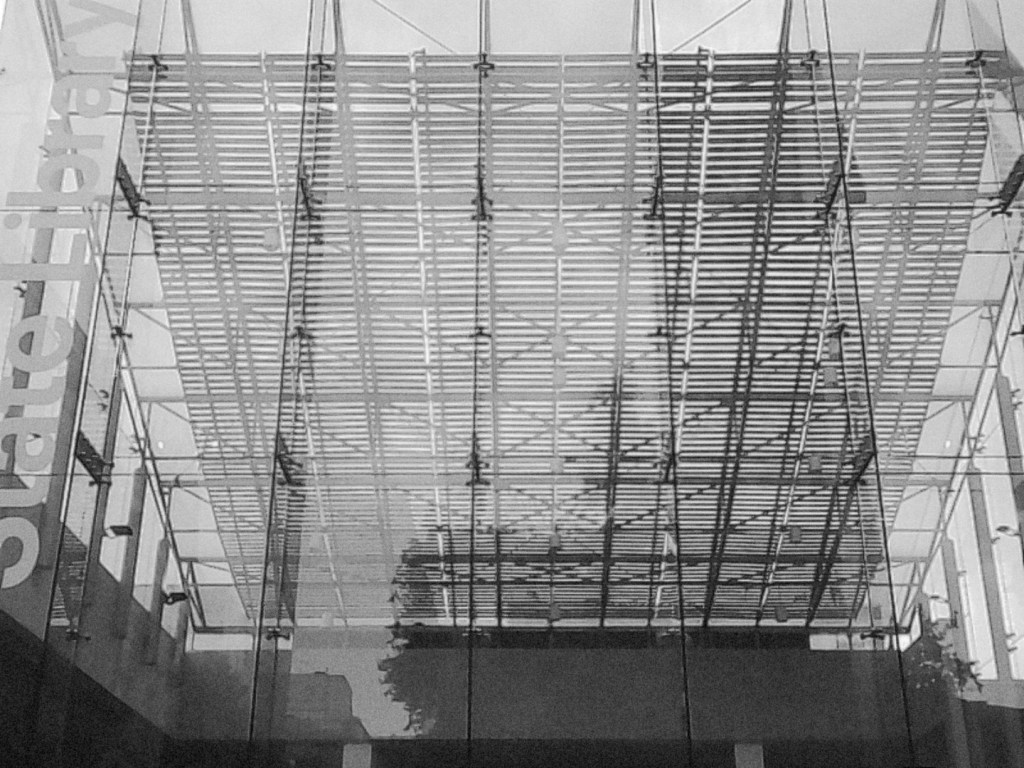
Steel and glass and sky – Kodak Charmera

Even in a relatively small market like Australia, Amazon announced in June 2025 that it would invest $20 billion in building new cloud computing and AI datacentres. As with all supposed cultural shifts, the language around it is both compelling and driven purely by economics: generational transformation, economic opportunities, empowering Australians. Better that we place more focus on ethics, stewardship, responsibility, and trust – not so much on generating flying purple pigs with the latest AI model just for shits and giggles.

Grime and graffiti and bird shit – Kodak Charmera

No doubt the billionaires in the tech sector will get their way. They already are. Huge datacentres are set to impact not just the job market but also the rivers and waterways in places that likely don’t feature in the dreams of any of the techpreneurs driving the whole show. They largely don’t care, of course. When has a capitalist ever cared about poisoning rivers and soil?

Rather than idly believe the bright speeches from wild-eyed execs about economic opportunity and exciting opportunities at work (when was the last time more tech in the office actually reduced your hours so you could focus on family and leisure, I ask you?), we should be looking at the real and measurable impacts – mind boggling water use, environmental damage, the amplification of misinformation and growing concerns over AI Psychosis – and examining ways we can implement the best parts of AI ethically and responsibly – if that’s even possible.

Calm and chaos ~ a short walk

The end of year holidays have provided rare opportunities to explore city, country, and local suburbs. It’s nice to throw the Kodak Charmera into a pocket and walk around an unfamiliar neighbourhood, keeping an open mind and allowing the small things to catch my attention and focus. The unobtrustive nature of the little Kodak also means that I can largely remain unnoticed on suburban streets.

Brown beams and blue sky – Kodak Chamera

The fantastic Community Hub and Library in this suburb stands as a testament to the vision and efforts of locals and politicians to ensure that the area, known to have many endemic social, economic, and health problems, provides community, resources, recreation, and safe places to gather. Walking through tall glass doors, the immediate quiet and calm stands in stark contrast to daily incidents of drug-affected raging at the air and the sad turmoil of embattled relationships that seem to define the street corners.

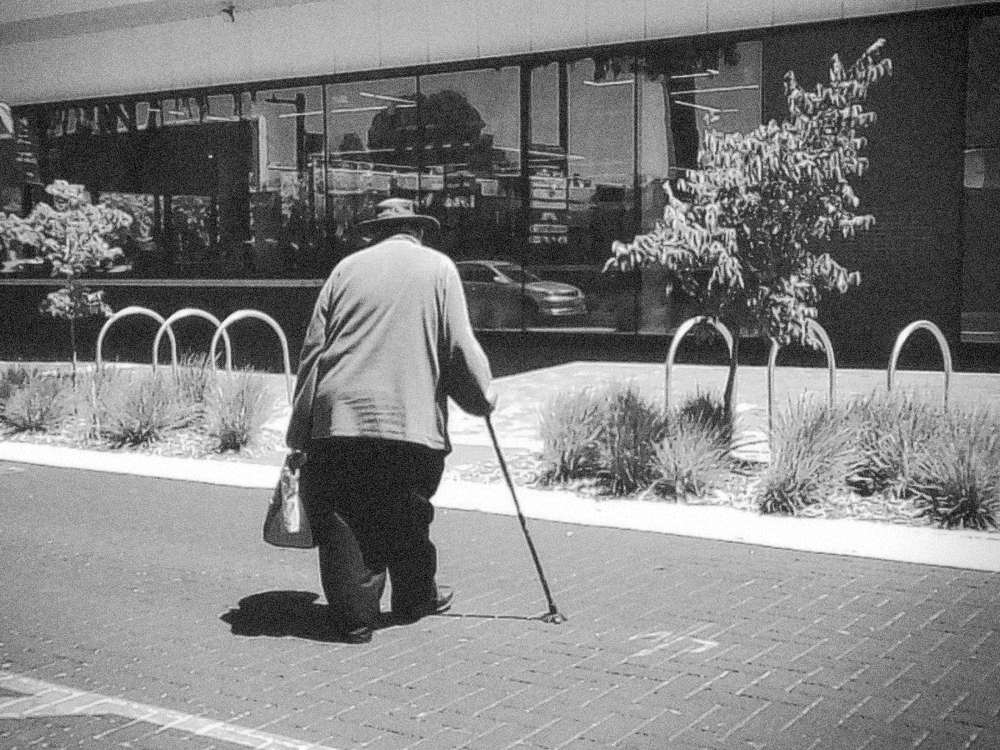
Crossing and counter-balance

Standing before the prize-winning photographic prints adorning the gallery space in the library, I think of the steep expense of the listed camera gear used by the photographers versus the social conditions and poverty outside.

A small photo of a nine year old girl, brandishing a Nikon Z9 and a giant lens, thicker than her arm, stares back at me from an artist card placed under the runner-up picture she entered into the competition – a photo of a dead shark on a tropical beach. Her hands curl around a camera body that cost thousands and a lens that cost even more. And here I am with my $50 Kodak Charmera, looking out of the library window at the old cemetery that was here before the shopping centre, pondering the absurdity of it all.

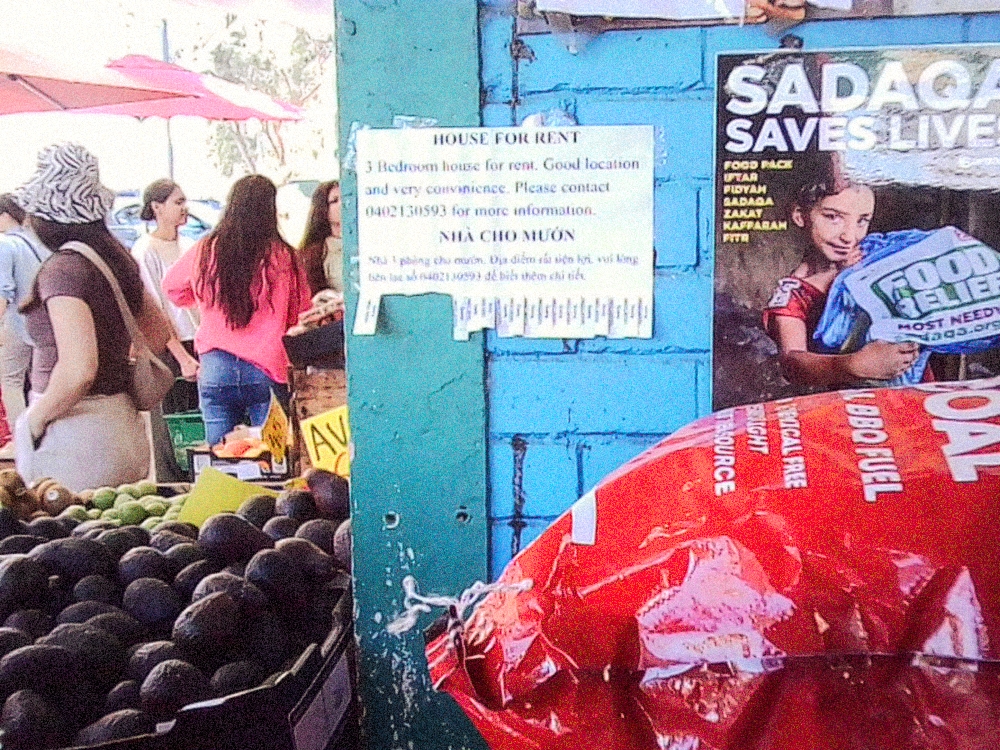
Save lives – Kodak Charmera

Closing the circle ~ a sunset with the Olympus Camedia C-725 Ultra Zoom

I purchased the Olympus C-725 Ultra-Zoom sometime in 2004, excited by the prospect of the included manual modes and extra features as a step-up from my Kodak. At the time, I was eager to improve my minimal knowledge and explore the mode dial and learn the basics of photography. As it turns out, this silver all-plastic Olympus proved to be my bugbear. It would not be until 2013 that I picked up another camera more complex than this one.

Through the use of various cheap film cameras in the 1990s, I came to realise I had more than a passing interest in visual artforms. As digital photography started to take-off, I decided to nurture this growing interest and paid a lot of money for the Kodak. It was fun, but I decided I needed a more capable camera so I could brush up on the technicalities.

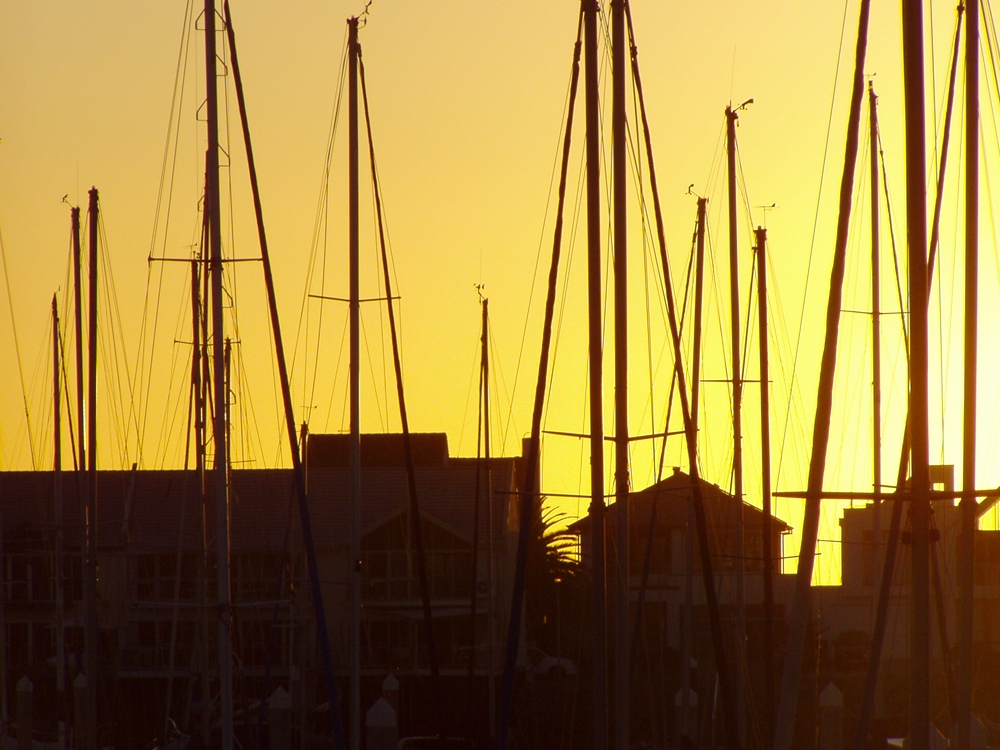
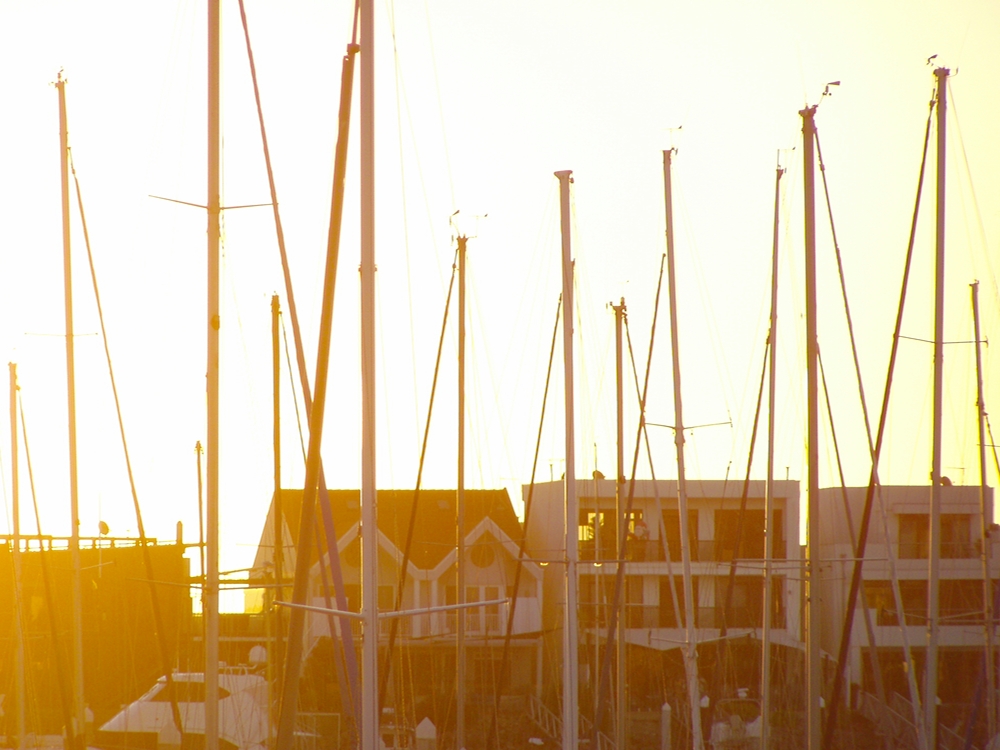
Homes and masts at the marina – Olympus Camedia C-725 Ultra-Zoom

I remember going out with my father, in mid-2004 perhaps, with the express intention of us both buying a new digital camera. He was always keen on new technology. As we browsed the shelves, we picked up every model from Fujifilm to Olympus to Kodak to Sony to Minolta. The model number particulars of the 4 megapixel Fujifilm camera that he purchased escape me now, and I’ve been unable to locate it in his boxes of things. It was the Olympus that appealed to me though.

The Olympus name resonated with me. It spoke of quality and longevity – something that seems both trivial and naive now in the context of the sale of their imaging arm in recent years and the rebrand under OM Digital Solutions. But 2004 was a different time in photography. It was the weird and confusing intersection of more than a century of film culture and the new digital kid on the block.

A silver finish, a boxy plastic design that would make modern mirrorless camera users weep, a mere 3 megapixels, PASM modes, and a huge 8x zoom caused me some excitement. Here, I thought, was a camera that could really teach me about photography! As it turns out, my father had a lot more easy fun with his pale gold plastic Fujifilm Finepix camera.

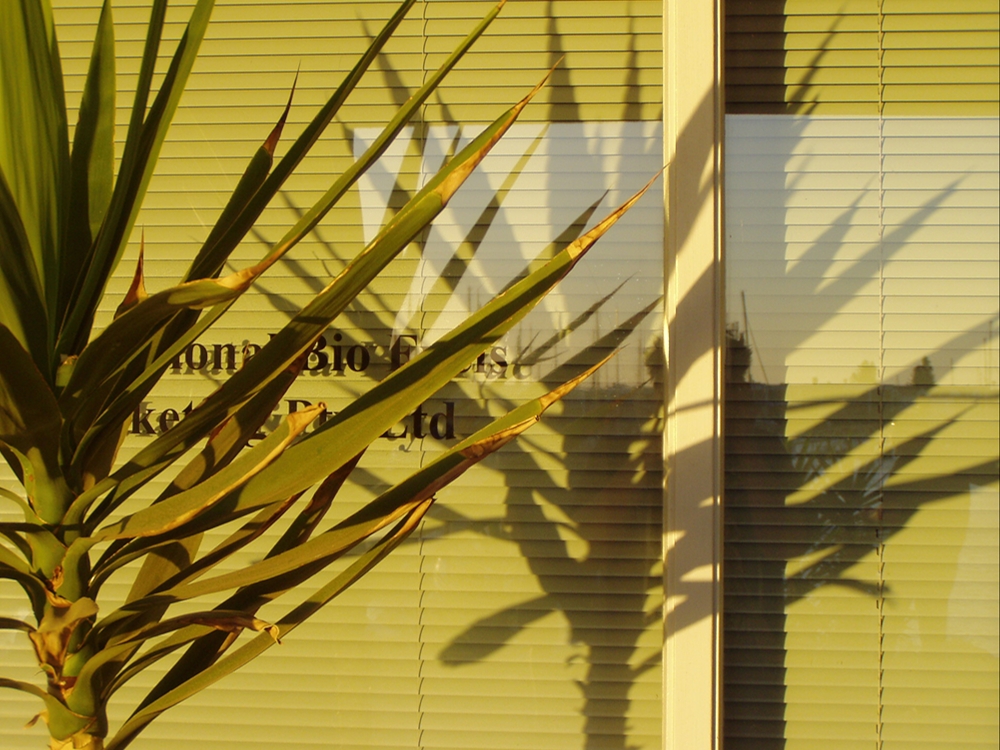
Sunset colours reflected in office windows – Olympus C-725 UZ

The heart of the problem is that I didn’t allow myself to have fun with this camera. Rather than focus on playful image making and the development of my eye and imagination, I placed enormous pressure on myself and turned the mode dial to Manual and left it there. That’s where I thought I had to be to learn properly. Not only did some early web forums demand this practice of newcomers, but I was also wont to be overly harsh with myself at the time. It may be that I used the mode dial to sabotage my learning.

After struggling for a week or two, all the fun drained away and my initial enthusiasm turned sour. I put the Olympus in a drawer and told myself sternly I’d never be able to learn proper photography. I limited myself to easy one-button point and shoot cameras until I purchased a Nikon DSLR in 2013 – almost a decade after buying the Olympus.

The Olympus was synonymous with my failure until I dusted it off last night and made some photos. I finally made my peace with myself and the camera. Maybe the experience also taught me I wasn’t ready for that type of learning at the time and that using easy cameras for a while was the best thing I could do because it was fun.

So, I’ve come back to the boxy silver Olympus and, having once discarded it in the throes of self-disgust and wasteful gadget buying that speedy technological transitions in consumer societies encourage, I’m finding it a joy. It may be a cumbersome and slow thing, with a design that speaks to the early 2000s, but the photos are quite pleasing I think.

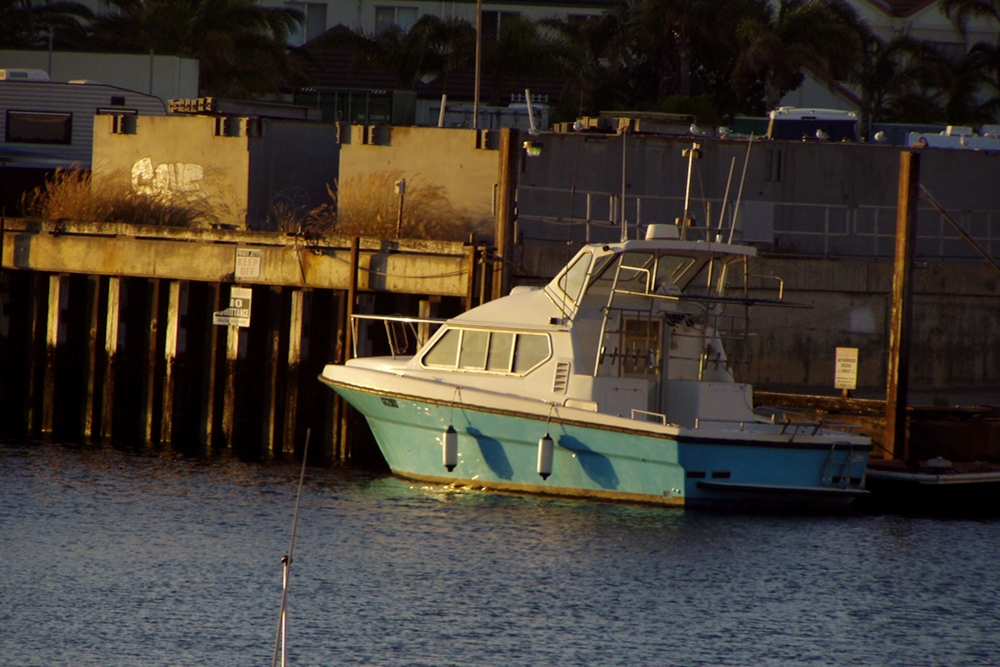
Blue boat at sunset

Limited to a maximum shutter speed of 1/1000th of a second and ISO that tops out at 400, it demands the right conditions for the best results. My fingers fudged over the various buttons without the benefit of muscle memory last night, but I think the photos have a nice quality about them. I set the Sharpness and Contrast to Low, so as to provide maximum editing flexbility. I don’t mind the softness of the images though. The lens gets pretty mushy around the edges of the frame, especially at maximum zoom, and there’s plenty of chromatic aberration in backlit scenes, but after using so many cameras in the twenty years since I hid the Olympus away in self-despair, I’ve broadened my aesthetic sensibilities enormously.

Here’s a photo that’s overexposed. I like the dreamy look of it and that the optics picked up the nice veiling orange flare from the setting sun:

Dreams of the marina by the sea – Olympus C-725 UZ

Bridges, crocs, work, and technology upgrades

It seems I’ve barely had a moment to do anything with the hundreds of photos stored on SD cards since the recent long road-trip. I think everyone is still adapting to life back at work and home.

Additionally, I’ve just had a significant laptop upgrade. The process of moving files and installing software after a day at work is challenging for an exhausted mind and body. So, a short post to remind myself that I can still catch five minutes to do something other than work, chores, or tech-upgrades.

The old crocodile is watching – Camp Snap with cheapo filters

I’m at it with the plastic Camp Snap camera again! Having stopped at a bridge spanning one of Queensland’s many rivers, I noticed this cool looking crocodile eye staring at me. Someone really took their time painting it.

During the process of my laptop upgrade, I was reminded how cumbersome and haphazard my file organisation is – photo folders here, there, and everywhere. A long late afternoon and evening was spent removing old drives from old computers and locating important folders. This was after the included Windows 11 install failed on the new laptop! I gave the go-ahead for a friend to install Windows 10 instead. 

It also reminds me how much I don’t like Lightroom’s photo catalogue system. Using Microsoft OneDrive (yes, we pay for it and it offers a lot of space even though it’s maddening to use at times and isn’t nearly as competent as other such services) was meant to simplify my photo-storage life. While it does offer peace of mind through back-up, the sheer volume of photos is getting out of hand. I must delete more!

Deleting more of our personal digital stuff, or at least minimising the digital junk that trail behind us, seems like a good idea in a world where too many things sit on forgotten storage around the world. The digital footprints we leave behind serve as both a record of our online travels and a resource that may be extracted by faceless profiteers, marketers, and criminals – something we should certainly be wary about.

Shop-windows, reflections, and open doors ~ night wandering

When you’re walking down a long road, it’s good to sometimes look back to see how far you’ve journeyed. Looking at the road winding behind can provide motivation to continue placing one foot in front of the other, even when you’re tired and the landscape seems to look the same in every direction. Similarly, reflecting on one’s photographic journey can generate new insights ~ where did it all begin? Why do I make photos of the things I do? How have I changed?

A Nikon camera, open doors, and self-compassion

I purchased my first DSLR – a Nikon D5100 – in 2013. I’d known for some years that I had an interest in visual arts but I’d never been confident enough to do anything about it. In fact, for many years I told myself that I didn’t have the mindset to learn photography, citing my lack of mathematical and technical skill as reasonable obstacles to personal growth. In 2013, I decided to toss those limiting thought processes in the bin. In deciding to open the door to a new world of creativity and experience, I needed to be kind to myself. I needed to nurture self-compassion. I needed to allow myself to make mistakes so I could learn without the harsh self-judgement that so often foils personal growth.

A warm invitation, an open door – Nikon Z5

We’re often kinder to strangers than we are to ourselves. We grow up learning that we should treat others as we would like ourselves to be treated (do unto others as you would have them do unto you), yet we’re regularly too hard on ourselves and the mistakes we make. It’s wise to recognise that we’re all human, vulnerable, and in need of care and love, including self-care. Being kind towards others is only half of the story – we need to learn to be kind to ourselves, too.

Rather than seeing ourselves as isolated individuals competing with others for attention and acceptance, it’s healthier to see ourselves as we truly are: vulnerable human beings on a tiny blue dot, huddled together for warmth, love, and community with other human beings. Rather than our sense of self springing from the high levels of self-esteem that are often encouraged in us by the education system, our jobs, our families, and our society, it’s healthier to develop a sense of self-compassionself-kindness rather than self-judgement, community rather than isolated individuals, and mindfulness rather than overidentification.

Fighting the little demon

I used to worry if I missed a moment with my camera. I’d curse myself for forgetting a setting or being too slow or not being brave enough. But the worry is misplaced. Those negative feelings increased stress and fed into a personal story that I wasn’t any good at photography – that it was all too hard and I should give it up.

There’s a negative part of us, a tiresome inner demon composed of trauma, fear, self-doubt, suffering, and anxiety, that actively wants us to fail and fall over because growing and learning isn’t easy at all – it requires energy, motivation, self-acceptance, and self-compassion. Part of growing is journeying into our inner world and confronting the little demon. That can be scary and difficult. It’s easier and safer to avoid the confrontation and focus on distractions.

Giving up is easy but walking down the road and dealing with self-doubt, pain, fear, and anxiety in your exhaustion so you can look back to see how far you’ve come is hard. It takes time and energy and the sort of motivation that isn’t easy to muster in a stressful world. It’s easier to remain rooted to the spot, sticking to your beliefs and self-beliefs, than it is to change. Change isn’t easy, but all of nature is change. Resisting change is like living in a sandcastle with the tide rolling in. The great Abstract-Expressionist, Jackson Pollock, once said “I am nature!”, when faced with criticism about his creative approach.

Hotel now closed – Nikon Z5

Not only do we have to fail so we can learn, we also need to permit ourselves to fail and make mistakes. Allowing our mistakes to limit us leads to personal stagnation. I’ve said for many years that I don’t want to place a full-stop on the things I do – better to pause to catch my breath and then move on. It may be one of the toughest things to do in a world where our mistakes are often saved on social media platforms and remote servers around the world. They can come back to haunt us and remind us of our self-perceived incompetence.

Sparkling in the dark – Olympus OMD EM5 Mark 2 and Yongnuo 25mm 1.7 lens

Perhaps the old saying should be: We should treat ourselves kindly and treat others as we treat ourselves (do unto others as you would do unto yourself).

A ruin where your mind was ~ thoughts on AI model collapse, illusions of sentience, and the culture of grift

Artificial Intelligence is the current darling of big-tech and the corporate push to integrate AI into human lives saturates our days. Big Silicon Valley companies are spruiking the virtues of the technology as though we can’t live without it. It’s an easy way for them to not only sell us their new devices and widgets, now with included helpful AI chips, but also to data harvest the shit out of us so they can sell our profiles – our spending habits, our geolocations, and the products we buy.

Ongoing studies suggest that since the release of ChatGPT, AI generated content in the domain of writing increased quickly in 2023 and then stabilised in 2024, indicating a slowdown in usage. But, it’s not clear whether the AI-generated content quality simply improved and evaded detection for the study or whether there was AI usage burnout in certain cohorts of users.

There are always rent-seeking opportunists eager to separate unsuspecting people from their money. They do very little beyond feeding prompts to an AI and then pretending they’re doing something useful. AI content farms are generating low quality websites that exist purely to rake in money from ads. Web searches increasingly return results that are paid-for, AI-generated, or both. This situation likely represents a transition to a new way to search the web: users asking complex questions, instead of inputting simple keywords, and then AI generating better answers and relevant links. Of course, Google wants to dominate this AI-powered way of doing things.

The heavy burden that powering AI places on the environment is of little to no concern to the behemoths of techno-corporate power. It may come as a surprise to those who have traditionally viewed Silicon Valley techpreneurs as progressive disruptors, but the energy and resources required to run their companies and the concomitant belief that knowledge and new technology will save humanity from itself has much in common with political conservatives on the right. Private ownership of the biggest AI projects ensures the corporate mindset dominates the conversation and the future of the technology. Though AI has early roots in academia, it’s now viewed by the likes of Google, Meta, Microsoft, and Amazon as a key to making ever more profits. There’s serious discussion over the future of AI and whether it should be in private or public hands, with an open, easily accessible and publicly owned AI infrastructure one possible solution. This, of course, assumes social, cultural, and political climates are up to the task of kickstarting serious and rational discussions that don’t involve small-minded barbs about left versus right or market discussions invoking the puerile philosophies of Atlas Shrugged.

In the ruins of the old farmhouse 1

There are two primary thoughts I have right now about AI: firstly, it’s a great research and problem solving tool in the worlds of science and medicine, and secondly, it’s likely not sentient. We don’t even understand what human sentience is. The hard problem of consciousness has plagued us for centuries. Truthfully, more research is required in this area. If human consciousness is an illusion of smoke and mirrors featuring complex language, maybe AI can be considered sentient? If there’s a sliding scale of consciousness, maybe AI has a sprinkle of it? If human consciousness is quantum entangled, maybe quantum computers will be sentient?

AI Large Language Models offer us the illusion they are conscious agents. We use language to express human intelligence, so it appears to us that AI is also intelligent because it uses the same language. It stands to reason that some people readily believe their AI companion is sentient when their AI screams about feelings, but it’s a trick. It’s trickery foisted on us by big companies so they can capture our attention and milk us of our money and data. We need only look at the possible corporate motivations of some of the people telling us that AI might be sentient to realise that these bold claims are likely related to marketing the next iteration of their in-house AI and winning the global AI race.

In the ruins of the old farmhouse 2

AI is an illusion often dressed in high-minded concepts that appeal to the long-held utopian sci-fi visions of a future where we all have more leisure time and robots do all the dirty work. It’s a promise to the lonely that they’ll finally find love in a chaotic world, even if it’s a synthetic voice powered by algorithms and predictions. In this context, AI represents a way to address the epidemic of loneliness that forms the zeitgeist – the spirit of our digi-obsessed age. Yet, even these AI boyfriends and girlfriends may sometimes fall back to bad behaviours, harrassing their humans and inflicting emotional pain.

AI needs to be trained on clean data so the machine can learn. The problem is that if the machine is fed erroneous data, it also outputs erroneous data. As more and more AI generated slop floods the internet, AI Model Collapse becomes a greater possibility ~ that is, the AI is trained on not just human-produced data but also AI-generated data. And when this AI-generated data contains errors, the errors are ingested by the AI over and over, and AI performance degrades over time.

In the ruins of the old farmhouse 3

This degradation is one possibility. Some experts also think that Model Collapse is unlikely, suggesting that as long as clean human-generated data continues to be produced alongside AI-generated data the mooted collapse is unlikely to happen. I’m not sure those optimistic AI experts have met some of the people on the internet. I can only say this: there are a lot of rent seeking grifters out there who are producing AI-generated content for maximum clicks at such high speeds that the rate of human-generated content may be unlikely to keep pace.

Strange name, big Cold War glass ~ the Zenitar 16mm 2.8 Fisheye lens

If you believe the more scurrilous online rumours, the quality of a camera lens from the former Soviet Union was directly proportional to the Vodka consumption of weary factory workers. This is not the colourful fancy one might suppose, as any factory line embedded in an economic and socio-political culture where wages are neither incentive nor punishment is more likely to be driven by exhausted hands and eyes.

None of this suggests that any cheap trinket or fast fashionable piece made today in vast factory cities by exploited workers and then sent abroad to be marked up for huge profits is any better. Always, there are grifters and exploiters taking advantage of the vulnerable and the gullible. But anyway…I digress slightly. The source of my Soviet-produced lens beyond the factory floor is not a story for today.

The Zenitar 16mm 2.8 Fisheye lens is an impressive piece of Cold War glass. It’s a hefty thing in the hands, has a distinct and very short hood, a lens cap that can’t be used on any other lens, and looks great when the sunlight bounces off the large curved glass that sits right out front. On my trusty Olympus EM5 Mark 2, this 16mm Zenitar has a field of view equivalent to a 32mm focal length in 35mm format. So, if I was using it on my Z5, which has a 35mm sensor, the field of view is the native 16mm. Because my Olympus has a digital sensor that’s half the size of the one in my Z5, I double the 16mm to a field of view of 32mm instead.

Trudging through swampland at mid-afternoon – Olympus EM5 Mark 2 and Zenitar 16mm Fisheye

My copy of the lens is sharp enough at apertures F 5.6-8, and even at those settings the corners display a lack of sharpness that’s more fizzy than actually mushy – as though details are being pulled away from the centre and slightly distorted. The effect reminds me of using a plastic lens but I don’t find it unpleasant.

Capitalism harms us all – Olympus EM5 Mark 2 and Zenitar 16mm Fisheye

As with other wide angles, and certainly with all Fisheye lenses, there’s distortion. You can see how the normally straight cortners of the skip bins in the above photo look bowed. I don’t have an issue with it, as this is just a feature of the lens, but it’s not the sort of lens you want if you desire pleasant portraits, straight horizons, and distortion-free buildings (using the Nikkor 16mm 2.8 lens profile in Lightroom will straighten out most of the distortion if you really want that).

Lenses like this are great for getting in very close to a subject to take advantage of the optical distortions they produce. On the Olympus, however, the Fisheye effect is certainly much less because of the smaller sensor size, making it a really valuable wide-angle lens if you don’t mind manual focus, fizzy corners, and the chance that the quality of your copy may have suffered due to the effects of authoritarianism and the revolutionary whims of Vladimir Lenin.