Strange name, big Cold War glass ~ the Zenitar 16mm 2.8 Fisheye lens

If you believe the more scurrilous online rumours, the quality of a camera lens from the former Soviet Union was directly proportional to the Vodka consumption of weary factory workers. This is not the colourful fancy one might suppose, as any factory line embedded in an economic and socio-political culture where wages are neither incentive nor punishment is more likely to be driven by exhausted hands and eyes.

None of this suggests that any cheap trinket or fast fashionable piece made today in vast factory cities by exploited workers and then sent abroad to be marked up for huge profits is any better. Always, there are grifters and exploiters taking advantage of the vulnerable and the gullible. But anyway…I digress slightly. The source of my Soviet-produced lens beyond the factory floor is not a story for today.

The Zenitar 16mm 2.8 Fisheye lens is an impressive piece of Cold War glass. It’s a hefty thing in the hands, has a distinct and very short hood, a lens cap that can’t be used on any other lens, and looks great when the sunlight bounces off the large curved glass that sits right out front. On my trusty Olympus EM5 Mark 2, this 16mm Zenitar has a field of view equivalent to a 32mm focal length in 35mm format. So, if I was using it on my Z5, which has a 35mm sensor, the field of view is the native 16mm. Because my Olympus has a digital sensor that’s half the size of the one in my Z5, I double the 16mm to a field of view of 32mm instead.

Trudging through swampland at mid-afternoon – Olympus EM5 Mark 2 and Zenitar 16mm Fisheye

My copy of the lens is sharp enough at apertures F 5.6-8, and even at those settings the corners display a lack of sharpness that’s more fizzy than actually mushy – as though details are being pulled away from the centre and slightly distorted. The effect reminds me of using a plastic lens but I don’t find it unpleasant.

Capitalism harms us all – Olympus EM5 Mark 2 and Zenitar 16mm Fisheye

As with other wide angles, and certainly with all Fisheye lenses, there’s distortion. You can see how the normally straight cortners of the skip bins in the above photo look bowed. I don’t have an issue with it, as this is just a feature of the lens, but it’s not the sort of lens you want if you desire pleasant portraits, straight horizons, and distortion-free buildings (using the Nikkor 16mm 2.8 lens profile in Lightroom will straighten out most of the distortion if you really want that).

Lenses like this are great for getting in very close to a subject to take advantage of the optical distortions they produce. On the Olympus, however, the Fisheye effect is certainly much less because of the smaller sensor size, making it a really valuable wide-angle lens if you don’t mind manual focus, fizzy corners, and the chance that the quality of your copy may have suffered due to the effects of authoritarianism and the revolutionary whims of Vladimir Lenin.


Squeezing the most from old lenses ~ the Clubman 28mm 2.8

I’ve used many old manual lenses on my Olympus EM5. It’s a great way to explore old glass, even if the lenses weren’t made for modern mirrorless digital cameras. One of my favourite lenses is the Clubman 28mm 2.8 – a mass-market cheapo lens that was made by a Japanese optical manufactuer and then rebranded to be sold in camera shops and department stores at the height of 35mm film photography in the 70s, when colour film rose to prominence and new artistic styles found voice. It can also be found under the Ensinor name and likely some others. Many cheap lenses from that era were equally cheap in performance, but the Clubman is surprisingly good.

Like all of the lenses from back then, it’s an all-metal build and features an aperture ring and manual focus – quite hefty when compared to the plastic lenses we often find today. One of the best things about it is that it has a kind-of macro mode where you can focus down to about 30 cm at a 1:5 ratio. The other surprising thing about the lens is that it’s quite sharp after stopping the aperture down to f 5.6-f 8.

The lens also benefits greatly from the small sensor size of the Olympus because the softer edges and corners are mostly chopped out on the Micro Four Thirds format. This lens wouldn’t be so good on a larger format, like APS-C or 35mm, because those mushy edges and corners would form a bigger part of the visible frame. On the Olympus, I get the central part of the lens, where it’s sharpest.

On a hike , Litchfield National Park – Olympus EM5 Mark 2 with Clubman 28mm lens and Circular Polariser

For the photo above, I stopped the lens down to F 5.6 – the sweet spot for this lens/camera combination. I also used a circular polariser to cut out stray light reflections on the rocks and the foliage. This also deepens the colours.

The effect of the polariser is obvious in the above photo when you look at the water. The reflections have been minimised, creating transparency and deeper colours. You can even see the cliff visible below the water’s edge and some of the rocks on the riverbed. This is when a circular polarising filter is most useful and helps to maximise the optical properties of older glass.

Here are some of my other most-used manual focus lenses:

  • Takumar 35mm 3.5
  • Takumar 28mm 3.5
  • Macro-Takumar 50mm F4
  • Fujinon 55mm 1.8
  • Petri CC Auto 55mm 1.8
  • Micro-Nikkor 55mm 3.5
  • Nikkor 50mm F2
  • Zenitar 16mm 2.8 Fisheye
  • Minolta Rokkor MC 50mm F2
  • Minolta Rokkor 55mm 1.7
  • Vivitar 28mm 2.5

A local photo walk with the Nikon D70S ~ rust, wood, and vegetation in the suburbs

I’ve previously written about the Nikon D70. As I seem to have some affinity for older Nikon cameras, and as my D70 is also pretty beaten up, I couldn’t resist a good deal on a Nikon D70s with an attached Nikkor lens that has long been on my list: the Nikkor 35-70mm 3.3-4.5 AF lens. First released in 1986, the 35-70mm is most definitely a lens made for film cameras of the time as a cheap walk-around unit.

Some detractors say the focal length of 35-70mm isn’t especially useful on an APS-C sized sensor, but I disagree – 35mm is a popular wide, not not too wide, focal length, and 70mm can most certainly get you close or give you a decent portrait. Even if you consider equivalence (and a 50mm lens is still a 50mm lens on any sized sensor), the lens gives us 35mm eqivalent focal lengths of 52mm, 85mm, and 105mm – all three of them very useful lengths on any camera.

Snapping plant monsters in the suburbs – Nikon D70s

As for the D70s, it was announced in August 2005 and came hot on the heels of the original Nikon D70. The differences between the two models are minor, with the back-screen of the S iteration being 2 inches rather than the 1.8 inches of the original. The other features remain the same really: a 6.1 megapixel CCD APS-C-sized sensor, a top LCD screen with settings information, and an array of useful external controls, including ISO and White Balance, among others. Though it’s an all-black-plastic affair and has that familiar hollow feel of Nikon’s cheaper offerings, it definitely has a prosumer feature-set. Sure, the Nikon D200 is the professional upgrade, with a solid magnesium-alloy skeleton that feels like a giant warm buttered scone in the hand, but the D70s still remains a competent DSLR even in 2025.

Just quickly, if you like this post and want to read more of my words on photography, old cameras, and such, just fill in your email below. I’m grateful for every connection in this digital abyss!

The old blue van – Nikon D70s

All the photos were made using the lens at F-stops 5.6 – 8. As you can see, the photos are sharp and punchy, even using a 6.1 megapixel sensor from yesteryear. Need I go on about the competent image-making capabilities of these older cameras?

Covered in cactus – Nikon D70s and Nikkor 35-70mm 3.3-4.5 lens

I was helped by heavy cloud-cover, as there wasn’t a lot of dynamic range for the old CCD sensor to manage. Even though you can print pretty large from a 6 megapixel camera easily without much loss, the lack of cropping room makes one slow down and compose deliberately – there’s no running and gunning here. No lazy composition and fix it in the edit mentality. Old lenses, lack of high ISO, and fewer megapixels is good for getting back to the basics of photography: seeing clearly, connecting to the world through imagination, subject choice, composing deliberately, correct settings to suit scene and intent, and good hand-held technique.

If you print a 1 megapixel photo at billboard size, it will look like badly made bricks up close. If you stand 50 feet away instead, where just about everyone will be viewing it from, that 1 megapixel image will look pretty good. Viewing distance makes all the difference, and this is what we also need to consider when it comes to resolution and print sizes. Are you standing two inches away to view your photo prints? Even so, I don’t want to needlessly toss pixels away if I can help it, especially on these old cameras. I slow down, look, reflect, imagine, think through settings, check the histogram for exposure, and adjust if necessary.

All wooden levels – Nikon D70s

A day with the Pentax K10D ~ my short time as a Pentaxian

When I was growing up, we’d spend time with another family on special occasions. They’d emigrated at the same time as us to Australia, and we’d maintained the sort of cultural bond with each other that immigrants often do when they’re finding their feet in a new country. Even though my brother and I didn’t have much in common with their two girls, we always found a way to have fun, whether it was hide and seek, boardgames, or exploring the nearby school on weekends.

I have a vivid memory of going to their home one day and looking up to see a large camera I’d never seen before sitting on a shelf in the dining room – a Pentax. Bigger and more professional looking than the usual plastic film cameras I was used to seeing, it seemed to suggest that someone in their family was a bit more serious than most about making photos. I never had the courage to ask, but that bold white Pentax font was burned into my memory.

A few weeks ago, I came into possession of my own Pentax – a K10D. Released in late 2006, it was a nice semi-pro DSLR with some interesting features ~ weathersealing, sensor-based shake reduction, and the same well-regarded CCD sensor as the Nikon D200. It even came to me in a Lowepro Nova 160 AW camera bag that still looks to have plenty of life left in it as a daily shoulder carry. As Ricoh-Pentax has, to me, always seemed a brand doing it’s own thing regardless of the trends, and bearing in mind the curiosity stoked in me since seeing that serious looking camera on the shelf, you can imagine I was quite excited to take it out for a day of use.

Closed up in Redhill – Pentax K10D with Sigma 17-50mm lens

We should be cautious about rushing into what seems like a good deal, especially online. I’ve been pretty lucky with my purchases, but sometimes old gear comes with problems. Despite a body in good condition and a shutter about a third of the way through its average life, my K10D isn’t in the best shape internally. Mine seems to have front and back focus problems, likely related to the dreaded mirror drop issue that plagued so many of these units. It took Pentax ages to own up to the problem officially.

Of course, the soft and slightly out of focus photos could also be due to the Shake Reduction system not playing nice, bad glass, or user error – though you’d expect that making a photo at 1 / 750th of a second in good light with plenty of depth of field wouldn’t be the cause of visual mush. And I know of no Sigma glass that’s so poor as to make everything soft even at an F-stop of 8. Given the inconsistency of the focal plane from photo to photo, I suspect one side of the mirror has tilted downwards slightly, thereby affecting sharp focus. I think this because every single photo comes out with the same tilt no matter how well I frame it: the right side tilted down. It’s easily corrected in Lightroom, but still annoying. The only other culprit could be the interchangeable focus screen being slightly askew – something that’s easier to adjust. Disappointment aside, these are some of the best photos from the day…

Inside the old farm-house – Pentax K10D

In some ways, I don’t mind slightly soft photos. Whilst I had to do more than my usual sharpness adjustment in Lightroom to compensate, they remind me a little of photos from a cheap old film camera.

Abandoned garage – Pentax K10D

The K10D is a nice camera to hold. The body seems to have more organic curves than the upright and serious looking Nikons I’ve grown accustomed to. The LCD screen is nice and bright, as is the optical viewfinder. It has a different hand-feel to my Nikons – slightly more refined in some ways, but lacking the external controls of the D200. If Nikon is the serious-looking man at the local bar drinking only tap water and green tea in the corner, Pentax is the loose fellow pressing buttons for fun on the jukebox after a few exotic beers.

Shipping container patina – Pentax K10D

Problems aside, it was good to finally use a Pentax after all those years of wondering about the camera on the shelf. Will I get another Pentax? I definitely won’t be rushing to do so. One of the hazards of picking up old cameras is that sometimes there are unreported faults. I have a Nikon D70 that’s very worn, but still makes great photos. The Pentax looks great and clean, but it’s not a trustworthy companion I’m afraid. I was a Pentaxian just for a day, and it was kinda nice. I’ll keep the nice Lowepro shoulder bag though!

My first digital camera ~ Kodak

My first digital camera was a Kodak DSC 3200, purchased in 2002, I think. It seemed like magic at the time ~ the fact that I could make photos and NOT have to pay to have film developed was pretty amazing. Even better – I didn’t even need to go to the trouble of using a flatbed scanner so I could transfer them to my computer! In a world saturated by digital imagery and modern cameras that can almost see in the dark, this all seems rather quaint.

My Kodak camera might have been magic in my hands, but it was also really frustrating to use – AA batteries that seemed to be good for only a dozen photos, limited internal storage, and a serial cable connection that took an age to transfer files. Still, I was pretty happy with it, and 1 megapixel seemed like a lot at the time. Here are some old photos made by the Kodak DSC 3200 I happened to find:

Machinery near the old quarry – Kodak DSC 3200
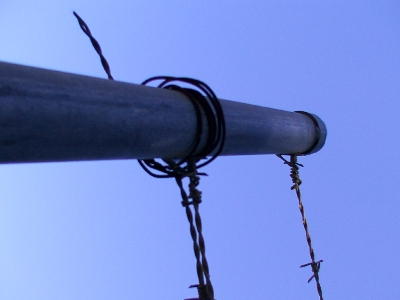
Spikes in my sky – Kodak DSC 3200
Kodak DSC 3200
Kodak DSC 3200

More photos from the Nikon D200

In my previous post, I sang the praises of the Nikon D200 – first released in 2005. Back then, I could barely afford a decent digital point ‘n’ shoot, let alone a premium DSLR like the D200 ! Even RAW photos from this Nikon feature similar contrast, punch, and compressed dynamic range to those from the Olympus E1yet another widely respected antiquarian among cameraphiles and CCD sensor enthusiasts. I’ll not expand fervently on that in this entry, as I’ve done previously! Just some more photos from the hefty and reassuringly solid Nikon D200:

A rusty old shed somewhere – Nikon D200 and Tamron 17-50mm F2.8 lens
The green shed – Nikon D200

Notice the old tin shed theme so far? I won’t deny that lonely sheds make for some nice pictures, especially when they’re decaying into the sun-beaten soil.

The yellow shed – Nikon D200

Seriously, I was going to post something other than a shed, I really was, but I couldn’t help myself! Back to another angle of the yellow shed you saw in my last post. Looking at these photos, I can’t help but wonder again about the image quality perfected in some of these old cameras. Makes you also wonder about the role of marketing and what we believe.

A sunny day with the Nikon D200

The Nikon D200 was released to market in 2005 – a long time ago in the world of digital cameras. Everything about it screams digital retro – the hulking black body, the 10.2 megapixel CCD digital sensor, 11 auto-focus points, and 5 frames per second shooting speed. Anyone who reads this journal regularly, knows that megapixels aren’t everything. Also, I’m a sucker for old and slow technology that does a good job and has a good feel.

Yellow shed – Nikon D200 and Tamron 17-50mm F2.8

I’ve kind of concluded by now that the best of the CCD sensor cameras produce punchy and colourful images. Even the RAW files look nice and punchy. I know that some people put it down to a thicker Color Filter Array above the photosites, and this may certainly be part of it, but I also think that the limited dynamic range of the sensor and the tonal response tuned by the engineers produces photos with extra contrast. Modern CMOS sensors have a much wider dynamic range and tend to produce flatter files for editing. You’ll find that shadows can be lifted more and highlights retain greater detail. In cameras like the D200 and the Olympus E1, the limited dynamic range of the CCD sensor results in less shadow and highlight detail, making for files that have compressed tonal range – more contrast.

Just quickly, if you like this post and want to read more of my words on photography, old cameras, and such, just fill in your email below. I’m grateful for every connection in this digital abyss!

The output from the Nikon D200 is reminiscent of the output from the Olympus E1 – a 5 megapixel beast I regard very highly. Of course, the lens makes a difference too, and the Tamron 17-50mm is a nice fast walk-around lens that balances well on this Nikon. It’s a bit on the soft side at 17mm in the corners, but at F8 and around the 35mm mark, it produces sharp images across the frame in my experience. It’s a great fit for the old D200.

Sand and sky and mangroves – Nikon D200

Just as with the Olympus E1, I’m not doing much editing at all with the RAW files from the Nikon D200 – minimal contrast boost if required, sharpening, and only a little vibrance for all of the photos on this page. In use, it’s a solid camera with all of the external control buttons you could ever want. This was a camera with pro features at the time, for sure. The magnesium-alloy skeleton and deep hand grip makes it feel secure and reliable, providing enough weight and heft for balancing longer lenses. Next to modern Nikon mirrorless cameras though, the D200 is an antiquated hulk! It makes the Nikon D70 seem like a cheap piece of plastic.

Shipping containers, a shed, and a caravan – Nikon D200

I received two original Nikon EN-EL3a batteries with the camera. I’d charged both of them before going out, but one of them drained to zero within minutes of fiddling with menu settings. I know the D200 had a reputation for poor battery life, but I think that particular battery may be done for! The other battery seems to have plenty of juice though. I’ve ordered some third-party replacements anyway, as Nikon don’t manufacture the official batteries anymore.

0000 – 9999 – Nikon D200

The Nikon D200 was the last Nikon camera body to feature a CCD digital sensor. The Nikon D300 featured a CMOS sensor, which enabled the use of higher ISO settings and low light photography with less noise. I’ve never used the D300, but I know it’s considered one of Nikon’s best early digitals. In my opinion though, the D200 remains a great camera and certainly scratches the retro digital itch – one of Nikon’s best cameras in the market transition between film and digital.

You can see more D200 photos in my follow-up post here.

Two sunsets ~ no pretensions

Things have taken a grim turn recently. I’ve been pre-occupied with thoughts of the small web / indieweb / personal web and then followed it up with some murder in the small outback town of Larrimah. It’s fair to say I probably need a sunset or two!

Looking out from The Point – Fujifilm Finepix S6500fd

This small bridge camera from Fujifilm only has a small – 7.44 x 5.58 mm – digital sensor, but it features Fuji’s SuperCCD sensor technology, which seems to have some special sauce about it. Can you believe the electronic viewfinder even has a nice live histogram so that you can alter exposure compensation quickly? It even looks like a mini-DSLR. Along with the clunkier Finepix S7000, I think the S6500fd is one of the best bridge cameras from the 2000s era between film and digital.

The moody golden spill – Olympus E1

These aren’t great light conditions for an old CCD-based camera like the Olympus E1 that loves more light, especially when pushing the ISO introduces the type of visible noise that 20+ year old digital cameras are known for. My steady hand and the vestiges of bright sunlight helped keep the shutter speed usable. I still love what this camera can do even more than 20 years after market debut! It can make very painterly images.

Seeing in 2025 quietly

As city revellers were ushering in the new year, we were driving with good friends through silent streets around the wharfs and docks. Earlier, we’d had dinner at a pub on the edge of the marina and witnessed a sunset full of delicate hues.

The Marina at Sunset – Nikon Z5

Once again, the opacarophile strikes! Low in the frame, the masts were like trees – but stripped back, orderly, severe, and made by human hands. Tiny streaks of boat fuel and chemicals on top of the water, iridescent in the fading light, reminded me of how these places are underpinned by our need to exploit the environment for reasons of vanity and leisure. I gazed at expensive apartments across the water, with expensive boats moored nearby, and thought about the very few who could afford that kind of life.

Some mundane reflections

I’m learning how to handle the Nikon Z5 better. I have no complaints about the hand-feel of the camera. The grip is typically nice in that Nikonian way – though not up to the high standard of the Olympus E1. The Z5 doesn’t have all the external button control of higher models in the Z lineup, but it’s the entry level camera, after all. That’s no bother to me.

I once wondered about the role my tiny Olympus OMD EM5 Mark 2 would play in the aftermath of my Z5 purchase. Admittedly, I don’t take the Olympus out as much as I used to, but on days when I want to carry less weight, it’s the better option. I’ve also become so used to using old manual focus lenses on the Olympus, just for the central sweet spot of the glass, that it seems a missed opportunity not to use it.

Reeds at Meningie, SA – Nikon Z5

I should explore the use of vintage glass on the Nikon Z5 this year. I invested in a good quality M42 adapter, so now I can use all of my old Soviet, German, and other glass. Pleasingly, the Z5 automatically detects a non-CPU lens and switches to Focus Peaking mode. No longer do I need to go into a menu and turn it on!

It’s a new year. We’ll see what happens. Some things will change and some things never will.

Lonely towns and broken dreams

When driving along the dusty Southern Flinders road into Hammond, it’s clear that it was once an important town along the formerly vital narrow-gauge rail line that fed so many settlements in the area. Whilst not completely abandoned, another decade or two may see Hammond left to the relentless heat and wind.

On the outskirts of Hammond SA – Olympus E1

I was drawn, of course, to the dilapidated ruins up the road, marking the dusty way to more ghost towns beyond. Yet another reminder that nothing is everlasting.

The E1 proved a great companion here, even on a bright sunny day. As long as I looked after the exposure compensation carefully, so as not to blow out highlights too heavily, I was rewarded with at least half a dozen photos the equal of my Nikon Z5 in all but overall size and resolution. Still, as discussed before, megapixel counts are often overrated.

A once grand entrance, Hammond SA – Olympus E1

If I have the stamina, I also pack my Z5 alongside the E1, but the bag then does tend to drag at the shoulder a little. Fortunately, such long drives into the mid-north necessitate lengthy car rides, thus allowing my shoulder to rest between destinations. As ever, my concern is for a solid shoulder-slung camera bag that allows me to pack enough gear for a comfortable day – hopefully as inexpensively as possible whilst still retaining usability and build quality. My current bag cost all of $60 AUD and allows me to pack both the Nikon Z5 and the Olympus E1, though other features are lacking, including a strap that isn’t adjustable.

Hello Trespassers! – Hammond SA – Olympus E1

The E1 still surprises me. For a camera from 2003, with limited dynamic range, it can certainly handle enough tonal range to produce some of the most attractive photos in my folders. Sure, a good subject helps a lot, but the E1 seems a good match for scenes I would have thought it would struggle with. Perhaps I’ve gelled with it to the point that I’m looking for scenes with more mid-tones and less gap between light and shadows, as this is where it shines best.

Old mysteries behind closed doors, Hammond SA – Olympus E1

Well worth the drive, if you can stand the dust and the gnawing sense of a town that has all but been forgotten. I love it, of course – the sense of melancholy is always a stern reminder of time’s vengeful movement. One interesting feature of our time there: a resident playing modern pop music loudly from inside the old town bank, drifting on the same winds scouring the bones of the empty buildings.