The end of year holidays have provided rare opportunities to explore city, country, and local suburbs. It’s nice to throw the Kodak Charmera into a pocket and walk around an unfamiliar neighbourhood, keeping an open mind and allowing the small things to catch my attention and focus. The unobtrustive nature of the little Kodak also means that I can largely remain unnoticed on suburban streets.
Brown beams and blue sky – Kodak Chamera
The fantastic Community Hub and Library in this suburb stands as a testament to the vision and efforts of locals and politicians to ensure that the area, known to have many endemic social, economic, and health problems, provides community, resources, recreation, and safe places to gather. Walking through tall glass doors, the immediate quiet and calm stands in stark contrast to daily incidents of drug-affected raging at the air and the sad turmoil of embattled relationships that seem to define the street corners.
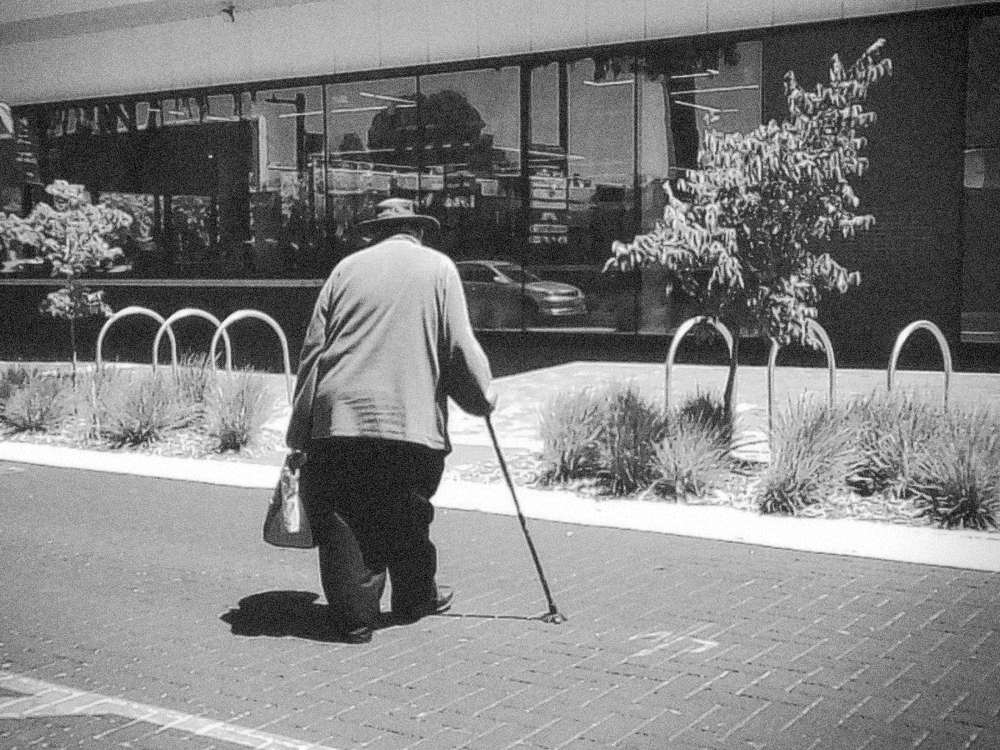
Crossing and counter-balance
Standing before the prize-winning photographic prints adorning the gallery space in the library, I think of the steep expense of the listed camera gear used by the photographers versus the social conditions and poverty outside.
A small photo of a nine year old girl, brandishing a Nikon Z9 and a giant lens, thicker than her arm, stares back at me from an artist card placed under the runner-up picture she entered into the competition – a photo of a dead shark on a tropical beach. Her hands curl around a camera body that cost thousands and a lens that cost even more. And here I am with my $50 Kodak Charmera, looking out of the library window at the old cemetery that was here before the shopping centre, pondering the absurdity of it all.
I purchased the Olympus C-725 Ultra-Zoom sometime in 2004, excited by the prospect of the included manual modes and extra features as a step-up from my Kodak. At the time, I was eager to improve my minimal knowledge and explore the mode dial and learn the basics of photography. As it turns out, this silver all-plastic Olympus proved to be my bugbear. It would not be until 2013 that I picked up another camera more complex than this one.
Through the use of various cheap film cameras in the 1990s, I came to realise I had more than a passing interest in visual artforms. As digital photography started to take-off, I decided to nurture this growing interest and paid a lot of money for the Kodak. It was fun, but I decided I needed a more capable camera so I could brush up on the technicalities.
Homes and masts at the marina – Olympus Camedia C-725 Ultra-Zoom
I remember going out with my father, in mid-2004 perhaps, with the express intention of us both buying a new digital camera. He was always keen on new technology. As we browsed the shelves, we picked up every model from Fujifilm to Olympus to Kodak to Sony to Minolta. The model number particulars of the 4 megapixel Fujifilm camera that he purchased escape me now, and I’ve been unable to locate it in his boxes of things. It was the Olympus that appealed to me though.
The Olympus name resonated with me. It spoke of quality and longevity – something that seems both trivial and naive now in the context of the sale of their imaging arm in recent years and the rebrand under OM Digital Solutions. But 2004 was a different time in photography. It was the weird and confusing intersection of more than a century of film culture and the new digital kid on the block.
A silver finish, a boxy plastic design that would make modern mirrorless camera users weep, a mere 3 megapixels, PASM modes, and a huge 8x zoom caused me some excitement. Here, I thought, was a camera that could really teach me about photography! As it turns out, my father had a lot more easy fun with his pale gold plastic Fujifilm Finepix camera.
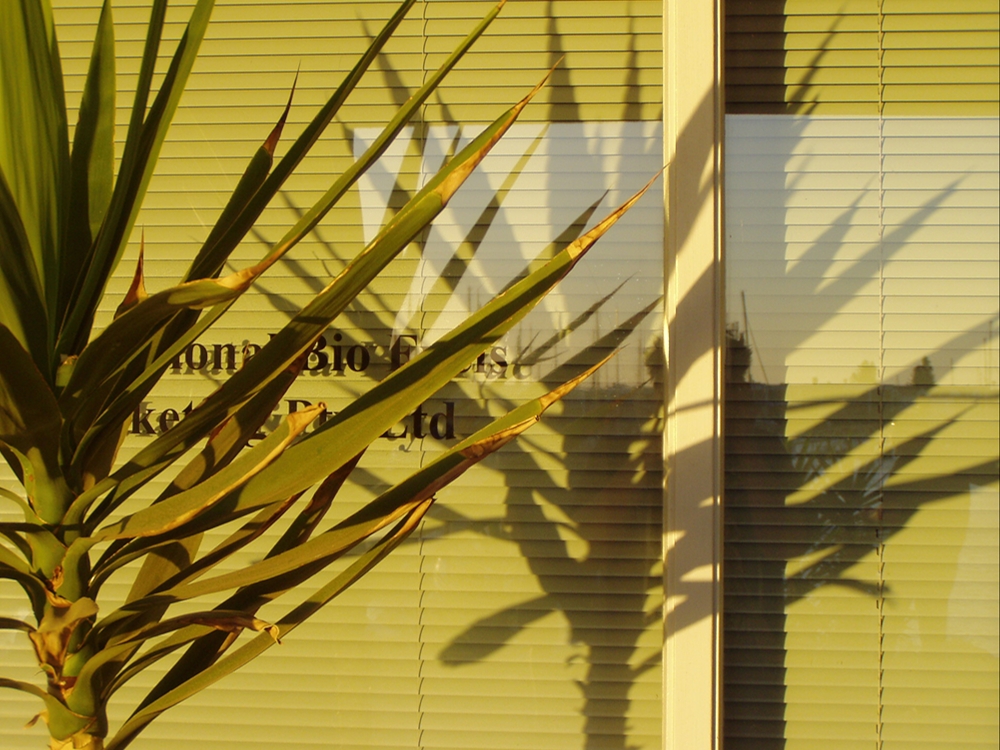
Sunset colours reflected in office windows – Olympus C-725 UZ
The heart of the problem is that I didn’t allow myself to have fun with this camera. Rather than focus on playful image making and the development of my eye and imagination, I placed enormous pressure on myself and turned the mode dial to Manual and left it there. That’s where I thought I had to be to learn properly. Not only did some early web forums demand this practice of newcomers, but I was also wont to be overly harsh with myself at the time. It may be that I used the mode dial to sabotage my learning.
After struggling for a week or two, all the fun drained away and my initial enthusiasm turned sour. I put the Olympus in a drawer and told myself sternly I’d never be able to learn proper photography. I limited myself to easy one-button point and shoot cameras until I purchased a Nikon DSLR in 2013 – almost a decade after buying the Olympus.
The Olympus was synonymous with my failure until I dusted it off last night and made some photos. I finally made my peace with myself and the camera. Maybe the experience also taught me I wasn’t ready for that type of learning at the time and that using easy cameras for a while was the best thing I could do because it was fun.
So, I’ve come back to the boxy silver Olympus and, having once discarded it in the throes of self-disgust and wasteful gadget buying that speedy technological transitions in consumer societies encourage, I’m finding it a joy. It may be a cumbersome and slow thing, with a design that speaks to the early 2000s, but the photos are quite pleasing I think.
Blue boat at sunset
Limited to a maximum shutter speed of 1/1000th of a second and ISO that tops out at 400, it demands the right conditions for the best results. My fingers fudged over the various buttons without the benefit of muscle memory last night, but I think the photos have a nice quality about them. I set the Sharpness and Contrast to Low, so as to provide maximum editing flexbility. I don’t mind the softness of the images though. The lens gets pretty mushy around the edges of the frame, especially at maximum zoom, and there’s plenty of chromatic aberration in backlit scenes, but after using so many cameras in the twenty years since I hid the Olympus away in self-despair, I’ve broadened my aesthetic sensibilities enormously.
Here’s a photo that’s overexposed. I like the dreamy look of it and that the optics picked up the nice veiling orange flare from the setting sun:
Dreams of the marina by the sea – Olympus C-725 UZ
It’s the last day of 2025 and there are plans afoot for the evening. I’ll be taking a bag of cameras, including the Kodak Charmera. There has been a certain freedom in using such plastic junk– dropping all pretense of aspiring to image perfection and controlling the light. It promotes presence in the moment:
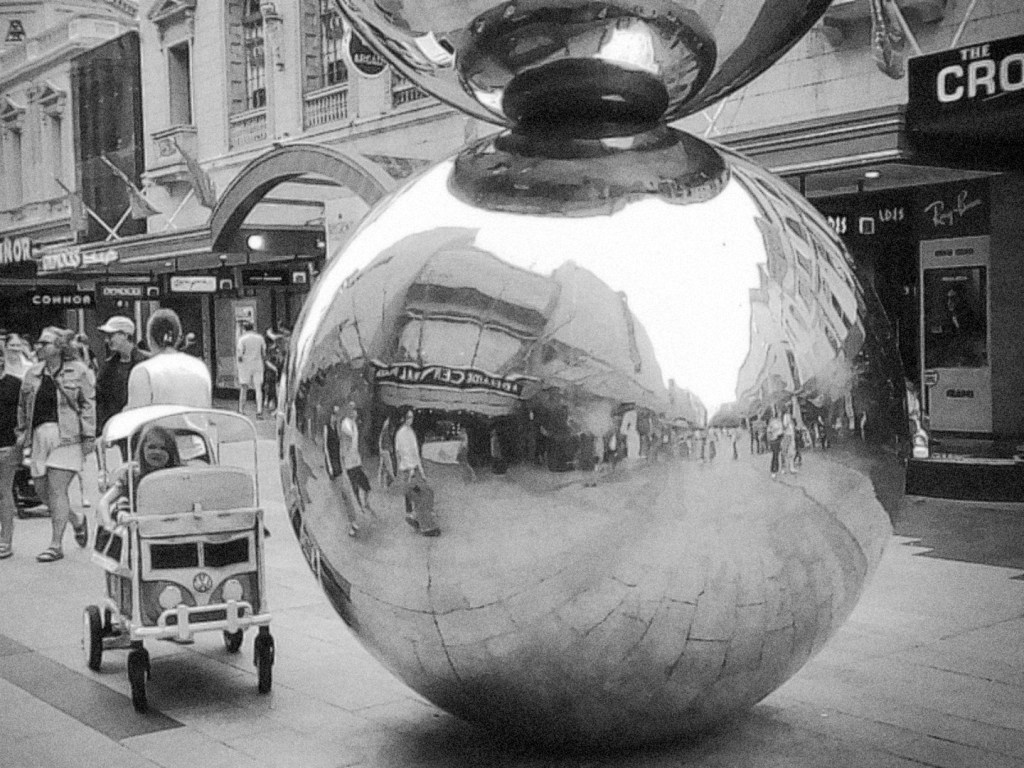
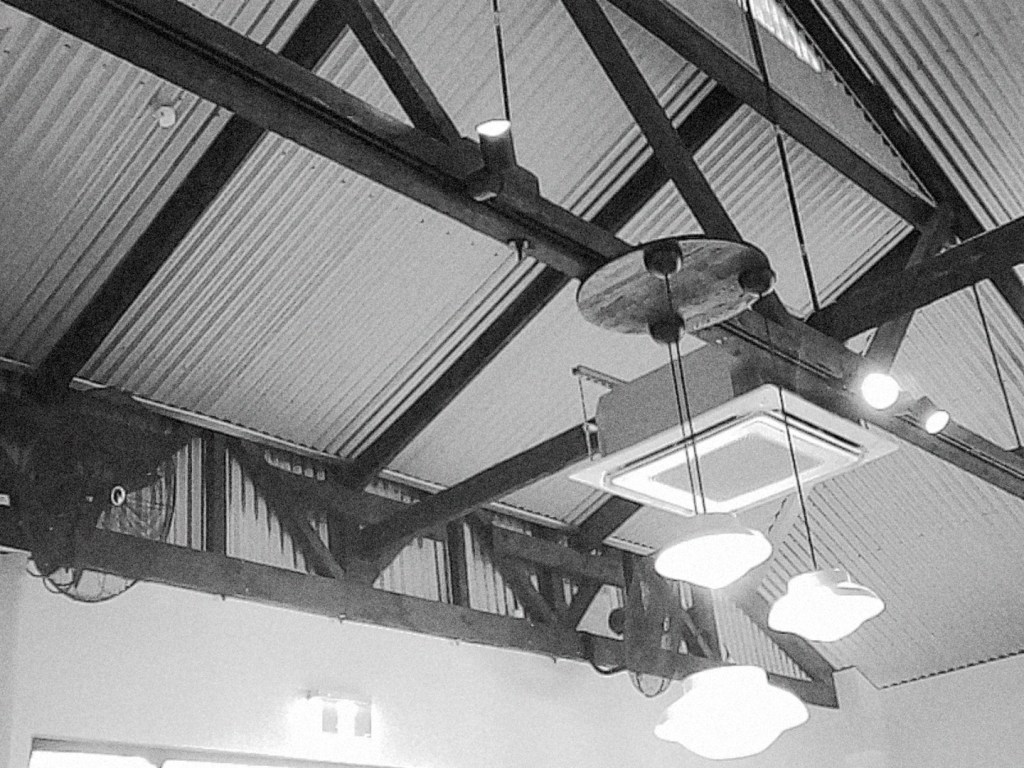
Food court ceiling geometry – Kodak CharmeraReflections and observations in the shopping mallShadow spears and a surveillance camera
An installation of spears, made by the First Nations people of this country, provided an interesting moment of juxtaposition in the Art Gallery: the shadows of spears on the ceiling, criss-cross where a security camera is mounted. A nearby art piece makes the point that all such colonial governments stamp their mark strongly on things – land, water, stuff – as if to say their word is the only word that counts and they get to have the final say in all matters.
I can’t get enough of this toy camera right now. There’s creative freedom in making photos of things I might not notice when using a more serious camera. Maybe I’ve developed a touch of snobbishness when using a Nikon or a Sony or an Olympus, as though only select scenes are worthy of the effort to pull pricier cameras from my shoulder bag.
Toy cameras, very far from the realms of technical perfection, allow a broader and more playful view of the world. They turn ordinary scenes into immersive moments: “That reflection in the window really is interesting and worthy of my time and attention!”. In this way, the eye is developed – the imagination fired – and the less serious camera becomes a tool that leads to the present moment playfully and without internal pressure and the solemn rituals surrounding serious gear.
Mounds of cheerful cheap fluff – Kodak Charmera
Once again, I’m experimenting with my custom Exposure X7 colour preset to add some film grain, enhance the washed out colours, and blur textures and digital sharpness.
Brick wall with blue graffiti
Admittedly, geometric arrangements like this always catch my eye, toy camera in hand or not. Dirty laneways in the city, home to rubbish bins, brown puddles, and the ugly backdoors of mall-way businesses that prefer to present a prettier face to the public, are ripe for wandeing on cloudy days with a camera ready.
Doc Martens from the back
I think sometimes we’ve forgotten just how amazing it is that we can record a unique slice of time. Maybe our image-obsessed and image-saturated culture has turned precious moments into tired throwaway pixels to be shared on social media – cheaply tossed atop the digital mountain for endless scrolling and potentially harmfulsocial comparison.
I’ve been working on Exposure X7 film-look settings for my Kodak Charmera photos. Who would have thought not too many years ago that adding scanned film grain to a photo and deliberately reducing clarity would become so popular in certain photographic quarters?
We’re nothing if not nostalgic – perhaps for a golden past that may exist only in desperately imagined and questionable memories. The so-called analog revival is, perhaps, a marker of our yearning for deeper connection in an increasingly fragmented world where we work from home, communicate online, develop relationships with AI partners, and are befuddled by the profit-driven machinations of big technology companies.
In the context of the Kodak Charmera’s low resolution, oversmoothed, and oversharpened photos, adding random noise in the form of film grain is about not only disguising aliased edges and digital harshness, but also providing more interesting visual textures for the eye and brain. When painting, varying brush stroke, texture, shape, line, and colour helps to guide the eye around the canvas. I’m applying the same principle here.
My settings: film grain effect at 38 percent with low roughness setting, slight increase in push processing to add a bit of contrast, slight increase in warmth to simulate a daylight balanced film, -40 reduction in clarity to soften texture and lower mid-tone contrast, slight increase to vibrance to enhance the weaker colours.
Burner – Kodak Charmera with edits in Exposure X7Oats – Kodak Charmera with edits in Exposure X7Dick and balls and surrounding scribble
It’s almost crazy that I would take a drive to a nearby country town around sunset with both my Nikon Z5 and the tiny toy Kodak Charmera and only use the toy camera. But that’s exactly what I did. It’s as though it was altogether too much effort for me to open up the bag, switch on the Nikon, and make a few photos. Pulling the Charmera from my pocket as hundreds of fast-moving black ants toiled about my sneakers seemed easier and lessened the risk of them getting a foothold in my socks. The bites are known to be painful!
This time, I used the standard colour filter of the charming little Kodak. Dynamic range is woeful and the colours are washed out, including ugly colour shifts, but that’s all part of the allure of the lo-fi look. I pushed the saturation, added a touch of warmth with the white balance slider, reduced clarity to blur the photo a little, and added regular fine film grain in Exposure X7:
Blue graffiti on the old bridge (edited) – Kodak Charmera
Here’s the original version:
Blue graffiti on the old bridge (unedited)
Yet another nice piece of graffiti below. You can see the purple colour shift at the top of the frame. This is the edited version – same edits in Exposure X7 as the previous photo:
Light blue graffiti on the old bridge (edited) – Kodak Charmera
Here’s the original unedited version:
Light blue graffiti on the old bridge (unedited)
In both cases, I think the edits reduce some of the harshness and add subtle visual interest via the film grain.
In my continued quest to find beauty in the photos made by toy cameras, I’ve come to broaden my views on what makes for an interesting photo. Growing up with cheap 35mm film cameras, disposable plastic boxes from Kodak and Fujifilm, 110 cameras, and APS cameras, I was never about technical perfection because I couldn’t afford the gear anyway.
Chasing megapixels is a fool’s adventure powered by marketing departments. One of my favourite film cameras back then was a Fujifilm APS camera – low on image quality, but high on ease of use and fun. Before that, my father’s old motor-drive 35mm Chinon, originally purchased in Singapore, beloved by him, and eventually passed to me.
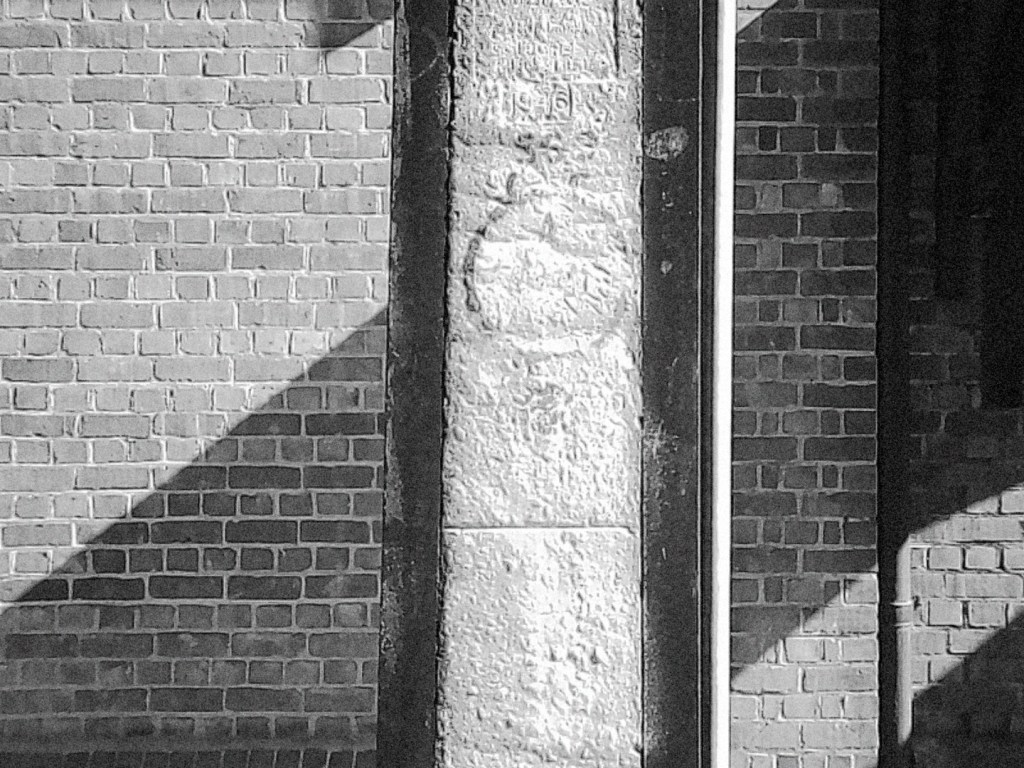
Bricks and concrete in the morning sun – Kodak Chamera with added film grain
It must have been truly magical to see images appear on film plates more than a century ago. Now, image recording is a daily routine ~ surveillance cameras all around, smartphones, digital keychain cameras that fit in pockets, AI that can generate talking flying pig animations, social media platforms saturated by snaps of the junk of day-to-day life, the latest and greatest from Sony. Image-making is so commonplace, we hardly notice the magic of being able to freeze time inside a frame.
Shadow ladder – with film grain added in Exposure X7
Of course, a good photo is about more than technical perfection and the money spent on gear ~ light and shadow, shape and angle, an interesting subject, framing and composition, emotion and vibe, story-telling ~ all of these elements can be communicated through even the cheapest of cameras.
Once synonymous with photography and the venerable Kodak Moment, the Kodak company has undergone multiple transformations over the last century. Having once dominated the film era, Kodak found itself in a war with Fujifilm in the 1990s whilst it awkwardly straddled the analog and digital imaging worlds.
It’s too simplistic to say that Kodak struggled because it didn’t adapt quickly enough to digital photography. Having researched and invented early digital imaging in the 1970s, the common view is that failure to invest in digital technologies caused their downfall. But Kodak did, in fact, produce many consumer digital cameras in the early 2000s and did manage to gain reasonable market share for a while. Even industry titans like Nikon and Canon struggled to devise a winning strategy in the digital imaging market as smartphones rose to prominence, so Kodak wasn’t alone.
Kodak may not have been agile enough to pivot completely from a huge historical investment in chemicals and film production, but in recent years, after Chapter 11 Bankruptcy, they have managed to make some headway in a difficult market. It helps that the Kodak brand is still so strong and sought after by their partners and licensees.
And so, we come to the intriguing Kodak Charmera ~ a teeny tiny digital toy camera that can live with the car keys in your pocket or get lost down the back of your couch. I received one as a Christmas gift this year. It’s made by RETO Production Ltd, who have a license from Kodak to use their well-known name on products.
Even though image quality from the 1.6 megapixel sensor isn’t anything special, it also records choppy video with sound, has a LED flash, a hole-in-body optical viewfinder, and features the cutest and smallest colour LCD on the back I’ve ever seen, making it a real charmer of a camera.
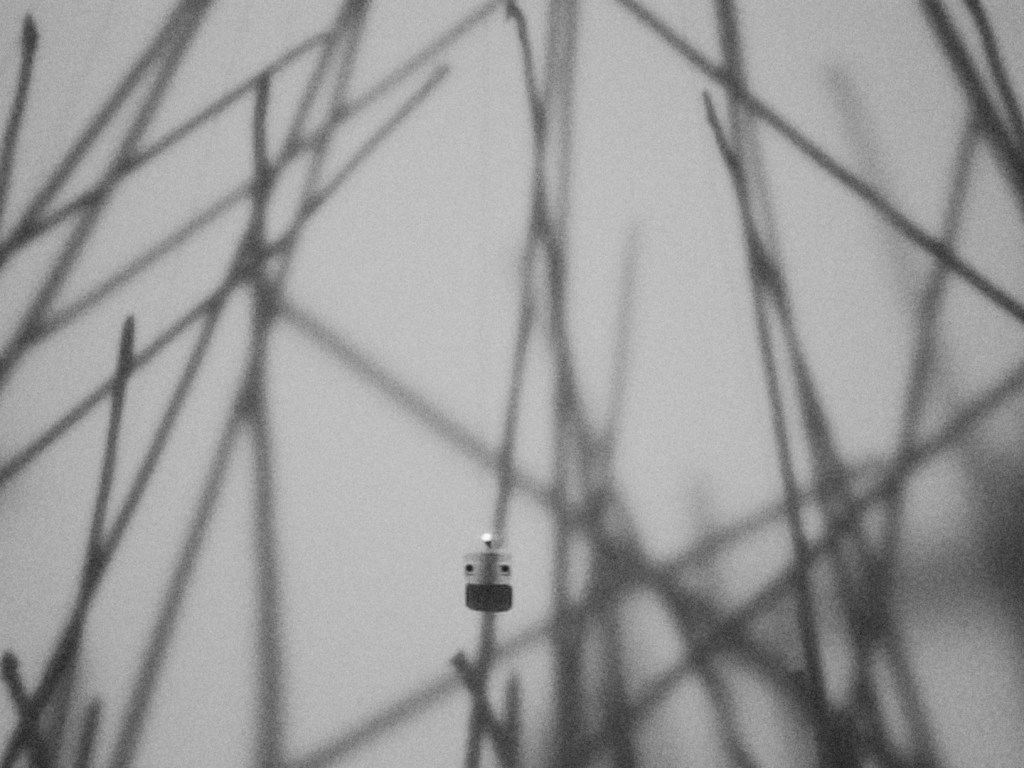
Structures in lo-fi ~ Kodak Charmera set to Black and White, with added Tri-X grain
The Charmera features a number of filters and frames. I like using it in black and white mode, if only to disguise some of the worst noise. Adding some film grain in editing leans into the lo-fi aesthetc and also covers up some of the oversharpening and oversmoothing that toy cameras aggressively apply. Of course, pixel peeping is not what this camera is about, and even adding some simulated film grain in post-processing feels like a bit too much effort! The Kodak Charmera is, if nothing else, a neat fun toy. It’s also stealthy enough to take out for some gritty street photos.
Corrugations and blown highlights in the coffee shop
The Kodak Charmera reminds me of seeing pictures for the first time from cheap old phones and early digital cameras. Maybe it’s not quite the same as seeing an image appear after washing chemicals over a long strip of film, but it does take me back to the early days of digital imaging when we realised we didn’t need to use flatbed scanners anymore to save images of film prints to hard drives so we could email them.
I need a distraction from thoughts more serious and sobering, so here I am on Christmas Eve scanning the latest batch of film prints from my Nikon F80. One of the most endearing (or potentially annoying, depending on when you were born) things about using film is the journey of getting through a roll so it can be developed. There’s a prevailing attitude that each frame of film is to be savoured – each shutter press is an adventure in the slow, deliberate, and mindful approach to making photos. But sometimes, you just want to blow through the last few exposures to get the canister into the local lab.
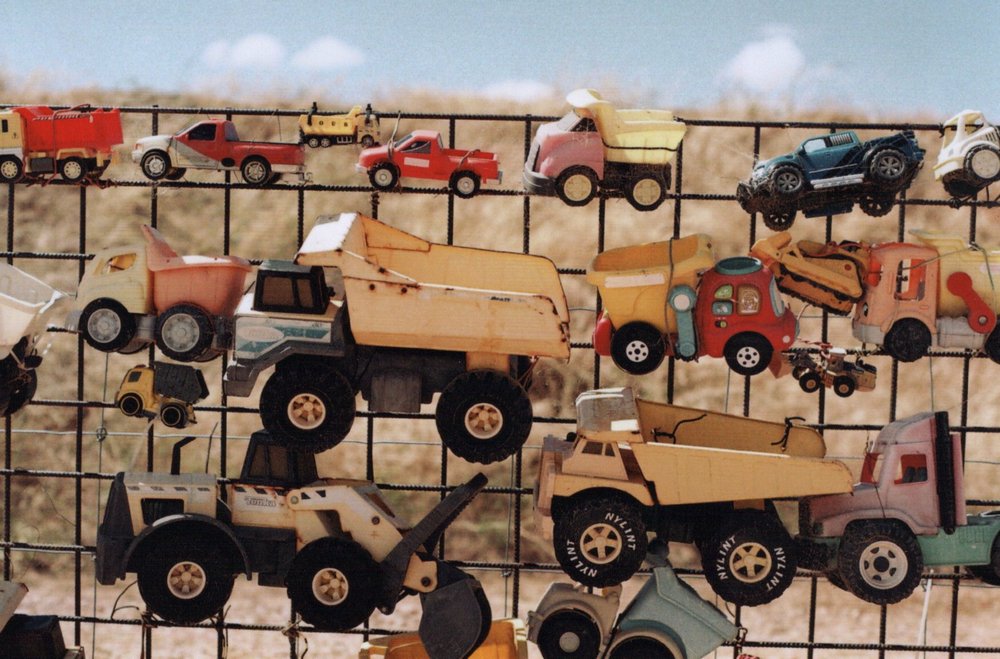
Tiny toy trucks in the sun – Nikon F80 and Fuji Superia 35mm colour film, overexposed by 1 stop
I think I fared a little better with this roll than my last. I was quite frugal and deliberate this time around with the old Nikon, resulting in several more keepers. The expired Fuji Superia film features a lovely fine grain and exposure latitude. As much as Kodak Ultramax 400 is the everyperson of the modern consumer film world, Fuji have made some superb emulsions over the years.
Graffiti on The Tanks, near Whyalla South Australia
I’ll admit that using the Nikon F80 in recent weeks seems to have revived my interest in rehabilitating my film cameras. Sadly, I have found so far that some of them are simply not working any longer. Some are victims of my forgetfulness ~ a lesson in never leaving cheap batteries inside cameras to leak rivers of toxic sludge and potassium carbonate. Others have succumbed to the dusty decades and have slow shutters, wonky gears, faded rangefinder markings, and internals that have simply kicked the bucket. Happily, I seem to have successfully revived my Yashica Electro 35. I’ll have to put a roll through it to really test it out.
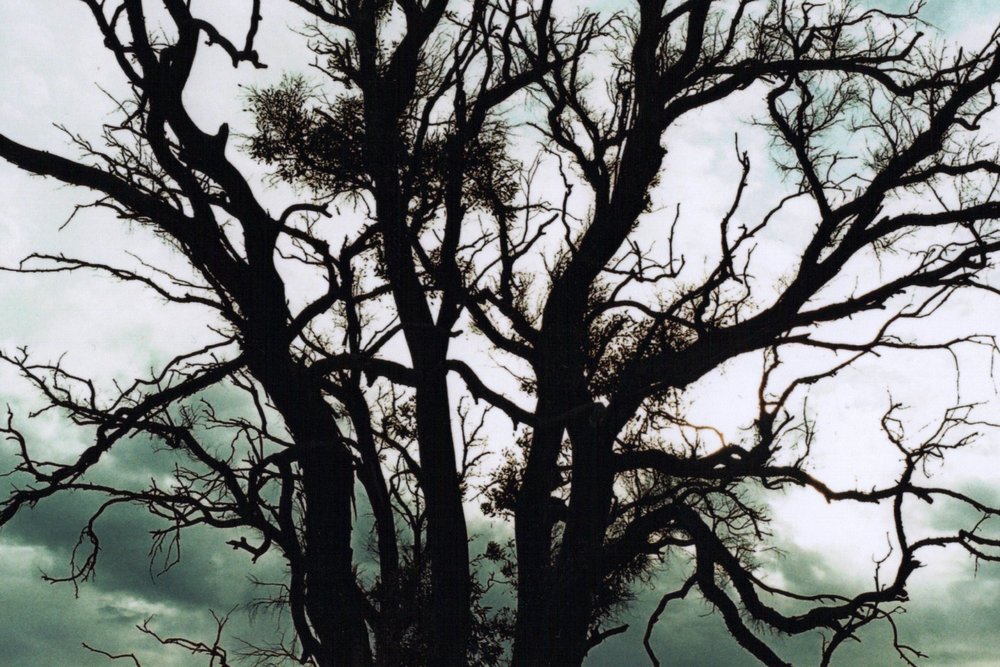
Moody tree near the old train-line, late in the afternoon
Perhaps not quite a decade has passed since I last had a roll of film developed. Such is the easy lure of digital imaging, I suppose. Still, it didn’t take me long to get used to not looking at the back of the camera for an image review. It’s as though I was quietly slipping back to the old film camera habits and movements of my childhood. The slowness of photographic practice demanded by the Nikon F80 on this day – taking in the scene and the light – matched the eerie end of the earth silence of the town of Iron Knob.
I said to a friend that the Nikon F80, made in the year 2000 at the end of the mainstream film era as digital was fast taking hold, feels every bit Nikonian. What I mean is that for someone used to handling and holding modern Nikon cameras, the F80 feels ever so familiar – the button placements make sense, the hand grip is deep and comfortable, and the working philosophy is the result of decades of Nikon engineering and knowledge. The sleek, black Nikon Z5 digital camera was nestled next to it in my bag, looking like it had come from a different century, but the two share the same DNA.
No fuel left in town – Nikon F80, Kodak Ultramax 400, and Nikkor 50mm 1.8D lens
The Kodak Ultramax film I’d loaded had expired some years ago, so I used the ISO function of the camera to fool the exposure system and set it to treat the loaded film as 200 speed ~ slower than the box rating of 400. Doing this slows the shutter speed down and allows more light to hit expired film that’s less sensitive due to age related degradation.
Abandoned long ago – Nikon F80
Iron Knob was established in 1915 and was the birthplace of the Australian steel industry ~ something I didn’t know and a fact that certainly surprised me. I’d seen the town on maps over many years and had developed a curiosity, but hadn’t had the chance to visit until recently. As it happens, I was also testing the F80 for use at our daughter’s upcoming 21st, and it seemed a good idea to load some batteries and run film through it.
Half a ghost town
The Iron Monarch mine looms over the town, forming a red and dusty backdrop. When the Hematite poured from the earth, the town thrived and was no doubt filled with macho banter, drinking, and the dirt-filled sweat of hot days. You can still see those halcyon days in the closed roads where Keep Out signs warn travellers – wider than would seem appropriate for the minimal traffic in town today – barely recognisable bitumen strips that are crumbling and lead nowhere, flanked by corrugated iron homes that may or may not be inhabited. The only food takeaway shop in town is closed – old faded stickers in the window advertise Chiko Rolls ~ that most Australian of junk food icons. The sign on the door says that the shop is temporarily closed, but it seems to have been there a long time.

































 The Rusty Ruin Journal