In search of rust and answers ~ what of the future?

My interest in rust is, as you might imagine, slightly more than that of the average person down the road. I don’t have data to back this up, but I’m not convinced that the idea of making photos of rusty things is of primary importance to many people as an activity. What I’m quite certain of is that people are definitely interested in the answers to big questions: Why am I here? Are we alone in the universe? Is death the end? What does the future hold?

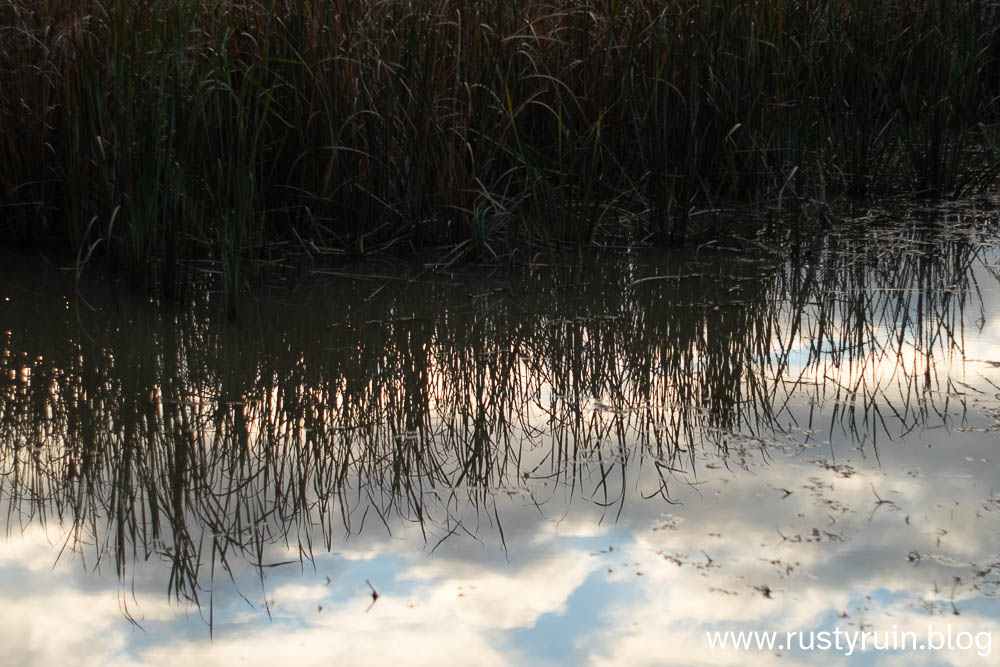
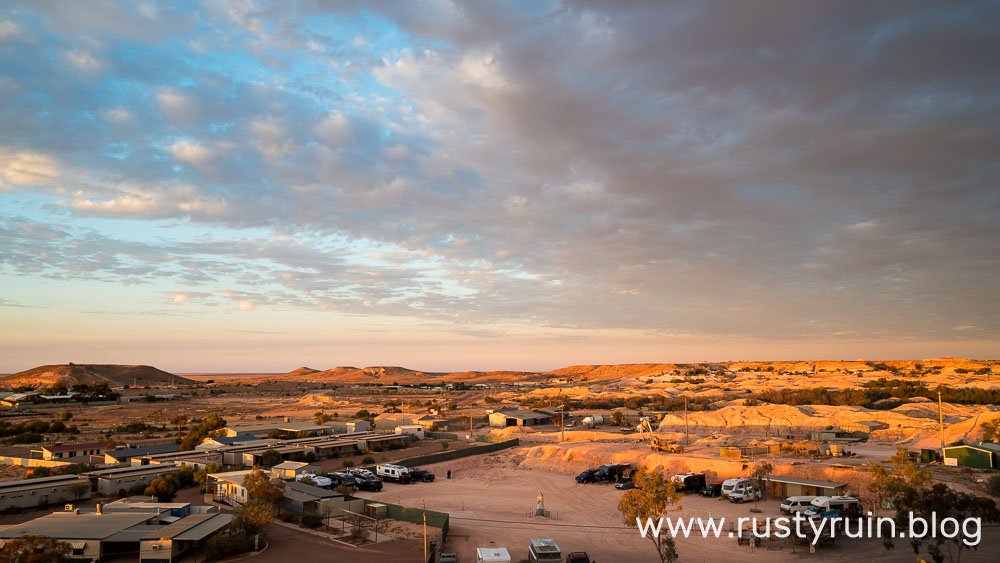
In the middle of nowhere that used to be somewhere – Nikon Z5

Rust and ruin are symbols of decay and time passing. Some people are terrified by this idea, perhaps hoping that science will one day discover the answer to immortality. Others believe they have the answers to the big questions already. For them, perhaps, ruin holds fewer terrors. I wrote about this in a previous post if you want to have a read. I even included one of my favourite poems.

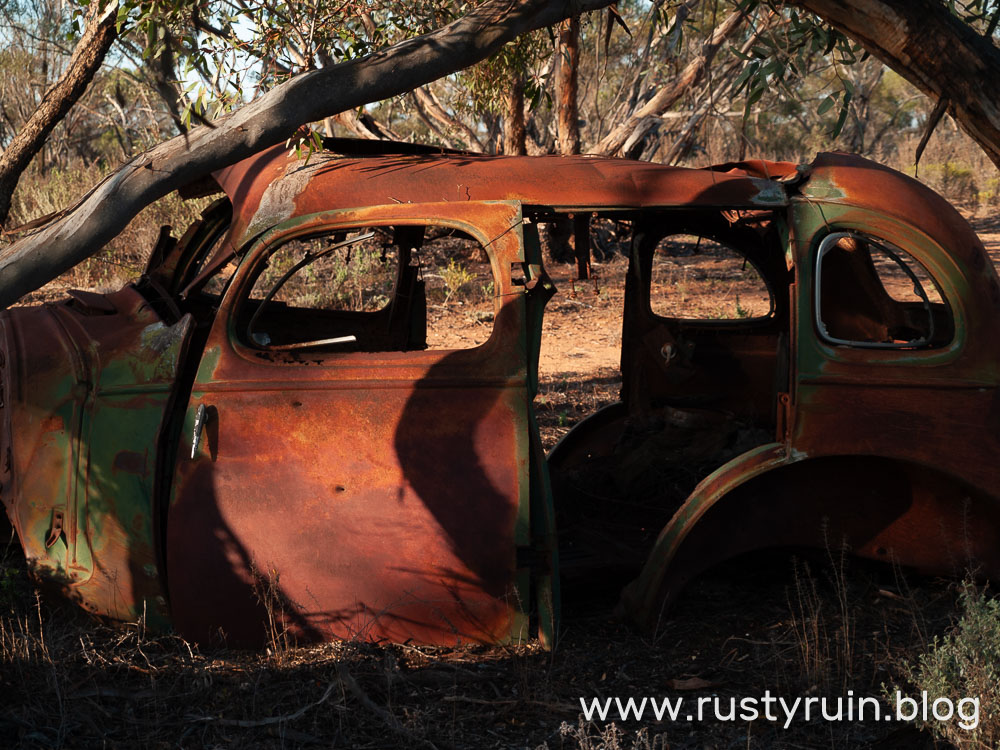
In shadow and broken steel – Nikon Z5 with Nikkor 40mm F2

Sidestepping terror to make life easy

I started this post like most others. Truthfully, I didn’t really have much direction, other than the desire to explore rust and ruins as universal symbols that remind us of our mortality in the vastness of the river of time’s relentless passing. But lately, I find myself thinking more and more about the impact that I and others have on the world. For example, my use of shaving cartridges, with all the plastic they include, isn’t just annoyingly expensive, but also destructive. All of that plastic ends up in landfill, contributing nothing to the environment but toxicity.

It’s perfectly understandable that people prefer to have easy lives where everything is mapped out and makes sense. An easy to understand narrative provides us with answers to many, if not all, of the big questions we have. It’s easier to come to terms with the idea of toxic human waste, selfish governments, and genocides when it’s part of a cosmic plan ~ the evil will get their punishment and the good will find peace. Unfortunately, human history is nothing if not a struggle between the powerful and the powerless.

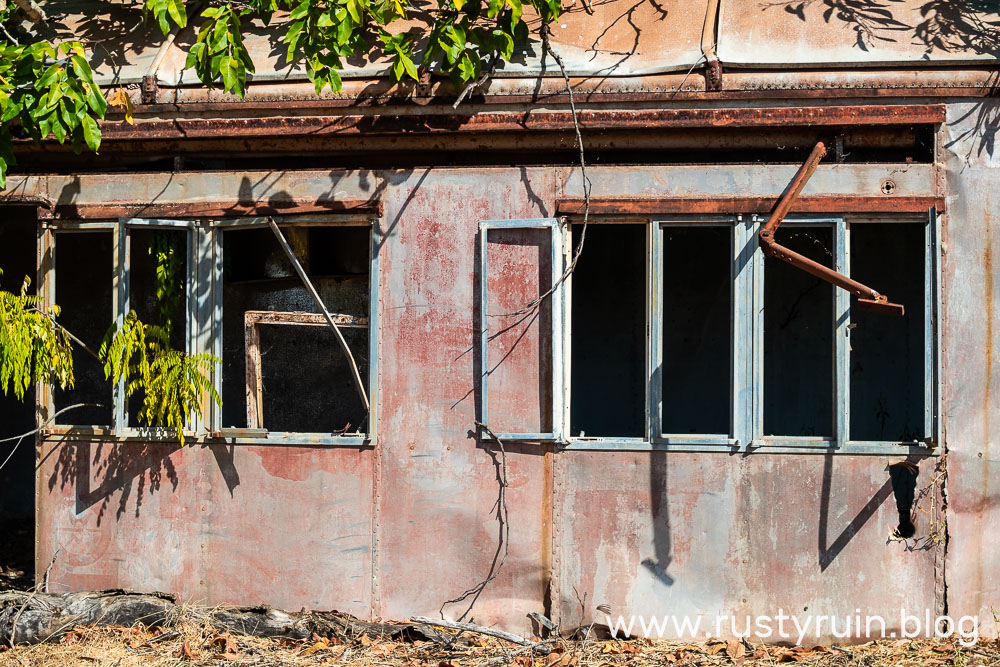
Rusting in the shadow of trees – Olympus E1

I think this makes it too easy to sidestep the feeling of terror gnawing at the mind in times of quiet. What does the future hold when we know all too well that the capacity for destruction lies in the same bed as the capacity for art within every human being? I strongly suspect that we may turn quickly and desperately to solutions as a species once it’s too late. The powerful will have squeezed every last drop of value from us and we’ll have been too busy buying fast-fashion clothing from giant toxic factories where people are grossly underpaid and overworked for the benefit of the few. Where do those unsustainable fast-fashion items end up, do you think? What good do they serve, other than to appease vanity?

Living with less

One kind of response I’ve often heard from people when speaking of this topic goes something like this: “But what about the economy and jobs? If we follow environmental policies, we’ll lose jobs. And how do we keep the lights on? Maybe we should think about nuclear power?

My blunt rebuttal these days is usually along these lines: “The environment isn’t interested in your comfort. We may all need to accept the idea that we must live very differently with a lot less.”

The idea that we must not stall our economy and standard of living as we explore ways of doing less destruction to the planet is not only absurd, it is also dangerous. All this does is serve the lives of people who have vested interests in making money and living comfortably. They don’t want their lives altered and would rather continue driving big vehicles that spray minute particles of rubber into crucial waterways. Yet, nature is change. Nothing remains the same. Living a life with less money, less oil, less waste, less electricity, less gas, less cars, and less fast-fashion is not only wise, it’s likely the only path to take.

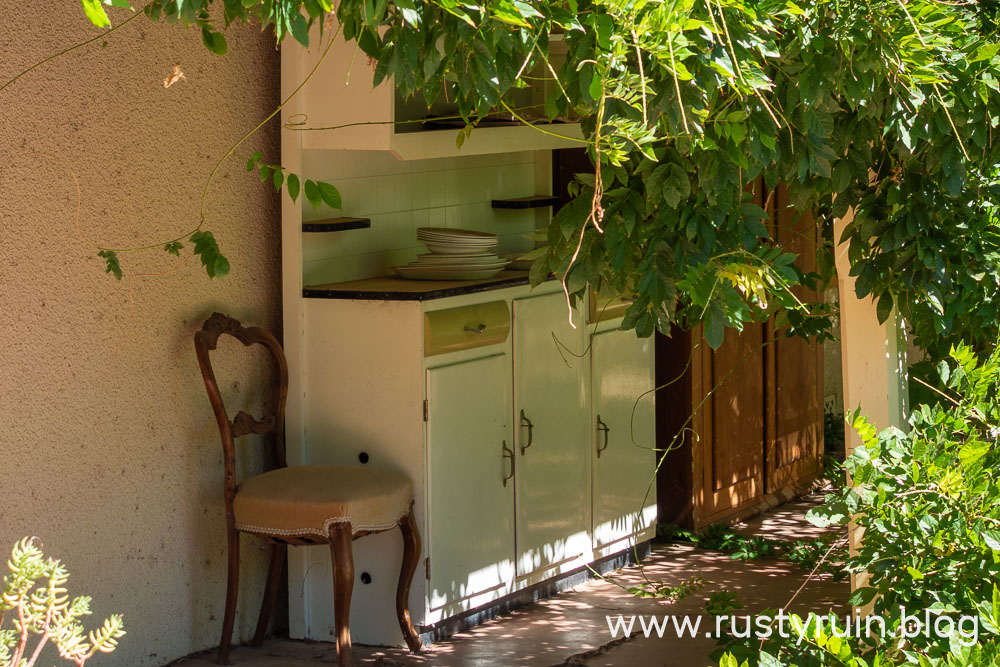
The empty house near the empty hotel – Olympus OMD EM5 Mark 2

The small beauty of everyday things

Do you ever find beauty in everyday things? Seemingly mundane stuff is part of the fabric of our daily lives, existing quietly in the background. I’ve been thinking about this a lot lately, especially on days when I feel as though I lack photographic inspiration. I can’t help but think that we’re sometimes looking for the big things as photographers, hoping they’ll catch the attention of online communities often engulfed by their own search for attention and validation. I’ve touched on that before too, of course.

Gaze – Sony RX100

Seeing everyday things in a fresh way that reveals their beauty isn’t a new idea. Contemplative photography and Miksang are approaches that emphasise an unpretentious photographic practice that’s mindful and completely present in the moment. The elevation of technical perfection is secondary to the experience of being in the world – of being aware of the moment completely and utterly. In this sense, it draws parellels to mindfulness and meditation, where inhabiting the moment non-judgementally is key.

Draped colours in strong sunlight – Olympus OMD EM5 Mark 2

There’s an interesting tension in this approach – maintaining a mind that’s open to details without becoming overly distracted by them.

When I inhabit the moment in photography, I pause momentarily to make a photo when a scene tugs at my attention gently enough that it doesn’t completely dislodge my middle-focus. Middle-focus occurs when attention hovers between soft and intense – when it’s non-judgemental and simply observational – when we focus on a thing without placing too much value on it or too much thought into it, and don’t allow it to draw us too close. In this state, we recognise something as being of value photographically, but our attention only skims across it – like a small boat floating lightly on clear water.

If this middle-focus state is dislodged and derailed, if the small boat sinks, the mindful journey will stop like a train pulling into the station to accept noisy passengers. This is the moment where mindfulness is thwarted and attention inhabits the distraction too fully, too intensely, and with an overburden of thought and judgement of value.

Morning delivery – Sony RX100

What defines this gentle pull at the edges of attention? What qualities in a scene are important? This is likely different for every photographer. For me, it’s important that such photos inhabit a space somewhere between details normally unnoticed and scenes that communicate meaning softly and quietly.

In the space between inspiration

Lately, I’ve been exploring the idea of quiet photography: noticing the quiet corners and seeking the details. When the big moments of inspiration don’t strike, it’s important not to feel the pressure of having to make photos. But if there is the tiniest inkling of wanting to pick up the camera at such times, why not commit to the small photos of everyday moments? Isn’t it in the everyday that we find a fresh view of the world?

Fire Panel – Sony RX100

Oh, where would I be without my little Sony RX100? Small, black, and set to silent mode, I re-discovered the joys of using it last year after keeping it in a drawer for too long. When the big Nikon seems too hefty for the moment, I’m always happy to find some fresh detail with the little Sony camera. Somehow, it feels less serious and more fun than my Nikons when inspiration lacks. Of course, it can make great pictures, but then again, so can a 100 year old film box!

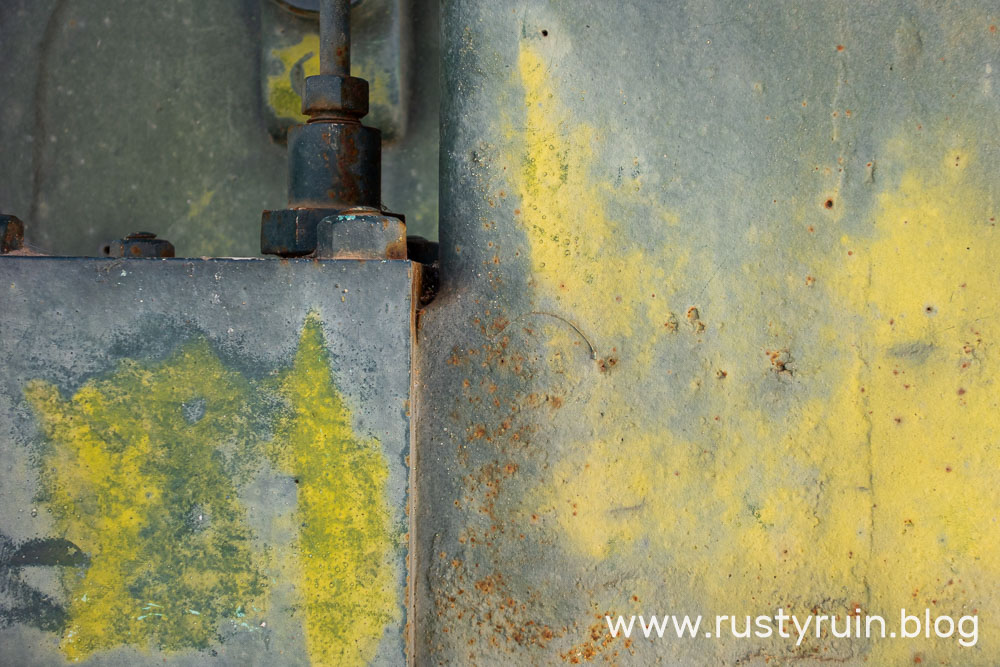
Splashes of yellow – Sony RX100

Quiet corners and photos of distinct insignificance

In my previous post, I touched on the idea that not every photo needs to be epic and impactful. Not every moment needs to be recorded. We must always remember that seeing and feeling are at the heart of photographic practice. In cultivating the eye and heeding the pull of emotion, we enable synchronicity with the environment, and in this momentary state the camera records our imaginative trajectory through the world.

Yet, sometimes the photos are small and quiet. They’re not loud or imposing at all. These are the quiet corners and the scenes forgotten in a rush. They’re just as important and they’re the details we often miss.

Empty bottles in the sun at a second-hand shop in the country – Sony RX100

In a world where we often clamour for attention, hoping for some notoriety or virality, for some interaction on social media, for the epic amplification of our voice, being loud seems to have become the default mode for many. The intense desire to be heard above the digital cacophany may signify the ongoing trend to further isolation, loneliness, and insularity but the small and quiet photo, bereft of loud intentions and sweeping announcements, is a momentary escape. This is where we connect the eye, the heart, and the imagination to the world.

Out with the old – Sony RX100

What do you do when your photos don’t inspire?

The sun was out, there was a nice breeze, and we had an entire afternoon free. A drive to Blanchetown should have provided fruitful inspiration for photographs. But it didn’t, mostly. The weather was kind, the company good, the battery charged, and the Nikon Z5 ready for anything. So, what happened? It was me…

You know those days as a photographer when things just don’t come together? There’s a disconnect between what you see and how you feel. You compose and press the shutter but the result fails to inspire you. At times like this, I do a few things:

  • Remove the pressure from myself by leaning into other moments. Not everything needs to be camera-worthy and not every moment needs to be recorded. Enjoy the day and put down the camera;
  • Take out a different camera for fun and just focus on other scenes – details, textures, shadows. There’s good stuff in the small stuff.
Peeling and rusting – Sony RX100

Finding the details again

Sometimes, it’s easy to fall into the trap of wanting every photo to make a big impact. But those magical sunsets full of great colours don’t come around too often. Those moments when the photographic mind and heart are synchronised with the wider world aren’t always available to us. At these times, it’s important to take a step back and access other areas of the photographic process: enjoying the moment, seeing the details.

Peeling and rusting 2 – RX100

Accepting fate and below average photos

Sometimes, even when we dig into another bag of tricks, the photos don’t turn out great. Over time, we develop a sense of taste and curate our photographic output, so what might please someone else won’t please us. Part of the creative journey is developing taste and deciding which photos meet our taste standards to become the ones that really make an impact.

The remaining, less than stellar, photos are still important because they’re part of the journey to get to the photos that meet a well-developed artistic taste. Some days are about honing the eye and sensibility. Not every photo is going to be a winner and that’s OK. In fact, it needs to happen, otherwise things get boring and you don’t sharpen your eye, your imagination, your taste, and your art.

Waterbirds on twisted branches – RX100

Out on the street again

In my previous post, I went out with the Nikon D40 and made some street photos. Even though it’s an enjoyable experience, street photography can also be tiring if not in the right frame of mind. I find that placing too much pressure on myself to make good photos can take a lot away from the experience. And out in the street where you need to be alert to interesting scenes that may last mere moments, missing one can lead to frustration.

Gathering before busking – Nikon D40

As much as that experience can lead to moments of regret at having not been quick enough on the shutter button, going down that path simply leads to more frustration and lack of joy. There are so many moments on the street that it’s always possible to find another. In simple terms: don’t get stuck in a moment missed because you’ll have just missed another moment.

Fresh milk and soft toys – Nikon D40 with Tamron 17-50 2.8

What do we do as photographers?

A photographer collaborates with the world to make a photo of a moment that never repeats. As much as there’s pressure to record all of the moments that pass so quickly, the photographer also brings the attention of others to a framed moment in time. In doing so, the photographer creates an awareness in others of the larger world we inhabit. And how often do we inhabit it without much care for the present moment?

In this context, street photography is like being in a whirlpool of moments. That’s both exciting and potentially exhausting if the pangs of regret haunt us too easily when the camera and the moment don’t quite line up. In those cases, better to accept the passing moment and move into a new moment with open eyes and mind. And have we really missed a moment if we haven’t recorded it?

Celebration and relief after a street performance – Nikon D40

Red paint and contemplation

In my previous post, I wrote about driving through some of the towns along the Murray River. We’ve been here many times but I’ve often found myself uninspired in the photography department, though I’m not entirely sure why. Going for a day-trip with friends is always fun, but sometimes it doesn’t lend itself to me spending time fiddling with camera settings or framing scenes! This time was different though. I found myself with the trusty Olympus E-1 again and looking for the kinds of scenes that the old digital sensor can manage more easily.

Red paint and corrugated iron – Olympus E-1

There’s no substitute for time when it comes to photography, at least for me. I’m not one who clicks a thousand photos in an hour. I prefer to be as deliberate as possible. Admittedly, using an old camera like the E-1 teaches me to slow down even more to carefully consider the scene before me. That’s a good thing, I think.

Red paint and old wood – Olympus E-1

How often is it that we don’t get to slow down and really look at the world around us? How often are we pre-occupied with thoughts of the forever-gone past or the uncertain future? How often do we steal the present moment from ourselves? Once that moment is gone, it’s gone for good.

I like to think that photography has the capacity to teach us something about the hidden details of the world that are ordinarily missed. When I first started teaching myself how to use a DSLR, I turned to a practice called Contemplative Photography, or Miksang.

On such occasions, I found myself a little more in touch with both my mind and the world, with inner and outer touching at the very boundaries, one might say. At these times, there’s no judgement of a scene, just an image pressing gently on the mind, as though it leaps out of the water like a fish to be seen momentarily. There’s no setting up or messing with technology beyond what the eye sees and the press of the button. And arguably, the camera itself is not even needed to see those hidden details in the world.

All the red envelops you in this moment – Olympus E-1

Photography blues: when things don’t go your way

I rushed out yesterday with the Olympus E-1, but it wasn’t a great photo session. The sun was out but I just didn’t see much that struck me as an interesting photo. This, of course, happens from time to time. While disappointing, it’s all part of the experience with the camera. You can’t force it.

Blue beams on blue – Olympus E-1

Despite my previous positive experiences with the E-1, this time there were no epiphanies. The sun was high and hot and controlling dynamic range with such an old camera isn’t always the easiest. There’s a point at which exposing for the highlights creates shadow noise and the in-built contrasty tone curve of this camera is a detriment at such times. Still, just look at all that blue! This camera does love plenty of blue.

So, I was left with just two photos from my session that piqued my interest. On the way home, I ran across some new house constructions and just loved the way that all the blue steel beams looked on such a sunny day.

Some days are just not going to be full of great photos. Some days, the eye just isn’t attuned. And that’s perfectly OK. I’ve learned not to worry about my mistakes and missing moments. I’ve learned that on some days the photographic mind is elsewhere and all that remains is forcing a moment. At those times, it’s best to accept the moment and look around. Not everything is for the camera.

Steel blue and deep sky – Olympus E-1

Detritus in Coober Pedy

I mentioned the town of Coober Pedy in a previous post. Going through my file folders tonight, I found some more ruins and the remains of dreams from this famous outback town. I often wonder how these places and things come to be abandoned and decaying.

No driver – Nikon D7100 with 35mm AFS Nikkor 1.8

Who once drove the bus? How did it get there? At some point, I imagine it will be nothing more than a pile of rusted metal, merging with the earth, gears and pistons embedded in thick soil. Perhaps a few blue paint flecks will provide some clue to a future explorer?

Decolonise – Olympus OMD EM5 Mark 2

Old walls become a canvas for political statements, the remains of a broken window framing the tension painted in bright pink. Thinking of photography as a voyeuristic pursuit, as Susan Sontag once wrote, such images can lend themselves to such consideration. Is there some voyeurism at work when photographing places like this? Perhaps. I certainly feel some drive to frame the political statement and focus on the socio-cultural tensions. Do I engage with it by recording it or do I step away from it by framing it as artfully as I can?

Homes not Tails – Olympus OMD EM5 Mark 2

Photography can only frame the world for others to view. Once out in the world, the audience applies their own values and beliefs. By providing the framing, the photographer must step aside for a moment to engage in the act of viewing rather than participating. But in the framing is the delightful devil – a story told by the photographer in cutting out a single view from the whole. What lies beyond the single frame and does it matter?

Making photos or taking photos?

For a while now, I’ve taken some issue with the use of the word take when it comes to describing the making of photos. After all, we don’t take photos. We make photos in collaboration with the camera and the environment. It’s pedantic, I suppose, and it doesn’t truly bother me when someone uses the term. It’s just a word I try not to use.

The other bothersome term is shooting photos. The camera isn’t a gun, is it? Maybe I’m just a bit cranky because I’m not feeling the best at the moment!

Angel & Tina – Nikon Z5

So, why do we make photos? Why do we use cameras? What is it about photography that keeps us coming back for more? I can only speak for myself of course.

Photography allows me to see the world differently. It’s not always relaxing, as I might be prioritising Aperture values and the exposure over framing a scene, but when I see something that speaks to me, it feels as though I can frame it and place a focus on it to remind myself of details in the world that we often miss. It can remind others too.

The old glass still glows – Olympus E-1

Susan Sontag once said that photography is a voyeuristic activity that removes us from the meaning of events and diminishes their importance. I can see merit in that thinking even if others think of it as inflammatory. When behind the camera, how close are we to the events around us? Arguably, we immerse ourselves in a scene more fully when we focus on it through the lens, but the goal is also to frame that scene in a specific way so it follows the rules we deem personally important – rule of thirds, art of photography, light and shadow, marketability, appeals to social media followers, and so on. A photograph may have an audience with their own set of values. In this sense, a photo is like a cut-out of a small part of the world, presented for viewing and criticism.

Ladder pathway – Sony RX100 Mark 1

Consider the photo above, for example. Is it voyeuristic? The photo of a home, possibly abandoned, but likely still owned by someone, is a deliberate cut-out of the entirety of the home that creates a separate reality. What does it say? What was my intention in making the photo? Am I merely highlighting the abandonment of buildings where people once lived and loved? Am I doing so callously and without regard for those who may still live there?

Late night contemplation in orange and blue – Nikon D7100 with 50mm 1.8 AF-D

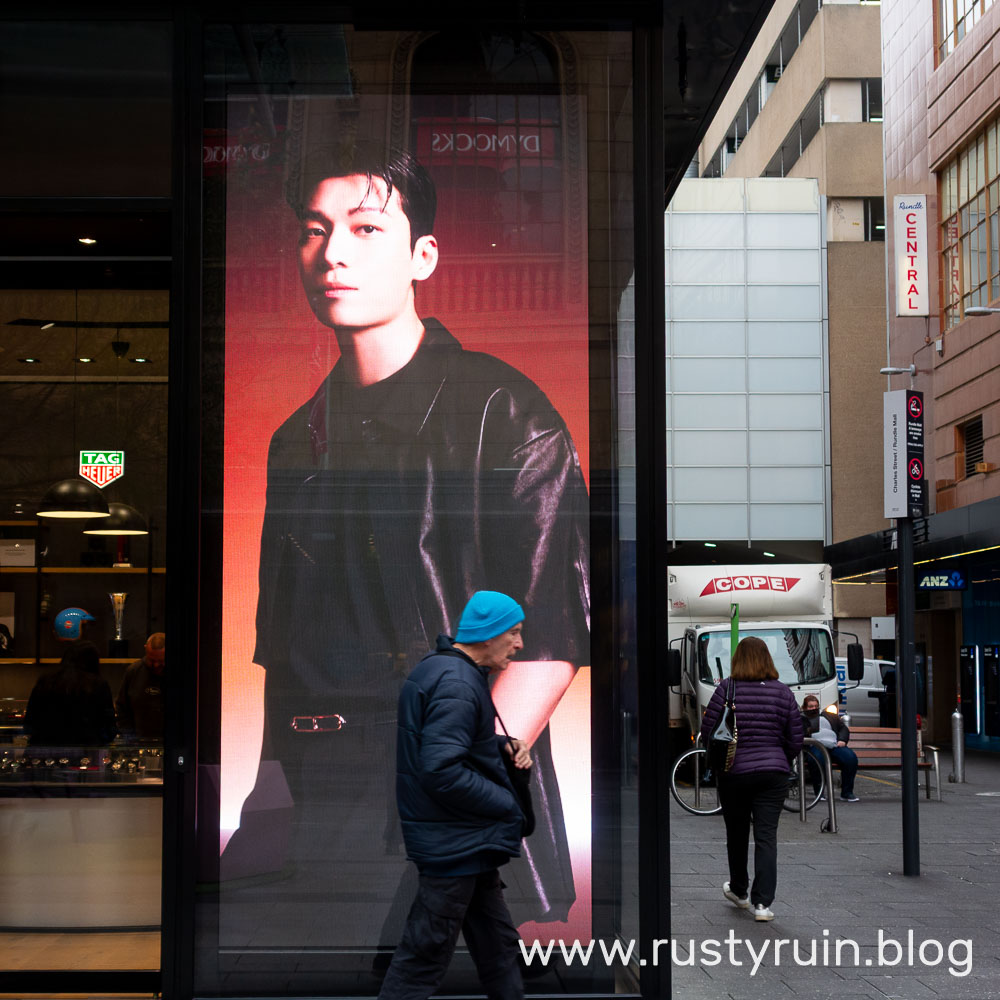
Street photography has a long and rich history of provoking thoughts along these lines. Is it ethical, for example, to make photos of vulnerable people on our streets? In some photography classes, it’s made clear that photographers are best-advised to ask for permission first. Yet, there is nothing surer to diminish spontaneity than to create a contrived street scene through such permission seeking.

If we are to document human life across a wide range of experiences through time, then street photography is an important tool. The photographer may, at the time, be vilified for lacking ethics, but as time relentlessly moves forward from the event, new audiences may view those photographs as historical artifacts. Perhaps there is no right or wrong in these cases – merely changeable thoughts and beliefs that drive culture.