Of wrecked trains and automobiles

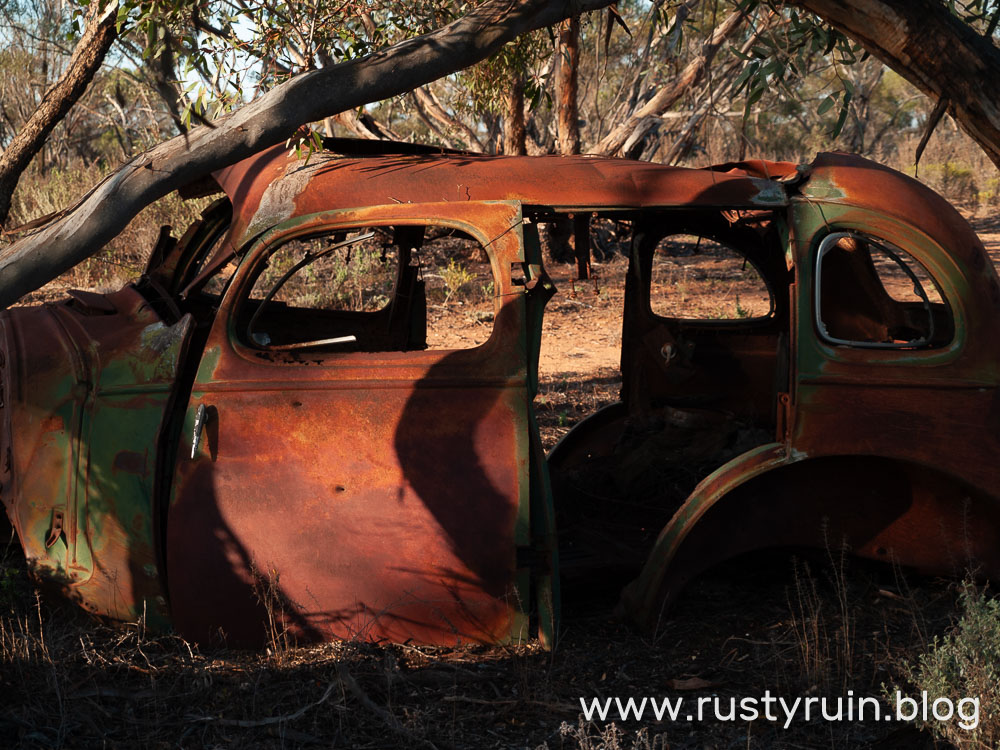
I imagine the car wrecks that litter the Australian outback partly inspired films like Mad Max. I could spend an entire road-trip stopping and photographing these hulks. You’re always looking for something interesting on long lonely roads in the middle of nowhere and the cars remind you that people drive through the middle of the country often enough to lose their way, run out of fuel, and break down. More than one overseas tourist has become lost in the Aussie bush and perished in the heat!

Newly overturned – Olympus EM5 Mark 2
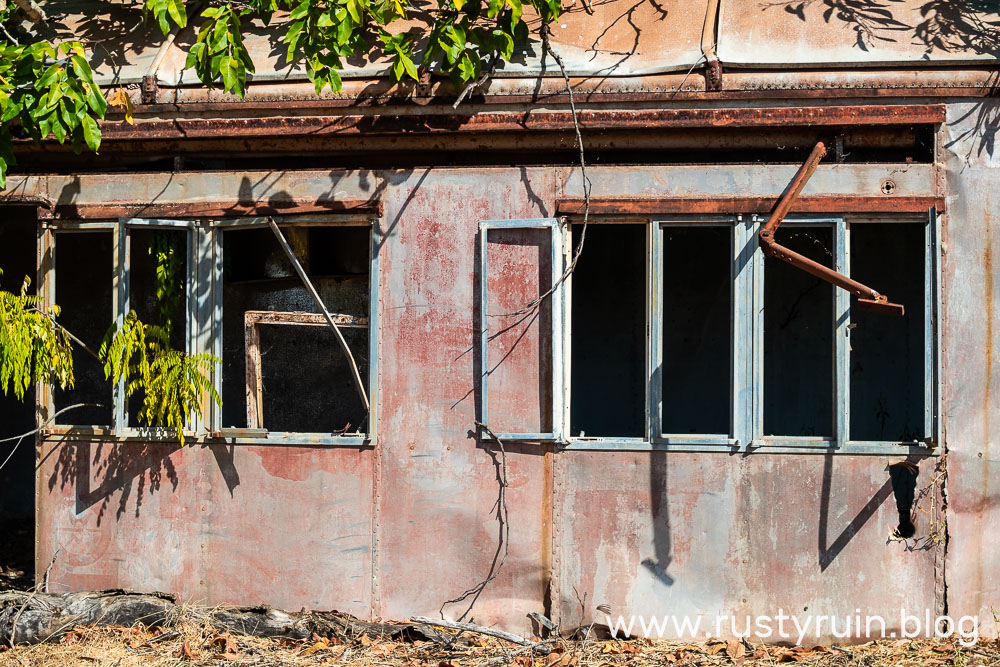
The old carriages make for good canvasses – Olympus EM5 Mark 2

Likewise for abandoned train carriages that have seen better days and could whisper the dreams of passengers long vanished. Rather than litter the outback, they often sit abandoned in old railyards in worn-out towns, languising next to tracks overgrown with weeds.

Welcome aboard! – Olympus OMD EM5 Mark 2

Revisiting a ruin at sunset and dealing with angry people

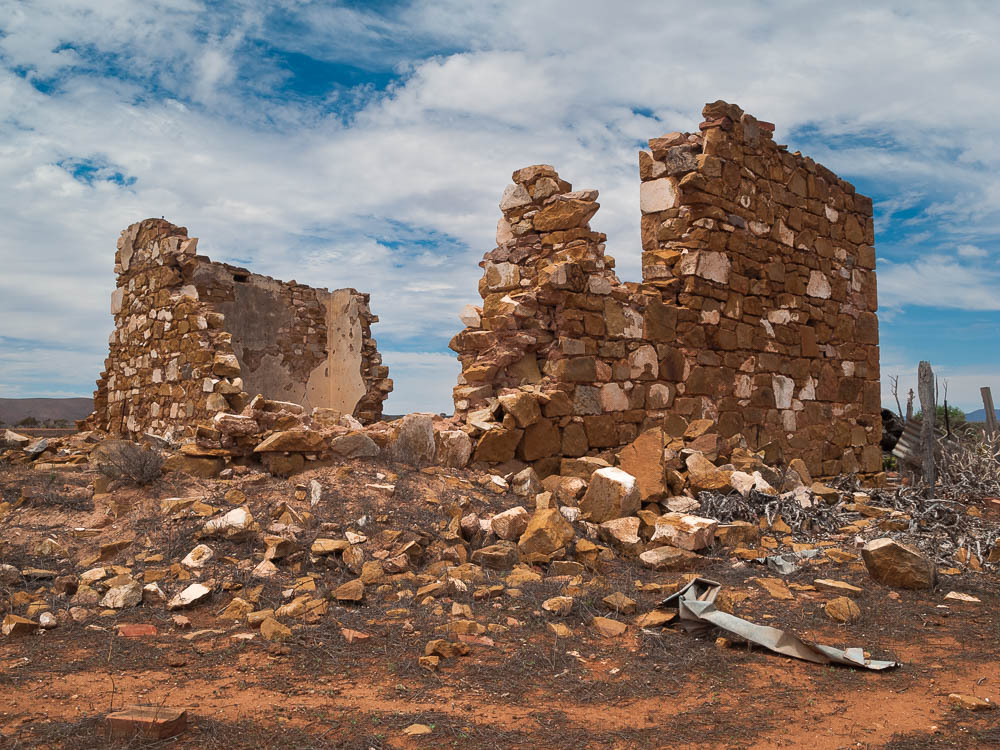
I was a little way up the dusty side-road with my Nikon Z5 and Nikon D40 when a big white 4-wheel drive roared past me and stopped next to our car, dust kicking up from the wheels. I knew it was a bad sign. I’d been here before. A few moments later, the car belted away down the dirt and turned onto the bitumen. Everything was quiet again and I gazed in the direction of the setting sun, hoping we’d be left alone long enough to make some more photos in the best light of the day.

Covered in old vines – Nikon Z5

I went back to work with the Z5, dialling back the exposure to preserve the highlights and waiting eagerly for the golden light to bathe the dusty corner we’d chosen for some evening photos. The quiet didn’t last very long…

Another big vehicle pulled up next to the ruined building we’d been training our lenses upon. I packed up my gear and started to walk back up the road to my buddy, suspecting he’d have to deal with a mouthful of abuse from the locals. I wasn’t wrong.

“What the FUCK do you think you’re doing???!”

I get it. There we are on a normally quiet road and we’re loitering outside his property. I made it there just in time for the tirade. My mate was very calm in the face of it, de-escalaing the situation and rightly pointing out we weren’t trespassing on his property and had no intention of entering or wrecking anything. Some minutes of back and forth and the property owner was still gruff but calm enough to take some mouthfuls of beer from the bottle he was swinging about.

Collapsing shed – Nikon D40 and Nikkor 35mm 1.8 lens

I contributed the odd word or two, reinforcing the argument that we were innocently making photos in great light and staying outside the fence-line.

“Yeah…I s’pose that’s OK if you’re into photography…”

Clearly his own mate was just there for moral support, as he’d said not a word the whole time. The golden light was fast fading and we were still locked in heated discussion about kids stealing copper from the old house and cutting the barbed wire fencing. The anger’s understandable, of course.

“Next time, ask me for permission! I’m just up the road, there.”

The problem with so many of these ruined places is that you just don’t know where the landowners are. Properties beyond urban areas can be big and it’s not always obvious who owns what. So, we stick to the public areas – the pathways and the roads, usually. Legally, you can make a photo of just about anything if you’re in a public space and you can see the subject from that public space. Permission isn’t required unless you’re planning to enter the property. I’ve never needed to say any of this to an angry onlooker or property owner, mostly because it doesn’t result in calm conversations.

A sea of cactus – Nikon D40

Finally, we made our peace and drove off. We’d missed the best light of the day. It would have been amazing too – pink clouds and soft golden highlights bathing all the dusty old corners and abandoned places.

Local ruins and ruinous beliefs

Some days it’s hard to ignore the culture wars that shoot back and forth viciously on digital threads or the hurried whispers of people who feel the uncomfortable cultural shift beneath their feet. I wonder whether we’re just living through especially tumultuous times or whether this has always been so? It has always been so, of course, because nature is change. Even the universe changes from moment to moment. It’s a truth some try to resist and others embrace. Often, we embrace it when young and ossify with age. That’s our nature too. Today’s passionate culture warriors become tomorrow’s slow-moving dinosaurs.

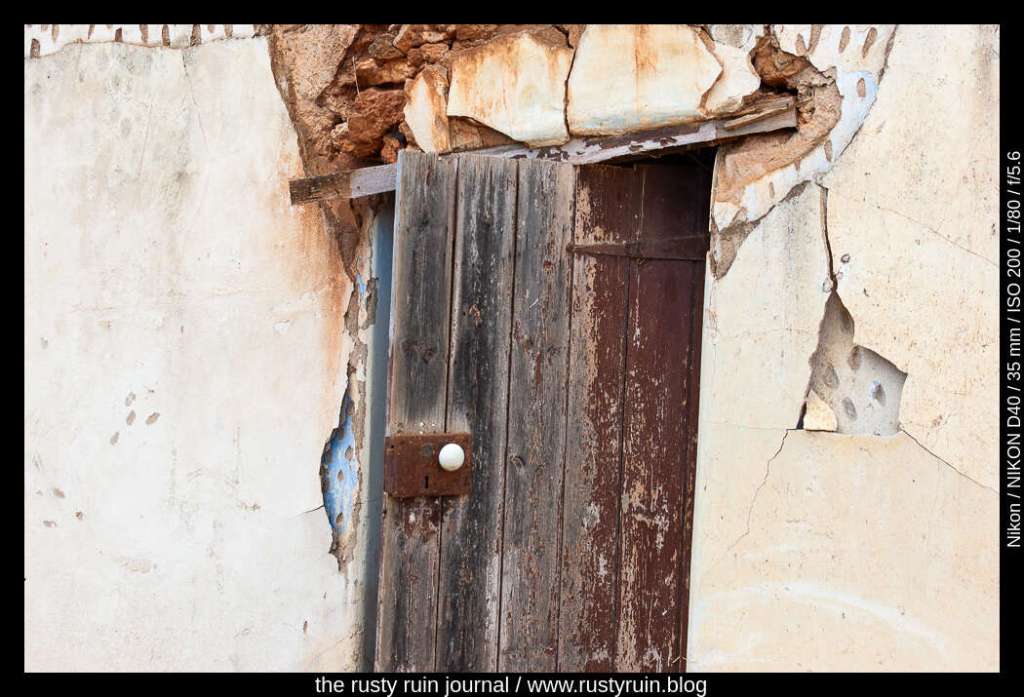
A door used no more – Nikon D40 and Nikkor 35mm 1.8 lens

I’ve always thought it unwise to commit too fully to a rigid set of beliefs. This is not to say belief systems are unreasonable or bad – humans seek meaning in all areas, and belief provides the framework for living in a universe that’s so vast as to cause us terror in dark and quiet moments – if you subscribe to Terror Management Theory. We cling to each other for warmth, just as we cling to belief like a security blanket.

We so often make the mistake of assuming our own beliefs are real and true and that they transcend time. Rather than understanding others deeply and cultivating compassion, we too easily find the beliefs of another person wrong, placing it on a rigid moral spectrum that functions as our own personal guide to undertsanding a seemingly random existence we seek desperately to understand, contain, and explain. In this way, we comfort ourselves.

The old entryway – Nikon D40

If we believe the universe has a moral structure inherent, we also tend to find a moral structure in the world and find our beliefs aligning strongly with it. If we believe the universe is mechanistic and chaotic, without moral structure, we align our personal narratives to this view instead. We find that life’s purpose and meaning is tied inextricably to our most basic beliefs about reality. We may be trapped within them at the expense of understanding other people. Either we’re islands of meaning, separated by uncrossable gulfs, or human beings attached to each other by common bonds. Perhaps both.

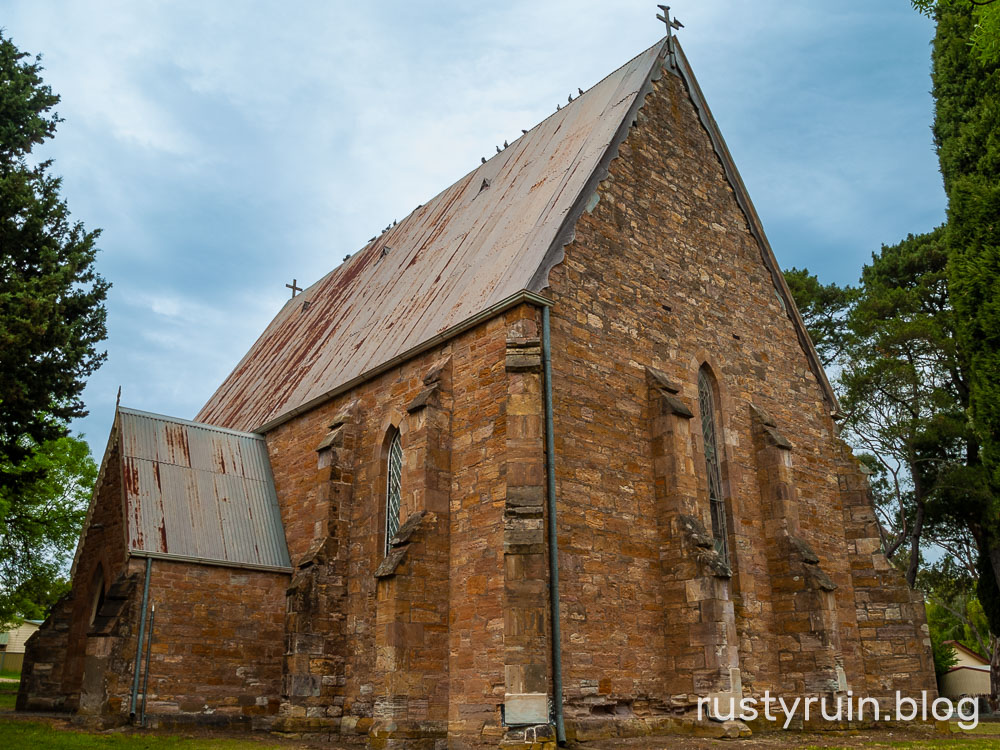
The tall church along the old road – Olympus E1

You don’t want to be on the wrong side of history, people sometimes say. For me, there is no right or wrong side, just people who have their own personal narratives, clinging to meaning. We’re all in the vast river of history together. It flows all around us. We’re part of the change happening from moment to moment, whether we embrace it or resist it. Neither approach is right or wrong – just ways of living and surviving and finding purpose and meaning.

Uluru at sunset – Nikon Z5

I love geology and astronomy. I like the feeling of placing myself in the context of deep time – the kind of time that barely notices our existence because we’re fresh and new. In this way, I place human life in the context of more ancient things. Uluru, the famed monolithic red rocky heart of Australia, started to form 550 million years ago. It was here long before we were. It started to form when multicellular life dominated the planet, long before dinosaurs roamed. Imagine that?

When you look up at the stars, those photons hitting your retina have travelled for countless light years. They’ve struggled and twisted up through impossibly dense super-heated layers of distant suns – the forges of our universe – careened through the cold depths of deep space, entered your eye, hit your retina, and then been processed as a visual signal by your amazing mammalian brain. In this way, we’re all connected to the stars. I love that thought.

A day with the Pentax K10D ~ my short time as a Pentaxian

When I was growing up, we’d spend time with another family on special occasions. They’d emigrated at the same time as us to Australia, and we’d maintained the sort of cultural bond with each other that immigrants often do when they’re finding their feet in a new country. Even though my brother and I didn’t have much in common with their two girls, we always found a way to have fun, whether it was hide and seek, boardgames, or exploring the nearby school on weekends.

I have a vivid memory of going to their home one day and looking up to see a large camera I’d never seen before sitting on a shelf in the dining room – a Pentax. Bigger and more professional looking than the usual plastic film cameras I was used to seeing, it seemed to suggest that someone in their family was a bit more serious than most about making photos. I never had the courage to ask, but that bold white Pentax font was burned into my memory.

A few weeks ago, I came into possession of my own Pentax – a K10D. Released in late 2006, it was a nice semi-pro DSLR with some interesting features ~ weathersealing, sensor-based shake reduction, and the same well-regarded CCD sensor as the Nikon D200. It even came to me in a Lowepro Nova 160 AW camera bag that still looks to have plenty of life left in it as a daily shoulder carry. As Ricoh-Pentax has, to me, always seemed a brand doing it’s own thing regardless of the trends, and bearing in mind the curiosity stoked in me since seeing that serious looking camera on the shelf, you can imagine I was quite excited to take it out for a day of use.

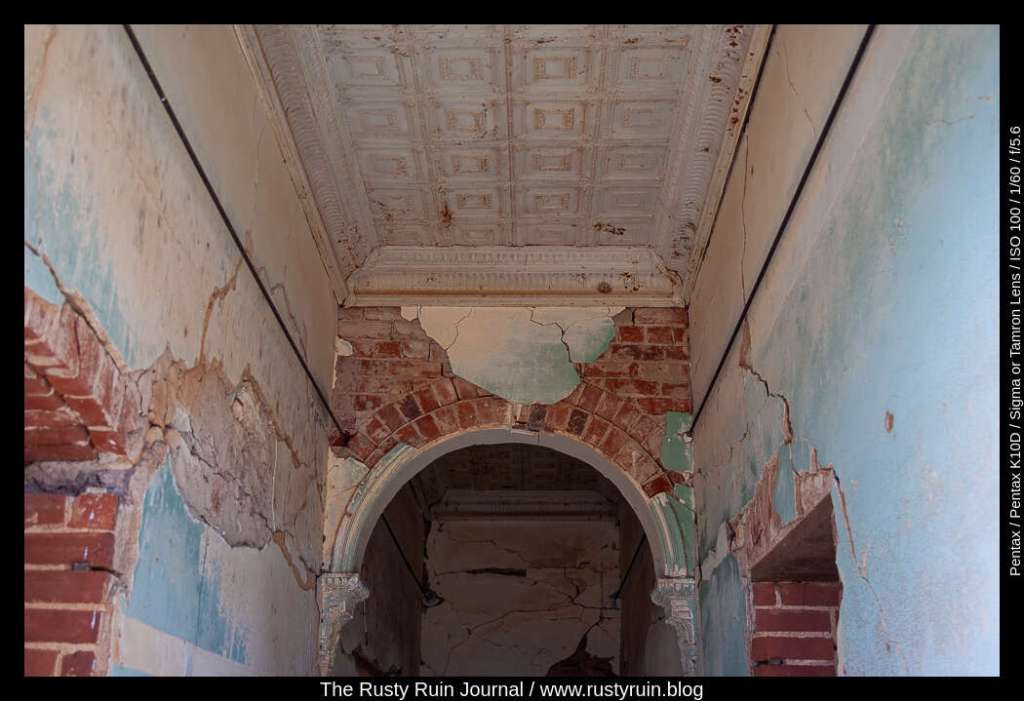
Closed up in Redhill – Pentax K10D with Sigma 17-50mm lens

We should be cautious about rushing into what seems like a good deal, especially online. I’ve been pretty lucky with my purchases, but sometimes old gear comes with problems. Despite a body in good condition and a shutter about a third of the way through its average life, my K10D isn’t in the best shape internally. Mine seems to have front and back focus problems, likely related to the dreaded mirror drop issue that plagued so many of these units. It took Pentax ages to own up to the problem officially.

Of course, the soft and slightly out of focus photos could also be due to the Shake Reduction system not playing nice, bad glass, or user error – though you’d expect that making a photo at 1 / 750th of a second in good light with plenty of depth of field wouldn’t be the cause of visual mush. And I know of no Sigma glass that’s so poor as to make everything soft even at an F-stop of 8. Given the inconsistency of the focal plane from photo to photo, I suspect one side of the mirror has tilted downwards slightly, thereby affecting sharp focus. I think this because every single photo comes out with the same tilt no matter how well I frame it: the right side tilted down. It’s easily corrected in Lightroom, but still annoying. The only other culprit could be the interchangeable focus screen being slightly askew – something that’s easier to adjust. Disappointment aside, these are some of the best photos from the day…

Inside the old farm-house – Pentax K10D

In some ways, I don’t mind slightly soft photos. Whilst I had to do more than my usual sharpness adjustment in Lightroom to compensate, they remind me a little of photos from a cheap old film camera.

Abandoned garage – Pentax K10D

The K10D is a nice camera to hold. The body seems to have more organic curves than the upright and serious looking Nikons I’ve grown accustomed to. The LCD screen is nice and bright, as is the optical viewfinder. It has a different hand-feel to my Nikons – slightly more refined in some ways, but lacking the external controls of the D200. If Nikon is the serious-looking man at the local bar drinking only tap water and green tea in the corner, Pentax is the loose fellow pressing buttons for fun on the jukebox after a few exotic beers.

Shipping container patina – Pentax K10D

Problems aside, it was good to finally use a Pentax after all those years of wondering about the camera on the shelf. Will I get another Pentax? I definitely won’t be rushing to do so. One of the hazards of picking up old cameras is that sometimes there are unreported faults. I have a Nikon D70 that’s very worn, but still makes great photos. The Pentax looks great and clean, but it’s not a trustworthy companion I’m afraid. I was a Pentaxian just for a day, and it was kinda nice. I’ll keep the nice Lowepro shoulder bag though!

More photos from the Nikon D200

In my previous post, I sang the praises of the Nikon D200 – first released in 2005. Back then, I could barely afford a decent digital point ‘n’ shoot, let alone a premium DSLR like the D200 ! Even RAW photos from this Nikon feature similar contrast, punch, and compressed dynamic range to those from the Olympus E1yet another widely respected antiquarian among cameraphiles and CCD sensor enthusiasts. I’ll not expand fervently on that in this entry, as I’ve done previously! Just some more photos from the hefty and reassuringly solid Nikon D200:

A rusty old shed somewhere – Nikon D200 and Tamron 17-50mm F2.8 lens
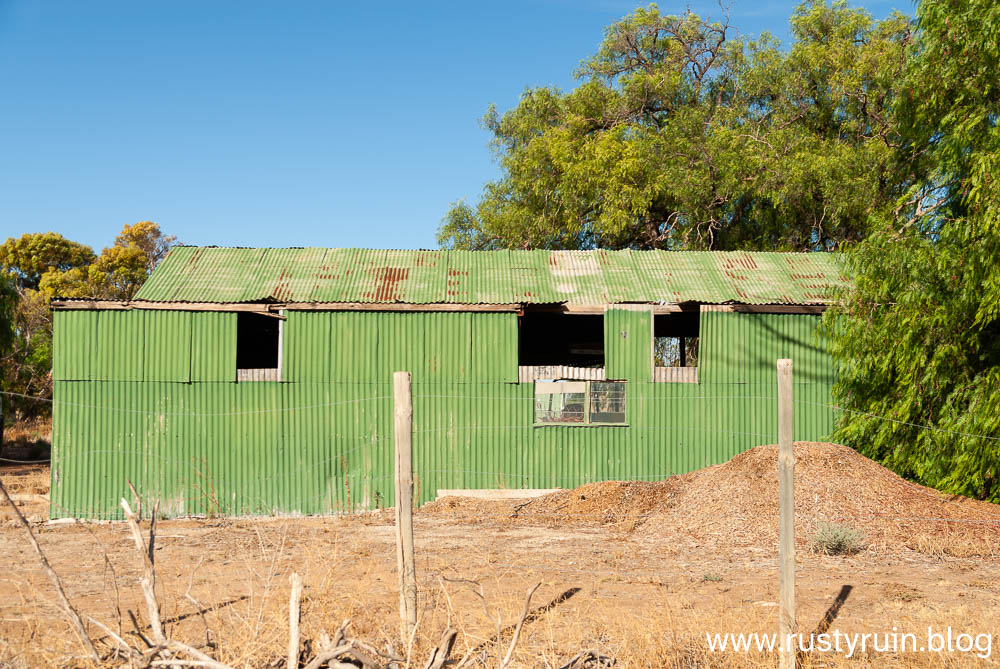
The green shed – Nikon D200

Notice the old tin shed theme so far? I won’t deny that lonely sheds make for some nice pictures, especially when they’re decaying into the sun-beaten soil.

The yellow shed – Nikon D200

Seriously, I was going to post something other than a shed, I really was, but I couldn’t help myself! Back to another angle of the yellow shed you saw in my last post. Looking at these photos, I can’t help but wonder again about the image quality perfected in some of these old cameras. Makes you also wonder about the role of marketing and what we believe.

In search of rust and answers ~ what of the future?

My interest in rust is, as you might imagine, slightly more than that of the average person down the road. I don’t have data to back this up, but I’m not convinced that the idea of making photos of rusty things is of primary importance to many people as an activity. What I’m quite certain of is that people are definitely interested in the answers to big questions: Why am I here? Are we alone in the universe? Is death the end? What does the future hold?

In the middle of nowhere that used to be somewhere – Nikon Z5

Rust and ruin are symbols of decay and time passing. Some people are terrified by this idea, perhaps hoping that science will one day discover the answer to immortality. Others believe they have the answers to the big questions already. For them, perhaps, ruin holds fewer terrors. I wrote about this in a previous post if you want to have a read. I even included one of my favourite poems.

In shadow and broken steel – Nikon Z5 with Nikkor 40mm F2

Sidestepping terror to make life easy

I started this post like most others. Truthfully, I didn’t really have much direction, other than the desire to explore rust and ruins as universal symbols that remind us of our mortality in the vastness of the river of time’s relentless passing. But lately, I find myself thinking more and more about the impact that I and others have on the world. For example, my use of shaving cartridges, with all the plastic they include, isn’t just annoyingly expensive, but also destructive. All of that plastic ends up in landfill, contributing nothing to the environment but toxicity.

It’s perfectly understandable that people prefer to have easy lives where everything is mapped out and makes sense. An easy to understand narrative provides us with answers to many, if not all, of the big questions we have. It’s easier to come to terms with the idea of toxic human waste, selfish governments, and genocides when it’s part of a cosmic plan ~ the evil will get their punishment and the good will find peace. Unfortunately, human history is nothing if not a struggle between the powerful and the powerless.

Rusting in the shadow of trees – Olympus E1

I think this makes it too easy to sidestep the feeling of terror gnawing at the mind in times of quiet. What does the future hold when we know all too well that the capacity for destruction lies in the same bed as the capacity for art within every human being? I strongly suspect that we may turn quickly and desperately to solutions as a species once it’s too late. The powerful will have squeezed every last drop of value from us and we’ll have been too busy buying fast-fashion clothing from giant toxic factories where people are grossly underpaid and overworked for the benefit of the few. Where do those unsustainable fast-fashion items end up, do you think? What good do they serve, other than to appease vanity?

Living with less

One kind of response I’ve often heard from people when speaking of this topic goes something like this: “But what about the economy and jobs? If we follow environmental policies, we’ll lose jobs. And how do we keep the lights on? Maybe we should think about nuclear power?

My blunt rebuttal these days is usually along these lines: “The environment isn’t interested in your comfort. We may all need to accept the idea that we must live very differently with a lot less.”

The idea that we must not stall our economy and standard of living as we explore ways of doing less destruction to the planet is not only absurd, it is also dangerous. All this does is serve the lives of people who have vested interests in making money and living comfortably. They don’t want their lives altered and would rather continue driving big vehicles that spray minute particles of rubber into crucial waterways. Yet, nature is change. Nothing remains the same. Living a life with less money, less oil, less waste, less electricity, less gas, less cars, and less fast-fashion is not only wise, it’s likely the only path to take.
The empty house near the empty hotel – Olympus OMD EM5 Mark 2

Lonely towns and broken dreams

When driving along the dusty Southern Flinders road into Hammond, it’s clear that it was once an important town along the formerly vital narrow-gauge rail line that fed so many settlements in the area. Whilst not completely abandoned, another decade or two may see Hammond left to the relentless heat and wind.

On the outskirts of Hammond SA – Olympus E1

I was drawn, of course, to the dilapidated ruins up the road, marking the dusty way to more ghost towns beyond. Yet another reminder that nothing is everlasting.

The E1 proved a great companion here, even on a bright sunny day. As long as I looked after the exposure compensation carefully, so as not to blow out highlights too heavily, I was rewarded with at least half a dozen photos the equal of my Nikon Z5 in all but overall size and resolution. Still, as discussed before, megapixel counts are often overrated.

A once grand entrance, Hammond SA – Olympus E1

If I have the stamina, I also pack my Z5 alongside the E1, but the bag then does tend to drag at the shoulder a little. Fortunately, such long drives into the mid-north necessitate lengthy car rides, thus allowing my shoulder to rest between destinations. As ever, my concern is for a solid shoulder-slung camera bag that allows me to pack enough gear for a comfortable day – hopefully as inexpensively as possible whilst still retaining usability and build quality. My current bag cost all of $60 AUD and allows me to pack both the Nikon Z5 and the Olympus E1, though other features are lacking, including a strap that isn’t adjustable.

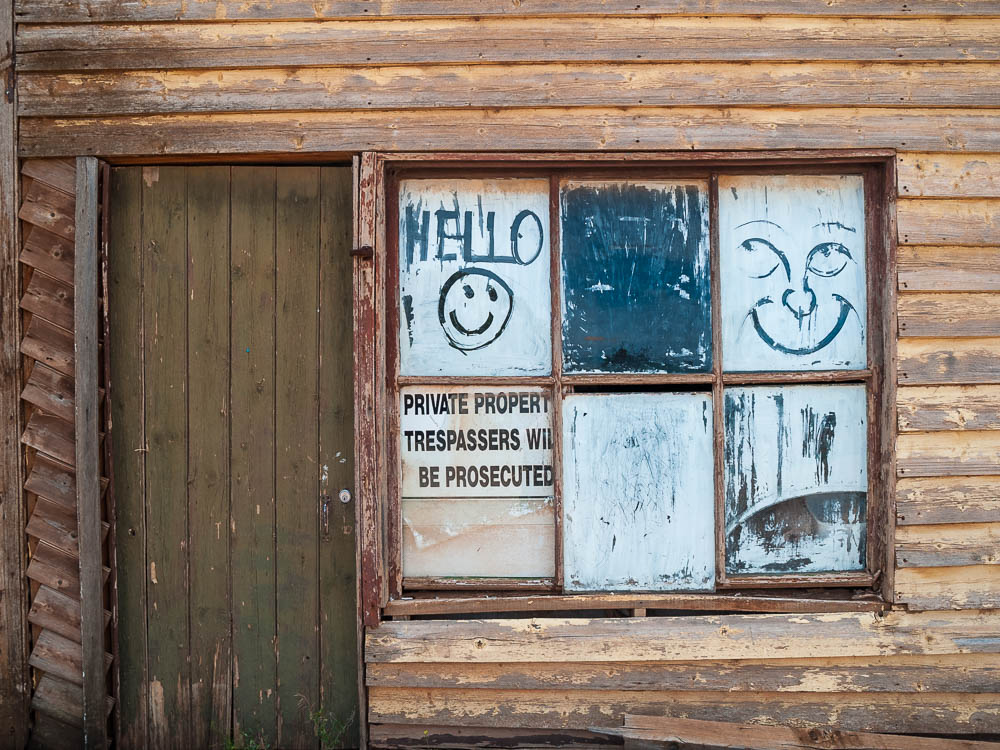
Hello Trespassers! – Hammond SA – Olympus E1

The E1 still surprises me. For a camera from 2003, with limited dynamic range, it can certainly handle enough tonal range to produce some of the most attractive photos in my folders. Sure, a good subject helps a lot, but the E1 seems a good match for scenes I would have thought it would struggle with. Perhaps I’ve gelled with it to the point that I’m looking for scenes with more mid-tones and less gap between light and shadows, as this is where it shines best.

Old mysteries behind closed doors, Hammond SA – Olympus E1

Well worth the drive, if you can stand the dust and the gnawing sense of a town that has all but been forgotten. I love it, of course – the sense of melancholy is always a stern reminder of time’s vengeful movement. One interesting feature of our time there: a resident playing modern pop music loudly from inside the old town bank, drifting on the same winds scouring the bones of the empty buildings.

More photos from Wycliffe Well

In my previous post, I spoke about the eerie ruins of the accommodation complex at Wycliffe Well. To the best of my knowledge, the large bush-fire in this area still rages uncontrolled. Such is the creation and destruction cycle of life in outback Australia. One day you’re listening to tourists recount stories about Min Min Lights and the next you’ve sold your long-term outback business and it now lies in ruins at the feet of new owners, unlikely to be repaired. Life moves on quickly and time is uncaring.

Anyone for the Ladies Toilets? – Nikon Z5

At this point in the road-trip, I was still getting used to the Nikon Z5. It’s a lovely camera, without doubt, but I need to get into the habit of choosing smaller F-stops to create a deeper depth of field when close to my subject. For many of these photos I used the excellent Nikkor 40mm F2 lens. I’m a sucker for prime lenses and this one is certainly good bang for the buck, despite the all-polycarbonate mount. It’s one sharp lens for sure!

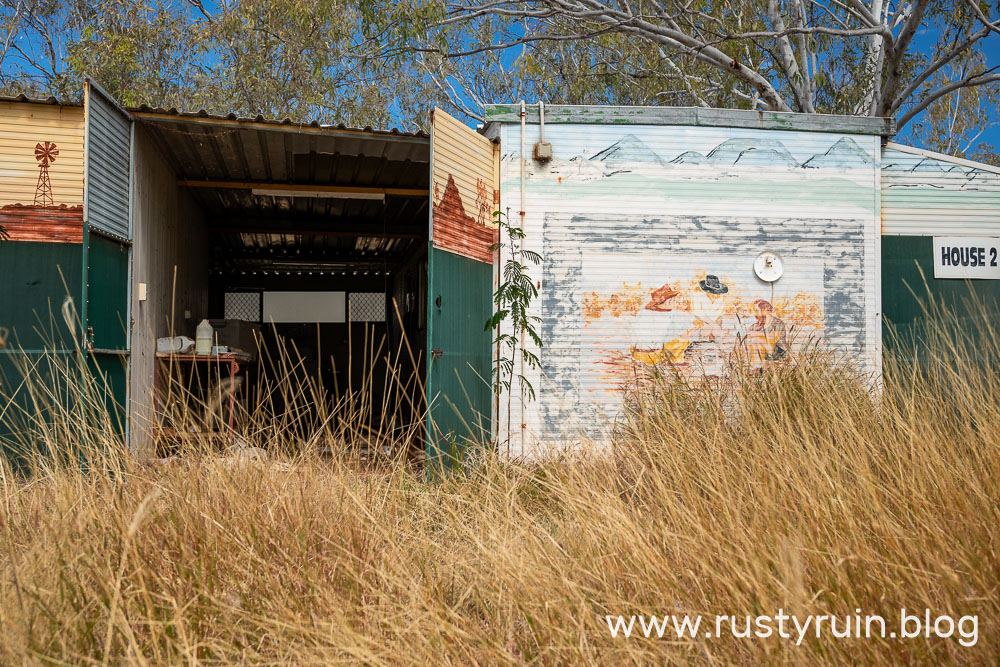
House 2 – Nikon Z5

I also used the 52mm B+W Circular Polarising Filter. This helps to cut stray reflections and saturate the colours so editing isn’t so burdensome. But using the CPL is not for every occasion. It’s great for cutting reflections, deepening the colour of foliage, and good if you want to photograph water, but it does tend to make photos look a bit flat and unnatural at times. I find that I always need to add contrast during the editing process just to cut that flatness.

Your caravan awaits – Nikon Z5

As you can see, the skies also really come alive when using the CPL. Sometimes it’s a bit too much, honestly. One year, I remember using it extensively around Alice Springs and the skies looked so dark they were almost purple. Now, I twist the brass ring of the CPL until it hits maximum effect and then dial it back a little to add some natural reflection to the scene. I think I used it quite judiciously on this outback journey.

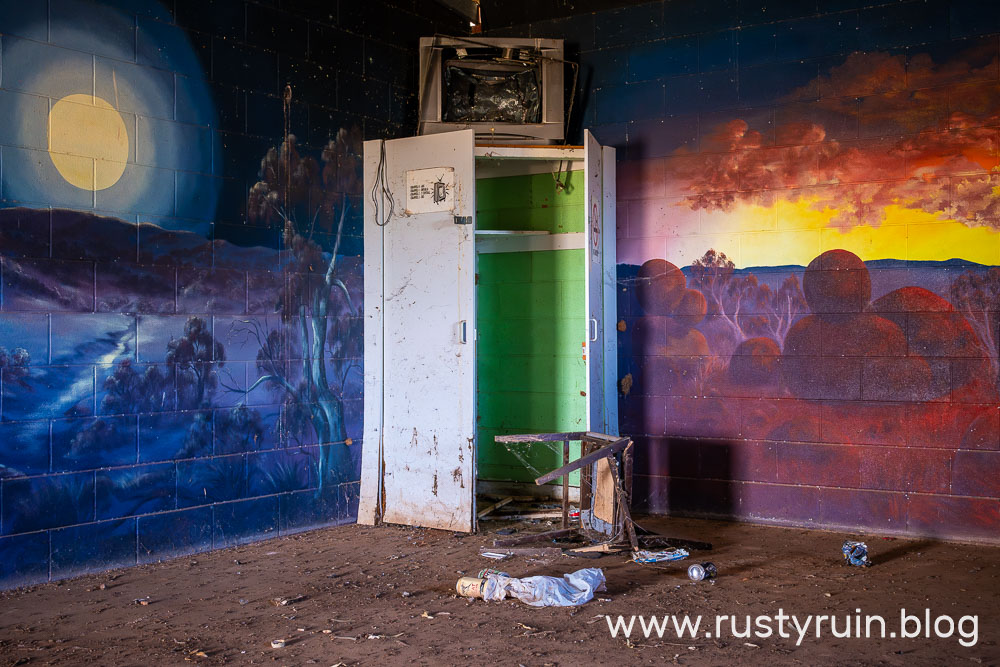
Welcome to the TV Room – Nikon Z5

The Z5 is very comfortable at ISO 6400 and I’m comfortable using it when required. I think I got away with ISO 3200 in the above photo and used Lightroom’s great AI-based noise reduction to smooth it all out. That’s a good use of AI technology, as far as I’m concerned. Really love that artwork too, though the TV has seen better days.

From UFO sightings to dilapidation: Wycliffe Well

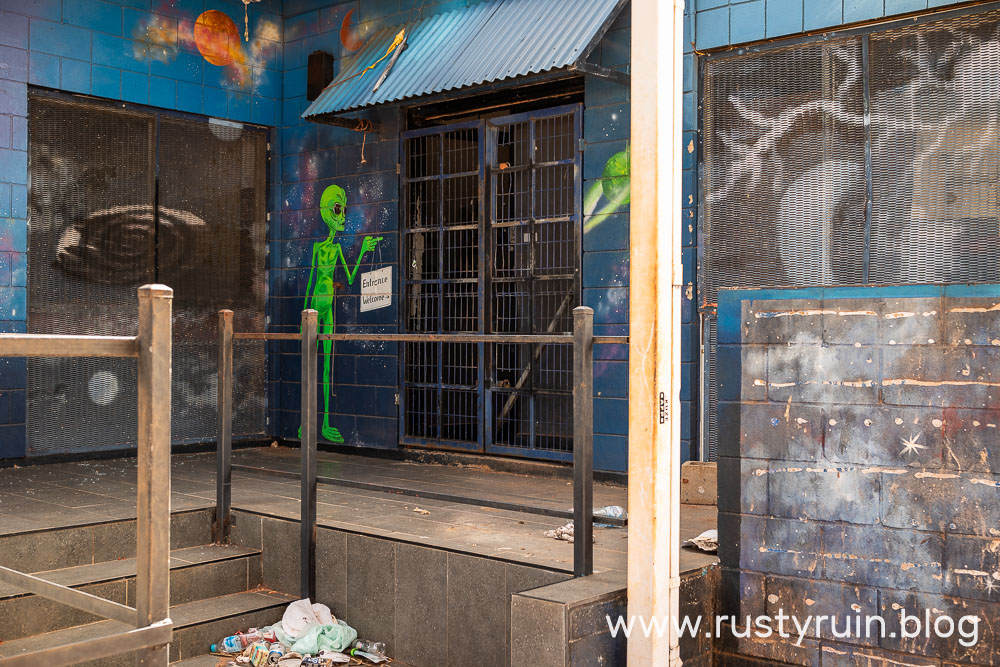
Sometimes, on those long and lonely roads through outback Australia, you come across things you don’t expect to see. Burned out cars flipped on the roadside are commonplace. So too are the broken bottles, campfire ashes, and plastic rubbish that litter desolate truck stops. What you don’t expect to see is an old campground and motel that lies in ruins, featuring an alien and UFO theme. This is Wycliffe Well – once known as Australia’s UFO sighting capital.

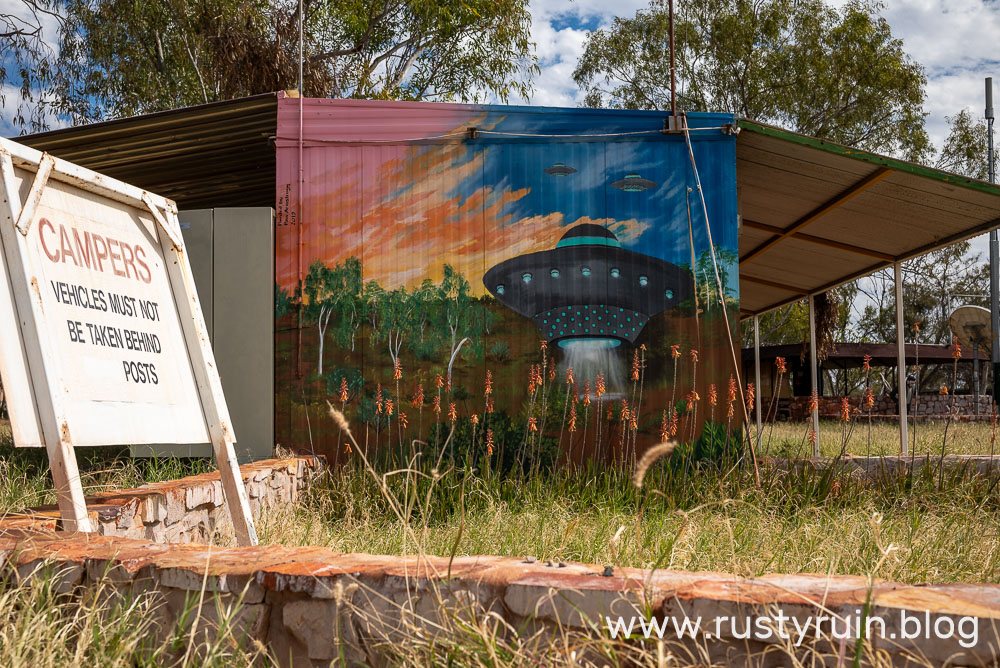
Attention Campers – Nikon Z5

In this ruined complex of dormitories, recreation rooms, and offices, we found the remains of glory days, when the site was home to a thriving community looking for their first UFO sighting. The signs are everywhere, including alien murals and painted UFO landings, as well as enigmatic depictions of Karlu Karlu (otherwise known as Devil’s Marbles), providing the geological majesty that perhaps fired the imaginations of UFO spotters who saw lights in the sky around here decades ago.

Welcome – Nikon Z5

The story of the site is a familiar one from a business perspective. It was owned for a long time by one family and managed by an ambitious man who drew upon the UFO mystery to market the facilities effectively to tourists. There were glory days, as the bar and large on-site restaurant provided rollicking evenings of food and music to guests. Finally, they decided to sell up and less enthusiastic owners took the reins whilst promising to repair and maintain the place. It now lies in ruins after flood waters ravaged the site. And there’s little doubt that tourism dried up in the wake of the Covid pandemic.

House 1 – Nikon Z5

It’s an eerie place to explore on the way to somewhere else. Though vandals have long since taken plenty of souvenirs, the site remains a strange and melancholy tribute to outback Australia’s tourist economy and the challenges of surviving in remote locations. Sadly, it’s now at risk of further damage, as huge uncontrolled bush-fires are currently sweeping through the area.

Detritus in Coober Pedy

I mentioned the town of Coober Pedy in a previous post. Going through my file folders tonight, I found some more ruins and the remains of dreams from this famous outback town. I often wonder how these places and things come to be abandoned and decaying.

No driver – Nikon D7100 with 35mm AFS Nikkor 1.8

Who once drove the bus? How did it get there? At some point, I imagine it will be nothing more than a pile of rusted metal, merging with the earth, gears and pistons embedded in thick soil. Perhaps a few blue paint flecks will provide some clue to a future explorer?

Decolonise – Olympus OMD EM5 Mark 2

Old walls become a canvas for political statements, the remains of a broken window framing the tension painted in bright pink. Thinking of photography as a voyeuristic pursuit, as Susan Sontag once wrote, such images can lend themselves to such consideration. Is there some voyeurism at work when photographing places like this? Perhaps. I certainly feel some drive to frame the political statement and focus on the socio-cultural tensions. Do I engage with it by recording it or do I step away from it by framing it as artfully as I can?

Homes not Tails – Olympus OMD EM5 Mark 2

Photography can only frame the world for others to view. Once out in the world, the audience applies their own values and beliefs. By providing the framing, the photographer must step aside for a moment to engage in the act of viewing rather than participating. But in the framing is the delightful devil – a story told by the photographer in cutting out a single view from the whole. What lies beyond the single frame and does it matter?