A night-walk with the Nikon Z5 ~ some thoughts on the quality of light

A few nights ago, I was parked on a busy main road near the city, scoffing a greasy burger and fries and washing it all down with a lukewarm decaf. I needed to fill several hours while I waited for the Katy Perry concert to finish so I could ferry home a car full of tired and content family members. I’d packed my Nikon Z5 so I could take a walk in the cold and make some photos. Opportunities to wander unfamiliar neighbourhoods don’t present themselves too often, so it was a great opportunity to challenge my eye.

Rainbow rotunda – Nikon Z5 and Nikkor 40mm F2 lens at 5000 ISO

When I use my older Nikon DSLRs, I temporarily forget how technically capable the Nikon Z5 is. Nikon were slow to enter the mirrorless market after a false start with the petite CX system, but their Z cameras are high quality devices that are a joy to use. I’m often amazed at how clean the Nikon Z5’s photos can be. The Z lenses have a reputation for being very sharp, with the Nikkor 40mm F2 being a good example.

Behind the shops

Photos made at night are often challenging to edit because the quality of light is so different to photos made during daylight hours. Where we might raise shadows to reveal more detail during the editing process for a day-time photo, it usually makes more sense to obscure the details in dark areas of a night-time photo where the absence of light defines the image.

In the photo above, the inky shadows obscuring the ground and part of the fence define areas of the image that are illuminated. Brightening the shadows not only weakens the impact of the photo but also makes little sense when part of the goal is to communicate the quality and feel of the night hours – the difference between light and shadow, the quality of artificial light running across metal and brick, and the darkness of the hour. If the versimilitude of the photo is important, as it is in this case, it’s as important to communicate the quality of absent light as it is to communicate how and where light falls.

Through the clouded shop-window

The excitement of a road-trip and escaping into the world

In the weeks leading up to our annual road-trip holidays, there’s a slow build of excitement that obliterates any pretence of work productivity during the final few days, for me at least. Questions around camera gear take root in my mind many months before setting off – what and how many cameras to bring? What lenses? Will I really need a tripod? How many bags and what kind?

In some sense, it feels as though this holiday in particular is partly about escaping the world’s current problems by escaping into and losing myself in the world. Photography can be therapeutic self-help in this way – reframing the world to suit our own narratives. As photographers, we look at things differently, composing and considering scenes and subjects before us. It’s a distraction from the pressing issues. We’re out there in the world, breathing in all that it offers, yet we’re one shutter-click away from reframing it to suit a story we want to tell so we can help ourselves.

The Panda’s exhausted – Nikon D7100 and 55-200mm Nikkor lens

Packing camera gear

Having recently purchased a Tenba Skyline V2 Shoulder Bag, I’ve been trying out different combinations of camera stuff for daytrips. I won’t have access to all the gear whilst we’re on the road, but a well-stocked easy-to-carry shoulder bag that sits with me in the passenger seat is going to be handy for quick stops along the way. Right now, I’m trying out this combination:

  • Nikon Z5 camera with the Nikkor 40mm F2 attached: This is going to be my workhorse camera. The 40mm Nikkor is about as sharp a lens as I need. I know there are sharper lenses, but this Nikkor is inexpensive, small, light, fast, and sharp. Ok, it’s an all plastic build, but it uses Nikon’s tough polycarbonate material, which seems to be quite durable. It may not be a classic but the results are excellent.
  • Viltrox 28mm 4.5 AF Pancake: It’s a third-party full-frame lens for Nikon’s Z system, nicknamed Chip, and it’s inexpensive. It’s also a strange lens – a true pancake lens (80g in weight), with a fixed aperture of 4.5, a 28mm focal length, a metal mount, part plastic and part metal body, 2 Aspherical and 2 Extra Dispersion lens elements, a USB-C port for firmware upgrades, and a mask that creates 8-pointed starbursts. I’m intrigued by this lens as it’s so odd. Auto-focus in a lens this small and this cheap is unusual. I think it will be much sought after in years to come, but what concerns me is that once the AF motor burns out, there’s no manual focus to fall back on.
  • Olympus OMD EM5 Mark 2 camera: Having gone back to using the Olympus lately, I’ve rediscovered the joys of a lightweight system with high quality. I use a metal grip to add a bit of heft and for better ergonomics. I’m testing out the Yongnuo 25mm 1.7 lens right now, so it’s attached to the camera. I could also pack the Sigma 30mm 2.8 DN Art lens, which is sharp and reminds me of a teeny-tiny Dalek when the hood is also attached.
  • Olympus Zuiko 4-5.6 40-150mm lens: This lightweight and rather small lens gives me an equivalent focal length of 80-300mm on the Micro Four Thirds system. If I want to be as lightweight as possible and give myself flexibility on the road, this lens is essential. Image quality is a bit on the soft side at 150mm, but that’s to be expected in a non-pro Zuiko lens.
  • Sony RX100: I generally take this with my in a day-bag whenever we go out. It’s so light and small and silent that I can use it indoors when I don’t want to bother with a larger camera and lens combination. This one fits easily in the front pocket of my Tenba bag.
  • Other stuff: Spare battery for the Z5, a micro-fibre lens cloth, a small wallet for 3 x 52mm filters (B+W Circular Polariser, B+W 10 Stop ND filter, and K&F Black Mist Diffusion filter), and an SD card holder for spares. I like the K&F Concept Diffusion filter at 1/4 strength.
  • Undecided: I’d really like to squeeze the Nikkor 24-70mm F4S lens in the bag but it’s pretty big and heavy. Finding a home for it in this bag with everything else is going to be difficult, but I think it may be a better option than carrying the Nikkor 40mm and the Viltrox 28mm. It will mean that the Zuiko 40-150mm lens has to live on the Olympus camera. Alternatively, I ditch the Olympus completely and carry the 70-300mm Nikkor ED lens attached to the FTZ adapter so I can use it on the Z5 – but this is a heavy and tall lens.
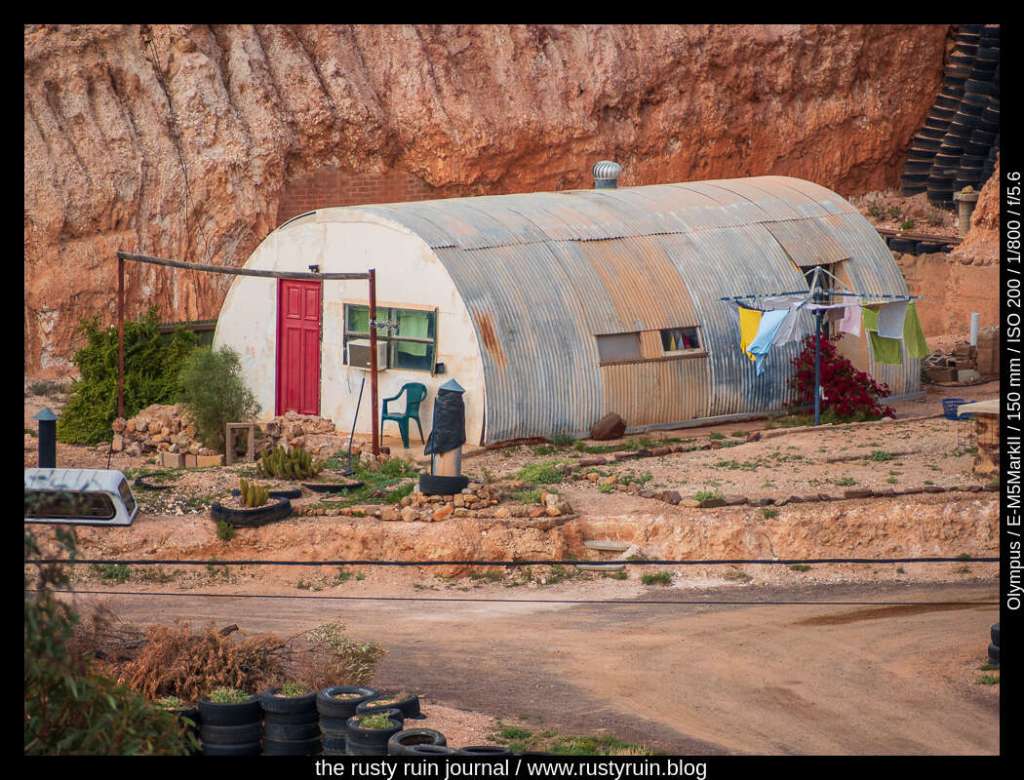
Behind the red door – Olympus OMD EM5 Mark 2 and Zuiko 40-150mm R lens – as you can see, even at 150mm, there’s acceptable sharpness available after some editing (contrast, clarity, and additional sharpening)