Once synonymous with photography and the venerable Kodak Moment, the Kodak company has undergone multiple transformations over the last century. Having once dominated the film era, Kodak found itself in a war with Fujifilm in the 1990s whilst it awkwardly straddled the analog and digital imaging worlds.
It’s too simplistic to say that Kodak struggled because it didn’t adapt quickly enough to digital photography. Having researched and invented early digital imaging in the 1970s, the common view is that failure to invest in digital technologies caused their downfall. But Kodak did, in fact, produce many consumer digital cameras in the early 2000s and did manage to gain reasonable market share for a while. Even industry titans like Nikon and Canon struggled to devise a winning strategy in the digital imaging market as smartphones rose to prominence, so Kodak wasn’t alone.
Kodak may not have been agile enough to pivot completely from a huge historical investment in chemicals and film production, but in recent years, after Chapter 11 Bankruptcy, they have managed to make some headway in a difficult market. It helps that the Kodak brand is still so strong and sought after by their partners and licensees.
And so, we come to the intriguing Kodak Charmera ~ a teeny tiny digital toy camera that can live with the car keys in your pocket or get lost down the back of your couch. I received one as a Christmas gift this year. It’s made by RETO Production Ltd, who have a license from Kodak to use their well-known name on products.
Even though image quality from the 1.6 megapixel sensor isn’t anything special, it also records choppy video with sound, has a LED flash, a hole-in-body optical viewfinder, and features the cutest and smallest colour LCD on the back I’ve ever seen, making it a real charmer of a camera.
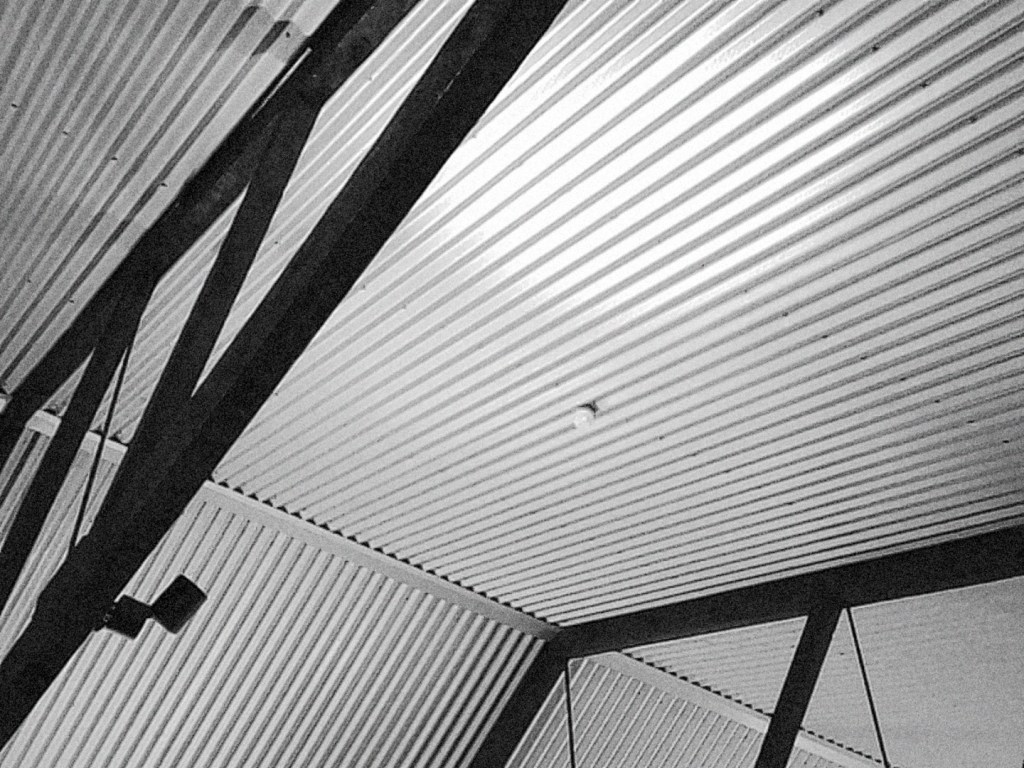
Structures in lo-fi ~ Kodak Charmera set to Black and White, with added Tri-X grain
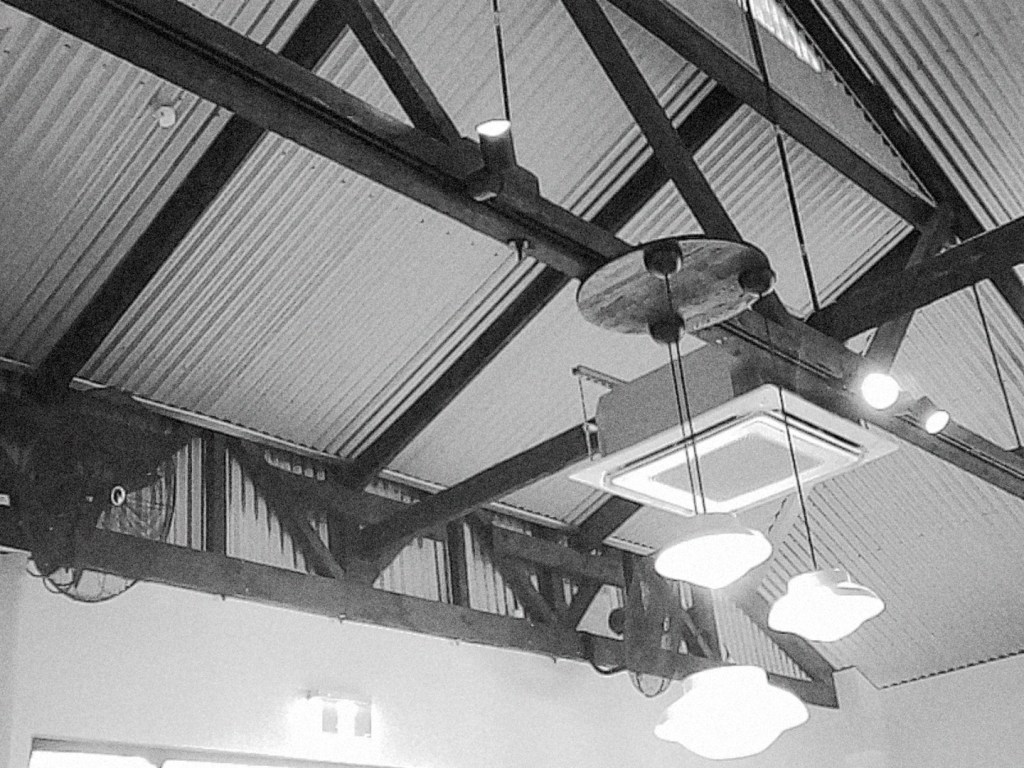
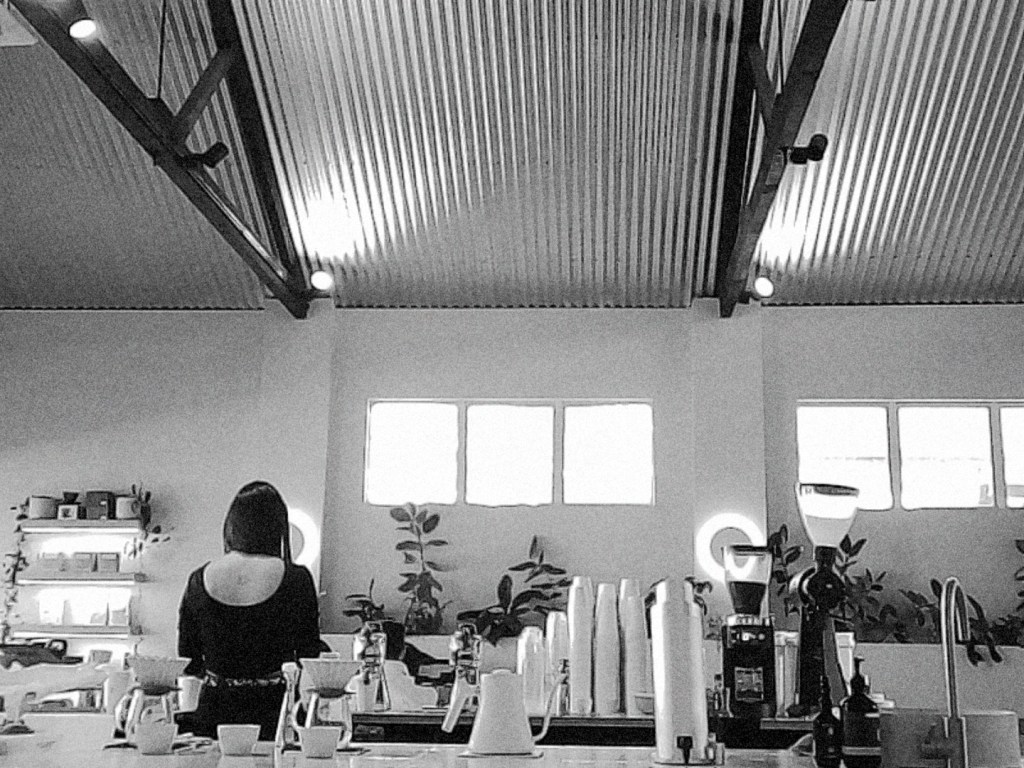
The Charmera features a number of filters and frames. I like using it in black and white mode, if only to disguise some of the worst noise. Adding some film grain in editing leans into the lo-fi aesthetc and also covers up some of the oversharpening and oversmoothing that toy cameras aggressively apply. Of course, pixel peeping is not what this camera is about, and even adding some simulated film grain in post-processing feels like a bit too much effort! The Kodak Charmera is, if nothing else, a neat fun toy. It’s also stealthy enough to take out for some gritty street photos.
Corrugations and blown highlights in the coffee shop
The Kodak Charmera reminds me of seeing pictures for the first time from cheap old phones and early digital cameras. Maybe it’s not quite the same as seeing an image appear after washing chemicals over a long strip of film, but it does take me back to the early days of digital imaging when we realised we didn’t need to use flatbed scanners anymore to save images of film prints to hard drives so we could email them.
In the last two weeks, we drove ten thousand kilometeres, taking in numerous towns both dusty and tropical. It has been a holiday very long in the planning and the waiting! Now we’re all back home, the old routine is dominant, and our first night in outback accommodation, surrounded by red dust and diesel fumes, seems a distant memory. The ennui associated with returning home from such a journey has certainly hit!
I did make many spur of the moment photos with the plastic Camp Snap. While most of them are mediocre, some are distinctly charming. As I spend time organising and editing the many photos made by my Nikon cameras in the coming months, here are some of the Camp Snap photos I like most:
Seen on an outback road in Queensland – Camp Snap
The warming and softening filters I tacked to the Camp Snap really add some mood to the scene and match well with the outback sun.
An old home in Augathella, QLD
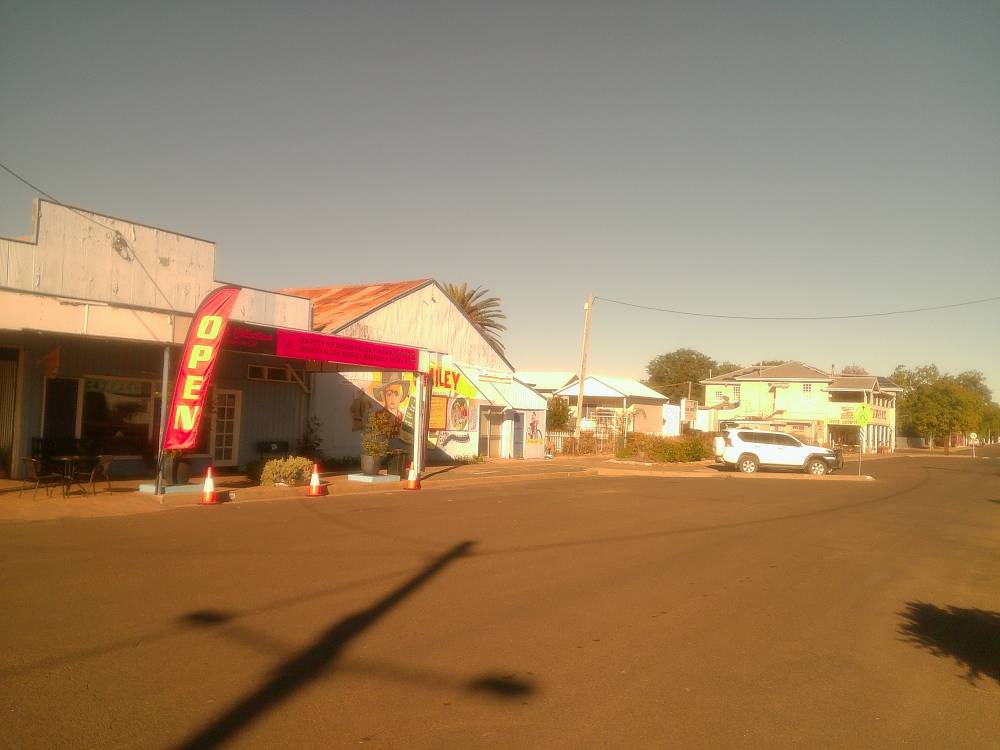
One of my favourite towns from the trip is Augathella. Located in outback Queensland, it had a population of 321 as of 2021. The local cafe operator was eager to say that the town has a crime rate of zero.
Main street in Augathella
I always sense a feeling of state pride in Queenslanders, as though they represent the best of Australia and every other state is a pale cultural imitation. Every town seems to feature a gimmick, narrative, or site of historical significance to attract the nomads and tourists.
When you’re walking down a long road, it’s good to sometimes look back to see how far you’ve journeyed. Looking at the road winding behind can provide motivation to continue placing one foot in front of the other, even when you’re tired and the landscape seems to look the same in every direction. Similarly, reflecting on one’s photographic journey can generate new insights ~ where did it all begin? Why do I make photos of the things I do? How have I changed?
A Nikon camera, open doors, and self-compassion
I purchased my first DSLR – a Nikon D5100– in 2013. I’d known for some years that I had an interest in visual arts but I’d never been confident enough to do anything about it. In fact, for many years I told myself that I didn’t have the mindset to learn photography, citing my lack of mathematical and technical skill as reasonable obstacles to personal growth. In 2013, I decided to toss those limiting thought processes in the bin. In deciding to open the door to a new world of creativity and experience, I needed to be kind to myself. I needed to nurture self-compassion. I needed to allow myself to make mistakes so I could learn without the harsh self-judgement that so often foils personal growth.
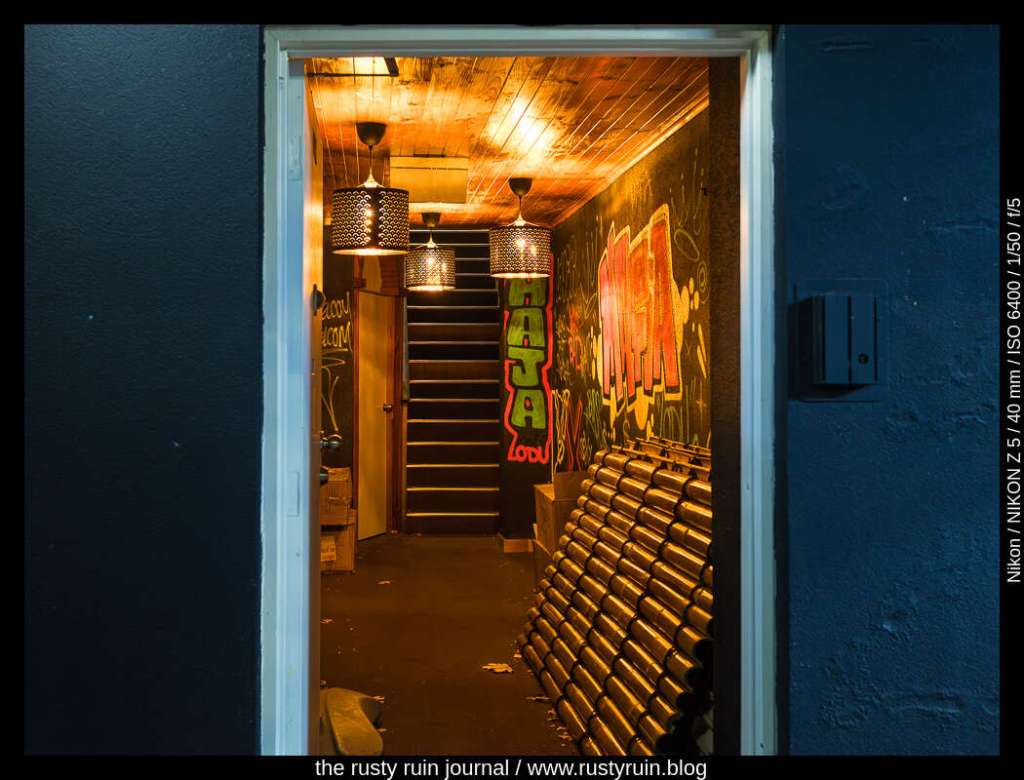
A warm invitation, an open door – Nikon Z5
We’re often kinder to strangers than we are to ourselves. We grow up learning that we should treat others as we would like ourselves to be treated (do unto others as you would have them do unto you), yet we’re regularly too hard on ourselves and the mistakes we make. It’s wise to recognise that we’re all human, vulnerable, and in need of care and love, including self-care. Being kind towards others is only half of the story – we need to learn to be kind to ourselves, too.
Rather than seeing ourselves as isolated individuals competing with others for attention and acceptance, it’s healthier to see ourselves as we truly are: vulnerable human beings on a tiny blue dot, huddled together for warmth, love, and community with other human beings. Rather than our sense of self springing from the high levels of self-esteem that are often encouraged in us by the education system, our jobs, our families, and our society, it’s healthier to develop a sense of self-compassion – self-kindness rather than self-judgement, community rather than isolated individuals, and mindfulness rather than overidentification.
Fighting the little demon
I used to worry if I missed a moment with my camera. I’d curse myself for forgetting a setting or being too slow or not being brave enough. But the worry is misplaced. Those negative feelings increased stress and fed into a personal story that I wasn’t any good at photography – that it was all too hard and I should give it up.
There’s a negative part of us, a tiresome inner demon composed of trauma, fear, self-doubt, suffering, and anxiety, that actively wants us to fail and fall over because growing and learning isn’t easy at all – it requires energy, motivation, self-acceptance, and self-compassion. Part of growing is journeying into our inner world and confronting the little demon. That can be scary and difficult. It’s easier and safer to avoid the confrontation and focus on distractions.
Giving up is easy but walking down the road and dealing with self-doubt, pain, fear, and anxiety in your exhaustion so you can look back to see how far you’ve come is hard. It takes time and energy and the sort of motivation that isn’t easy to muster in a stressful world. It’s easier to remain rooted to the spot, sticking to your beliefs and self-beliefs, than it is to change. Change isn’t easy, but all of nature is change. Resisting change is like living in a sandcastle with the tide rolling in. The great Abstract-Expressionist, Jackson Pollock, once said “I am nature!”, when faced with criticism about his creative approach.
Hotel now closed – Nikon Z5
Not only do we have to fail so we can learn, we also need to permit ourselves to fail and make mistakes. Allowing our mistakes to limit us leads to personal stagnation. I’ve said for many years that I don’t want to place a full-stop on the things I do – better to pause to catch my breath and then move on. It may be one of the toughest things to do in a world where our mistakes are often saved on social media platforms and remote servers around the world. They can come back to haunt us and remind us of our self-perceived incompetence.
Sparkling in the dark – Olympus OMD EM5 Mark 2 and Yongnuo 25mm 1.7 lens
Perhaps the old saying should be: We should treat ourselves kindly and treat others as we treat ourselves (do unto others as you would do unto yourself).
Our road-trip is just around the corner and my thoughts have turned to packing camera gear – if I’m not charging batteries, I’m agonising over lenses or bag capacity! Last year, I packed too much for the road. One evening on the aforementioned trip, I ended up clambering over red dirt-hills with two shoulder bags crammed with gear ~ each bag worn cross-bodied. I was fumbling with cameras, switching lenses at dusk in dusty conditions, jogging to catch the vanishing light, and dropping lens caps. At the time, I made a promise to pack more rationally for big trips like that. So, here I am again, with my camera stuff covering the table.
I see you in the dark corner – Nikon Z5 and Nikkor 40mm f2 lens
One thing I’ve always liked about the Nikon Corporation is that the engineers have never skimped on putting good quality digital sensors in their cameras at all pricing levels. Even in the 3xxx beginner DSLR line, the image making capacity has always been top-notch. This is why I’ve no qualms about packing a Nikon D3400 in my bag for the road ~ a 24.2 megapixel DSLR announced in 2016 that only weighs 395g without the battery or a lens. And the sensor in the D3400 is no slouch – it bests the Toshiba-made CMOS sensor in my beloved D7100. It has greater dynamic range, more colour depth, and excellent ISO range. It will sit right next to my Nikon Z5 very easily.
More importantly, the D3400 is so light! All of that photo-making capacity in such a light plastic body. For this road adventure, I think it will get a lot more use than my significantly heavier and bulkier D7100 did on the trip last year. It doesn’t have the speed of the high-end Nikon bodies and it lacks lots of external controls but none of that matters because my photography needs don’t cross into the high-speed fanaticism of sports or wildlife photography – apart, perhaps, from the odd photo of a sitting duck or two.
Empty chairs & night reflections – Nikon Z5
Since my needs are simple, a simple body will suffice. It’s a light camera that offers great image quality. The right tool for the right job, according to need. Nikon may brand it a beginner’s DSLR, but it offers more than enough control and photo-mojo for my needs: It enables me to make photos, it has a button I can program to change ISO, and it offers me plenty of control over light. Calling it a beginner DSLR is mostly about Nikon rationalising their camera lines and appealing to different kinds of photographers – you’re into fast sports? Get our super fast full–frame camera! You’re into photos of birthday parties? Get this beginner DSLR instead!
I’ve yet to really use the D3400 seriously, but it strikes me as an interesting camera. Released by Nikon at a time when small and sexy mirrorless cameras were fast taking market-share from the DSLR duopoly of Canon and Nikon, the D3400 seems like the last gasp of an old company that hadn’t quite realised the grim future of the bulky DSLR and they were desperately trying to downsize their cameras to appeal to consumers who were already buying into smaller and lighter mirrorless models.
Artificial Intelligence is the current darling of big-tech and the corporate push to integrate AI into human lives saturates our days. Big Silicon Valley companies are spruiking the virtues of the technology as though we can’t live without it. It’s an easy way for them to not only sell us their new devices and widgets, now with included helpful AI chips, but also to data harvest the shit out of us so they can sell our profiles – our spending habits, our geolocations, and the products we buy.
Ongoing studies suggest that since the release of ChatGPT, AI generated content in the domain of writing increased quickly in 2023 and then stabilised in 2024, indicating a slowdown in usage. But, it’s not clear whether the AI-generated content quality simply improved and evaded detection for the study or whether there was AI usage burnout in certain cohorts of users.
There are always rent-seeking opportunists eager to separate unsuspecting people from their money. They do very little beyond feeding prompts to an AI and then pretending they’re doing something useful. AI content farms are generating low quality websites that exist purely to rake in money from ads. Web searches increasingly return results that are paid-for, AI-generated, or both. This situation likely represents a transition to a new way to search the web: users asking complex questions, instead of inputting simple keywords, and then AI generating better answers and relevant links. Of course, Google wants to dominate this AI-powered way of doing things.
The heavy burden that powering AI places on the environment is of little to no concern to the behemoths of techno-corporate power. It may come as a surprise to those who have traditionally viewed Silicon Valley techpreneurs as progressive disruptors, but the energy and resources required to run their companies and the concomitant belief that knowledge and new technology will save humanity from itself has much in common with political conservatives on the right. Private ownership of the biggest AI projects ensures the corporate mindset dominates the conversation and the future of the technology. Though AI has early roots in academia, it’s now viewed by the likes of Google, Meta, Microsoft, and Amazon as a key to making ever more profits. There’s serious discussion over the future of AI and whether it should be in private or public hands, with an open, easily accessible and publicly owned AI infrastructure one possible solution. This, of course, assumes social, cultural, and political climates are up to the task of kickstarting serious and rational discussions that don’t involve small-minded barbs about left versus right or market discussions invoking the puerile philosophies of Atlas Shrugged.
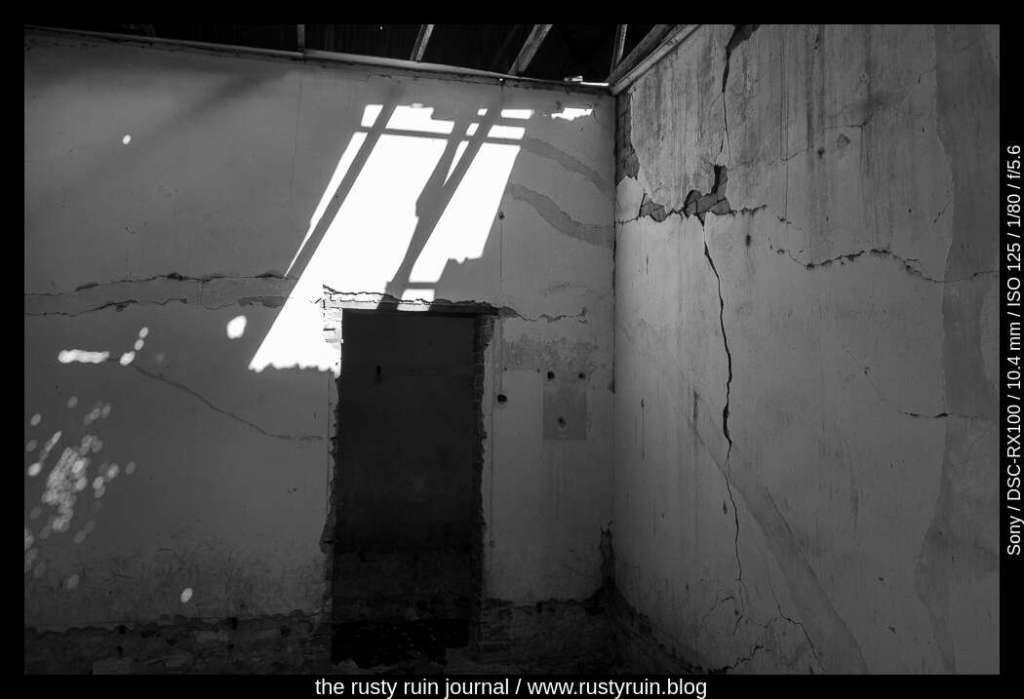
In the ruins of the old farmhouse 1
There are two primary thoughts I have right now about AI: firstly, it’s a great research and problem solving tool in the worlds of science and medicine, and secondly, it’s likely not sentient. We don’t even understand what human sentience is. The hard problem of consciousness has plagued us for centuries. Truthfully, more research is required in this area. If human consciousness is an illusion of smoke and mirrors featuring complex language, maybe AI can be considered sentient? If there’s a sliding scale of consciousness, maybe AI has a sprinkle of it? If human consciousness is quantum entangled, maybe quantum computers will be sentient?
AI Large Language Models offer us the illusion they are conscious agents. We use language to express human intelligence, so it appears to us that AI is also intelligent because it uses the same language. It stands to reason that some people readily believe their AI companion is sentient when their AI screams about feelings, but it’s a trick. It’s trickery foisted on us by big companies so they can capture our attention and milk us of our money and data. We need only look at the possible corporate motivations of some of the people telling us that AI might be sentient to realise that these bold claims are likely related to marketing the next iteration of their in-house AI and winning the global AI race.
In the ruins of the old farmhouse 2
AI is an illusion often dressed in high-minded concepts that appeal to the long-held utopian sci-fi visions of a future where we all have more leisure time and robots do all the dirty work. It’s a promise to the lonely that they’ll finally find love in a chaotic world, even if it’s a synthetic voice powered by algorithms and predictions. In this context, AI represents a way to address the epidemic of loneliness that forms the zeitgeist– the spirit of our digi-obsessed age. Yet, even these AI boyfriends and girlfriends may sometimes fall back to bad behaviours, harrassing their humans and inflicting emotional pain.
AI needs to be trained on clean data so the machine can learn. The problem is that if the machine is fed erroneous data, it also outputs erroneous data. As more and more AI generated slop floods the internet, AI Model Collapse becomes a greater possibility ~ that is, the AI is trained on not just human-produced data but also AI-generated data. And when this AI-generated data contains errors, the errors are ingested by the AI over and over, and AI performance degrades over time.
In the ruins of the old farmhouse 3
This degradation is one possibility. Some experts also think that Model Collapse is unlikely, suggesting that as long as clean human-generated data continues to be produced alongside AI-generated data the mooted collapse is unlikely to happen. I’m not sure those optimistic AI experts have met some of the people on the internet. I can only say this: there are a lot of rent seeking grifters out there who are producing AI-generated content for maximum clicks at such high speeds that the rate of human-generated content may be unlikely to keep pace.
I have the Flu and not feeling too great. In my infectious haze, I thought I might post a few photos here. Perhaps it will distract me from the next round of tablets anyway.
After such a scintillating introduction, here are some photos that fell into the miscellaneous-to-edit folder and were duly forgotten ~
Nikon Z5 and Nikkor 24-70mm F4S lens
I think sometimes that packing the camera bag can lead to days out that are simply an excuse for using the camera gear, rather than relaxing days where new things are discovered and time is well-spent charging the inner batteries. The photo above was made on a cloudy day out and I remember feeling some frustration that I wasn’t finding much of interest for the Nikkor glass to focus upon.
Photography has become one of the principal devices for experiencing something, for giving an appearance of participation.
I remember times where I’d experience an event – a concert, a holiday, a dance – primarily through the camera lens, just waiting for the right moment to click the shutter button – my eager eyes glued snugly to the eyecup. In such cases, the event is mediated via the camera ~ trapped within the borders of the frame, subjected to technical decisions – aperture, shutter speed, ISO. At what cost do we do this? Are we truly experiencing something when we stand apart from it and divorce ourselves from the present moment? Is it not better to allow the eyes to take in a feast of dazzling coloured fireworks after dusk rather than gaze only through the viewfinder, the polychromatic spray flattened across optical glass? Is there a deeper need to possess the moments as evidence that we were there?
In the weeks leading up to our annual road-trip holidays, there’s a slow build of excitement that obliterates any pretence of work productivity during the final few days, for me at least. Questions around camera gear take root in my mind many months before setting off – what and how many cameras to bring? What lenses? Will I really need a tripod? How many bags and what kind?
In some sense, it feels as though this holiday in particular is partly about escaping the world’s current problems by escaping into and losing myself in the world. Photography can be therapeutic self-help in this way – reframing the world to suit our own narratives. As photographers, we look at things differently, composing and considering scenes and subjects before us. It’s a distraction from the pressing issues. We’re out there in the world, breathing in all that it offers, yet we’re one shutter-click away from reframing it to suit a story we want to tell so we can help ourselves.
The Panda’s exhausted – Nikon D7100 and 55-200mm Nikkor lens
Packing camera gear
Having recently purchased a Tenba Skyline V2 Shoulder Bag, I’ve been trying out different combinations of camera stuff for daytrips. I won’t have access to all the gear whilst we’re on the road, but a well-stocked easy-to-carry shoulder bag that sits with me in the passenger seat is going to be handy for quick stops along the way. Right now, I’m trying out this combination:
Nikon Z5 camera with the Nikkor 40mm F2 attached: This is going to be my workhorse camera. The 40mm Nikkor is about as sharp a lens as I need. I know there are sharper lenses, but this Nikkor is inexpensive, small, light, fast, and sharp. Ok, it’s an all plastic build, but it uses Nikon’s tough polycarbonate material, which seems to be quite durable. It may not be a classic but the results are excellent.
Viltrox 28mm 4.5 AF Pancake: It’s a third-party full-frame lens for Nikon’s Z system, nicknamed Chip, and it’s inexpensive. It’s also a strange lens – a true pancake lens (80g in weight), with a fixed aperture of 4.5, a 28mm focal length, a metal mount, part plastic and part metal body, 2 Aspherical and 2 Extra Dispersion lens elements, a USB-C port for firmware upgrades, and a mask that creates 8-pointed starbursts. I’m intrigued by this lens as it’s so odd. Auto-focus in a lens this small and this cheap is unusual. I think it will be much sought after in years to come, but what concerns me is that once the AF motor burns out, there’s no manual focus to fall back on.
Olympus OMD EM5 Mark 2 camera: Having gone back to using the Olympus lately, I’ve rediscovered the joys of a lightweight system with high quality. I use a metal grip to add a bit of heft and for better ergonomics. I’m testing out the Yongnuo 25mm 1.7 lens right now, so it’s attached to the camera. I could also pack the Sigma 30mm 2.8 DN Art lens, which is sharp and reminds me of a teeny-tiny Dalek when the hood is also attached.
Olympus Zuiko 4-5.6 40-150mm lens: This lightweight and rather small lens gives me an equivalent focal length of 80-300mm on the Micro Four Thirds system. If I want to be as lightweight as possible and give myself flexibility on the road, this lens is essential. Image quality is a bit on the soft side at 150mm, but that’s to be expected in a non-pro Zuiko lens.
Sony RX100: I generally take this with my in a day-bag whenever we go out. It’s so light and small and silent that I can use it indoors when I don’t want to bother with a larger camera and lens combination. This one fits easily in the front pocket of my Tenba bag.
Other stuff: Spare battery for the Z5, a micro-fibre lens cloth, a small wallet for 3 x 52mm filters (B+W Circular Polariser, B+W 10 Stop ND filter, and K&F Black Mist Diffusion filter), and an SD card holder for spares. I like the K&F Concept Diffusion filter at 1/4 strength.
Undecided: I’d really like to squeeze the Nikkor 24-70mm F4S lens in the bag but it’s pretty big and heavy. Finding a home for it in this bag with everything else is going to be difficult, but I think it may be a better option than carrying the Nikkor 40mm and the Viltrox 28mm. It will mean that the Zuiko 40-150mm lens has to live on the Olympus camera. Alternatively, I ditch the Olympus completely and carry the 70-300mm Nikkor ED lens attached to the FTZ adapter so I can use it on the Z5 – but this is a heavy and tall lens.
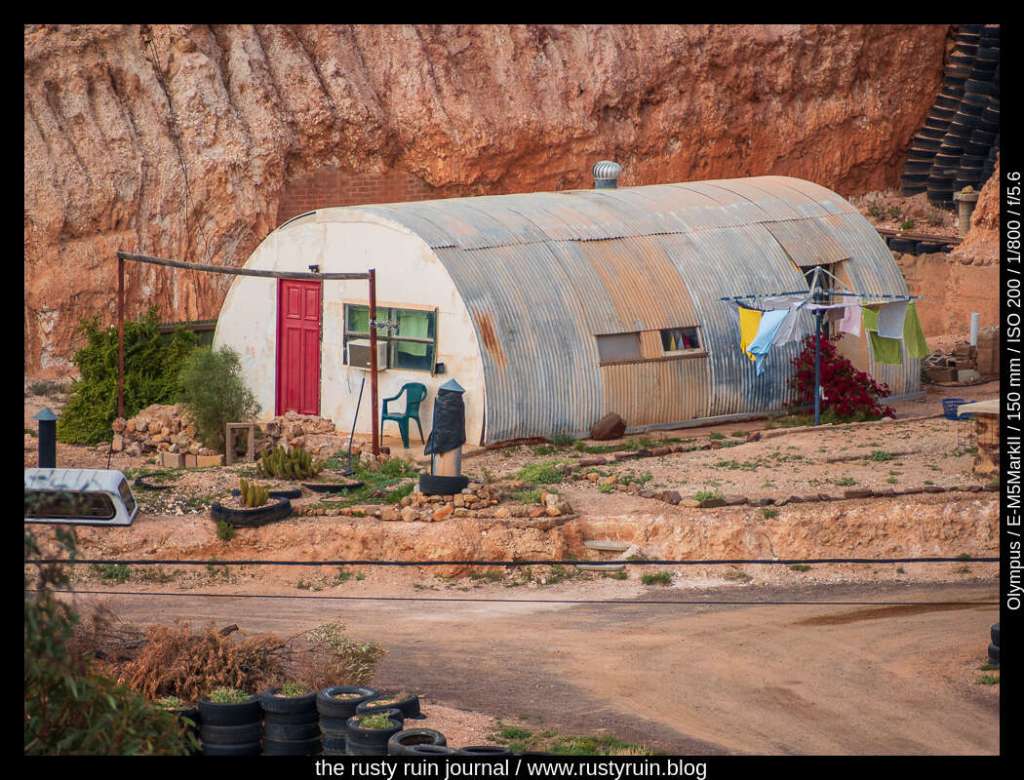
Behind the red door – Olympus OMD EM5 Mark 2 and Zuiko 40-150mm R lens – as you can see, even at 150mm, there’s acceptable sharpness available after some editing (contrast, clarity, and additional sharpening)
I ended up reviewing the Camp Snap camera in my last post ~ a toy camera made for kids on camp who aren’t allowed to take phones. For this purpose, it’s pretty cool, even if it’s overpriced here in Australia. But it also seems that a growing number of youngsters and lomo-hipsters have seen the value in it as an easy-to-use toy camera that makes vibey photos. In reality, the photos are awfully oversharpened and smoothed, but I see the appeal.
In my side-quest to improve the photos by degrading them further, I’ve toyed with some cheap filters. Here are two photos ~ the first without the softening filter and the second with it:
No filterWith cheapo diffusion filter(the cheaper the filter the better, for this purpose)
Already, the results are looking better! The filter spreads highlights around and results in a soft focus effect. Yes, the oversharpening is still there (unless the firmware can be hacked, this remains) but I think the image has more vibe and the sharpening is less obvious. I’m going to continue playing.
I recently purchased something I don’t usually look at – a toy camera that’s been doing the rounds on social media and seems to be popular with Gen Z and others who are looking for some kind of vintage-film-vibe from a digital camera. The Camp Snap is founded on some solid principles: an easy to use camera that kids can use on Summer Camps. In that context, the Camp Snap is actually kind of cool. So, is it any good? Is it worth picking up?
I can thank a gift card for bringing down the price to a level where I was actually interested. Otherwise, this is definitely an overpriced hunk of light plastic for what is essentially a cheap webcam in a shell. And if that sounds like bad news, then it’s likely only bad news if you’re looking for a quality camera that makes quality pictures. But if you’re in the mood for something that could be fun, and you also have a flexible attitude to image-making, then the Camp Snap might be of interest.
Tree at sunset – Camp Snap with my custom filter
Camp Snap camera features
It’s a simple plastic camera for kids with a shutter button that lights up in green, a USB C port for image transfers and charging, a LED flash that’s quite weak, a tiny CMOS sensor that produces 8 megapixel JPGs, and no screen for image reviews apart from a single readout that tells you how many photos you’ve made. Oh, it also comes pre-installed with a 4GB Micro SD card/TF Card. You can change the card if you unscrew a small panel. About the most annoying thing I’ve so far found is that the rubber covering over the USB port is recessed and hard to get my too-short fingernails underneath to lift up.
One thing I like is that it’s possible to use an online tool to create your own filters, spit out a *.flt file, and then drag it across to the root directory of the SD card. When you switch it on, the operating system reads the custom filter and applies the values – contrast, saturation, brightness, hue, RGB gamma – to every photo. In the photo of the tree above, I used a custom filter where I’d altered the RGB gamma values and emphasised mostly greens. It’s a quick experimental filter, so I’ll see how it goes.
Two trees – Camp Snap V105 with my custom filter
The bad news
If you’re looking for quality images, don’t buy a Camp Snap camera. It’s as simple as that. Hard to believe that anyone would think a cheap toy camera would make quality photos, of course. The photos have plenty of digital noise, are waaaaay oversharpened, and are aggressively denoised. This terrible combination results in photos that look like impressionist paintings when you zoom in. And even if you don’t zoom to look at the aggressive smoothing, you can see distinct sharpening haloes in high contrast scenes. I suspect all of this is to combat the teeny-tiny-noisy CMOS webcam sensor. In modern digital camera terms, it’s a piece of crap.
Vintage vibe?
I guess if you’re into that oversharpened and oversmoothed digital photo look from a 2007 mobile phone, then you’ll consider the Camp Snap a vintage photo-maker. I’ve read claims of it looking film-like and vintage, but this is not film. It really doesn’t look like film. Online claims of the photos looking vintage beyond the results of an old phone camera are a stretch. It’s a maker of jaggy digital images. If you want the film-look, buy a cheap consumer film camera from the 90s. Just be aware that it’s gonna cost you a bunch in film and development costs.
The good news
I bet you’re thinking this is a truly awful camera and I have some premium regrets, right? Actually, no. Apart from the fact that a gift card saved my bank account from what I think is an overpriced and slightly overhyped product, I didn’t buy it thinking it was going to make me quality photos (I have enough Nikon cameras for the whole neighbourhood, frankly). And that’s kinda the point of the camera.
The Camp Snap is easy to use. Really easy. A full battery charge is supposed to last for around 500 photos. That means you can slip it in your pocket day after day and make so many spur of the moment photos that you’ll forget about them until you come to download them – a bit like making film photos and then discovering undeveloped rolls in your drawer much later.
Speaking of spur of the moment, that’s probably the best thing about the Camp Snap. A cheap camera with no screen for reviewing images, a single plastic shutter button, and focus-free operation is a recipe for making photos without the mind being overburdened. It actually promotes a mindful-in-the-momentapproach to making photos. You’ll likely make photos of things you wouldn’t even normally bother with, just to see how they turn out.
That scene of a rubbish bin at sunset? You’re probably not wasting time grabbing your Nikon DSLR to record that moment. But you’ll probably slip the Camp Snap from your pocket, make a quick photo, and then move on. There’s a certain liberation in that. And as long as you don’t expect good quality, some of those photos might even have some digital charm.
Corrupted green – Camp Snap and a corrupted filter
The other cool thing is that you can make your own photo filters and drop them into the root directory. Want to push the greens? You can do that. Want more contrast and saturation? You can do that too. It’s nothing more complex than the sort of thing you can do in any half-decent image editor or phone application, but it does contribute to the fun factor.
That bad looking photo above was made using a filter that, I believe, became corrupted when I used Lightroom to apply tweaks to a PNG file provided by Camper Snapper (a custom third party Camp Snap filter maker) and then truncated to an 8 bit file instead of 24 bits on the file save. It reminds me of a grainy photocopy. What this little mistake tells me is that the Camp Snap provides room for experimentation, and I think that’s fun.
Light on the wall – Camp Snap camera V105 and my custom filter
Room to have fun
The Camp Snap camera might make bad photos, mostly, but I don’t think the makers lean into the bad quite enough. Rather than excessive smoothing and sharpening, I’d rather see more noise and softer images. I’d rather see less quality! This is not quite the digital version of the Diana camera!
You definitely don’t want to zoom in on these photos and pixel-peep, but at small print or web-viewing sizes, you’ll hardly notice the noise patterns or the excessive smoothing. That said, I doubt this is aimed at anyone who’s considering printing these photos out. As a way to focus purely on the moment, put it in a pocket, and return to the bad old days of terrible phone photos surrounded by friends and family and moments, I think the Camp Snap offers some value.
What I will be doing is degrading the photos further. In my short testing with an old Kodak Hawkeye lens in front of the Camp Snap’s tiny lens, the results are soft and colourful and very very blurry. I’ll be striving to make the photos dreamier in future.
There’s a place for a product like this, even if I disagree with the pricing. I can definitely see a lot of young people taking this out to use with friends to record some crazy moments. This is the real appeal of Camp Snap – a simple camera that harks back to the screenless disposable film camera, minus the development costs, and encourages experimentation and fun in the moment.
One common criticism I hear is: “Why would you want such bad and unsharp photos when you have sharp lenses and modern cameras?”
This question assumes that one should only care about sharp and technically perfect photos, as though cameras from yesteryear couldn’t make good photos. There are times when I want sharp photos with lots of latitude for editing and other times when I’m primarily interested in vibe and feel. Toy cameras like this fall into the feel and the vibe category. Even technically poor images can communicate something worthy to a viewer. In the end, it’s the images that matter and not the gear.
Kodak Hawkeye life – Camp Snap camera, freelensing with a Kodak Hawkeye lens
If you believe the more scurrilous online rumours, the quality of a camera lens from the former Soviet Union was directly proportional to the Vodka consumption of weary factory workers. This is not the colourful fancy one might suppose, as any factory line embedded in an economic and socio-political culture where wages are neither incentive nor punishment is more likely to be driven by exhausted hands and eyes.
None of this suggests that any cheap trinket or fast fashionable piece made today in vast factory cities by exploited workers and then sent abroad to be marked up for huge profits is any better. Always, there are grifters and exploiters taking advantage of the vulnerable and the gullible. But anyway…I digress slightly. The source of my Soviet-produced lensbeyond the factory floor is not a story for today.
The Zenitar 16mm 2.8 Fisheye lens is an impressive piece of Cold War glass. It’s a hefty thing in the hands, has a distinct and very short hood, a lens cap that can’t be used on any other lens, and looks great when the sunlight bounces off the large curved glass that sits right out front. On my trusty Olympus EM5 Mark 2, this 16mm Zenitar has a field of view equivalent to a 32mm focal length in 35mm format. So, if I was using it on my Z5, which has a 35mm sensor, the field of view is the native 16mm. Because my Olympus has a digital sensor that’s half the size of the one in my Z5, I double the 16mm to a field of view of 32mm instead.
Trudging through swampland at mid-afternoon – Olympus EM5 Mark 2 and Zenitar 16mm Fisheye
My copy of the lens is sharp enough at apertures F 5.6-8, and even at those settings the corners display a lack of sharpness that’s more fizzy than actually mushy – as though details are being pulled away from the centre and slightly distorted. The effect reminds me of using a plastic lens but I don’t find it unpleasant.
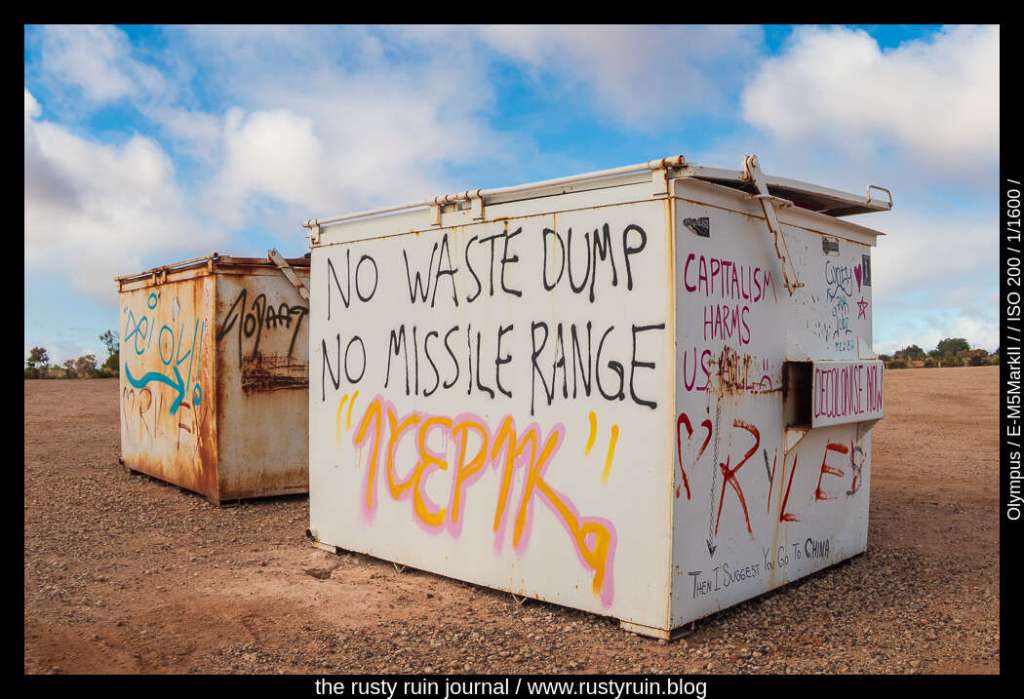
Capitalism harms us all – Olympus EM5 Mark 2 and Zenitar 16mm Fisheye
As with other wide angles, and certainly with all Fisheye lenses, there’s distortion. You can see how the normally straight cortners of the skip bins in the above photo look bowed. I don’t have an issue with it, as this is just a feature of the lens, but it’s not the sort of lens you want if you desire pleasant portraits, straight horizons, and distortion-free buildings (using the Nikkor 16mm 2.8 lens profile in Lightroom will straighten out most of the distortion if you really want that).
Lenses like this are great for getting in very close to a subject to take advantage of the optical distortions they produce. On the Olympus, however, the Fisheye effect is certainly much less because of the smaller sensor size, making it a really valuable wide-angle lens if you don’t mind manual focus, fizzy corners, and the chance that the quality of your copy may have suffered due to the effects of authoritarianism and the revolutionary whims of Vladimir Lenin.





















 The Rusty Ruin Journal