A waterfall, tourists, and different camera generations

Finally, I’ve started to edit some of the photos from the recent road-trip. I made so many that I’ll probably have editing fodder for the next two years! The recent laptop upgrade has taken up most of my spare time ~ copying thousands of files across, wrangling new software installs, and adapting to a non-OLED screen. The upside is that the new laptop features desktop power in a portable plastic shell, so any photo editing software runs as smooth as glass made by NASA for the latest Space Shuttle build.

The third of three waterfalls, Atherton Tableland – Nikon D3400 and Nikkor 35mm lens

On this day, we were driving through the Atherton Tableland, via Atherton and Herberton. Somewhere along the road, we happened on short walking trails for three waterfalls. Not having had an opportunity for hiking up to this point in the road-trip, we leapt at the chance to enjoy the cool forests in the area.

As serene as the waterfall looks, the mess of tourists waiting on the viewing platform to make photos was anything but quiet! Having made my way to the front, I hurriedly reached for my Nikon D3400 and made some quick photos. I’d screwed in the Circular Polariser to minimise the stray reflections on foliage and water. Using a slower shutter speed of 1/60th of a second blurred the fast-running water to give it a milky effect. Because I was using the Nikkor 35mm lens, such a slowish shutter speed was unlikely to cause a blurry image, as long as I was still enough. Even if I’d wanted to use a tripod for extra stability, finding room in the crowd was not going to be easy.

Within moments of completing those initial photos with the D3400, I pulled out the Nikon Z5 and made some more. After a minute or two of switching settings and trying different positions on the muddy viewing platform, I felt the pressure of the tourists behind me waiting for their turn.

Just as I was about to put away the camera, a guy approached me casually swinging his Sony A7III and asked me to make a photo of him and his family – “Always best to ask a person with a good looking camera, right?”, he said (I wondered what he might have thought if I’d been using a glacially slow 20 year old Finepix). After checking the settings – shutter priority and face recognition – I obliged and handed it back. Almost as soon as I’d done this, a young woman walked up to me and handed me a one-shot film camera. I made a photo of her and her young overseas tourist group and wound on the film.

From a Nikon D3400 to a Nikon Z5 to a Sony A7II and then a cheap film camera. As I was the last of our group still lingering, I quickly left the scene and made my way back to the waiting car.

Walking the old goldfields with the Fujifilm Finepix S6500fd ~ ghostly gums and Fuji-Chrome

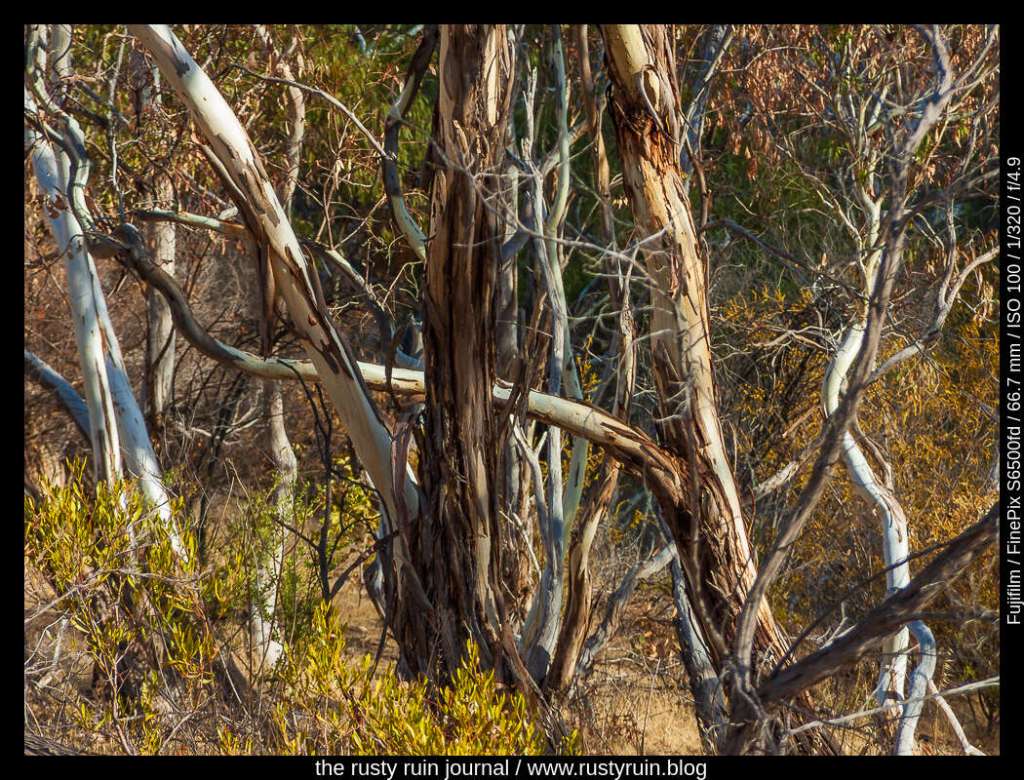
It was the perfect afternoon for us to ramble along a walking trail through century old goldfields nearby. I’d decided to pack the Nikon D40 and the Fujifilm S6500fd. I totally forgot about the Sony RX100 sitting in the zipper pocket of my camera shoulder-bag – the usual go-to in case an old camera flakes on me. I’ll say this about the Finepix S6500fd: the combination of the tiny Super CCD sensor – ancient in digital photography terms – and the long, sharp lens, produce some really interesting photographs at times.

Ghostly gums – Finepix S6500fd

Setting the camera to the Fuji-chrome setting and Fine JPG seemed to enhance the blues and purples in this photo. Maybe it was the combination of the cloud, sunlight, shade, subject, and white balance, but there’s a really strong look to the image. I haven’t added additional colour in editing.

Gum trees along the trail – Fujifilm Finepix S6500fd

For the above photo, I decided to set the camera to generate RAF files – CCD-RAW in the settings menu. I wasn’t even sure they’d open in Lightroom, but they did, and I’m pretty pleased. This provides more latitude and flexibility during editing. As you can see above, I was able to draw out pretty good detail in the shadows and sharpen the image in specific areas. It’s not easy to see without magnifying in Lightroom, but there’s some beautiful detail and tonality in the bark. Hard to believe from this piece of old gear.

Beneath the bark – Finepix S6500fd

Finally, one of my favourite features on old bridge cameras is the Macro and Super-Macro modes, at the touch of a button. It’s so handy for getting up close when there’s good available light for a decent shutter speed. I usually wander handheld, so there’s no tripod involved. Steady hands and good light are a must under these circumstances. It’s a JPG (wish I’d set to CCD-RAW), but the colour and range of tonality is still impressive. The best photos from this camera, like the S7000, seem to have a versimillitude about them. Note to self: set this camera to make RAF files from now on!

Two sunsets ~ no pretensions

Things have taken a grim turn recently. I’ve been pre-occupied with thoughts of the small web / indieweb / personal web and then followed it up with some murder in the small outback town of Larrimah. It’s fair to say I probably need a sunset or two!

Looking out from The Point – Fujifilm Finepix S6500fd

This small bridge camera from Fujifilm only has a small – 7.44 x 5.58 mm – digital sensor, but it features Fuji’s SuperCCD sensor technology, which seems to have some special sauce about it. Can you believe the electronic viewfinder even has a nice live histogram so that you can alter exposure compensation quickly? It even looks like a mini-DSLR. Along with the clunkier Finepix S7000, I think the S6500fd is one of the best bridge cameras from the 2000s era between film and digital.

The moody golden spill – Olympus E1

These aren’t great light conditions for an old CCD-based camera like the Olympus E1 that loves more light, especially when pushing the ISO introduces the type of visible noise that 20+ year old digital cameras are known for. My steady hand and the vestiges of bright sunlight helped keep the shutter speed usable. I still love what this camera can do even more than 20 years after market debut! It can make very painterly images.

A few more from the Olympus E-1

The Olympus E-1 is quickly becoming one of my favourite cameras. There’s a certain solidity to the photos from it. The mid-tones are strong and the tone curve applied in-camera produces really attractive images. If there’s anything to the CCD versus CMOS sensor argument, the E-1 is likely one of the best arguments for CCD being inherently superior. None of this is to suggest that modern cameras can’t produce amazing images, of course.

Crystal Lake – Olympus E-1

With my time currently limited, the fact that the RAW files from the E-1 require far less editing than expected is a big positive. And I still think that people are overpaying for cameras like this. It may be a really nice camera, but it lacks many of the niceties we’ve become accustomed to on our modern cameras. The limited dynamic range can be a problem in difficult lighting conditions and there’s no Histogram or highlight blinkies to check exposure. This does lead me to more carefully consider the tonal range of a scene and whether I use ESP or Spot metering, so it’s a good thing for learning, really.

Mine also has a few issues – a missing eye-cup and the mode dial is stuck in either Program mode or Manual mode. The eyepiece is not an issue but the mode dial is frustrating. I can live with it though. It does serve to remind me that this is an old camera now and it won’t last. Yet another reason not to overpay for old tech!

Table for Three – Olympus E-1

I’d also taken out the Finepix S5600 along with the E-1 in my camera bag, but once I opened up the Finepix files at the end of the day, I was disappointed. If I hadn’t been using the E-1 all day, the Finepix would likely have pleased me enough. But looking at those photos side by side, the E-1 completely blows the Finepix out of the water.

I feel a sense of melancholy when I use the E-1 though. Olympus isn’t the company it used to be, with the imaging arm now sold off and owned by OM Digital Solutions. The E-1 is every bit a lovely camera from a different time. It was a time when digital photography wasn’t quite yet mainstream and venerable companies like Olympus were putting every effort into the new digital market – enticing film shooters with the promise of not having to pay for film development.

I can’t help but feel that the E-1 contains as much technical mojo as Olympus could pour into it. The collaboration with Kodak represents the shared vision of two traditional companies focussed on surviving in a rapidly changing photography landscape. Ultimately, neither company managed to escape a brutal market where smartphone cameras defined the new rules, with severe decline causing them either to be sold off piece by piece or handed over to new owners divorced from company tradition.

Antiques – Olympus E-1

The Nikon D40 – a perfectly small classic

In the days between film and the mainstream take-up of digital, traditional companies like Nikon were doing what they could to persuade people to finally make the jump to Digital SLRs. We’re now a long way from the days of the Nikon D40 – featuring 6.1 megapixels and an APS-C sized sensor – but it can still surprise with excellent image making. And after going out with a number of Finepix cameras recently, the D40 feels fantastically Nikonian, which is to say that the ergonomics are comfortable and familiar.

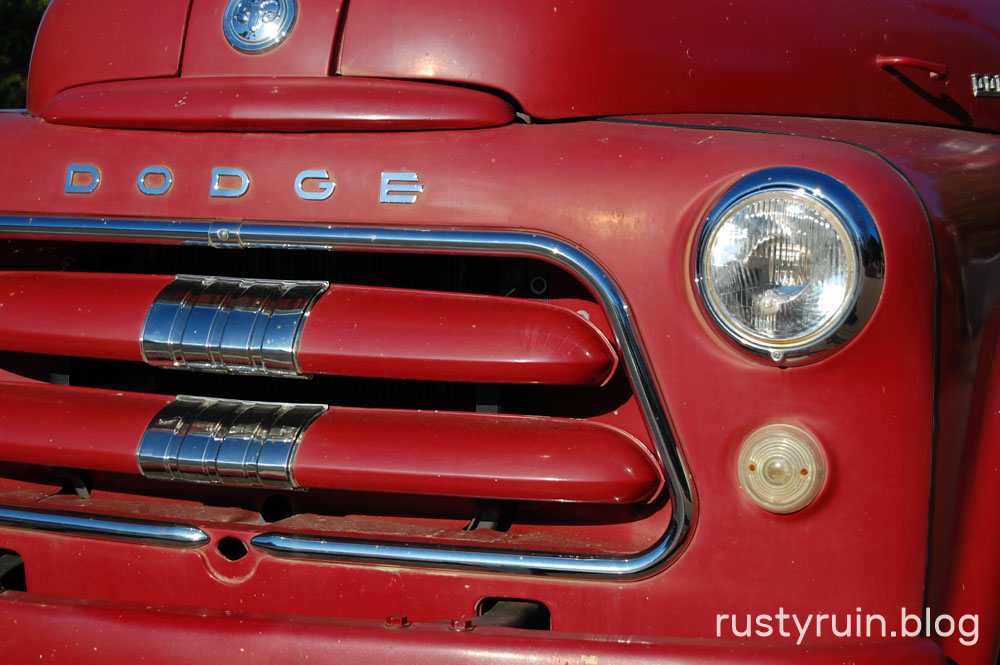
Dodge and polished chrome – Nikon D40

Note the lovely reds of the car body and the blue of the chrome preserved in the above photo. Plenty of detail with this old sensor too. I was using the 18-55mm 3.5-5.6 Nikkor kit lens, version 1. Plastic feel for sure, but decent optics, especially for a 6.1 megapixel sensor, where any shortcomings of the glass aren’t a deal-breaker. It turns out that the shutter mechanism isn’t faulty at all, as I thought last week, just my inability to note that the Exposure Compensation goes in reverse on these Nikons! That’s some good news at least, and rather makes up for the Finepix 602z I recently purchased, with a bent CF pin and non-working EVF. At least it was cheap!

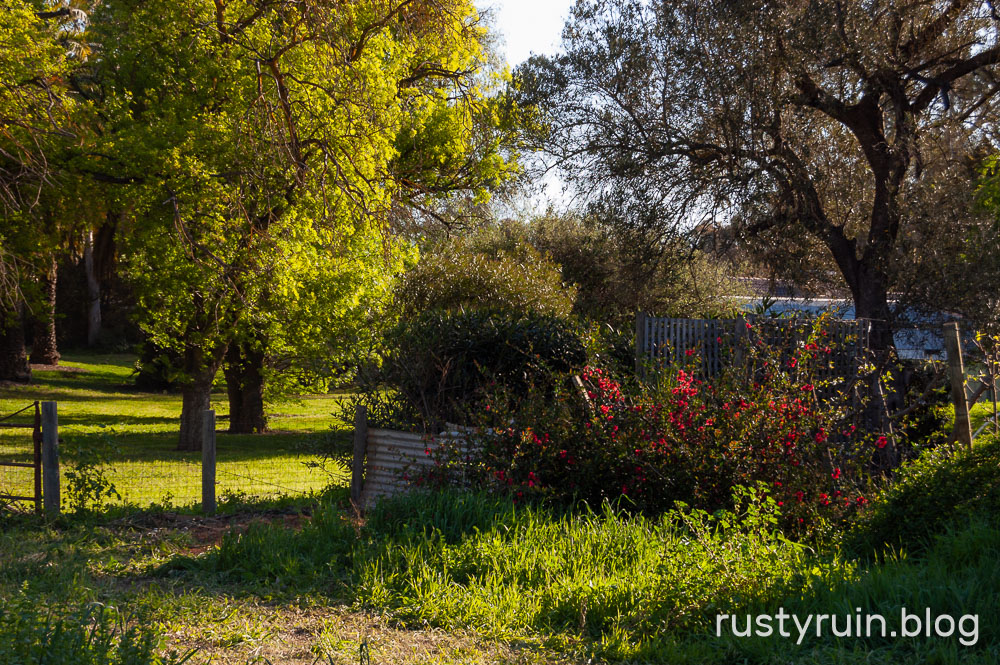
Garden of colour – Nikon D40

I was fortunate to have some great sunlight late in the day. These old CCD cameras definitely love the light, and I’m looking forward to also receiving my Olympus E1, even if it does have some usability issues. I’d heard a lot about the colour of the D40 and it doesn’t disappoint in this kind of light. I won’t say there’s something magical about CCD colour, like others do, but these photos do make you wonder whether image making has really advanced as much as we’re told?

As the leaves catch last light – Nikon D40

My Nikon D40 settings: JPG Fine, base ISO of 200, Exposure Compensation often set to -0.3 or -0.7, and Vivid picture mode. There’s barely any noise at 200 ISO and reputation has it that noise is not much of an issue up to 800 anyway. Old forums also suggest that the D40 has a tendency to overexpose, so I did often dial in a touch of negative Exposure Compensation just to preserve highlights.

The above photo was one that I made in Nikon’s native NEF Raw format. The Raw files from the D40 definitely have more latitude than the JPGs and it’s easier to tame highlights and shadows, but there’s certainly less editing potential in these files compared to the NEF files from modern Nikons. Nevertheless, the photo is pleasant, and working with NEF does provide the option to use a different White Balance setting and fine tune any sharpening.

The D40 was one of Nikon’s most popular early consumer cameras and I can understand why. I like that it’s so small and fits easily in a smallish camera bag. I’ll have to seek out the G version of the 50mm 1.8 lens for it, as the D version requires a screw drive motor, and the D40 lacks this feature. Really, the D40 proves that picture quality wasn’t a problem for digital cameras even in 2006.

Sunsets and uncomfortable confrontations

Yes, it was another cloudy day and I was out with the Finepix 6500fd. Driving around tiny old towns, largely forgotten and left to people with desires to escape the rest of the world, can be surprising sometimes. Yes, there are plenty of interesting ruins to look at and photograph, but occasionally there are also encounters with unfriendly locals.

Old Post Office – Finepix 6500fd

Admittedly, not an awesome photo, but the old Post Office above is an interesting building. I’m always careful when it comes to remaining in public areas, as there’s largely few restrictions on what can be photographed as long as it can be viewed from a public area that one is occupying. I can walk along any public road or path and photograph buildings and most other things without a problem.

The confrontation

So, there I was in the middle of an old dirt road, pointing my camera at an old Post Office. A car pulled up and out hopped a local. She asked me in a very pointed manner: “Why are your taking photos of my house?”. A little surprised, and somewhat curious, I replied, “You live in the Post Office building?”.

It turns out she didn’t live there, but in the house next door. I assured her I had no interest in photographing her home, but only the old building because it “looks cool”. She clarified and told me that she only uses it for storage. I tried to de-escalate the situation and asked about the history of the building and when it was closed down. She responded but still was very unhappy and asked me again why I was making photos of her home. At this point I politely fare-welled her and left, knowing that it was pointless to continue the conversation.

Mangroves at sunset – Finepix 6500fd

Reflecting on feelings and laws

I knew I wasn’t doing anything illegal and this was simply a case of an unhappy and suspicious local. That’s perfectly understandable, of course. There’s a difference between what I can legally photograph and how someone feels about it. I’d tried to cool things down and assure her that I wasn’t interested in photographing her home, but rather just a nice old building with some history. Rather than argue any legal point about public land, it was simply better for me to leave.

I’m often in two minds about these, thankfully rare, situations. On one hand, I understand that someone might be suspicious of a stranger coming to town and having an interest in their property. Would I also react similarly if someone was camped outside my home with a camera pointed at it? I may, though I’d likely be mostly interested in the camera gear. On the other hand, it’s certainly not illegal to photograph things from the vantage point of public land.

If the person is open to a conversation, I think it’s reasonable to explain what you’re doing and why you have an interest. I don’t think it’s helpful to start a conversation about legalities around the act of photography because this may be more likely to cause more upset. There’s an understandable emotional response involved that does cause some personal dilemma but I think it’s wise to consider both sides.

It’s certainly perfectly reasonable to photograph the world around us, yet remain aware of the private and public boundaries that are sometimes difficult to define. It’s also reasonable to consider the potentially strident reaction that a person might have to the act of photography in an area they consider, legally or not, their turf. Despite the dilemma, I remain on the side of photographing the world within legal limits, and if there’s a confrontation, explaining why I’m there in hopes this will provide context and calm the situation.

In the end, we finally saw a great sunset:

A welcome sunset – Finepix 6500fd

Another cloudy day and another Finepix camera in hand

In a previous post, I rushed out with the Fuji Finepix 6500fd and was impressed by the camera’s ability to hold onto detail. Fast-forward to a cloudy Sunday and a last-minute invitation from family friends, and once more, the Finepix 6500fd is in my hands. It has the feel of a mini-DSLR and the manual zoom, unlike most other Finepix cameras from the 2000s era, really adds to this feeling.

Pink scrawls – Finepix 6500fd

At this point, I’m trusting the Automatic White Balance of the 6500 because it does an admirable job, even on a really cloudy day. At some point, there’ll be some sun, I hope! As you can see in the above image, out of cameras JPGs are nice and colourful. Of course, I have it set to JPG Fine, ISO 100, and the Fujichrome picture setting so that there’s more saturation of certain colours and extra contrast. I’ve yet to use the F-Standard setting.

Roadside groceries – Finepix 6500fd

Like most older digital cameras, it’s not great when it comes to preserving strong light and shadow areas. There’s a bit of a focus on preserving highlight and shadow detail in modern photos, but it really depends on the subject and the type of photo it is. Is there anything you really want to preserve in the highlights/shadows? Do strong highlight and shadow areas add punch and drama to your photo? These are really the questions that should be asked, and not just an assumption that these areas need detail all the time. In many cases, clipped highlights and blocked out shadows don’t matter and add visual interest.

Bees and butterflies – Finepix 6500fd

I did also take out my Nikon D40 but I ended up bagging it because it seemed to be overexposing. As it happens, I think it was my error entirely. I’ll take it out again and check to see if it’s a mechanical issue with the shutter speeds or just me being completely stupid.

The cactus takes over – Finepix 6500fd

Because I set the Finepix to Soft sharpening levels, all of the JPGs benefit from some light extra sharpening in Lightroom. Using both Texture and Clarity in small amounts also brings the best out of this camera. I’d go so far as to say that the lens on the Finepix 6500fd is superb for the time, and it wrings the most out of the sensor to the point that a higher resolution sensor would likely be a better fit for the lens.

A cloudy few hours with the Finepix S6500fd

Previously, I admitted to having developed a thing for the old Fujifilm Finepix bridge cameras from yesteryear. I didn’t have the money to buy them back when they were new and I’ve often heard good things about Fujifilm cameras in general. Given the recent fetish in the more feverish and magical corners of the internet with CCD cameras of a certain vintage, I think it’s a good time to explore their capabilities and features.

Blossoms – Finepix 6500fd

Where the S7000 is a bit clunky and shows its age, despite some amazing image making capacity for the time, the S6500 feels more modern and sleek. Start-up time is quicker, menus are cleaner and more responsive, and the nice histogram that overlays on the, slightly disappointing, EVF when the Exposure Compensation button is pressed is really useful for looking after highlights and shadows.

I set it to JPG Fine and the Chrome picture mode. This pushes contrast and boosts saturation, especially in greens. Unfortunately, the day was thick with cloud cover, but the Auto White Balance did an admirable job when photographing flower blossoms on the side of the road. Even in this grim light, there’s lots of detail.

Speaking of detail, can you believe that the above photo was made with a small sensor bridge camera from 2006? Even under heavy cloud, there’s amazing detail in the foliage and on the sign. I set Soft sharpening in-camera, preferring to sharpen up in Lightroom. At ISO 100, there is no discernible noise. Unlike the JPGs from the S7000, where pushing them even a little during editing shows plenty of digital noise and tonal fragility, the JPGs from the 6500 preserve a lot more noise-free detail in shadows. The photo above was pushed to +30 in shadow areas! Apart from that, there were small boosts to mid-tone Contrast and Clarity.

Machinery in the yard – Finepix S6500fd

More than megapixels and sensors

The quality of these photos is not just about the sensor. Though the sensor is the same one that’s in the much-loved Fuji F31fd camera, a great lens also makes a big difference. A quick trip out under heavy clouds and rain isn’t ideal for testing a camera, but just looking at the detail in the foliage from a 6.3 megapixel Super CCD sensor and lens combination from 2006 is something of a revelation.

Beauty on the side of a back-road

I think this camera is worthy of setting to record in native Raw file format at some stage, just to see how much detail can be pulled from shadows and highlights. What’s clear is that the Super CCD sensor in the S6500 handles higher dynamic range scenes much much better than the older and clunkier S7000. Two years of digital camera advancement makes a big difference, and I can only imagine how thrilled I would have been to have had this camera way back when!

Rust, ruin, and Fujifilm bridge cameras

There’s something delightful about rust – rough patches of red, brown, orange, and black signify the decay of something once whole. It’s a reminder that nothing lasts forever. It gives one pause to consider time, relentless and vast. Also, a good excuse to post some photos of rust and old stuff!

Something rusty – Sony RX100 Mark 1

There’s another thing too: lately I’ve become interested in those old Fujifilm bridge cameras I could never afford at the time of market release. Honestly, I barely had two cents to rub together, let alone the disposable income to purchase one of the many Finepix models from the 2000s era. It was a time when digital, so ubiquitous now, was still carving out a place in photographer’s hearts.

Back in 2004 or 2005 (too long ago), I remember going out with my late father with the intention to buy a good camera. He picked up a mostly plastic, silvery Finepix – a 3500 I think. It was 4 megapixels and looked quite neat. I picked up an Olympus Ultra Zoom – silvery and plastic: a 3 megapixel Olympus Camedia C-725. I still have it, minus the XD card.

My father got the better deal, honestly. Though it wasn’t the best digital camera at the time, the Fuji Finepix he had was fun and easy to use, and he used it a lot! On the other hand, I used my C-725 rarely, under the misapprehension at the time that Olympus must somehow be of more legendary status than Fujifilm. I failed to squeeze much joy out of it and found myself feeling regret. I foolishly set it to Manual mode, placing myself under pressure to make sense of it all, and my brain exploded! Once I find an XD card, I’ll fire it back up with new vigor and give it a second life – if it still works.

Where industry once was, rust reigns supreme – Sony RX100 Mark 1

I have the Finepix S7000 now, of course – a camera that recently surprised me with features, even if it’s slow by today’s lofty standards. But there are two more on the way: the Finepix S5600 and the Finepix S6500fd. The former intrigues me with a minimum ISO of just 64, and a reputation for low noise. The latter features the excellent sensor also present in the Finepix f31fd – a camera that has been targeted by the CCD colour crowd and is now absurdly expensive.

I’m enjoying the old bridge cameras. Back then, these cameras bridged the gap between people who were either still using film cameras and wanted an easy way into digital, and/or those who were using compact digital cameras and wanted to move to something closer to a DSLR/pro camera but didn’t want to lay out too much money.

CCD vs CMOS colours – debate, assumption, bias, and speculation

I’m not a scientist. I’m not an engineer of any sort. I’m certainly not a designer of optical devices or digital sensors, just so you know. There has been debate in some corners of the web about old cameras with CCD sensors rendering better colour and their images looking more film-like. I think a pleasing photo is a subjective thing and people are free to decide what that looks like. I’m just curious about the nature of the debate and why people might think this way.

CCD sensors were the dominant type of digital sensors at the dawn of digital photography. Around 2010 or so, CMOS sensors started to appear in new camera models. At the time, I really didn’t think about it, as I couldn’t even afford any of the better CCD cameras anyway. And believe me, there are plenty of CCD cameras that make junk photos! Interestingly, the CCD colour is better pundits rarely discuss those junk cameras, perhaps because their output doesn’t suit the argument that CCD colour is better.

Of Nikons, Canons, Pentax, and Fujifilm

When people talk about those lovely CCD colours, they usually reference the same cameras: most of the early Nikon CCD cameras, the Fuji Super CCD cameras, early Canons and compacts of a certain model, the Olympus Evolt series, the Leica M9, and a handful of compacts with excellent output. Of course, those cameras were always considered excellent. Reviews at the time of their release praised them, so it’s no surprise that they’re still great cameras today.

I used a few CCD cameras at the time, and then moved to CMOS cameras because that’s what was being sold. I don’t remember anyone discussing the merits of CCD colour versus CMOS colour. I do know that the output of many cheap and cheerful CCD cameras at anything higher than 200 ISO is pretty awful – there’s lots of chroma and luminance noise, and the colours don’t look so great. If you read reviews of those old consumer cameras online, you’ll see there was a focus on accuracy of colour. This is because camera makers saturate certain colours to make the output more attractive for consumers.

Complaints about colour from Flickr

Consider the quote above about an old CCD camera. Evidence that colour reproduction has always been on the mind of the photographer and that CCD cameras, for all their current hype, have issues with accurate colour reproduction. This is not to say that inaccurate colours are less attractive. Many cameras are sold based on how their on-board JPG conversion software renders colour, after all.

What influences the colour of a digital photo?

First of all, whether it’s a CCD sensor or a CMOS sensor, the sensor itself is actually colour-blind. The sensor only sees lightness/brightness and not colour. The Colour Filter Array on top of this slice of silicon filters wavelengths of light into Red, Green, and Blue. All of this data is transferred to AD converters and the signal amplified. The on-board software takes this data and, in the case of JPG output, it does some clever stuff to render a compressed file. To achieve the Canon look or the Olympus look, or whatever, the software also applies a tone curve, temperature and tint settings, and may saturate certain colours more heavily.

The Fuji-Chrome look in digital

Fuji is pretty well-known for offering users lots of film presets in their digital cameras. These settings emulate some of the qualities of certain films, including colour, grain, and tone curve. The photo above is from an old Fuji Finepix S7000. It’s a JPG straight out of the camera on the Chrome setting. Note that there’s a slight green bias in the white balance, as well as extra contrast. Definitely a pleasing photo.

On some makes of camera, the White Balance is known to bias warmer or cooler. Nikons tend to have a cooler look to photos, and this helps to produce better colour in some scenes where a warmer bias would create unnatural colours, such as in some types of skin tones. But these things largely matter only when JPG file output is needed.

Choice of lens also has some influence on how a photo looks. People talk about the Leica look, for example, noting that there’s some mystique about it. I don’t have the money to buy a Leica of any sort, so it’s hard for me to comment on this phenomenon. What I do know is that a poor lens can produce poor output, and a great lens can produce great output. Leica have always been known for the superiority of their optics, so it’s most likely that the signature Leica look has a lot to do with the contrast and sharpness imparted by the lens.

Hype and reality

So, why are some people talking about the inherent superiority of CCD sensors and how they render colour? Is CCD colour a question of hardware or software? Here are some common reasons and assumptions, including my thoughts on them, from people who believe that CCD sensors produce better or more film-like images:

  • The old CCD sensors have thicker Colour Filter Arrays that separate colour better and produce stronger images: As I said, I’m no engineer, so this is tough to question. If this is true, then all a camera maker would need to do is to put a thicker CFA on a new CMOS sensor, and it would approximate all of those great colour results from old cameras. I strongly suspect that the CFAs have very little, if anything, to do with it though, given that there are other strong influences on how a photo looks, such as white balance and camera software.
  • Camera manufacturers stopped using CCD because CMOS was cheaper, which led to less organic images: Companies do things to save money all the time, but would they really intentionally hobble the output of their cameras to the extent that many CCD enthusiasts believe?
  • Camera X with a CCD sensor makes photos that look so much better than camera Y with a CMOS sensor, so therefore the CCD sensor must be superior: Let us not forget that most CCD pundits never mention all the junk CCD cameras from that era (is anyone talking about those plasticky Nikon L series compacts that produce average photos?). They mostly talk about the CCD cameras that are still good, even today. They were praised then, and they are still making good photos now. I think that some people who were too young to remember the digital transition now cultivate the mistaken assumption that old camera technology is mostly inferior to today’s technology, and that those great cameras from yesteryear make photos look great because there’s some hidden and forgotten technology in them – the CCD sensor.
  • CCD cameras make images that are film-like: Let us be clear – only film looks like film. I grew up with film cameras and remember the cheap cameras (I couldn’t afford anything else), powerful in-built flashes, and cheap consumer film. I think the look that many young people talk about relates to the softer quality of many film photos due to low-grade lenses and the appearance of highlights from low-priced consumer film cameras. Those old CCD cameras have limited dynamic range, often creating blown highlights. The best CCD sensors, at low ISOs, do produce less digital noise due to the chip’s architecture, and some people say that this means it’s closer to film. But modern CMOS sensors have advanced greatly in these areas and have far more dynamic range, colour accuracy, and noise control. Just look at the crappiest CCD cameras at anything above base ISO and you’ll see some pretty ugly chroma and luminance noise. The best CCD cameras from that era can make some very nice low noise images, even up to 800 ISO, but none of this means it looks like film. Plenty of people know more about it than I do, but film grain is random and organic. Digital noise is square and uniform. Where an old and highly regarded CCD camera may be useful is at the lowest ISOs and almost no perceptible digital noise. That could make for some nice black and white conversions. The low noise might also make it a better fit for overlaying scanned images of film grain. I’ve never seen much point in overlaying film grain over digital photos that already have digital noise.
  • You’ll have unlimited film-like images if you buy this cheap CCD camera: There are lots of YouTube videos touting the benefits of these old digicams, even going so far as to label them Y2K cameras. This is a hook to lure people in to watching the videos so that the creators can game the algorithm and snag subscribers, with a little magical thinking and potential profiteering thrown in. Growing up, I saw thousands of photos from film cameras of all sorts. The so-called Y2K camera, the moniker itself a pointer to the generational interest in digicams, doesn’t make film-like images.

If you want to read a pretty in-depth, though only loosely scientific, article on CCD versus CMOS colours, take a look at this site. Spoiler alert: there isn’t a visible difference between them for most people, and any colour output differences seem to come down to company preferences with regard to on-board software processing. CMOS also offers so much more low-light performance that it’s little wonder CCD was replaced by it in the end.

There is something curious about the Olympus E-1 I’ve been using recently, in light of this speculation about sensors. The RAW files it produces are not as flat and dull as you’d expect. They require little editing when exposure settings are nailed. Is that the sensor? Maybe. More likely a tone curve applied, though it seems odd that this can be seen in the RAW files? You can read my thoughts about it here.

Nikon Z5, when paired with sharp lenses, can produce wonderful output

Does it matter?

People love the photos they love. And I’m not an engineer, so I don’t have all the answers. In the end, it doesn’t really matter. Humans are always looking for meaning somewhere and often latch onto narratives despite the data. And that’s OK. Creating and finding greater meaning in life is what we’ve always done.

What I do find interesting is how much prices have risen for the CCD cameras that get the most attention in these online forums and social media discussions. No doubt, some people in those corners have enough interest in profits and online followers that they’ll keep pushing the CCD vs CMOS colour narrative, even unconsciously. I think this is what bothers me the most: the fact that a lot of young people are being duped into paying a three figure sum for a point and shoot from the early 2000s just because some YouTubers told them that the CCD sensor it features produces filmic photos.

In the end, whatever the truth, it’s all part of the marketing and hype cycle. It’s a snake-oil trend that will eventually fade. A generation that grew up seeing family members use those early digital cameras are now looking back to find inspiration in a world that’s over-saturated by AI and overly processed images from smartphones. They feel nostalgic about those old cameras from their childhood and that’s perfectly OK and understandable.

Are digicams worth using now?

The short answer is: yes, of course old cameras are worth using now! Admittedly, I like some of those old cameras because I can afford some of the best ones and their history interests me. And where else would they end up? In the junkyard, thoughtlessly tossed and abandoned as old XD cards and Compact Flash cards molder and rot in their plastic slots? We don’t need the latest and greatest cameras to make interesting photos, that’s for sure.

I do have one thing to thank the Y2K digcam craze for: it has provided me with the impetus to explore some of the early digital cameras I always wanted and could never afford at the time. I can now appreciate some of the great technology in some of those cameras and see how we ended up where we are now. It has also taught me something else: image-making hasn’t advanced as much as the big companies want us to believe.

Olympus E-1minimal editing required