In the forest of the night ~ the hostile internet

Have you been involved in a flame-war online? Have you witnessed dog-piling on social media that causes crushing anxiety in the vulnerable? If so, maybe you’ve largely retreated to safer spaces online, cozier and more comfortable spaces, like direct messaging, where you feel like you have more control over your privacy and your online interactions. In these spaces of the cozy web, we distance ourselves from the bots, data scrapers, ads, web predators, profiteers, and shills of the corporatised web.
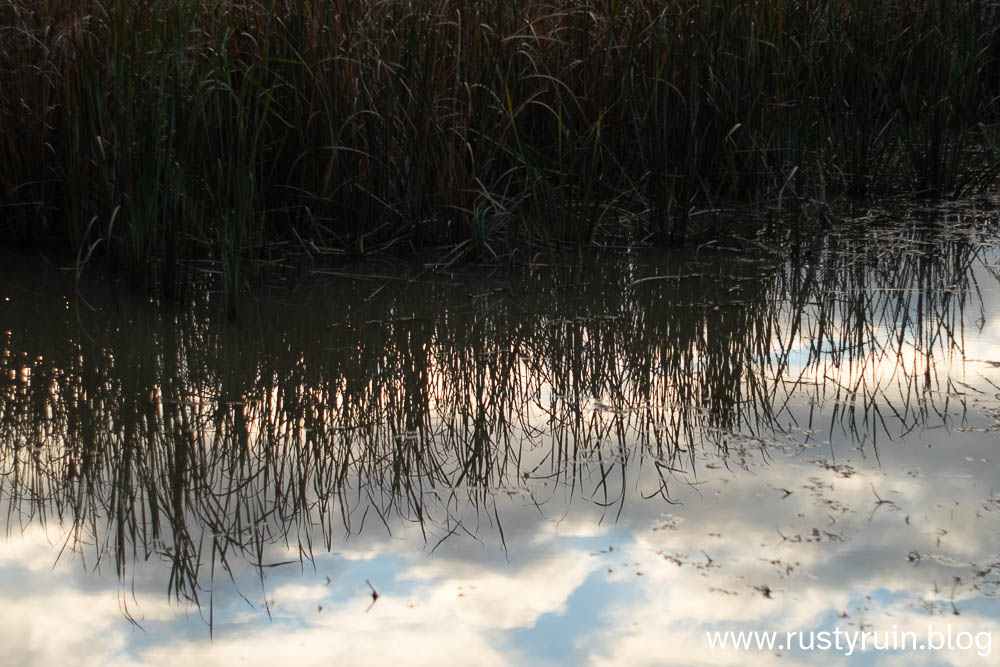
Darkening – Olympus OMD EM5 Mark 2

The Dark Forest

If aliens exist and life in the universe is abundant, why haven’t we made contact yet? The dark forest hypothesis presents one possible answer: the universe harbours plenty of alien life, but it remains hidden and silent for fear of making too much noise and attracting predators. I guess our radio broadcasts into the darkness of space are going to be a problem then!

Yancey Strickler applies the dark forest hypothesis to the internet ~ the top layer is inhabited by predators: data scrapers, bots, surveillance capitalism, marketers, shills, and growing generative AI. The cozier web lies beneath this layer and is where many of us hang out to get away from the internet of predators. You can drill down all the way until hitting the dark web. It’s a complex digital ecosystem.

Reflections of a network – Olympus OMD EM5 Mark 2

Into this dark forest, we introduce AI, where entire websites are being populated with AI generated content in the hopes that a few stray clicks will make some coin for faceless people somewhere. Error-filled news articles, health tips, wellness blogs, crypto ads and more are being churned out at a growing rate of digital knots ~ most of it designed to make money, gain followers, and inflate reputations. It’s trashy, low-quality, dull content, generated by AI LLMs and lazy and unimaginative human parasites. This is the anti-web – the web where AI talks to itself and we remain hidden in the forest.

Hyperlinks lost

Some months ago, I watched a video that was clearly advertising a wellness product. I didn’t think much about it until I looked closely at the woman in the ad and her movements – they were looped and repeated, her facial expressions betraying the stiff smile of generative AI. It was chilling really. The stuff of cyberpunk nightmares in a world where we don’t recognise each other, question reality, and where human interactions are mediated through digital networks shaped by personal profiles that AI has built to represent each of us so huge corporations can maintain their walled gardens, their power, and their profits.

It’s hard to remember now, but I know it wasn’t always like this. The idea that the internet could be a hostile dark forest seemed far from my mind in the 1990s. The hyperlink once connected intimate digital ecosystems together ~ humble links living on obscure web pages, pointing you in a hundred different directions and encouraging you to surf the web. It was almost aimless. There’d be evenings where I’d dial-up, connect, and then see where a search would take me: a personal page, a few broken thoughts from a person living on the other side of the world, a cool-links page, onwards to another page living in the digital corners, and ending up somewhere obscure and unexpected where I might learn about dolphin language experiments. It’s not altogether different from simply wandering about with a camera, without expectation or judgement.

As Friedrich Nietzsche said: “All truly great thoughts are conceived by walking.”

There was once a time when it seemed like the web could liberate entire nations and set information free. There was a promise in the medium – a thousand thousand thousand human thoughts and feelings connected by the humble blue hyperlink in a web browser. Instead, we have tech-billionaires who have constructed platforms and closed systems and called it the modern web – Web 2.0 or 3.0, or whatever the zeitgeist and marketing departments demand. In their systems, hyperlinks are nothing more than restricted sections in a social media Bio – a way to funnel the gullible, the vulnerable, and the young to AI-written websites and empty blogs where generating income from clicks is all that matters. The click of the humble hyperlink has been twisted into a way to service the predatory machine in the dark forest. We’re sedentary now, having forgotten how to walk aimlessly, and doomscrolling our days away.

Tranquil moments – Olympus OMD EM5 Mark 2

Web gnomes and the technocrat hijack

In my last post, I discussed the idea of the Indieweb and the state of the World Wide Web. If you have any interest, I urge you to read Olia Lialina’s fantastic essay on the transition from the idea of My to Me on the web. It’s lengthy but contains a wealth of information about how the web has changed and how the web user has changed. It coalesces many of the thoughts I’ve been having for some years now.

Lialina references a late 90s quote from Tim Berners-Lee – the man often called the inventor of the World Wide Web – where he talks about personal home pages:

“With all respect, the personal home page is not a private expression; it’s a public billboard that people work on to say what they’re interested in. That’s not as interesting to me as people using it in their private lives. It’s exhibitionism, if you like. Or self-expression. It’s openness, and it’s great in a way, it’s people letting the community into their homes. But it’s not really their home. They may call it a home page, but it’s more like the gnome in somebody’s front yard than the home itself.”

Lialina calls out the arrogance in this statement – the idea that regular people using the web, and enthusiastically learning HTML so they can create a personal home page, are amateurs creating nothing more than quaint gnomes in the garden. A clear divide is inserted between the web professional and the web amateur – between the skilled technologist and the average person on the street.

Dress me up any way you want – Olympus OMD EM5 Mark 2

The personal home page as rebellion

There have always been people looking to make lifelong careers and profits out of the web. The idea that the web would be a gigantic repository of information available to everyone equally is very much a 90s ideal. Alongside developments in technology, and in service to these professionals and technocrats, the web has changed from something a person logs into occasionally to check email and exercise an alter-ego, to an always-on connection where the idea that you’d even have a home page, rather than a simple Instagram bio, seems odd to many young web users.

When Tim Berners-Lee said that the web isn’t a home for the average web user, he may not have envisioned just how defining that statement would become. Today, giant corporations lay claim to sections of the web and tell us how we should interact with it. Too bad if you want to upload your own hand-made HTML to their platforms, because they won’t allow it. You can’t be trusted to engage in good design as defined by them. And you certainly can’t be allowed to disengage with their data collection because then you’d be worthless to them as a method of making money.

Corporations and technologists making their income from the monetisation of the web aren’t interested in anyone owning any part of it. They want you to stay in their curated walled gardens so they can sell your data, sell your profile, and make you believe you’re getting something useful in return when you spend time filling their platforms with content for free. Need to stay in touch with friends and family? Yeah, lucky thing we have a social media platform for that! Of course, we always had a thing called email where we could stay in touch, too.

Whilst the retro-web revival highlighted by places like Neocities is reminiscent of 90s home pages, and is populated by well-meaning people who want to return to a supposed web golden age, there’s still a pervasive attitude of reworking the ugly design of those original 90s websites so that modern design principles aren’t insulted. The 90s aesthetic is catalogued and examined by the current crop of professisonals. Thus, it becomes another social movement defined by what technologies one had access to, and is assigned space beneath the umbrella of Web 1.0 – itself just another label designed to make conversations about the past easier to grasp.

Of course, we’ve learned so much about web accessibility and our tools have improved to the point where we can now make easy-to-read websites that don’t feature dancing baby GIFs. There’s certainly admission in some quarters that web users in the 90s used the tools they had to make the best websites possible – an admission that the personal home page aesthetic was perhaps not completely a result of people with bad design tastes. But there are also people now who’d like to revive the 90s aesthetic with modern tools like the latest CSS and other scripting that didn’t exist back then, whilst adhering to accessibility and good design principles because, of course, we must do that since it’s best design practice – best practice only in terms of appeal, standardisation, and monolithic design that has, of course, nothing to do with the admirable and simple personal goal of just having a digital home. Not adhering to good design principles would make a site anti-corporate, anti-design, and anti-social, according to arrogant web technologists.

The idea that we should adhere to standards and monolithic design principles seems based on the idea of appealing to the greatest number of people, attracting the most attention, making the most money, and going viral – all of which are core concepts of capitalism that certainly didn’t define personal home page design in the 90s. During the time of the slow web, you’d get excited if a single person emailed you once a month and said how awesome they thought your personal home page was and how you had things in common – and it was a genuinely exciting moment of connection because you weren’t bombarded with likes and followers and subscribers and junk emails every single day. One connection felt real and important because it was uncommon.

It’s a slow day – Olympus E1