Testing the Nikon D3400 and a low-priced DX telephoto lens classic

The road-trip is only days away and the table is covered in camera gear. I’ve already rushed out to test the Viltrox 28mm pancake lens on the Z5 and found it to be unexpectedly sharp and unusual. I’m intending on packing the Nikon D3400 for the holiday because it’s light, small, and offers excellent quality images. With this in mind, I tested it at the local wetlands.

Yellow reeds at sunset – Nikon D3400 and Nikkor DX 55-200mm 4-5.6 G lens

I’ve always nurtured a soft spot for the Nikkor 55-200mm DX lens – the largely plastic construction belies better than expected optical quality. I sold my original version and purchased the 55-300mm DX Nikkor some years ago, thinking I needed the extra reach. Even though it’s not optically poor, it never had the personality of the 55-200mm. It was mushy and unattractive at 300mm unless stopped down to f8 at a minumum. The 55-200mm also offers more pleasing out of focus areas – or bokeh.

In use, the Nikon D3400 feels as plastic as it looks. The external buttons are functional and generally well-placed but offer hollow haptics beneath fingertips. I also kept moving the focus point because I was smushing the four-way pad on the back accidentally. It was one of Nikon’s lightest and cheapest entry-level cameras and certainly feels it.

Despite the build quality, the image quality is excellent. I have no complaints in my rushed testing. My outing was less about the characteristics of the attached lens and more about checking whether the camera itself was in good order after picking it up second-hand with just over 1000 shutter clicks. So far, so good…

When processing the raw file above, I found some odd behaviour in Lightroom. When choosing any one of Daylight, Cloudy, or Shade White Balance presets to see how they looked, a lot of green was added to the image, as you can see below. I don’t mind it, but I’m not sure why it’s happening.
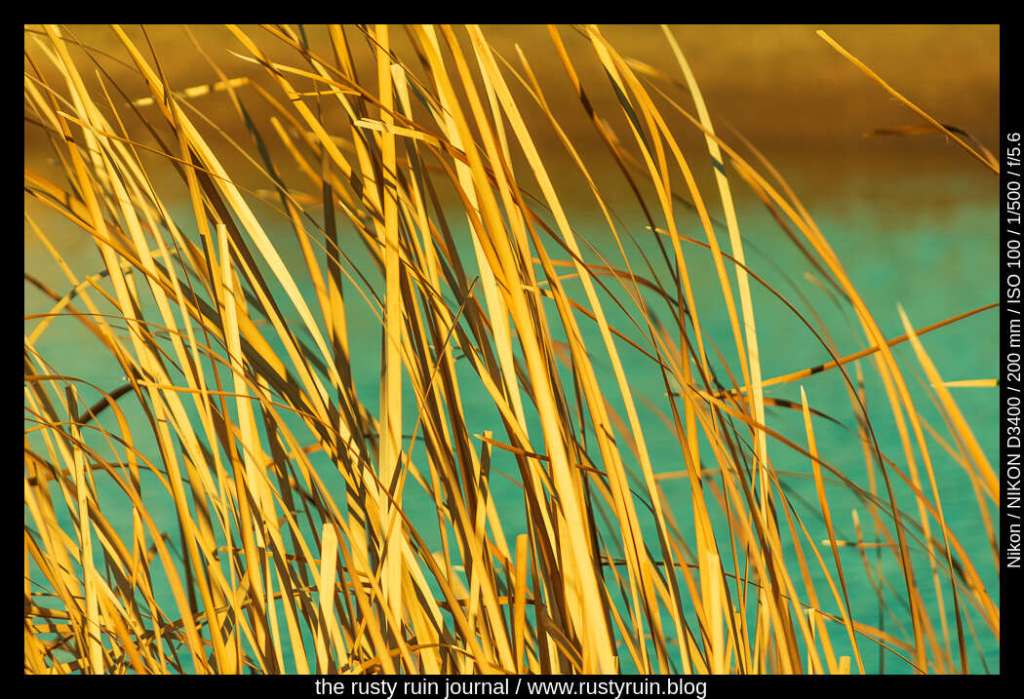
Yellow reeds at sunset in green

The Viltrox AF 28mm f4.5 ~ anyone for pancakes?

As much as I’d like to buy everything Nikkor, it’s an expensive exercise. Luckily, companies like Viltrox are doing interesting things in the world of camera lenses by providing inexpensive alternatives to Nikon’s offerings for the Z mount. The tiny Viltrox 28mm f4.5 is a lightweight, very flat, and slightly strange lens. Seeing as I’m planning to pack it for the road-trip, I thought I’d take it out for a few rushed test photos.

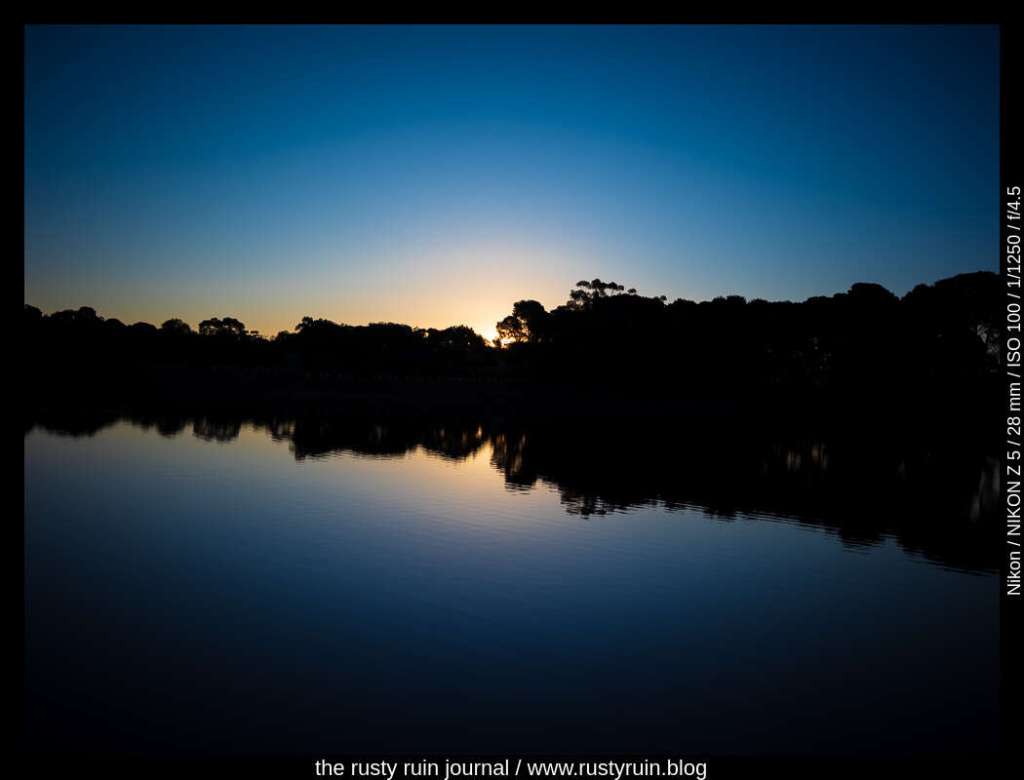
Catching last colours over the pond – Nikon Z5 and Viltrox AF 28mm f4.5 pancake lens

The lens is sharper than I thought it would be for the price. As with many lenses, the central area is the sharpest, with the corners and edges being less sharp. However, nothing is awfully mushy or unacceptable. There’s no aperture mechanism in the lens, so it’s always operating at f4.5. This can either be liberating or frustrating. I found it a nice change from my usual approach because the lack of aperture control alleviated some of the technical cognitive load. Since it’s a 28mm focal length, f4.5 provides pretty good depth of field for most purposes.

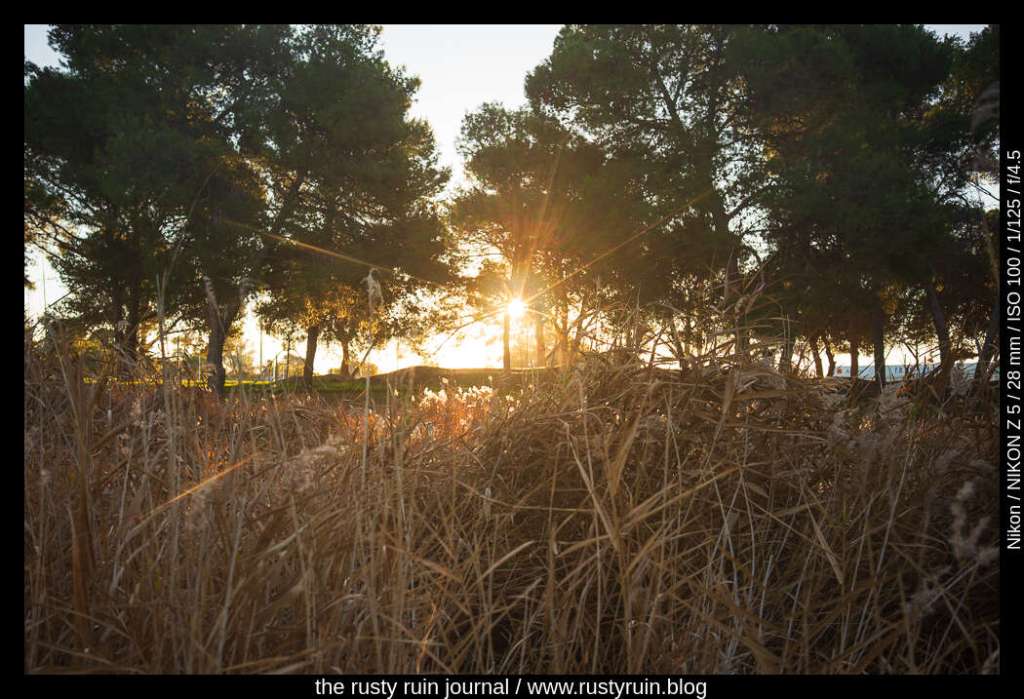
Sunstars and brown reeds

It’s not the greatest photo, but you can see the dramatic sunstar the lens created around the setting sun. Viltrox have included an octagonal mask inside the lens that produces sunstars with long rays. In practice, I found the light needs to be quite strong to produce a visible effect, so it’s not going to be apparent in every photo. Some people won’t like it, but I think it’s a nice point of difference. I also like the accompanying veiling flare across the frame. I imagine this lens is capable of producing some dreamy images in the right light.

The excitement of a road-trip and escaping into the world

In the weeks leading up to our annual road-trip holidays, there’s a slow build of excitement that obliterates any pretence of work productivity during the final few days, for me at least. Questions around camera gear take root in my mind many months before setting off – what and how many cameras to bring? What lenses? Will I really need a tripod? How many bags and what kind?

In some sense, it feels as though this holiday in particular is partly about escaping the world’s current problems by escaping into and losing myself in the world. Photography can be therapeutic self-help in this way – reframing the world to suit our own narratives. As photographers, we look at things differently, composing and considering scenes and subjects before us. It’s a distraction from the pressing issues. We’re out there in the world, breathing in all that it offers, yet we’re one shutter-click away from reframing it to suit a story we want to tell so we can help ourselves.

The Panda’s exhausted – Nikon D7100 and 55-200mm Nikkor lens

Packing camera gear

Having recently purchased a Tenba Skyline V2 Shoulder Bag, I’ve been trying out different combinations of camera stuff for daytrips. I won’t have access to all the gear whilst we’re on the road, but a well-stocked easy-to-carry shoulder bag that sits with me in the passenger seat is going to be handy for quick stops along the way. Right now, I’m trying out this combination:

  • Nikon Z5 camera with the Nikkor 40mm F2 attached: This is going to be my workhorse camera. The 40mm Nikkor is about as sharp a lens as I need. I know there are sharper lenses, but this Nikkor is inexpensive, small, light, fast, and sharp. Ok, it’s an all plastic build, but it uses Nikon’s tough polycarbonate material, which seems to be quite durable. It may not be a classic but the results are excellent.
  • Viltrox 28mm 4.5 AF Pancake: It’s a third-party full-frame lens for Nikon’s Z system, nicknamed Chip, and it’s inexpensive. It’s also a strange lens – a true pancake lens (80g in weight), with a fixed aperture of 4.5, a 28mm focal length, a metal mount, part plastic and part metal body, 2 Aspherical and 2 Extra Dispersion lens elements, a USB-C port for firmware upgrades, and a mask that creates 8-pointed starbursts. I’m intrigued by this lens as it’s so odd. Auto-focus in a lens this small and this cheap is unusual. I think it will be much sought after in years to come, but what concerns me is that once the AF motor burns out, there’s no manual focus to fall back on.
  • Olympus OMD EM5 Mark 2 camera: Having gone back to using the Olympus lately, I’ve rediscovered the joys of a lightweight system with high quality. I use a metal grip to add a bit of heft and for better ergonomics. I’m testing out the Yongnuo 25mm 1.7 lens right now, so it’s attached to the camera. I could also pack the Sigma 30mm 2.8 DN Art lens, which is sharp and reminds me of a teeny-tiny Dalek when the hood is also attached.
  • Olympus Zuiko 4-5.6 40-150mm lens: This lightweight and rather small lens gives me an equivalent focal length of 80-300mm on the Micro Four Thirds system. If I want to be as lightweight as possible and give myself flexibility on the road, this lens is essential. Image quality is a bit on the soft side at 150mm, but that’s to be expected in a non-pro Zuiko lens.
  • Sony RX100: I generally take this with my in a day-bag whenever we go out. It’s so light and small and silent that I can use it indoors when I don’t want to bother with a larger camera and lens combination. This one fits easily in the front pocket of my Tenba bag.
  • Other stuff: Spare battery for the Z5, a micro-fibre lens cloth, a small wallet for 3 x 52mm filters (B+W Circular Polariser, B+W 10 Stop ND filter, and K&F Black Mist Diffusion filter), and an SD card holder for spares. I like the K&F Concept Diffusion filter at 1/4 strength.
  • Undecided: I’d really like to squeeze the Nikkor 24-70mm F4S lens in the bag but it’s pretty big and heavy. Finding a home for it in this bag with everything else is going to be difficult, but I think it may be a better option than carrying the Nikkor 40mm and the Viltrox 28mm. It will mean that the Zuiko 40-150mm lens has to live on the Olympus camera. Alternatively, I ditch the Olympus completely and carry the 70-300mm Nikkor ED lens attached to the FTZ adapter so I can use it on the Z5 – but this is a heavy and tall lens.
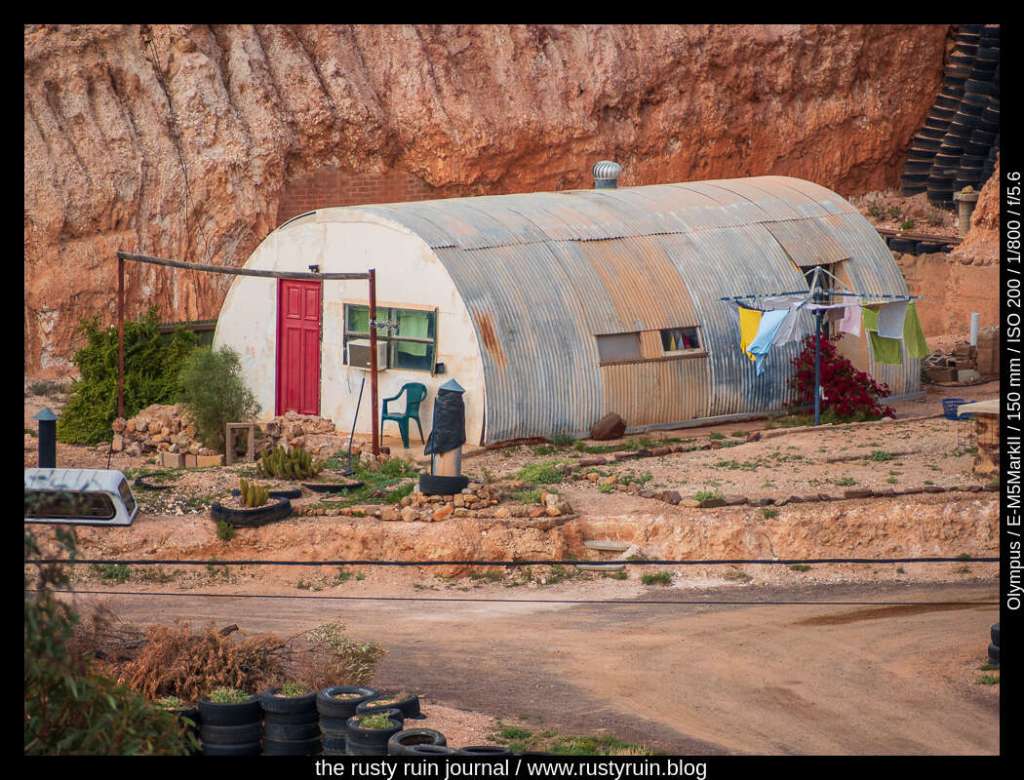
Behind the red door – Olympus OMD EM5 Mark 2 and Zuiko 40-150mm R lens – as you can see, even at 150mm, there’s acceptable sharpness available after some editing (contrast, clarity, and additional sharpening)

Dreamy photos from the Yongnuo 25mm 1.7 lens

As much as I enjoy my Olympus EM5 Mark 2, I rarely invest in the system. Since the imaging arm of Olympus was sold off and rebranded under the OM Digital Solutions name, I admit that Micro Four Thirds has lost some lustre. It is, of course, a fantastic lightweight system and it would be nice to see Panasonic continue the format under their Lumix brand, though I fear that many camera manufacturers see 35mm sensors as the biggest cash-cow at this point.

It was with some surprise that I discovered the Yongnuo 25mm 1.7 lens for Micro Four Thirds. It’s a Chinese-made product and features a quiet auto-focus motor, which is unusual in such a cheap lens. The body is all-plastic, but it feels and looks good. It’s also the fastest Micro Four Thirds lens I own.

Dreamy vibes from a cheap lens

I made the photo with the lens wide open at F 1.7. The sun flared across the frame, resulting in a soft and dreamy look. It’s pretty sharp in the centre at an aperture setting of 1.7, with the edges and corners looking soft. There’s also plenty of chromatic aberration, especially in high contrast areas, but I think all of this adds to the mood of the photo.

Siloes at sunset – Yongnuo 25mm 1.7 lens

Just before the sun dipped below the horizon, I set the Yongnuo lens to F 2.2, just to sharpen things up a little, and made this photo. I really like the rendering of this lens so far and I think I’ll be packing it for our upcoming roadtrip.

Squeezing the most from old lenses ~ the Clubman 28mm 2.8

I’ve used many old manual lenses on my Olympus EM5. It’s a great way to explore old glass, even if the lenses weren’t made for modern mirrorless digital cameras. One of my favourite lenses is the Clubman 28mm 2.8 – a mass-market cheapo lens that was made by a Japanese optical manufactuer and then rebranded to be sold in camera shops and department stores at the height of 35mm film photography in the 70s, when colour film rose to prominence and new artistic styles found voice. It can also be found under the Ensinor name and likely some others. Many cheap lenses from that era were equally cheap in performance, but the Clubman is surprisingly good.

Like all of the lenses from back then, it’s an all-metal build and features an aperture ring and manual focus – quite hefty when compared to the plastic lenses we often find today. One of the best things about it is that it has a kind-of macro mode where you can focus down to about 30 cm at a 1:5 ratio. The other surprising thing about the lens is that it’s quite sharp after stopping the aperture down to f 5.6-f 8.

The lens also benefits greatly from the small sensor size of the Olympus because the softer edges and corners are mostly chopped out on the Micro Four Thirds format. This lens wouldn’t be so good on a larger format, like APS-C or 35mm, because those mushy edges and corners would form a bigger part of the visible frame. On the Olympus, I get the central part of the lens, where it’s sharpest.

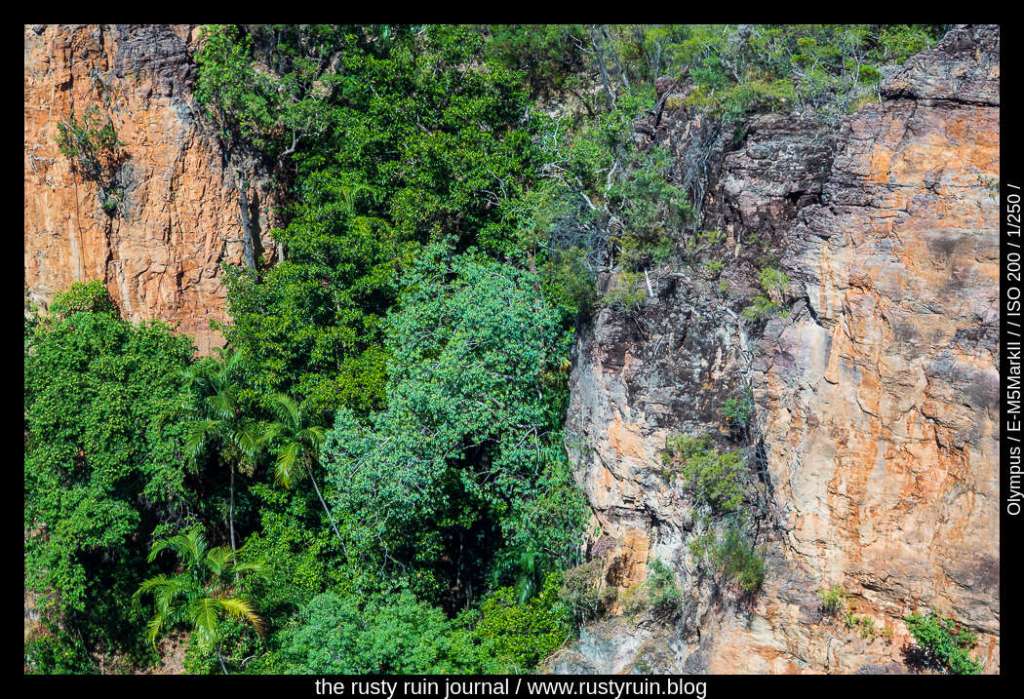
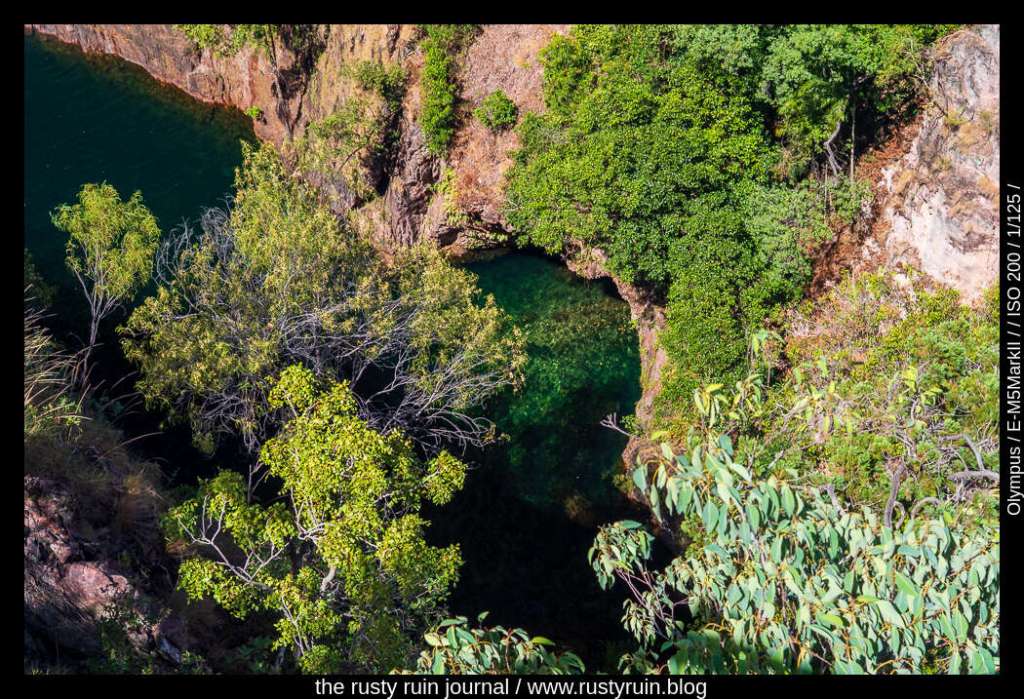
On a hike , Litchfield National Park – Olympus EM5 Mark 2 with Clubman 28mm lens and Circular Polariser

For the photo above, I stopped the lens down to F 5.6 – the sweet spot for this lens/camera combination. I also used a circular polariser to cut out stray light reflections on the rocks and the foliage. This also deepens the colours.

The effect of the polariser is obvious in the above photo when you look at the water. The reflections have been minimised, creating transparency and deeper colours. You can even see the cliff visible below the water’s edge and some of the rocks on the riverbed. This is when a circular polarising filter is most useful and helps to maximise the optical properties of older glass.

Here are some of my other most-used manual focus lenses:

  • Takumar 35mm 3.5
  • Takumar 28mm 3.5
  • Macro-Takumar 50mm F4
  • Fujinon 55mm 1.8
  • Petri CC Auto 55mm 1.8
  • Micro-Nikkor 55mm 3.5
  • Nikkor 50mm F2
  • Zenitar 16mm 2.8 Fisheye
  • Minolta Rokkor MC 50mm F2
  • Minolta Rokkor 55mm 1.7
  • Vivitar 28mm 2.5