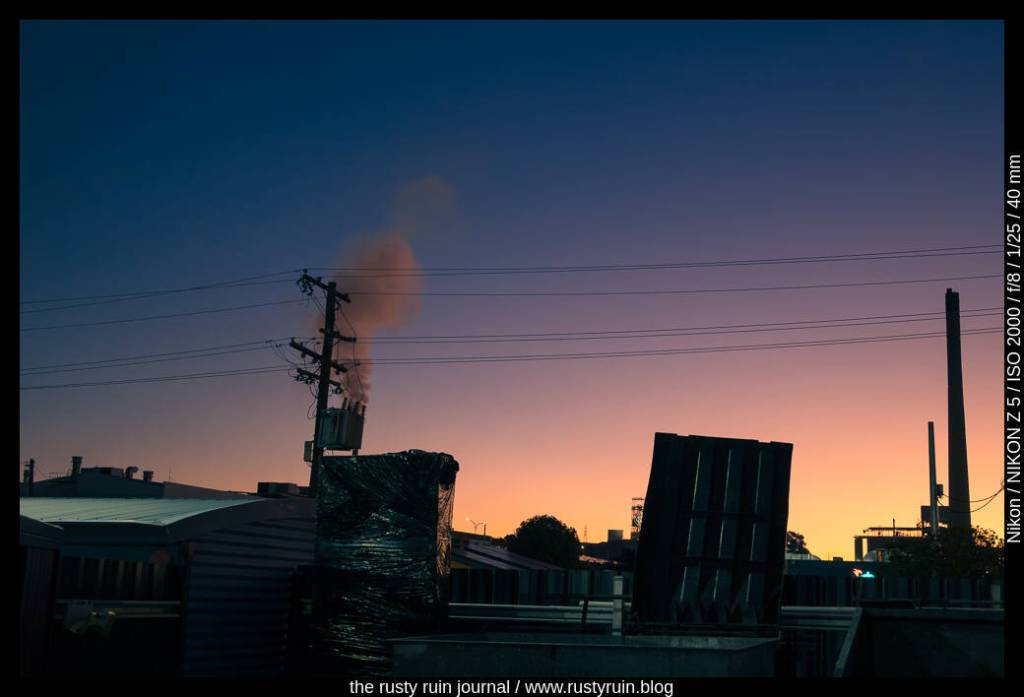
Slow smoke pours from towering stacks into the still air, day and night. Minerals are pulled from the ancient desert ground and form the heart of industry in Mount Isa. I think everyone smokes, drinks, and wears a vest in this place. It must be a tough life out here.
Everything seems caked in sweat and dust. The soil is red and orange, and lazy heat hangs in the air. Abandoned mines are something of a tourist attraction here. Of course, I’m attracted to those ruined places.
Mt Isa sunset – Nikon Z5
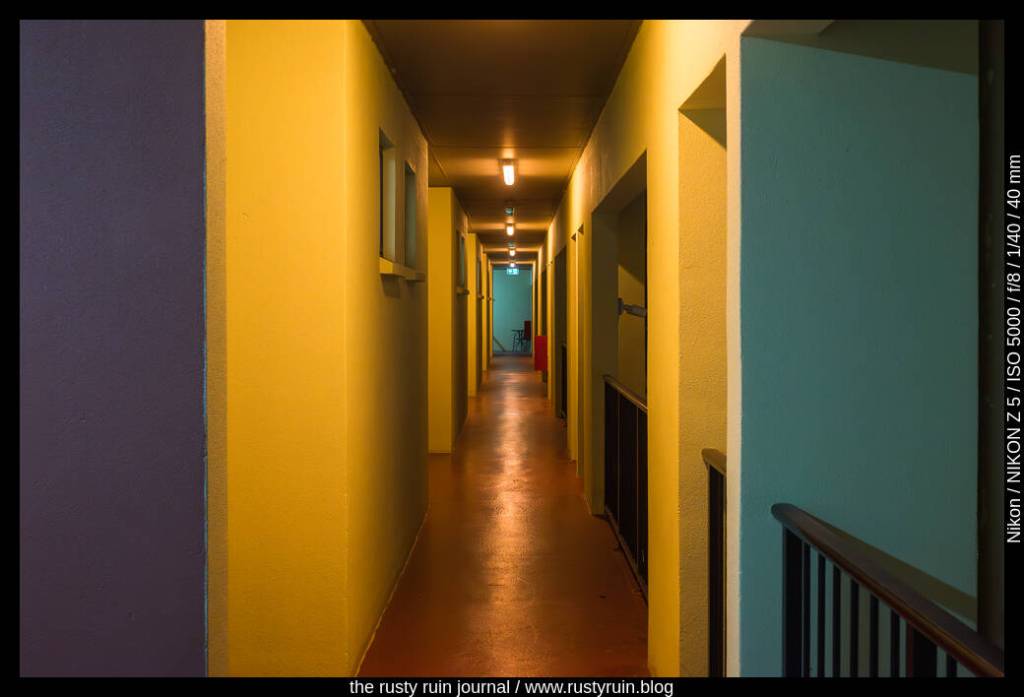
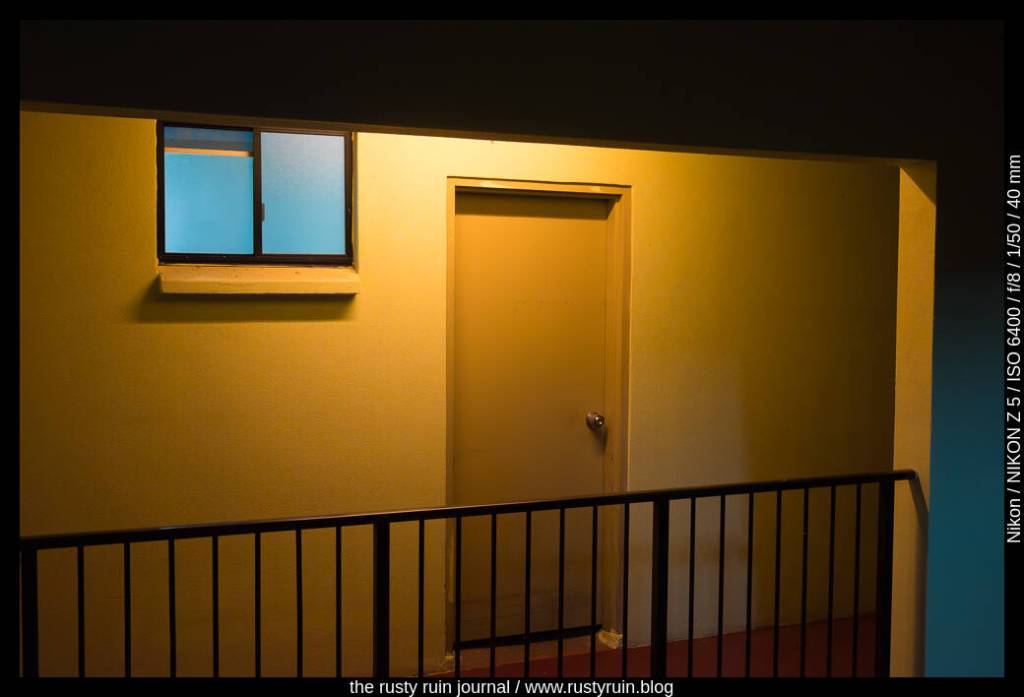
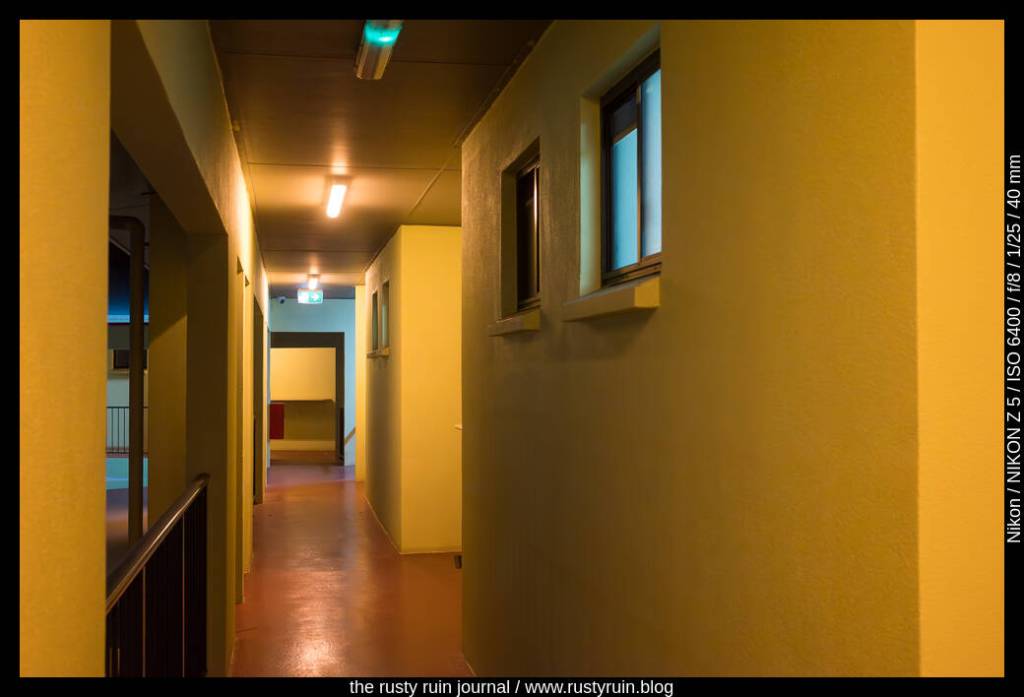
I take the opportunity to walk around the motel late at night. Likely, most people are sleeping or watching TV drowsily. What strikes me are the warm colours and the long walkways. I imagine the owners wouldn’t be too interested in using the photos for marketing purposes!
A friend of mine tells me he likes the orange and yellow lights. They make him feel comfortable. I agree – they’re nicer than the new clean white lights. They’re atmospheric. They go well with the heavy air and the smokestacks.
The chair at the end of the walkway – Nikon Z5 and Nikkor 40mm lensYellow door and yellow wallBlue glow from the window
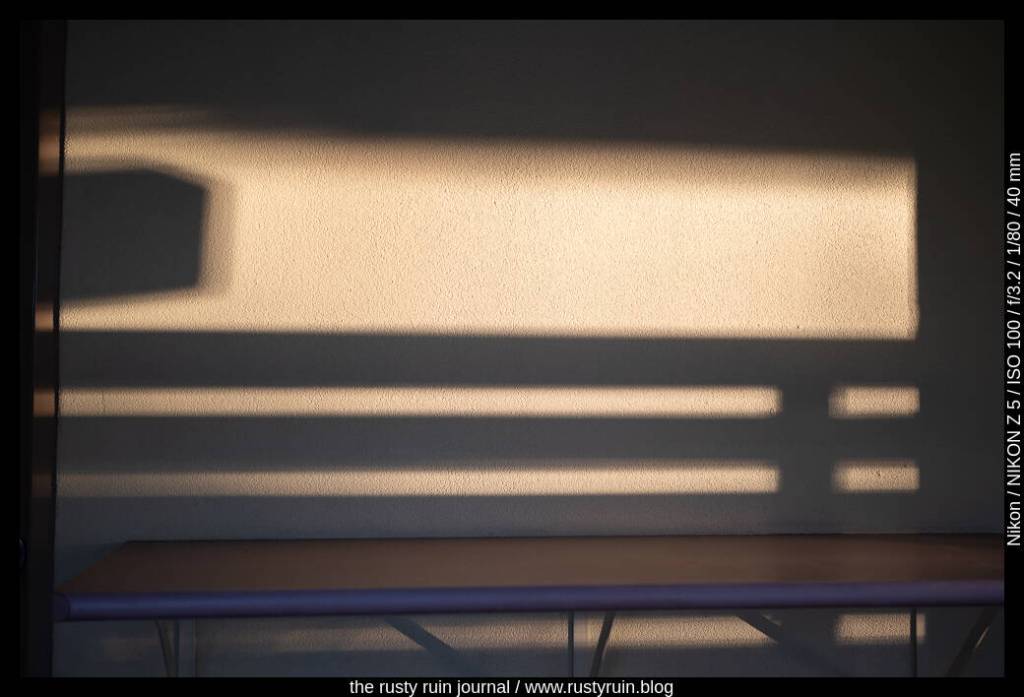
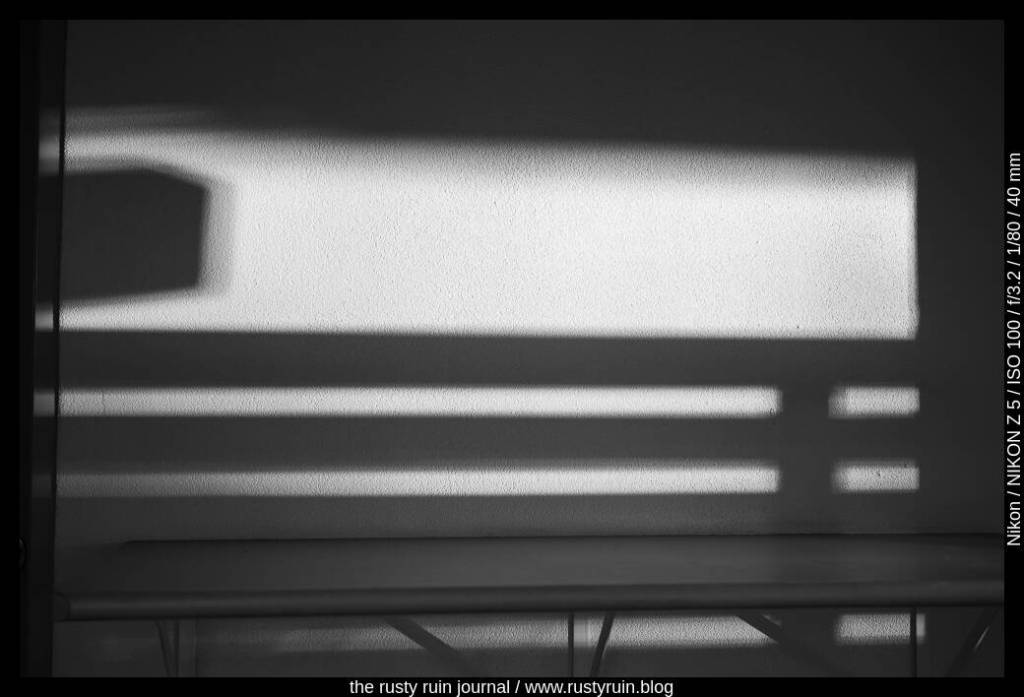
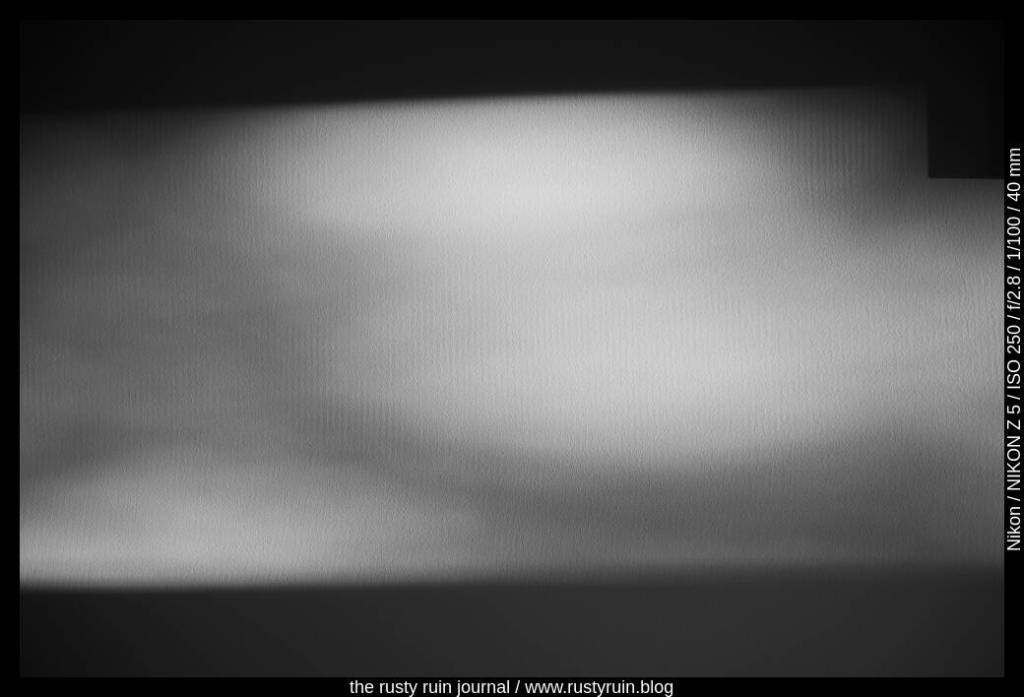
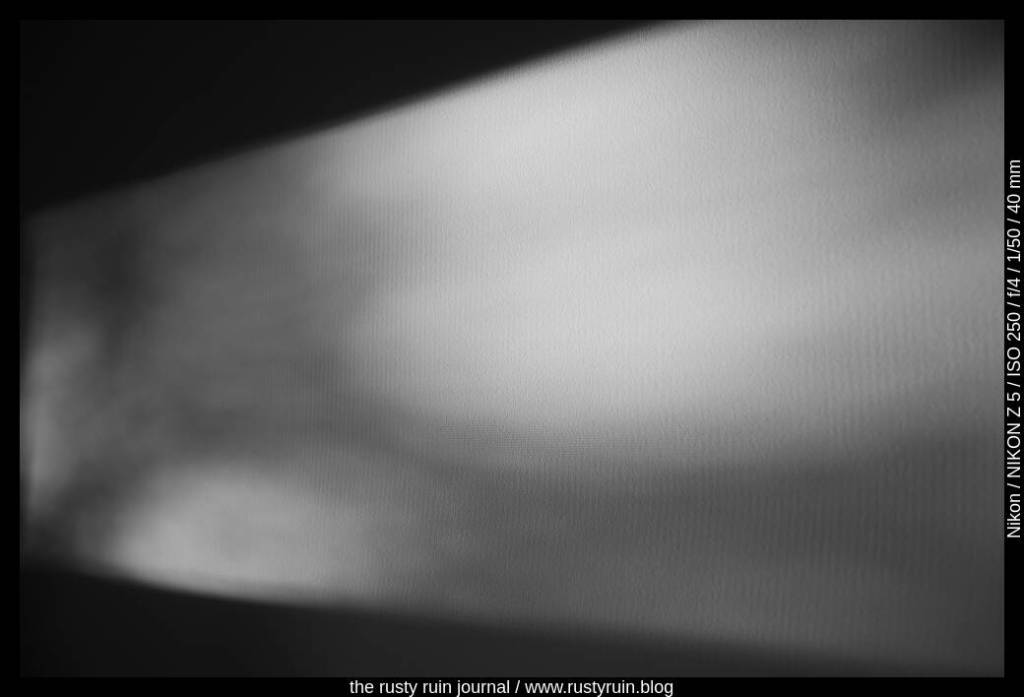
After my last post, it seems I’m in the mood for monochrome. The interplay of light and shadow – the patterns on the rough wall – the cold metal bench. This collection of quiet and ordinary things caught my eye, emotion, and imagination:
Metal bench and shadows #1 – Nikon Z5 and Nikkor Z 40mmMetal bench and shadows #2
A set of photos in colour. Now in black and white. I almost always use colour in my photos, but there’s also something intriguing about the removal of colour. Black and white reduces the picture to the most minimal of tonal qualities – light and shadow – the eye drawn to delicate gradations. I sometimes think that black and white photography can be overly contrived, entangled as it is with classic street photography and delusions of stepping into the shoes of Henri Cartier-Bresson and others.
I admit that I probably don’t explore black and white in an editing context as much as I should. Or at least, as much as would contribute to a photograph that pleases me.
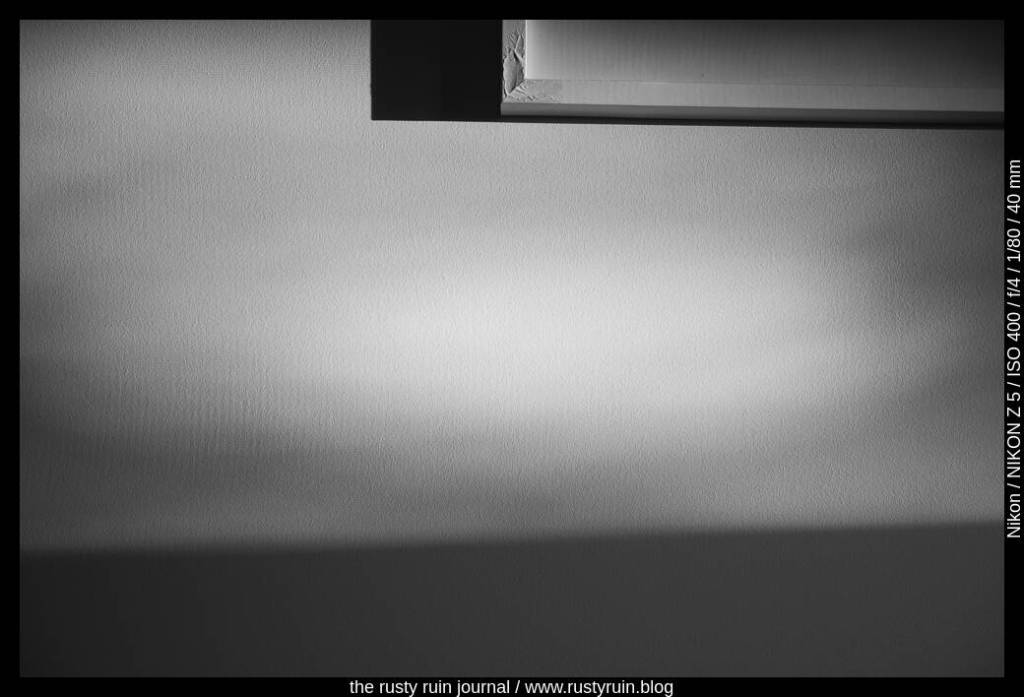
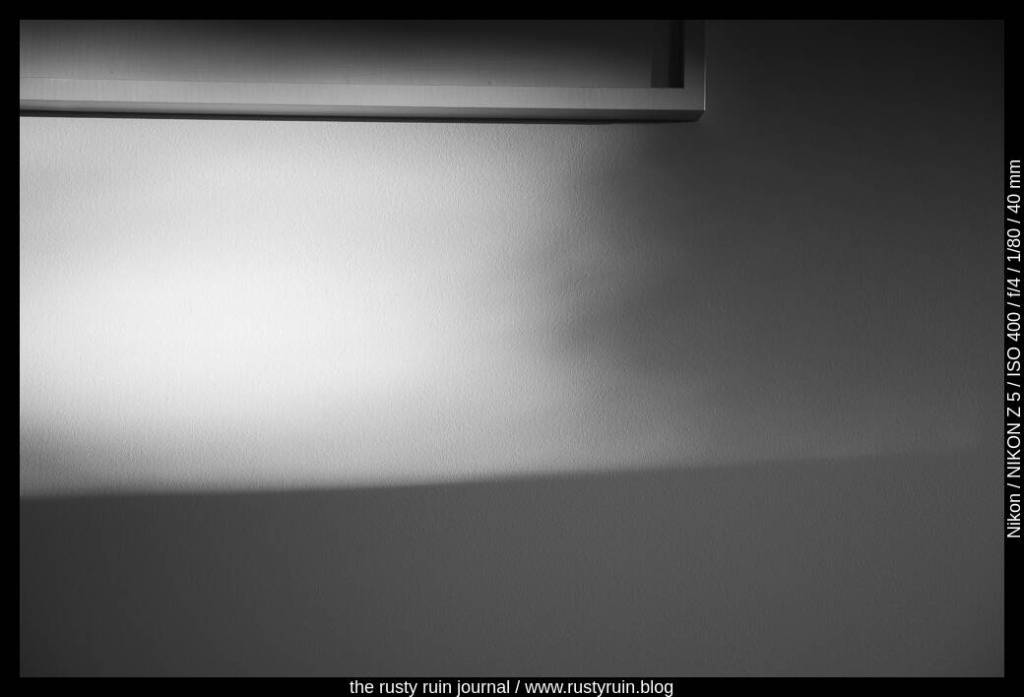
The sharp corner intruding rather rudely – Nikon Z5 and Nikkor Z 40mm The angles yet apparentReceding now to darker edgesFrom the outside: a whirl of bordered shadows
The Nikon D50 appeals to me because it sits somewhere between the small Nikon D40 and the prosumer Nikon D70/D70s. With a plastic body that’s closer in style to 1990s Nikon film SLRs like the F65, it seems a world away from Nikon’s current black, sleek, industrial-feel mirrorless cameras and Z-mount lenses. The silver-bodied D50 I have may be technologically long in the tooth, but the 6.1 megapixel sensor still packs an imaging punch when used with careful intent.
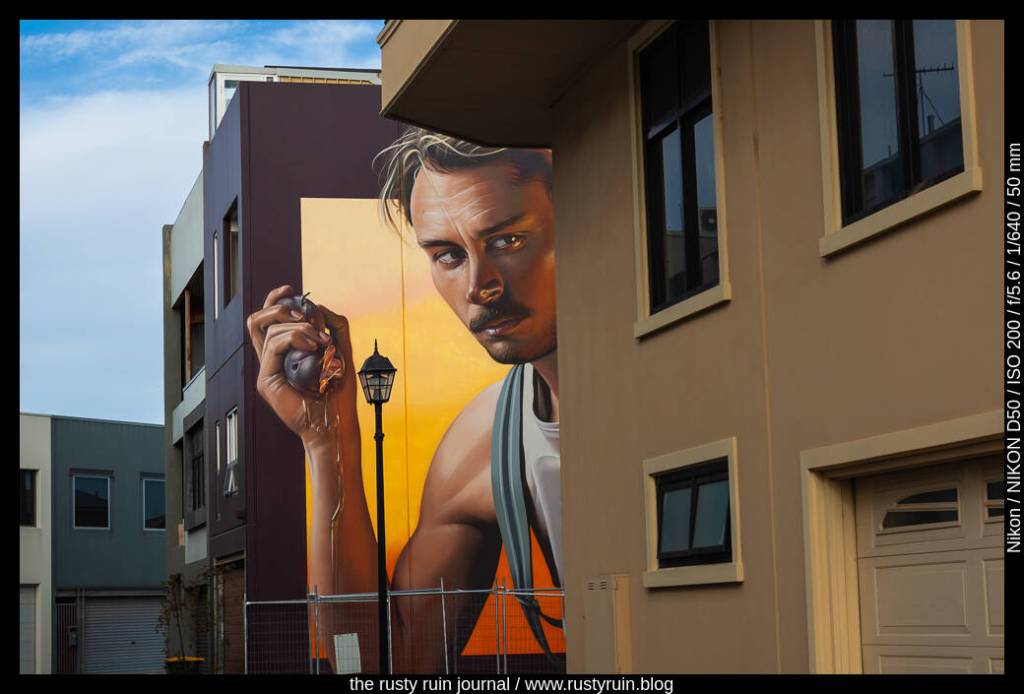
Looking at you – Nikon D50 and Nikkor 50mm AF-D 1.8 lens
The Nikkor 50mm 1.8 AF-D is one of my favourite lenses, and I can use it on the D50 because the body includes a screw-drive motor. Not only is the lens light and small, but the glass happens to be sharp and practically distortion-free. On the D50, it’s a perfect match, squeezing everything from the 6.1 megapixel CCD sensor. Even at base 200 ISO, the D50 is very quiet when it comes to digital noise.
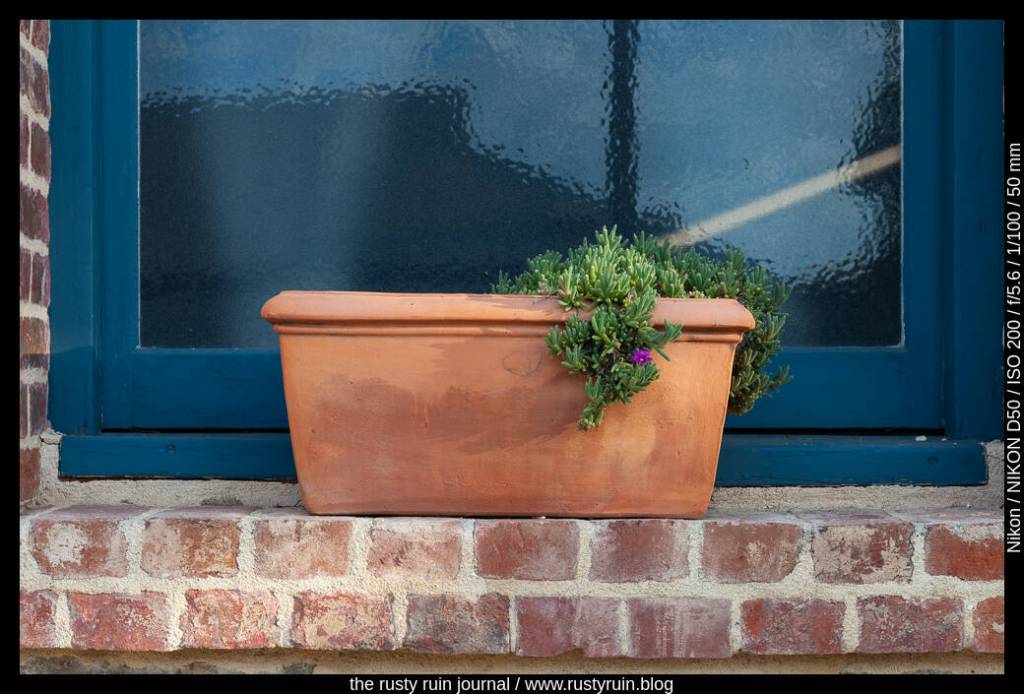
Against the blue window, green foliage spills over warm terracotta – Nikon D50
This is the sort of camera and lens combination that invites contemplative photography at sunset on an overly warm eve. Old buildings, weathered window frames, and glowing reflections put me in mind to simply wander and open my eyes to vast possibility. Something about the terracotta on blue, framed by red brick, drew my imagination – ordinary, understated, usually unnoticed, and quiet.
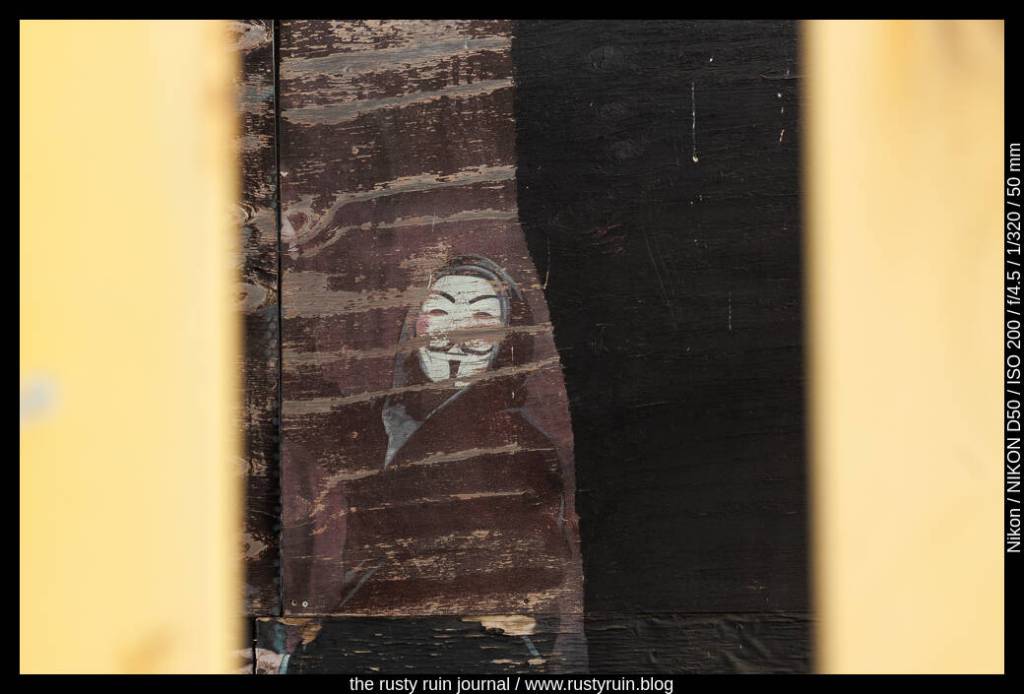
The face between the yellow bars – Nikon D50
Getting close to the yellow bars and setting the aperture to F4.5 allowed me to sufficiently blur them, communicate depth and dimensionality, and still maintain excellent sharpness in the peeling paint and the smiling figure – the subject of the photo.
The Nikon D50 fills an old DSLR usage gap for me – small and light enough to pack with another camera for the day; the ability to use AF-D lenses like the aforementioned Nikkor 50mm 1.8 due to the included screw-drive focus motor; and a top-plate LCD that communicates the most common camera settings at a glance.
The Nikon D200 and the Kodak Charmera – two very different cameras on the surface. The D200 is built like a magnesium-alloy tank and the Kodak Charmera is a tiny plastic toy. There’s no comparison when talking about image quality, of course, yet I continue to return to the fact that we can freeze time through the use of these devices, whatever their technical limitations.
The act of making a photo has become so culturally habitual – so intertwined with commerce and self-promotion – that the initial magic has long since been lost. We’re a long way from the very first photo made ~ “View from the window at Le Gras”.
California Surf – Kodak Charmera
It’s strange to think the toy Kodak’s 1.6 megapixels features vastly more resolution than the very first photo made using a camera obscura over an 8 hour exposure time. Marked in technological milestones, human lives seem small. Our lives seem smaller still when we pick up to examine even the dullest stone that lies at the foot of a worn hill that was once a mountain.
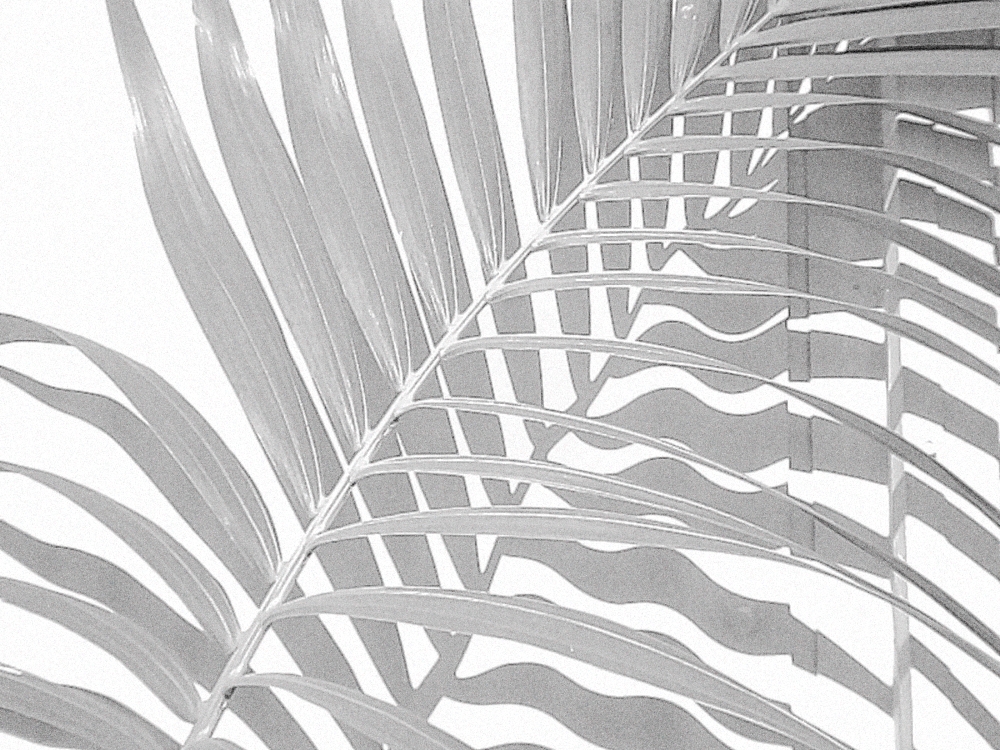
Fern in high-key – Kodak Charmera
In colour, the photo above is washed out and the highlights burned beyond editing. In black and white, the photo becomes a small study in shape, direction, pattern, and shadow, with a high-key aesthetic. It was a single moment seized as we ordered food.
Exploring the wreckage – Kodak Charmera
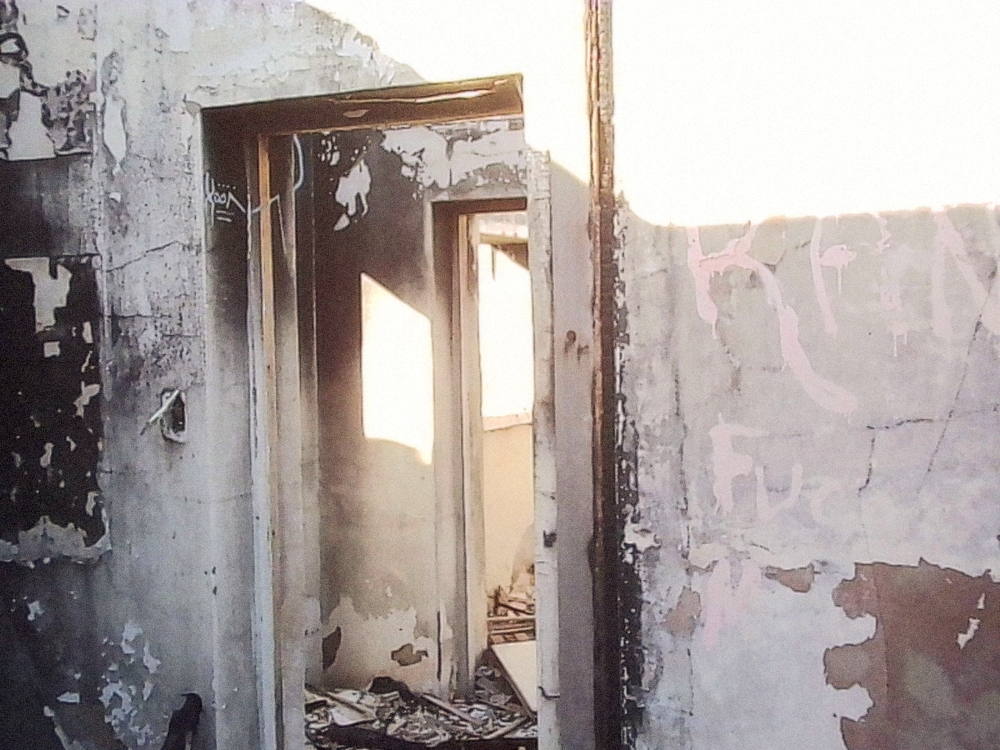
We chanced upon a burned out ruin. I walked around fallen red brick and charred wall cladding, immersing myself in light and shadow.
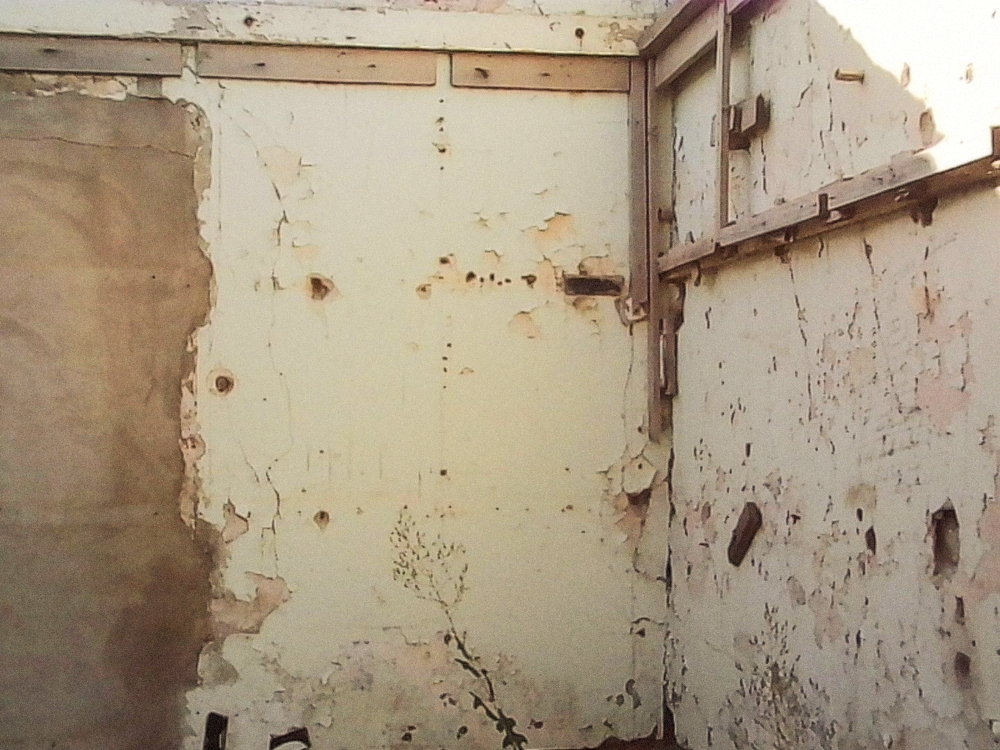
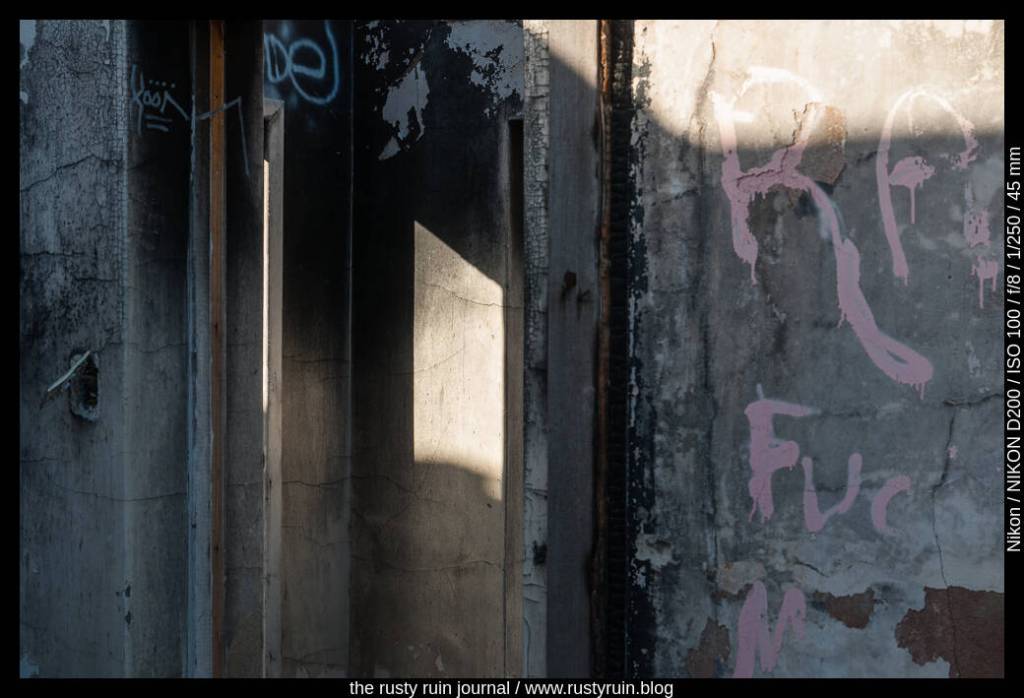
Ghosts in broken rooms – Kodak CharmeraAngry scrawls – Kodak CharmeraNails and holes in the wall – Kodak Charmera
I couldn’t forget the Nikon D200 in my camera bag. It pulled on my left shoulder as it reminded me that it’s services were available – every bit the prosumer DSLR of 2005 and seemingly so distant from that first photograph in the early 19th century.
One might wonder if there exists a linear technological line between cave art on rough walls and the recording of the world to modern digital storage media? It’s hard to imagine a world without the technology to record ourselves and the world, yet we’ve always sought a type of crude immortality through the things we leave behind – whether recorded on cave walls 60 thousand years ago or posted online. We try to leave a mark before we leave.
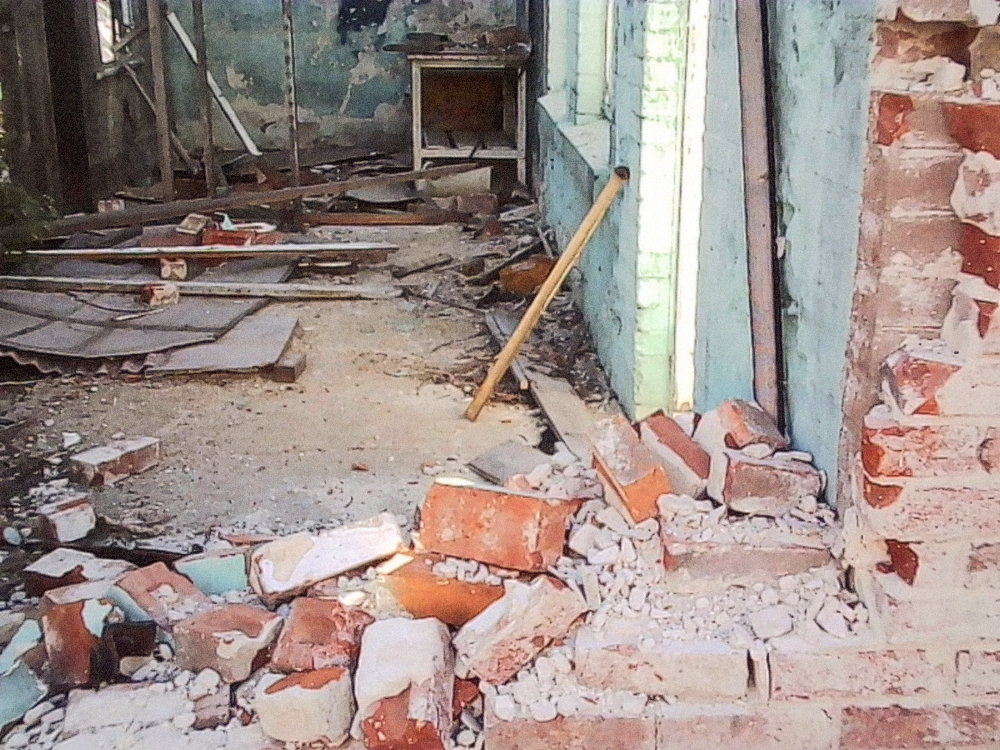
Blue walls and red brick – Nikon D200
Rarely do I have the opportunity to get so close to a ruin like this. Walking over the rubble, the soles of my sneakers adjusting to the sharp edges and angles of detritus, I reflected on the passage of time.
The end of year holidays have provided rare opportunities to explore city, country, and local suburbs. It’s nice to throw the Kodak Charmera into a pocket and walk around an unfamiliar neighbourhood, keeping an open mind and allowing the small things to catch my attention and focus. The unobtrustive nature of the little Kodak also means that I can largely remain unnoticed on suburban streets.
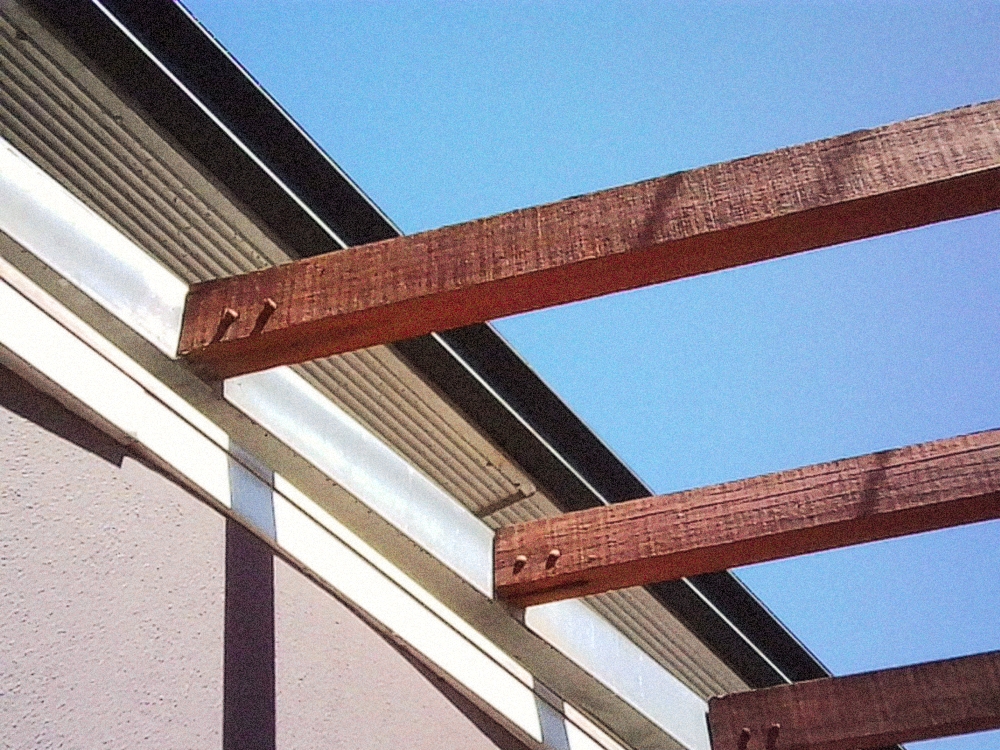
Brown beams and blue sky – Kodak Chamera
The fantastic Community Hub and Library in this suburb stands as a testament to the vision and efforts of locals and politicians to ensure that the area, known to have many endemic social, economic, and health problems, provides community, resources, recreation, and safe places to gather. Walking through tall glass doors, the immediate quiet and calm stands in stark contrast to daily incidents of drug-affected raging at the air and the sad turmoil of embattled relationships that seem to define the street corners.
Crossing and counter-balance
Standing before the prize-winning photographic prints adorning the gallery space in the library, I think of the steep expense of the listed camera gear used by the photographers versus the social conditions and poverty outside.
A small photo of a nine year old girl, brandishing a Nikon Z9 and a giant lens, thicker than her arm, stares back at me from an artist card placed under the runner-up picture she entered into the competition – a photo of a dead shark on a tropical beach. Her hands curl around a camera body that cost thousands and a lens that cost even more. And here I am with my $50 Kodak Charmera, looking out of the library window at the old cemetery that was here before the shopping centre, pondering the absurdity of it all.
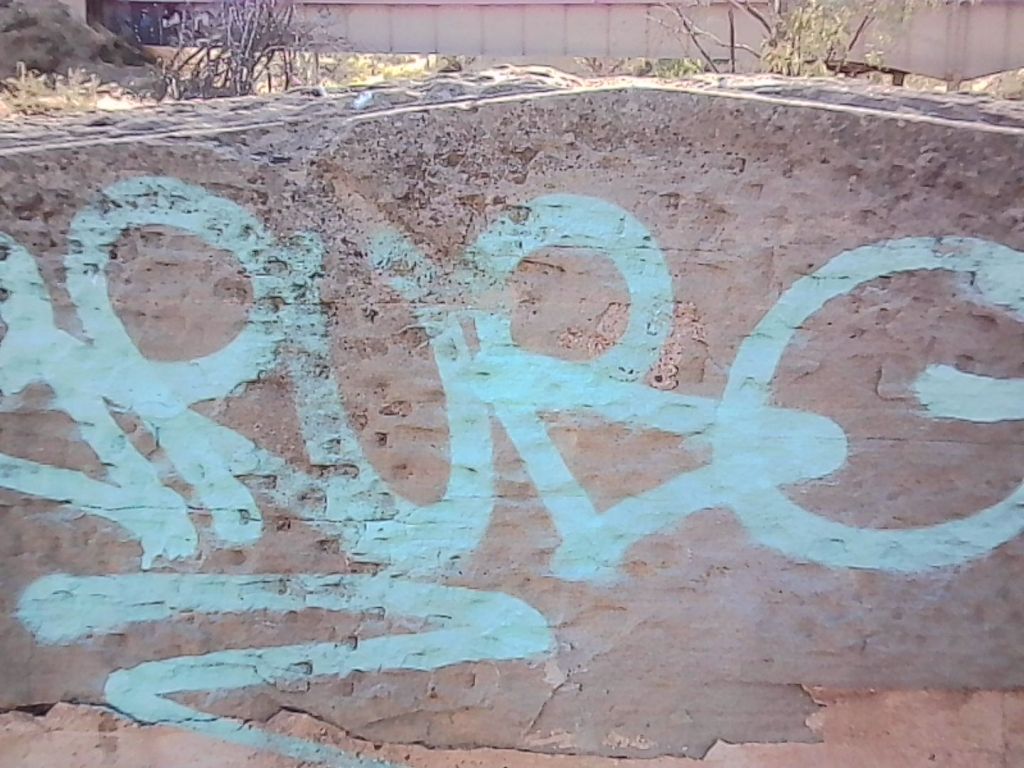
It’s almost crazy that I would take a drive to a nearby country town around sunset with both my Nikon Z5 and the tiny toy Kodak Charmera and only use the toy camera. But that’s exactly what I did. It’s as though it was altogether too much effort for me to open up the bag, switch on the Nikon, and make a few photos. Pulling the Charmera from my pocket as hundreds of fast-moving black ants toiled about my sneakers seemed easier and lessened the risk of them getting a foothold in my socks. The bites are known to be painful!
This time, I used the standard colour filter of the charming little Kodak. Dynamic range is woeful and the colours are washed out, including ugly colour shifts, but that’s all part of the allure of the lo-fi look. I pushed the saturation, added a touch of warmth with the white balance slider, reduced clarity to blur the photo a little, and added regular fine film grain in Exposure X7:
Blue graffiti on the old bridge (edited) – Kodak Charmera
Here’s the original version:
Blue graffiti on the old bridge (unedited)
Yet another nice piece of graffiti below. You can see the purple colour shift at the top of the frame. This is the edited version – same edits in Exposure X7 as the previous photo:
Light blue graffiti on the old bridge (edited) – Kodak Charmera
Here’s the original unedited version:
Light blue graffiti on the old bridge (unedited)
In both cases, I think the edits reduce some of the harshness and add subtle visual interest via the film grain.
I need a distraction from thoughts more serious and sobering, so here I am on Christmas Eve scanning the latest batch of film prints from my Nikon F80. One of the most endearing (or potentially annoying, depending on when you were born) things about using film is the journey of getting through a roll so it can be developed. There’s a prevailing attitude that each frame of film is to be savoured – each shutter press is an adventure in the slow, deliberate, and mindful approach to making photos. But sometimes, you just want to blow through the last few exposures to get the canister into the local lab.
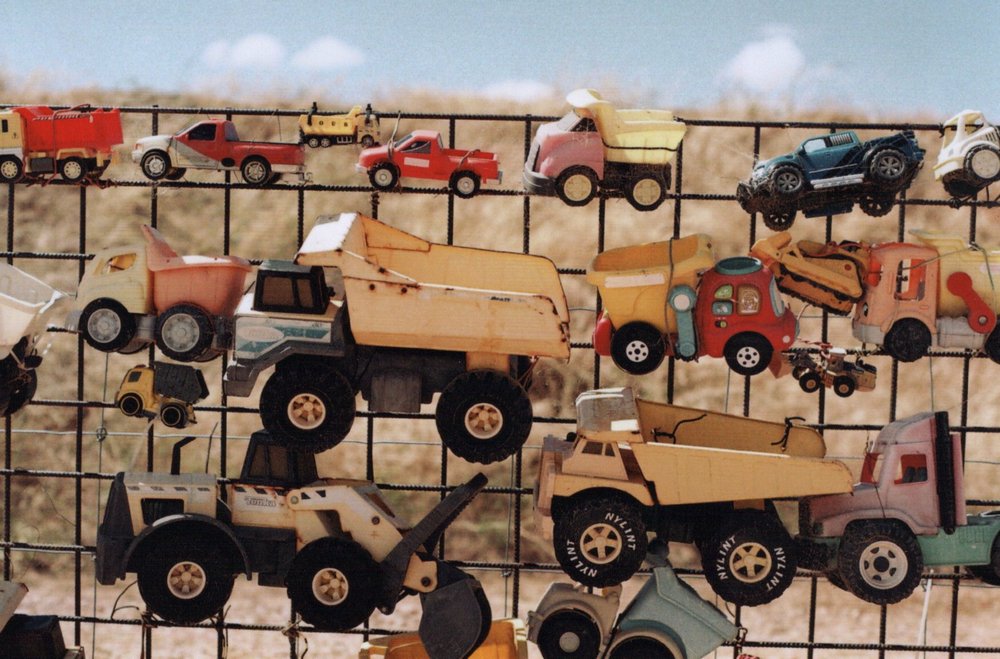
Tiny toy trucks in the sun – Nikon F80 and Fuji Superia 35mm colour film, overexposed by 1 stop
I think I fared a little better with this roll than my last. I was quite frugal and deliberate this time around with the old Nikon, resulting in several more keepers. The expired Fuji Superia film features a lovely fine grain and exposure latitude. As much as Kodak Ultramax 400 is the everyperson of the modern consumer film world, Fuji have made some superb emulsions over the years.
Graffiti on The Tanks, near Whyalla South Australia
I’ll admit that using the Nikon F80 in recent weeks seems to have revived my interest in rehabilitating my film cameras. Sadly, I have found so far that some of them are simply not working any longer. Some are victims of my forgetfulness ~ a lesson in never leaving cheap batteries inside cameras to leak rivers of toxic sludge and potassium carbonate. Others have succumbed to the dusty decades and have slow shutters, wonky gears, faded rangefinder markings, and internals that have simply kicked the bucket. Happily, I seem to have successfully revived my Yashica Electro 35. I’ll have to put a roll through it to really test it out.
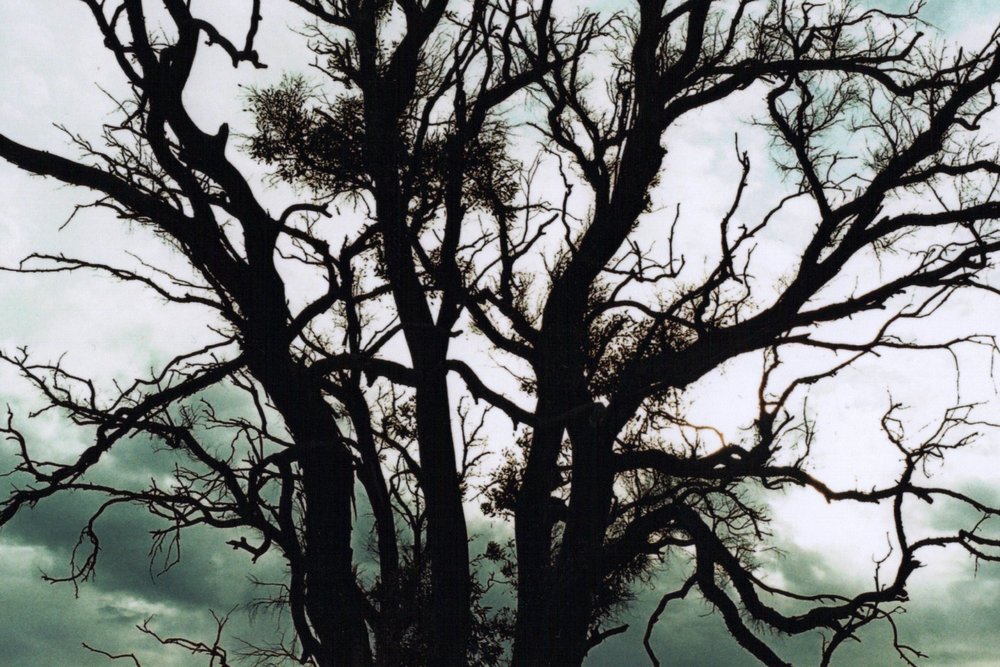
Moody tree near the old train-line, late in the afternoon
Perhaps not quite a decade has passed since I last had a roll of film developed. Such is the easy lure of digital imaging, I suppose. Still, it didn’t take me long to get used to not looking at the back of the camera for an image review. It’s as though I was quietly slipping back to the old film camera habits and movements of my childhood. The slowness of photographic practice demanded by the Nikon F80 on this day – taking in the scene and the light – matched the eerie end of the earth silence of the town of Iron Knob.
I said to a friend that the Nikon F80, made in the year 2000 at the end of the mainstream film era as digital was fast taking hold, feels every bit Nikonian. What I mean is that for someone used to handling and holding modern Nikon cameras, the F80 feels ever so familiar – the button placements make sense, the hand grip is deep and comfortable, and the working philosophy is the result of decades of Nikon engineering and knowledge. The sleek, black Nikon Z5 digital camera was nestled next to it in my bag, looking like it had come from a different century, but the two share the same DNA.
No fuel left in town – Nikon F80, Kodak Ultramax 400, and Nikkor 50mm 1.8D lens
The Kodak Ultramax film I’d loaded had expired some years ago, so I used the ISO function of the camera to fool the exposure system and set it to treat the loaded film as 200 speed ~ slower than the box rating of 400. Doing this slows the shutter speed down and allows more light to hit expired film that’s less sensitive due to age related degradation.
Abandoned long ago – Nikon F80
Iron Knob was established in 1915 and was the birthplace of the Australian steel industry ~ something I didn’t know and a fact that certainly surprised me. I’d seen the town on maps over many years and had developed a curiosity, but hadn’t had the chance to visit until recently. As it happens, I was also testing the F80 for use at our daughter’s upcoming 21st, and it seemed a good idea to load some batteries and run film through it.
Half a ghost town
The Iron Monarch mine looms over the town, forming a red and dusty backdrop. When the Hematite poured from the earth, the town thrived and was no doubt filled with macho banter, drinking, and the dirt-filled sweat of hot days. You can still see those halcyon days in the closed roads where Keep Out signs warn travellers – wider than would seem appropriate for the minimal traffic in town today – barely recognisable bitumen strips that are crumbling and lead nowhere, flanked by corrugated iron homes that may or may not be inhabited. The only food takeaway shop in town is closed – old faded stickers in the window advertise Chiko Rolls ~ that most Australian of junk food icons. The sign on the door says that the shop is temporarily closed, but it seems to have been there a long time.
In my previous post, I touched on the idea that gear limitations can have an impact on subject matter and aesthetic choices. Rather than work against the glass, it’s personally more rewarding to adapt to limits and consider other ways to make interesting photos. In this context, limits drive creative growth and learning.
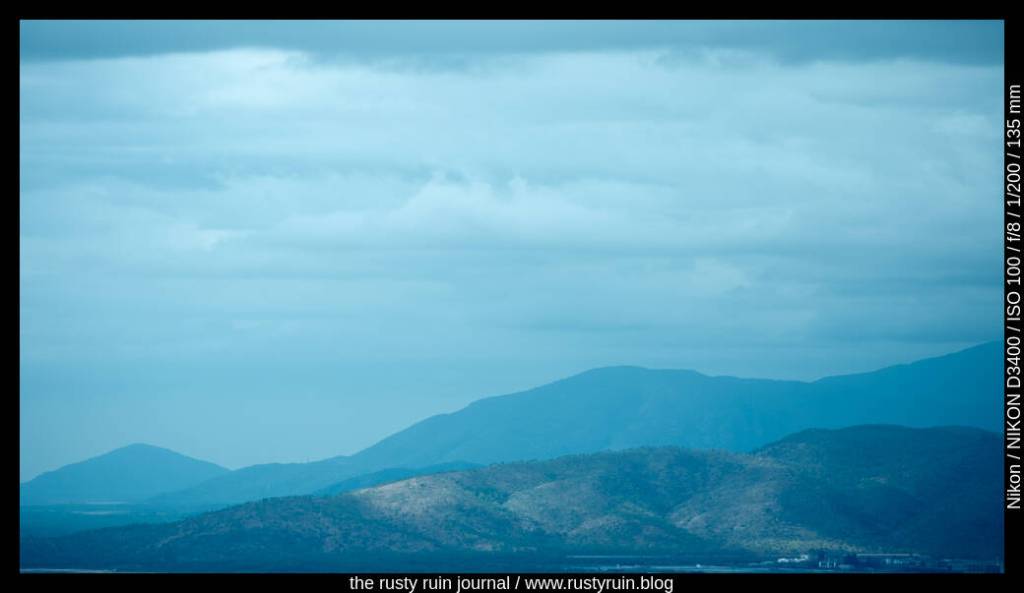
As there was an abundance of wondrous mountains draped in heavy clouds, I made a decision to focus on the scale, shape, colour, and tonality of the landscape rather than the sharpest details. Knowing the optical limits of my telephoto lens changed my perspective.
Distant landscapes are often hazy, and the details are difficult to record. Conditions were also overcast and regularly dull, further encouraging me to adapt and make deliberate aesthetic choices.
My objective in this mountain series was to simply focus on framing form, shape, scale, and tone. Having a rough final image in mind, I made photographs that provided me the raw material for editing post-holiday.
I set the White Balance to Fluorescent in Lightroom to make everything cold and slightly mysterious, emphasising the cloudy conditions. The 16:9 ratio crop choice also amplifies the scale of the mountains and encourages the viewer’s eye to travel their length, taking in tone, layering, and form.
During initial composition for the above photo, I deliberately framed it so the three visible mountain layers travelled to the right edge of the frame and terminated together. This provides visual interest, harmonises with the bulky layering at the leftmost edge of the frame, and serves as both entry and exit point for the viewer’s eye.
In the photo above, you can just make out tiny white buildings at the bottom right of the frame, They sit at the foot of the mountains and look small, thus providing a sense of scale. I also like the dapples of sunlight near them, made muddy and indistinct by the Fluorescent White Balance choice.















 The Rusty Ruin Journal