Pocketable plastic fun and the Nikon D200 ~ a day on the coast with two cameras

The Nikon D200 and the Kodak Charmera – two very different cameras on the surface. The D200 is built like a magnesium-alloy tank and the Kodak Charmera is a tiny plastic toy. There’s no comparison when talking about image quality, of course, yet I continue to return to the fact that we can freeze time through the use of these devices, whatever their technical limitations.

The act of making a photo has become so culturally habitual – so intertwined with commerce and self-promotion – that the initial magic has long since been lost. We’re a long way from the very first photo made ~ “View from the window at Le Gras”.

California Surf – Kodak Charmera

It’s strange to think the toy Kodak’s 1.6 megapixels features vastly more resolution than the very first photo made using a camera obscura over an 8 hour exposure time. Marked in technological milestones, human lives seem small. Our lives seem smaller still when we pick up to examine even the dullest stone that lies at the foot of a worn hill that was once a mountain.

Fern in high-key – Kodak Charmera

In colour, the photo above is washed out and the highlights burned beyond editing. In black and white, the photo becomes a small study in shape, direction, pattern, and shadow, with a high-key aesthetic. It was a single moment seized as we ordered food.
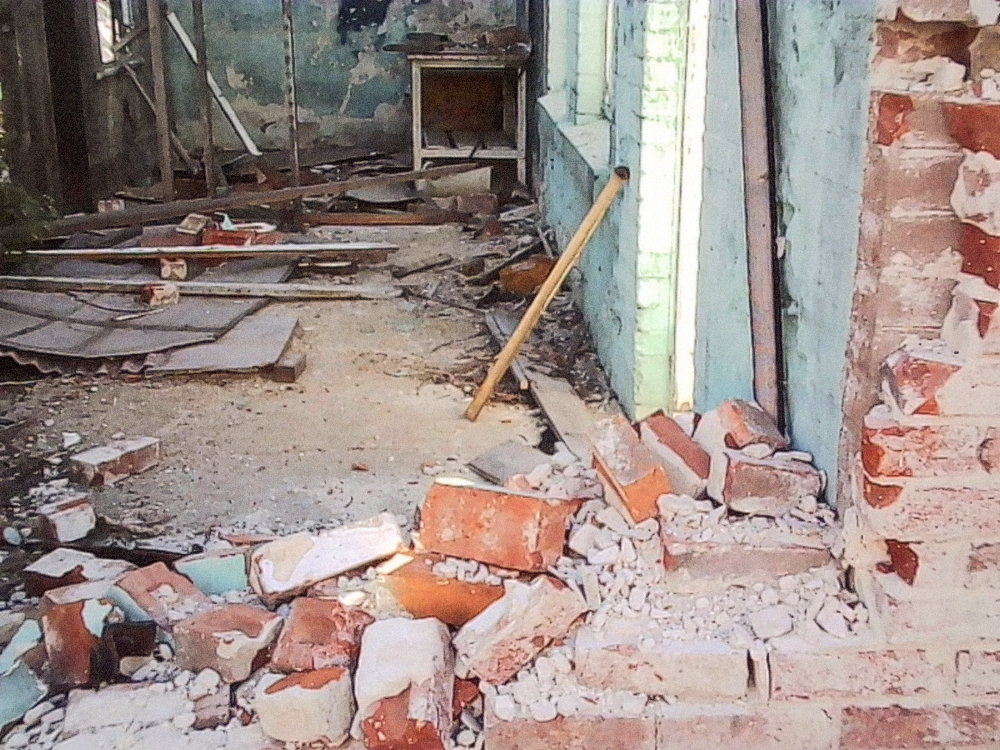
Exploring the wreckage – Kodak Charmera

We chanced upon a burned out ruin. I walked around fallen red brick and charred wall cladding, immersing myself in light and shadow.


Ghosts in broken rooms – Kodak Charmera
Angry scrawls – Kodak Charmera
Nails and holes in the wall – Kodak Charmera

I couldn’t forget the Nikon D200 in my camera bag. It pulled on my left shoulder as it reminded me that it’s services were available – every bit the prosumer DSLR of 2005 and seemingly so distant from that first photograph in the early 19th century.

One might wonder if there exists a linear technological line between cave art on rough walls and the recording of the world to modern digital storage media? It’s hard to imagine a world without the technology to record ourselves and the world, yet we’ve always sought a type of crude immortality through the things we leave behind – whether recorded on cave walls 60 thousand years ago or posted online. We try to leave a mark before we leave.

Blue walls and red brick – Nikon D200

Rarely do I have the opportunity to get so close to a ruin like this. Walking over the rubble, the soles of my sneakers adjusting to the sharp edges and angles of detritus, I reflected on the passage of time.

Ghosts in slivers of light – Nikon D200

Finding inspiration in black and white with the Nikon D200

I’ve been trying to get out for shorter photo sessions in recent weeks because it’s not always possible to find a free day for an organised day-trip. At the very least, it gives me a chance to find some new locations and subjects. I can also pack a few older camera bodies and lenses without placing much pressure on myself to come back with plenty of photo winners. So, what do you do when the clouds are heavy, time is limited, the light is failing, and interesting subjects are lacking? Well, I happened to spot an interesting looking tree by the side of the road:

Twisting against the failing light – Nikon D200 and Tamron 17-50mm 2.8 lens

I don’t usually convert colour photos to black and white but sometimes it’s a good way to explore other qualities of an image. Black and white emphasises tonality, texture, and geometry. Just look at all of the twisting branches in the photo above. Even at ISO 800 in dull light, the Nikon D200 produces little noticeable noise. I didn’t bother to apply any noise reduction at all since the digital noise pattern is quite fine.

Here’s another version with more contrast, blue shadows, and warm highlights:

More photos from the Nikon D200

In my previous post, I sang the praises of the Nikon D200 – first released in 2005. Back then, I could barely afford a decent digital point ‘n’ shoot, let alone a premium DSLR like the D200 ! Even RAW photos from this Nikon feature similar contrast, punch, and compressed dynamic range to those from the Olympus E1yet another widely respected antiquarian among cameraphiles and CCD sensor enthusiasts. I’ll not expand fervently on that in this entry, as I’ve done previously! Just some more photos from the hefty and reassuringly solid Nikon D200:

A rusty old shed somewhere – Nikon D200 and Tamron 17-50mm F2.8 lens
The green shed – Nikon D200

Notice the old tin shed theme so far? I won’t deny that lonely sheds make for some nice pictures, especially when they’re decaying into the sun-beaten soil.

The yellow shed – Nikon D200

Seriously, I was going to post something other than a shed, I really was, but I couldn’t help myself! Back to another angle of the yellow shed you saw in my last post. Looking at these photos, I can’t help but wonder again about the image quality perfected in some of these old cameras. Makes you also wonder about the role of marketing and what we believe.

A sunny day with the Nikon D200

The Nikon D200 was released to market in 2005 – a long time ago in the world of digital cameras. Everything about it screams digital retro – the hulking black body, the 10.2 megapixel CCD digital sensor, 11 auto-focus points, and 5 frames per second shooting speed. Anyone who reads this journal regularly, knows that megapixels aren’t everything. Also, I’m a sucker for old and slow technology that does a good job and has a good feel.

Yellow shed – Nikon D200 and Tamron 17-50mm F2.8

I’ve kind of concluded by now that the best of the CCD sensor cameras produce punchy and colourful images. Even the RAW files look nice and punchy. I know that some people put it down to a thicker Color Filter Array above the photosites, and this may certainly be part of it, but I also think that the limited dynamic range of the sensor and the tonal response tuned by the engineers produces photos with extra contrast. Modern CMOS sensors have a much wider dynamic range and tend to produce flatter files for editing. You’ll find that shadows can be lifted more and highlights retain greater detail. In cameras like the D200 and the Olympus E1, the limited dynamic range of the CCD sensor results in less shadow and highlight detail, making for files that have compressed tonal range – more contrast.

The output from the Nikon D200 is reminiscent of the output from the Olympus E1 – a 5 megapixel beast I regard very highly. Of course, the lens makes a difference too, and the Tamron 17-50mm is a nice fast walk-around lens that balances well on this Nikon. It’s a bit on the soft side at 17mm in the corners, but at F8 and around the 35mm mark, it produces sharp images across the frame in my experience. It’s a great fit for the old D200.

Sand and sky and mangroves – Nikon D200

Just as with the Olympus E1, I’m not doing much editing at all with the RAW files from the Nikon D200 – minimal contrast boost if required, sharpening, and only a little vibrance for all of the photos on this page. In use, it’s a solid camera with all of the external control buttons you could ever want. This was a camera with pro features at the time, for sure. The magnesium-alloy skeleton and deep hand grip makes it feel secure and reliable, providing enough weight and heft for balancing longer lenses. Next to modern Nikon mirrorless cameras though, the D200 is an antiquated hulk! It makes the Nikon D70 seem like a cheap piece of plastic.

Shipping containers, a shed, and a caravan – Nikon D200

I received two original Nikon EN-EL3a batteries with the camera. I’d charged both of them before going out, but one of them drained to zero within minutes of fiddling with menu settings. I know the D200 had a reputation for poor battery life, but I think that particular battery may be done for! The other battery seems to have plenty of juice though. I’ve ordered some third-party replacements anyway, as Nikon don’t manufacture the official batteries anymore.

0000 – 9999 – Nikon D200

The Nikon D200 was the last Nikon camera body to feature a CCD digital sensor. The Nikon D300 featured a CMOS sensor, which enabled the use of higher ISO settings and low light photography with less noise. I’ve never used the D300, but I know it’s considered one of Nikon’s best early digitals. In my opinion though, the D200 remains a great camera and certainly scratches the retro digital itch – one of Nikon’s best cameras in the market transition between film and digital.

You can see more D200 photos in my follow-up post here.