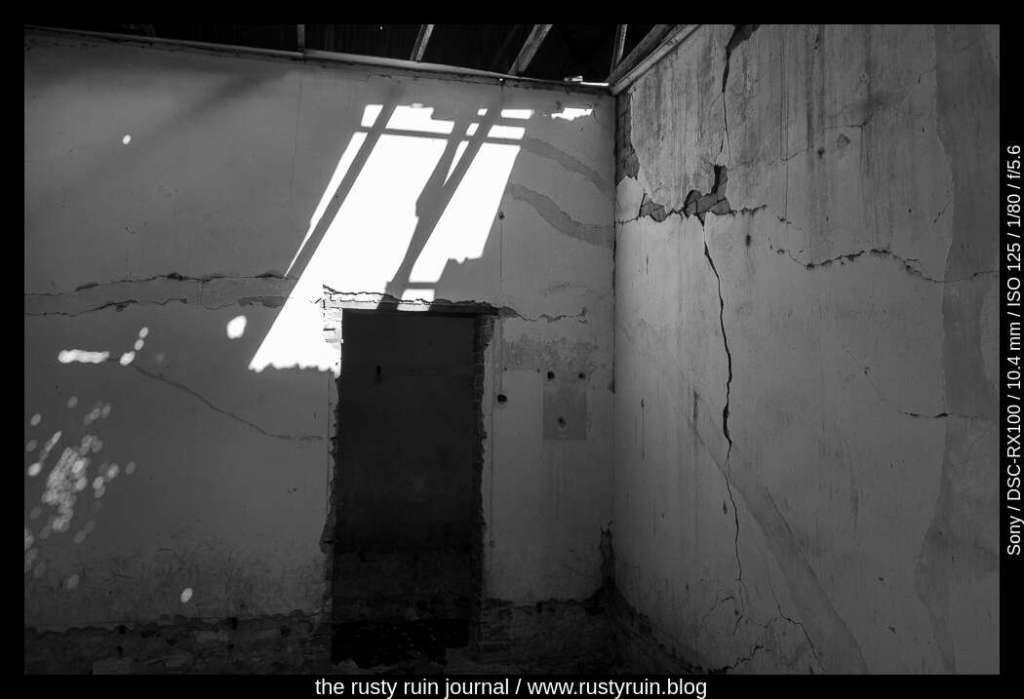
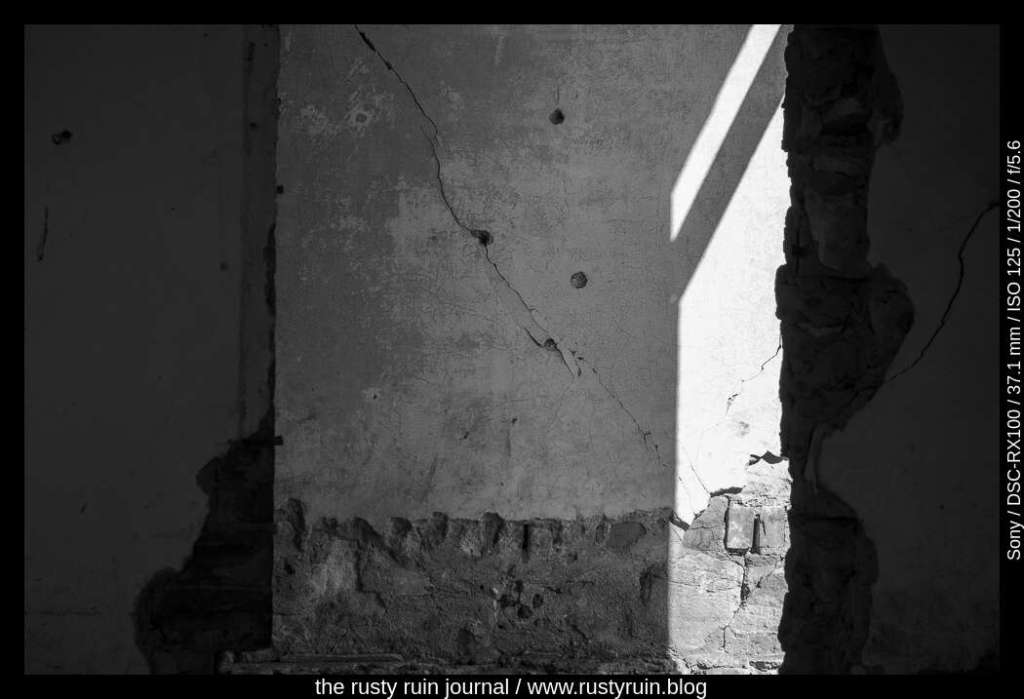
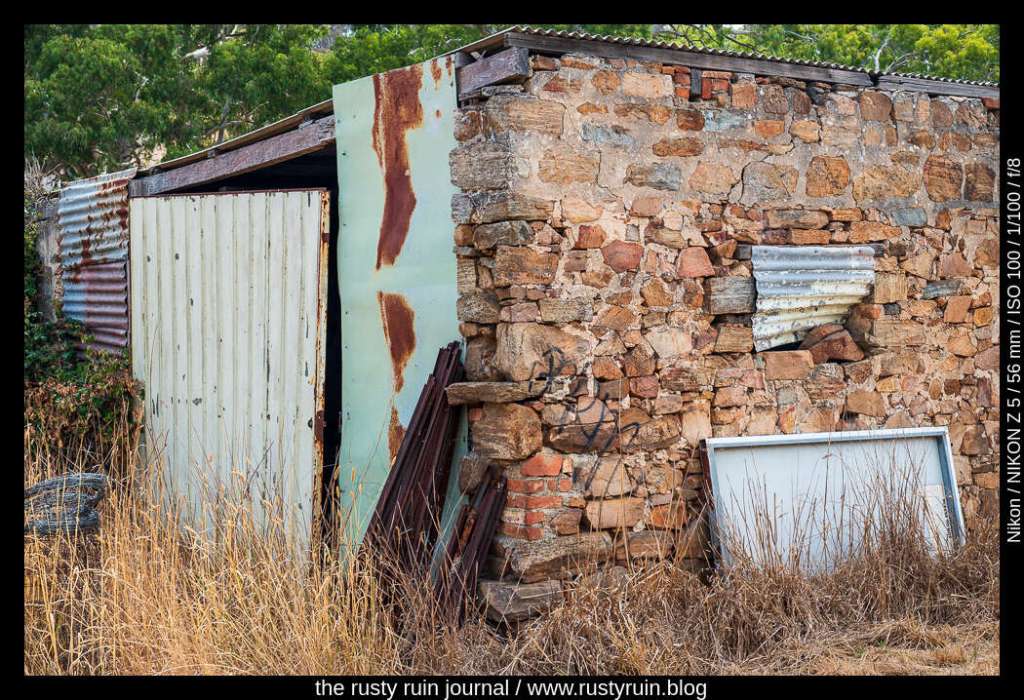
A day off and low motivation for much of anything ~ possessing the world in photos and missing moments

I have the Flu and not feeling too great. In my infectious haze, I thought I might post a few photos here. Perhaps it will distract me from the next round of tablets anyway.

After such a scintillating introduction, here are some photos that fell into the miscellaneous-to-edit folder and were duly forgotten ~

Nikon Z5 and Nikkor 24-70mm F4S lens

I think sometimes that packing the camera bag can lead to days out that are simply an excuse for using the camera gear, rather than relaxing days where new things are discovered and time is well-spent charging the inner batteries. The photo above was made on a cloudy day out and I remember feeling some frustration that I wasn’t finding much of interest for the Nikkor glass to focus upon.

The old market – Olympus OMD EM5 Mark 2

In Susan Sontag’s essay – In Plato’s Cave – she says:

Photography has become one of the principal devices for experiencing something, for giving an appearance of participation.

I remember times where I’d experience an event – a concert, a holiday, a dance – primarily through the camera lens, just waiting for the right moment to click the shutter button – my eager eyes glued snugly to the eyecup. In such cases, the event is mediated via the camera ~ trapped within the borders of the frame, subjected to technical decisions – aperture, shutter speed, ISO. At what cost do we do this? Are we truly experiencing something when we stand apart from it and divorce ourselves from the present moment? Is it not better to allow the eyes to take in a feast of dazzling coloured fireworks after dusk rather than gaze only through the viewfinder, the polychromatic spray flattened across optical glass? Is there a deeper need to possess the moments as evidence that we were there?

Olympus OMD EM5 Mark 2 and Sigma 19mm DN Art lens

Strange name, big Cold War glass ~ the Zenitar 16mm 2.8 Fisheye lens

If you believe the more scurrilous online rumours, the quality of a camera lens from the former Soviet Union was directly proportional to the Vodka consumption of weary factory workers. This is not the colourful fancy one might suppose, as any factory line embedded in an economic and socio-political culture where wages are neither incentive nor punishment is more likely to be driven by exhausted hands and eyes.

None of this suggests that any cheap trinket or fast fashionable piece made today in vast factory cities by exploited workers and then sent abroad to be marked up for huge profits is any better. Always, there are grifters and exploiters taking advantage of the vulnerable and the gullible. But anyway…I digress slightly. The source of my Soviet-produced lens beyond the factory floor is not a story for today.

The Zenitar 16mm 2.8 Fisheye lens is an impressive piece of Cold War glass. It’s a hefty thing in the hands, has a distinct and very short hood, a lens cap that can’t be used on any other lens, and looks great when the sunlight bounces off the large curved glass that sits right out front. On my trusty Olympus EM5 Mark 2, this 16mm Zenitar has a field of view equivalent to a 32mm focal length in 35mm format. So, if I was using it on my Z5, which has a 35mm sensor, the field of view is the native 16mm. Because my Olympus has a digital sensor that’s half the size of the one in my Z5, I double the 16mm to a field of view of 32mm instead.

Trudging through swampland at mid-afternoon – Olympus EM5 Mark 2 and Zenitar 16mm Fisheye

My copy of the lens is sharp enough at apertures F 5.6-8, and even at those settings the corners display a lack of sharpness that’s more fizzy than actually mushy – as though details are being pulled away from the centre and slightly distorted. The effect reminds me of using a plastic lens but I don’t find it unpleasant.

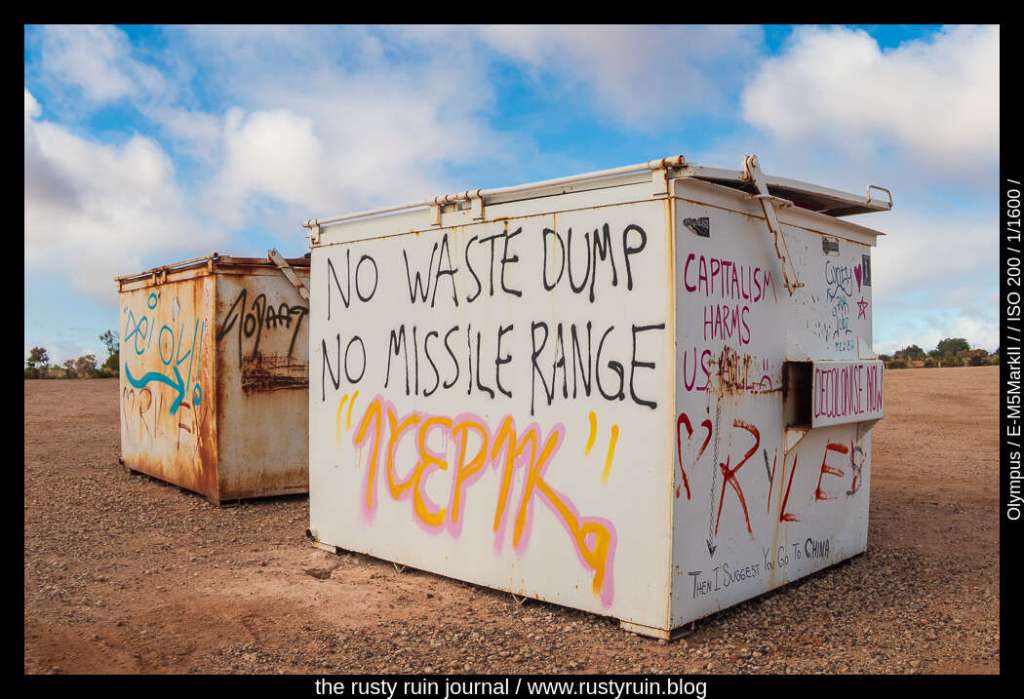
Capitalism harms us all – Olympus EM5 Mark 2 and Zenitar 16mm Fisheye

As with other wide angles, and certainly with all Fisheye lenses, there’s distortion. You can see how the normally straight cortners of the skip bins in the above photo look bowed. I don’t have an issue with it, as this is just a feature of the lens, but it’s not the sort of lens you want if you desire pleasant portraits, straight horizons, and distortion-free buildings (using the Nikkor 16mm 2.8 lens profile in Lightroom will straighten out most of the distortion if you really want that).

Lenses like this are great for getting in very close to a subject to take advantage of the optical distortions they produce. On the Olympus, however, the Fisheye effect is certainly much less because of the smaller sensor size, making it a really valuable wide-angle lens if you don’t mind manual focus, fizzy corners, and the chance that the quality of your copy may have suffered due to the effects of authoritarianism and the revolutionary whims of Vladimir Lenin.

Some thoughts on Quiet Photography

It seems that during prior lyrical waxings on the concepts underpinning mindful/contemplative photography and Miksang, I came to refer to it as Quiet Photography. This, without thinking for a moment that Quiet Photography might indeed be a thing out there in the world – a concept already girded by philosophies and academic essays. As it turns out, it’s a definite thing in some academic circles and is mentioned elsewhere.

Old door and dappled light – Olympus EM5 Mark 2 and Sigma 30mm 2.8 lens

For me, quiet photos don’t announce themselves. They don’t add their voice to the cascade of loud photos that speak of ego, marketing, and contrivance. They step away from noise and action. Quiet photos speak of the small things and the ordinary things. I think the best of these photos imbues the mundane subject with an imaginary life, as though revealing a mystery in a quiet place unnoticed by the noisy hubbub of humanity.

Wood bench partly in shadow – Olympus EM5 Mark 2

As in contemplative photography, the necessary mindset inhabits a moment fully but may be distracted easily. The play of autumn light over the surface of an old door, a wooden bench in shadow and light – ordinary things that convey the passing of time and a feeling of history, with the photographer as quiet witness.

Revisiting ruins and ethics – moral philosophy and photography

Lately, I’ve been contemplating ethical questions in photography. According to Wikipedia, ethics is the study of moral phenomena and “…investigates normative questions about what people ought to do or which behaviour is morally right.”

At the risk of being ultracrepidarian, I’ll just say this: I’m not an expert in ethics or philosophy, but I believe that self-reflection is an important part of not just photography, but also generally. It’s crucial to ask questions and seek answers to discover what drives our photographic practice. What beliefs inform our behaviour? What do we consider to be right and wrong and why? Where are the moral lines for us?

Bruce Gilden and Mark Cohen – well-known street photographers who hold the camera in one hand, the flash-gun in the other, and get right into the personal space of their subjects – may be at the behavioural far end of what street photography encompasses. Here’s a great video of Gilden at work: Bruce Gilden.

This in-your-face methodology has variously been called innovative, invasive, bullying, and unethical. There’s no denying it can produce some amazing photos of people doing everyday things on the street, but is it ethical? Ethics is about what behaviour is morally right. But just because something is legal, like making photos of people in public spaces where the law says there is no expectation of privacy, that doesn’t make it ethical.

All smiles at midnight – Nikon D7100

Consent and ethical frameworks

Consider the photo of the two ladies above. You can see they’re happy and smiling. In fact, they saw me with the camera and posed for me, thereby providing consent. There aren’t too many people who’d have an ethical issue with this photo.

What complicates matters is that what we consider to be ethical, or morally right and wrong, is based on our ethical framework – a set of core beliefs, culturally embedded and varying across time and place – that inform the way we behave, the way we think and feel, and what we consider to be right and wrong. If all of my street photos were made with consent, such as the one above, my ethical framework might be Care-Based, where I consider the feelings of others, care for others, and my relationship to others.

Street photographers like Bruce Gilden may be considered unethical by a majority, but the truth is that their thoughts, feelings, and behaviours are driven by belief systems that may not be in accordance with the mainstream. One might argue they work to a type of Utilitarian ethical framework that values a good outcome above questionable methods – art as the good outcome in this case. But if people that Gilden photographs are startled, offended, or unhappy with his method, is it a good outcome from their perspective? Should one set of ethics override another?

Perhaps it’s the goal of making good art that drives the photographer’s impulse to shove a camera into personal space. Or the goal to be well-known, with money in the pocket and exhibition space for the work. Would you think differently if you thought of Gilden’s work as great art? Or if you didn’t like his photos, would you find his practice unethical instead?

Kneeling with nothing – Nikon D7100

I thought for some time before posting the photo above. I photographed a vulnerable person and for many people, making photos of vulnerable people on the street is a big no-no and crosses an ethical line. What drove my behaviour here? Obviously, I feel uncomfortable posting the photo but do I feel discomfort because I fear possible bad reactions to it? I’m certainly not one to dive into conflicts.

The idea of a person with nothing, surrounded by people in a busy city, appeals to my sense of exploring the effects of capitalism and urbanisation – a fragile human being in a concrete and glass city, looking to survive the grinding day. The potential cruelties of modern life appeal thematically and drive an aesthetic. I’m driven to this as I’m driven to photos of decaying buildings and ruin.

It’s easy to be seduced by photo opportunities on the street in a big city where few people care about others with cameras. It’s easier still to exercise power as a photographer and frame a vulnerable person who gave no consent, telling a momentary story about them that can’t represent them in totality. Perhaps in making this photo, I also touched the edges of what I’m comfortable with. That, in itself, is a valuable lesson and self-reflection.

Charles de Gaulle at work on the streets – Nikon D7100

It’s important to understand that ethical frameworks vary across culture, time, geography, and individuals. The behaviour that one person feels comfortable with will not be in accordance with the ethical framework that drives someone else. We may argue that some ethics are universal, and perhaps they are, but prior civilisations have believed it a good thing to sacrifice virgins to appease deities, or have seen fit to expose weakling babies to create a stronger society.

Ethical frameworks are, in this context, subjective. The law seeks to be universal and pragmatic, but ethics remain separate and personal. And when my ethics disagree with yours, conflict may ensue, even though neither of us is wholly right or wrong. According to Descartes, we can never truly know if other minds exist since we can only truly know our own minds. We’re trapped within our own minds, and for all we know, other people are zombies, illusions, or mindless automatons. Slipping into Solipsism for a moment, we can never know another person’s ethical framework because we can never know if other minds exist beyond our own and we are therefore doomed to cross ethical boundaries at every moment and every step. In this context, it may be more relevant to depend on laws rather than subjective ethics.

Diving into Solipsism is, perhaps, at the deep end of the pool, but it serves to illustrate a simple point: ethics are indeed personal and subjective and we often can’t know the ethical framework of another person. We may minimise this confusion by seeking consent, and this is a perfectly reasonable solution, but we also change what street photography is by doing so: it then becomes a set of poses and forced half-smiles for the stranger’s camera, thereby losing the interesting spontaneity that defines the genre.

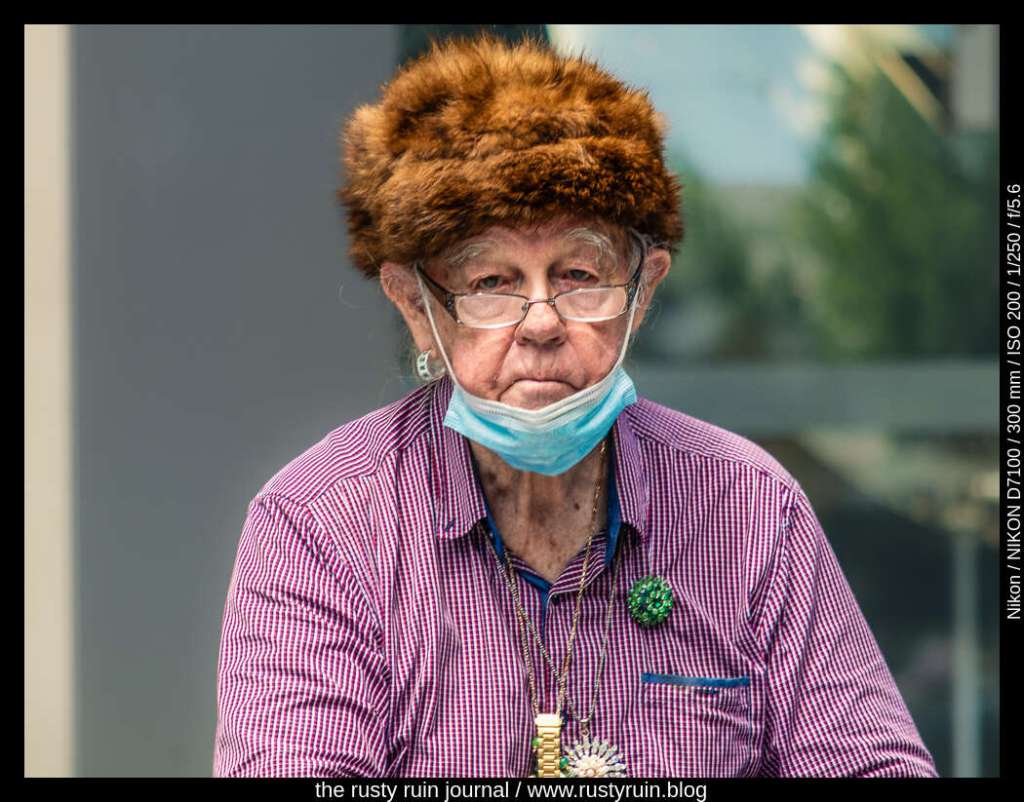
Covid-safe and unhappy – Nikon D7100 and 55-300mm Nikkor lens

It’s clear the person in the photo above isn’t very happy. Was he unhappy with me pointing the lens in his direction or was he unhappy with something unrelated? I found his look interesting and decided to make the photo before moving on. I admit it’s not an especially good photo but I share it in hopes of provoking thought about the ethics of street photography.

If a person isn’t comfortable with me making their photo but I’m ethically comfortable doing so, should one ethical framework override the other? Should there be an expectation that within a time, place, and culture, where photographing people in a public place may be legal but sometimes morally questionable, the ethics that favours asking consent or not making the photo at all should always take precedence?

Ethical choices and geological wonders

In a previous post, I posted photos of Uluru – a magnificent natural wonder that started to form over 500 million years ago. There are parts of Uluru where clear signs forbid photography based on the cultural beliefs of the local indigenous Arrernte people. I didn’t make any photographs in the aforementiomned signed areas, choosing instead to pay respect to those local beliefs.

My belief system allows me to view the world around me as not owned by any single person or group. It allows me to view nation-states, governments, and fortunes as illusions in the sense they are consensually understood and agreed-upon narratives. These beliefs inform my ethical framework, but I understand that such frameworks are purely subjective and personal. For me, Uluru is an amazing example of geological processes that existed millions of years before any human being set foot on the shores of the ancient inland sea. Yet, despite my belief, I chose not to make photos anyway, partly because I also respect the value of indigenous culture.

Ethics in photography is like a huge bowl of spaghetti on a first date – you’re probably going to spill it on yourself and look awkward while slurping up the pasta. It’s a messy and often uncomfortable area that’s filled with subjectivity and declarations of universal moral truths by stubborn individuals. Perhaps the best we can do is our best in understanding other people, occasionally override our own ethics to get along better with others, and hope that we find people that share some of our own ethics.

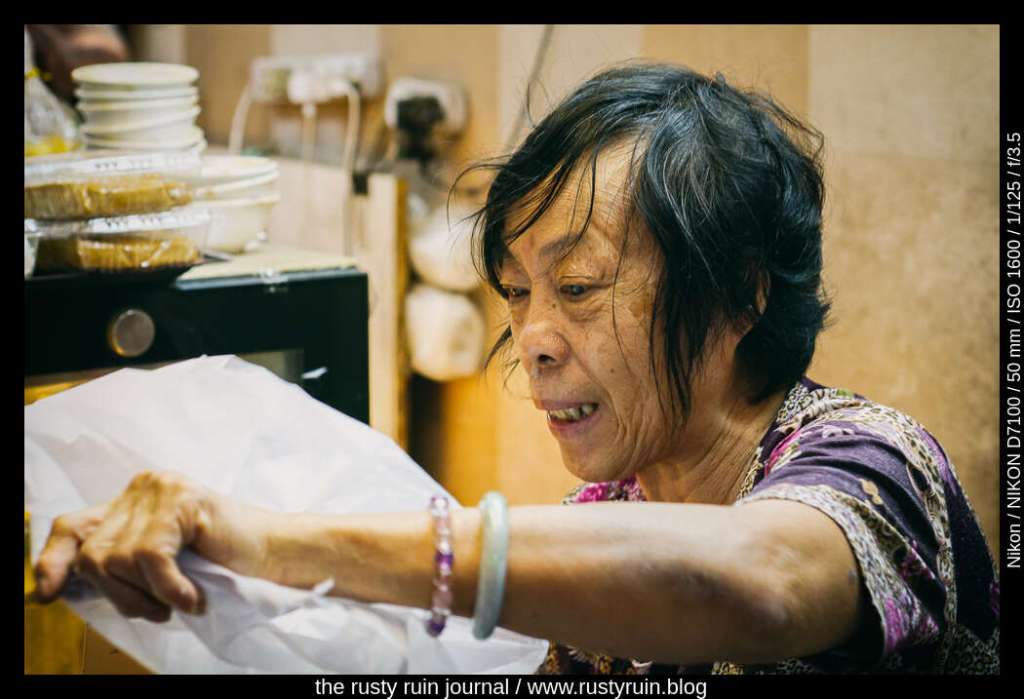
Hard at work into old age – Nikon D7100

A short self-reflection on ethics in photography in the context of a recent confrontation

In my previous post, I outlined a confrontation that had happened when revisting a ruined house nearby. In a world where the Silicon Valley business model is obsessed with surveillance capitialism, tracking online behaviour, harvesting personal data, and selling that data, it’s no surprise that a growing number of people become very touchy indeed when a lens is pointed in their direction or the direction of something they own.

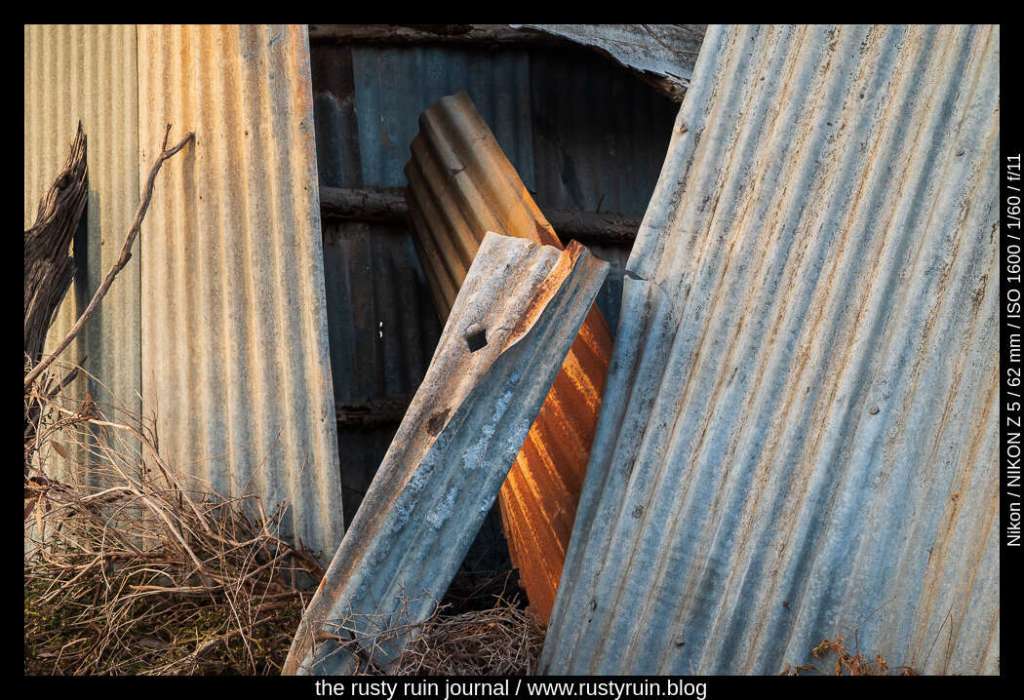
Old shed on a dusty corner at sunset – Nikon Z5

Ethics is a branch of Moral Philosophy that concerns itself with morality and how people should behave and why. Despite the fact that we were on a public road at the time of the incident, doing nothing legally wrong, and making photos, was our behaviour ethical? Why were we confronted and what ethical framework, if any, should inform photographic practice?

It’s very easy to dismiss confrontations with a deft wave of the legal hand: making photos from public spaces of things visible from those spaces is not legally wrong. Yet, doing so can provoke a strong reaction in many people. It may not be illegal, but is it ethical? Is it right or wrong to make photos of a property owned by someone else? And how should we react, as photographers, when we’re confronted?

Keep Out – Nikon Z5

I think self-reflection is a useful tool for personal growth and change. It allows us to consider our system of beliefs, our thoughts and feelings, and our behaviours in the larger context of culture and society. What beliefs inform our behaviours? And when those beliefs are challenged by someone else who thinks, believes, and behaves differently, what should we do? I’ll be coming back to these questions…

Local ruins and ruinous beliefs

Some days it’s hard to ignore the culture wars that shoot back and forth viciously on digital threads or the hurried whispers of people who feel the uncomfortable cultural shift beneath their feet. I wonder whether we’re just living through especially tumultuous times or whether this has always been so? It has always been so, of course, because nature is change. Even the universe changes from moment to moment. It’s a truth some try to resist and others embrace. Often, we embrace it when young and ossify with age. That’s our nature too. Today’s passionate culture warriors become tomorrow’s slow-moving dinosaurs.

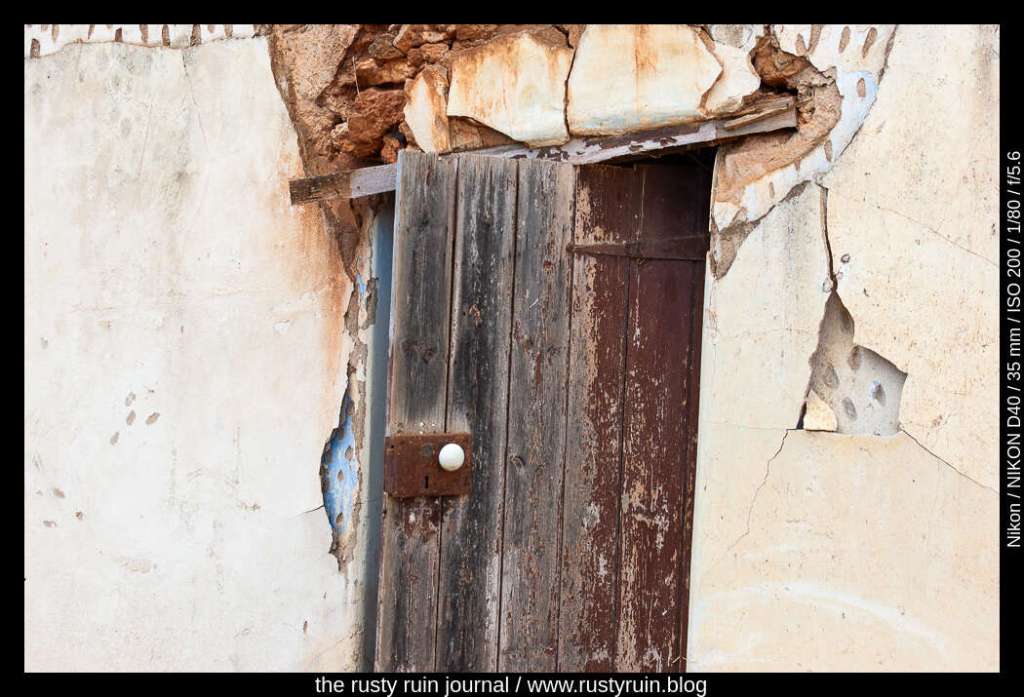
A door used no more – Nikon D40 and Nikkor 35mm 1.8 lens

I’ve always thought it unwise to commit too fully to a rigid set of beliefs. This is not to say belief systems are unreasonable or bad – humans seek meaning in all areas, and belief provides the framework for living in a universe that’s so vast as to cause us terror in dark and quiet moments – if you subscribe to Terror Management Theory. We cling to each other for warmth, just as we cling to belief like a security blanket.

We so often make the mistake of assuming our own beliefs are real and true and that they transcend time. Rather than understanding others deeply and cultivating compassion, we too easily find the beliefs of another person wrong, placing it on a rigid moral spectrum that functions as our own personal guide to undertsanding a seemingly random existence we seek desperately to understand, contain, and explain. In this way, we comfort ourselves.

The old entryway – Nikon D40

If we believe the universe has a moral structure inherent, we also tend to find a moral structure in the world and find our beliefs aligning strongly with it. If we believe the universe is mechanistic and chaotic, without moral structure, we align our personal narratives to this view instead. We find that life’s purpose and meaning is tied inextricably to our most basic beliefs about reality. We may be trapped within them at the expense of understanding other people. Either we’re islands of meaning, separated by uncrossable gulfs, or human beings attached to each other by common bonds. Perhaps both.

The tall church along the old road – Olympus E1

You don’t want to be on the wrong side of history, people sometimes say. For me, there is no right or wrong side, just people who have their own personal narratives, clinging to meaning. We’re all in the vast river of history together. It flows all around us. We’re part of the change happening from moment to moment, whether we embrace it or resist it. Neither approach is right or wrong – just ways of living and surviving and finding purpose and meaning.

Uluru at sunset – Nikon Z5

I love geology and astronomy. I like the feeling of placing myself in the context of deep time – the kind of time that barely notices our existence because we’re fresh and new. In this way, I place human life in the context of more ancient things. Uluru, the famed monolithic red rocky heart of Australia, started to form 550 million years ago. It was here long before we were. It started to form when multicellular life dominated the planet, long before dinosaurs roamed. Imagine that?

When you look up at the stars, those photons hitting your retina have travelled for countless light years. They’ve struggled and twisted up through impossibly dense super-heated layers of distant suns – the forges of our universe – careened through the cold depths of deep space, entered your eye, hit your retina, and then been processed as a visual signal by your amazing mammalian brain. In this way, we’re all connected to the stars. I love that thought.

Camera settings, mistakes, and cognitive load

When I decided to dive headfirst into photography as a hobby, I was anxious about the technical jargon and understanding the myriad camera settings. The good news is that it wasn’t all that bad. I read and watched and learned a lot through trial and error.

Owning up to failure is always important. Being able to move on from a mistake to the next moment is even more important for continued growth in any field. I’ll tell you something, honestly: I still make plenty of mistakes!

Falling down – Nikon D40 and Nikkor 35mm 1.8 DX lens

Here are some of the most common photographic errors I continue to make:

  • Not resetting important camera settings: All too often, I’ve forgotten to change ISO when entering different light situations, or I’ve missed resetting exposure compensation.
  • The camera mis-pack: I’ve packed not enough when I needed extra gear and packed too much gear when I should have packed less.
  • SD card woes: Yes, I’ve filled up an SD card and forgotten to pack a backup. The only solution is to go through the recorded files and be brutal about deletion decisions.
  • ISO stubborn: Have you ever been stubborn about pushing your ISO in poor light situations? Base ISO is optimal for less digital noise in a photo, but a blurry photo just isn’t worth the stubborn refusal to UP the ISO a bit more to force a faster shutter speed! It’s better to have a noisy photo over a blurry one. Digital noise can be dealt with far more easily now using software tools. I can’t even tell you how many times I’ve stubbornly refused to move from base ISO in fast-fading light, standing there with my arms tucked and not breathing just to cut as much movement as possible to achieve perfection at a too-slow shutter speed in hopes of a sharp image.
  • Reverse dialling: Older Nikon bodies dial positive and negative exposure compensation values in reverse to other cameras, so when my muscle memory becomes accustomed to the opposite dial movement of another camera, I find myself cursing the over or under-exposed photo on an old Nikon camera. At worst, I just forget the reverse dial motion completely until I’ve long moved on from the scene, at which point I sigh. Thankfully, the new Z-mount Nikons have changed both the exposure value dial direction and the reverse F-mount lens twist they had going for decades.
The old green gate of J. Martin & Co. – Nikon D40

I’ve been tough on myself in times past when it comes to making photographic mistakes. I think part of that was not feeling comfortable with the equipment and not believing I could learn enough to make good photos. In fairness, I still make plenty of stinky photos, but every poor photo teaches me something new, even if it’s a lesson I thought I’d already learned.

We can always improve our photography, but learning and living isn’t some easy linear path. It’s full of twists and turns and ups and downs. There are rocks of many different sizes littering the paths we walk. One of the hardest things to develop is self-compassion. We’re often kinder to strangers than we are to ourselves. But, why? We’re just as fragile and just as prone to mistakes as anyone else. All that truly matters is that we experience and inhabit the moment meaningfully, in whatever mode we choose: Auto, Program, Aperture Priority, Shutter Priority, or Manual.

Wending my way through photo edits on a quiet day ~ curation, technical considerations, and personal growth

It’s a public holiday and I’m working my way through old photos in hopes of finding some stray winners I’d forgotten about. I’ve always been my own biggest critic, editor, and curator. I think it’s good to develop our own tastes as photographers over time. It’s important to connect to our own photos without judgement, reflect on the image and the subject choice, consider the chosen settings, and remember our original photographic vision for the scene versus the actual image.

The key is to do this without judgement. Not every photo is going to meet your developing creative tastes. Not every photo is going to work at a technical level – some will be blurry, some will be rushed, some subject choices will seem odd, and some photos will seem dull. All this is absolutely OK. It needs to happen for growth to happen.

Sundial on a cloudy day – Olympus EM5 Mark 2 and Zenitar 16mm 2.8 Fisheye lens

I love the way the sunlight hits the sundial to reveal the texture of the metal in the photo above. All of the rust spots, built-up debris, weathering, and patina is visually interesting. The old Zenitar Fisheye would be a specialist lens on a 35mm camera, but on the half-sized sensor of the Olympus it works out to an equivalent focal length of 32mm and functions as a nice wide lens with a sharp centre and mushy corners. In situations where I want to get close and get in as much of the scene as possible, it’s a great lens.

There’s a little blown out highlight right up the top, but blown highlights and blocked shadows are not necessarily bad things, and in the above photo it’s very small and not distracting. There are so many other elements that make up a photo! Consider these questions: is there any detail in the highlights/shadows that you want to preserve? Will preserving those details add to your photo? If you make a photograph and part of the image features a glowing light bulb, for example, should you decrease the exposure to bring down this highlight so that the filament inside the bulb can be seen? Will doing this compromise other elements in your photo? How integral are those highlights and shadows to your photographic vision? Instead of the sensor having to manage dynamic range that exceeds its capabilities, can you simply reframe the image instead to include less heavy highlights/shadows?

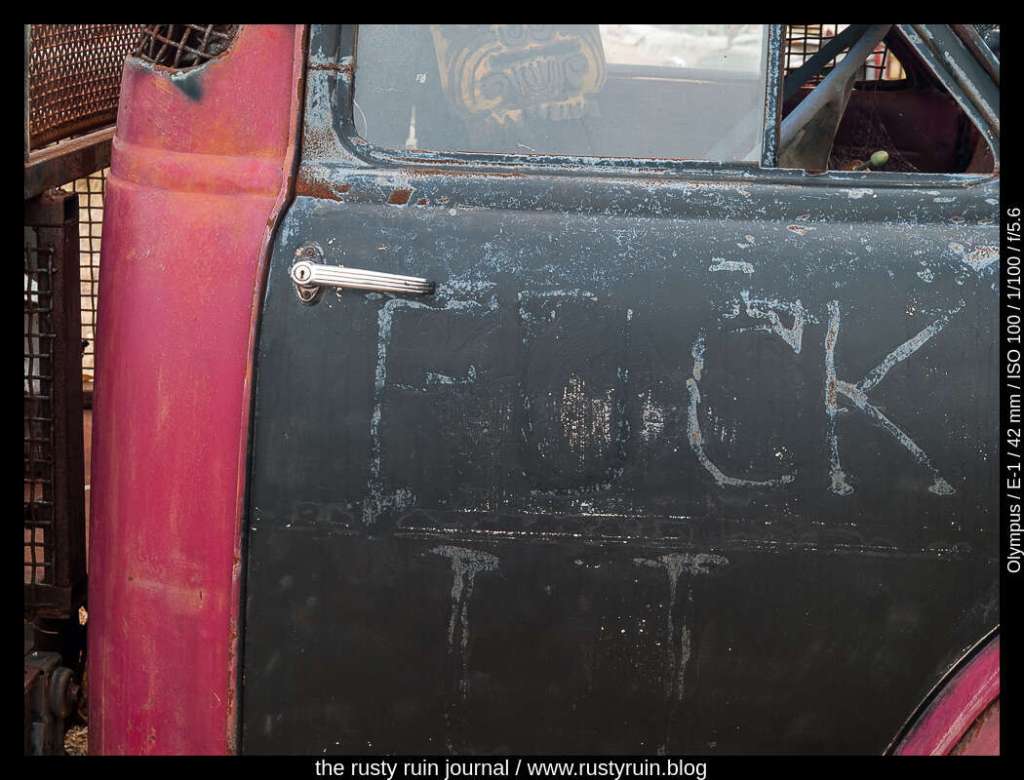
Cheapo Mad Max – Olympus E1

In the photo above, my decision to focus on the car door was made easy by the fact that the window at the top was allowing in a lot of light. The E1 has an old sensor that doesn’t manage high dynamic range so well, so it made sense for me to cut out most of the light from the window in my viewfinder composition so as to preserve the details in darker areas and on the car door. In effect, the old sensor didn’t need to work so hard to contain all of the dynamic range in the scene.

The red paint on the left, the curved red painted area to the bottom right, and the window at the top all serve to frame the weather-beaten door and its message. It may not be the most exciting photo in the world, but it works for me and it’s a good example of connecting a scene to a photographic vision through careful composition and technical knowledge. I’ll be the first to admit that I’m not always good at that and plenty of photos don’t meet my own tastes, but I keep learning.

Diesel, detritus and digital dust ~ a few more photos from the Nikon D70s

How do you store your digital photo files? In this modern world, it’s a regular concern – how to safely and securely store all of the digital detritus that builds up around us. It used to be so easy when we just had to remember a few passwords. There was no such thing as 2 factor authentication years ago. Security breaches and cyber-hacks have put paid to having an easy life when it comes to digital security. And you know something? I’m a bit burned out on all of it…it feels a bit too much some days.

Stacked for the night – Nikon D70s

Just trying to organise photo files feels like a burden. I’ve had hard drives go bust over the years. The ever-swelling trove of files gets bigger and the voice gets louder: “Find an easy way to store all this crap or delete more!” – as if I’m stuck playing a simulation game and the goal is just to move shit around every minute of every day and night. Like Sisyphus pushing the boulder up the hill.

As I said previously, I use Microsoft One Drive these days. At the very least, I can use the cloud to quickly backup DNG files and TIFFs for future download. I know lots of people feel like they shouldn’t have to pay, but in the age of information overload, I think it’s a good idea to find a reasonable solution that offers enough storage for a good price. It’s the business model that Google tends to run with: offer generous freemium cloud storage, but not too much, so that people come to rely on it for their photo and file backups. Then offer paid tiers for more storage room.

Diesel back in the day – Nikon D70s

I suppose we’re always looking to organise something – photos, files, music, our lives. And truthfully, sometimes all of those files feel like too much of a weight – like a digital albatross. I can’t even tell you how many sites I’ve been locked out of because an old paid email address went bust and now the site is sending the password I’ve forgotten to an email address that doesn’t exist. Or software license codes that got lost in the shuffle of hard drives and file moves. The 21st century has the feel of a password-protected version of copy of a copy of a copy, featuring tiny beige plastic parts that need to be glued together against a time-limit. So, I guess this is my rant about simplicity and complexity, as if there was ever a simple time. And since I work with vulnerable people, many of whom live really tough lives, I must say that I feel a little queasy even making a small complaint about any of it. Life moves and changes and we’re just the floating leaves flung by the ripples and waves as it goes.

Permanently parked – Nikon D70s

A local photo walk with the Nikon D70S ~ rust, wood, and vegetation in the suburbs

I’ve previously written about the Nikon D70. As I seem to have some affinity for older Nikon cameras, and as my D70 is also pretty beaten up, I couldn’t resist a good deal on a Nikon D70s with an attached Nikkor lens that has long been on my list: the Nikkor 35-70mm 3.3-4.5 AF lens. First released in 1986, the 35-70mm is most definitely a lens made for film cameras of the time as a cheap walk-around unit.

Some detractors say the focal length of 35-70mm isn’t especially useful on an APS-C sized sensor, but I disagree – 35mm is a popular wide, not not too wide, focal length, and 70mm can most certainly get you close or give you a decent portrait. Even if you consider equivalence (and a 50mm lens is still a 50mm lens on any sized sensor), the lens gives us 35mm eqivalent focal lengths of 52mm, 85mm, and 105mm – all three of them very useful lengths on any camera.

Snapping plant monsters in the suburbs – Nikon D70s

As for the D70s, it was announced in August 2005 and came hot on the heels of the original Nikon D70. The differences between the two models are minor, with the back-screen of the S iteration being 2 inches rather than the 1.8 inches of the original. The other features remain the same really: a 6.1 megapixel CCD APS-C-sized sensor, a top LCD screen with settings information, and an array of useful external controls, including ISO and White Balance, among others. Though it’s an all-black-plastic affair and has that familiar hollow feel of Nikon’s cheaper offerings, it definitely has a prosumer feature-set. Sure, the Nikon D200 is the professional upgrade, with a solid magnesium-alloy skeleton that feels like a giant warm buttered scone in the hand, but the D70s still remains a competent DSLR even in 2025.

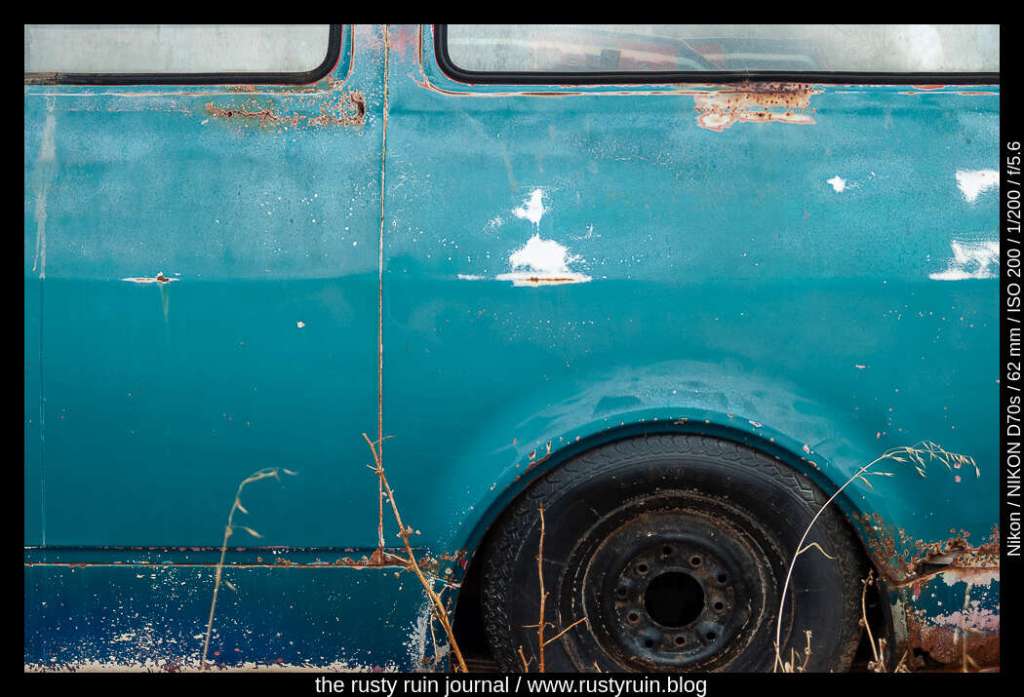
The old blue van – Nikon D70s

All the photos were made using the lens at F-stops 5.6 – 8. As you can see, the photos are sharp and punchy, even using a 6.1 megapixel sensor from yesteryear. Need I go on about the competent image-making capabilities of these older cameras?

Covered in cactus – Nikon D70s and Nikkor 35-70mm 3.3-4.5 lens

I was helped by heavy cloud-cover, as there wasn’t a lot of dynamic range for the old CCD sensor to manage. Even though you can print pretty large from a 6 megapixel camera easily without much loss, the lack of cropping room makes one slow down and compose deliberately – there’s no running and gunning here. No lazy composition and fix it in the edit mentality. Old lenses, lack of high ISO, and fewer megapixels is good for getting back to the basics of photography: seeing clearly, connecting to the world through imagination, subject choice, composing deliberately, correct settings to suit scene and intent, and good hand-held technique.

If you print a 1 megapixel photo at billboard size, it will look like badly made bricks up close. If you stand 50 feet away instead, where just about everyone will be viewing it from, that 1 megapixel image will look pretty good. Viewing distance makes all the difference, and this is what we also need to consider when it comes to resolution and print sizes. Are you standing two inches away to view your photo prints? Even so, I don’t want to needlessly toss pixels away if I can help it, especially on these old cameras. I slow down, look, reflect, imagine, think through settings, check the histogram for exposure, and adjust if necessary.

All wooden levels – Nikon D70s