More photos from the Pentax K10D

As disappointed as I was in my last post about the Pentax I recently acquired, I managed to make some decent photos on the day. The small backscreens on old cameras aren’t good enough to determine much of anything about sharpness or focus, so I usually make a few photos of the same subject to have some redundancy in case of faults and errors.

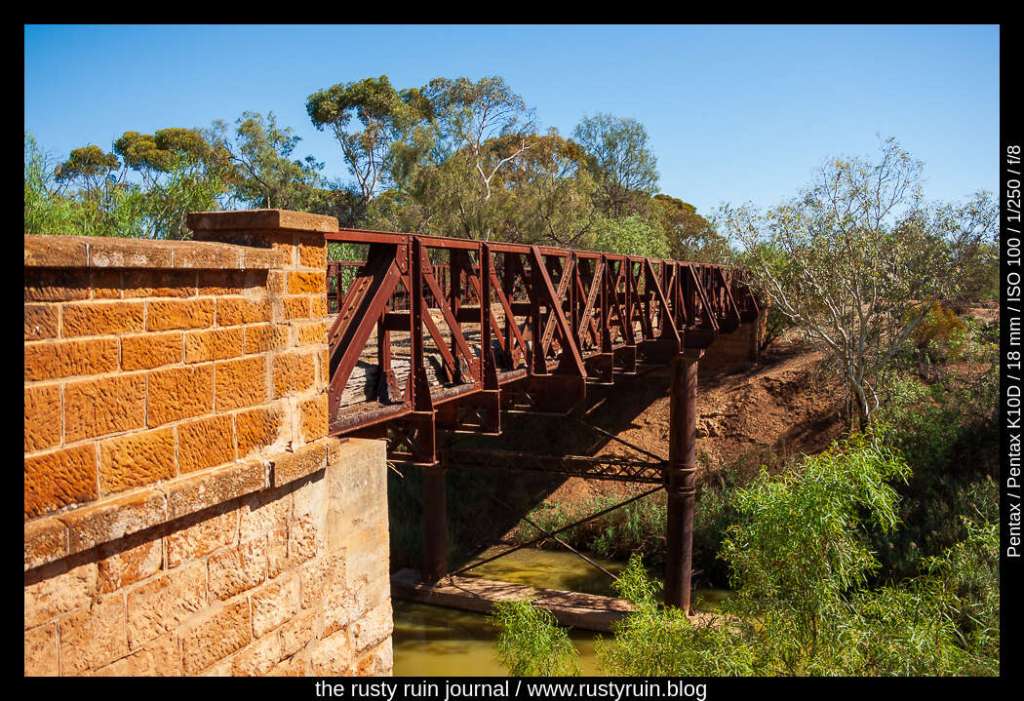
Old bridge over the Broughton River – Pentax K10D

I think sometimes we get too used to the idea that every photo should be as sharp as possible. It’s a common criticism in photography groups, of course. But what constitutes sharpness in a photo? Good focus is one primary ingredient – something I struggled with on the Pentax. Contrast is another characteristic that contributes to the perception of sharpness. Aperture size is also important, as this determines depth of field and just how much of a photo is going to be in focus and acceptably sharp. A fast enough shutter speed if a tripod isn’t being used is also key to avoiding blurry photos.

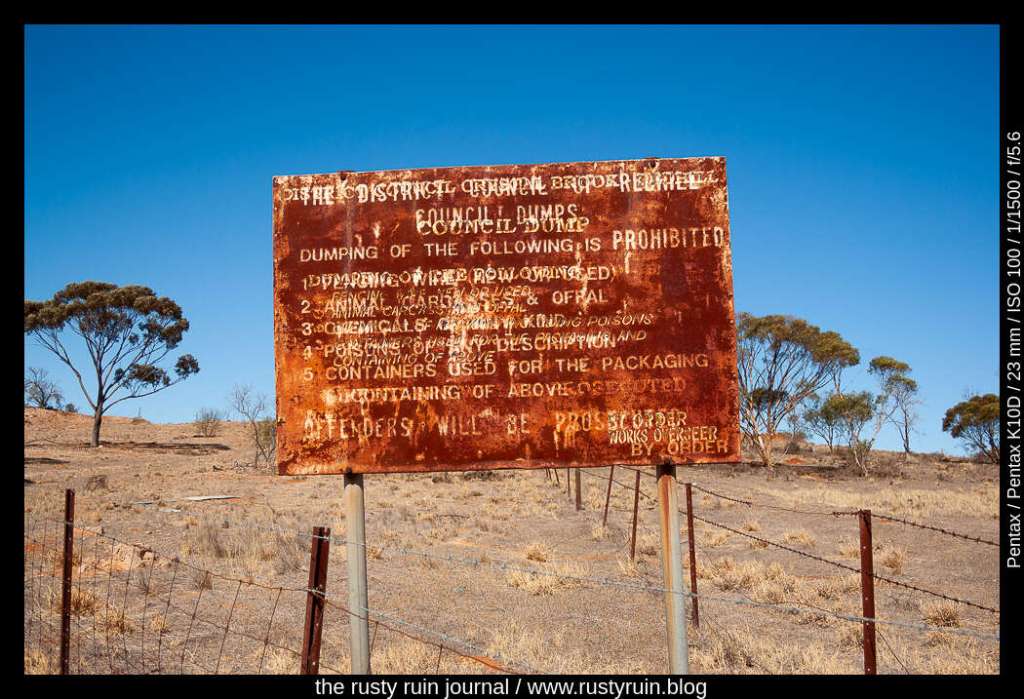
The old dumping ground – Pentax K10D

I don’t know about you, but my eyesight isn’t good enough to see the world like the best lenses. I can zoom in on a super sharp photo in Lightroom and see all the details. That’s a wonderful thing and I’m often amazed at how much detail modern lenses and sensors can resolve, but acceptable sharpness is also a range within which a photo looks good to our eyes. There are well-known lenses from every manufacturer that aren’t known to be super sharp, yet I’m sure many excellent photos have been made with them.

Free book library – Pentax K10D

Inexpensive kit lenses often receive criticism from people who view the technical quality of gear as primary markers of status and image quality. If you’ve chosen the correct aperture, correct ISO, correct shutter speed, and the correct point of focus for the scene, the rest is down to technique, content, and composition. A lens that’s not super sharp can certainly produce wonderful photos of subjects that are a good fit for the glass. Great content and compostion will always beat out slightly soft photos every time in my books. As I’ve said before, amazing photos were made over a century ago with equipment we’d consider primitive when contrasted to the camera gear of today.

A contemplative wander at sunrise with the camera

I think contemplative photography has always appealed to me at some level. As photographers, we’re sometimes too focussed on making photos that announce our presence to others. That makes sense when looking at things through an economic or self-marketing lens. There’s a space for that, of course. But photography is about more than the next Like or Follow on the latest social media platform.

Illuminated – Sony RX100

I’m not so interested in mass appeal, exposure, ego-stroking, or money. I’m certainly interested in people and ideas and connections, but the idea that I’d need to specialise and market and propel myself in front of others just feels wrong. It goes against my grain, I suppose. The foundation of my practice finds expression through wandering, seeing, imagining, and purpose in the moment. Seeing the world differently in a single moment is at the heart of photographic practice, for me.

Sunrise and silhouettes – Sony RX100

It’s not always an easy thing to enter the mind-state of reacting instinctively to a scene. We so often judge what we see: is it a good photo? How can I make it better when editing it? How can I crop it? What camera settings should I use? When such thoughts take over, like a virus, they interrupt the flow of the moment and remove some of the joy. Is it truly important that we frame a scene so precisely that it attracts comments? Is it truly important that we even make the photo in the first place? Do we really need the camera to see the world?

On this last point: it’s true that we require no camera to experience the joy of the moment. And I think that as photographers, we’re prone to feeling as though we must capture everything and see the world through the lens. Still, the camera is integral to photography and there’s some consideration to be afforded technical settings. It’s the tension between the camera and inhabiting the world in the moment without distraction that can be the tricky tightrope for me to walk at times.

Sunlight and shadows – Sony RX100

Tjoritja aglow ~ The West MacDonnell Ranges

The West MacDonnell Ranges stretches west of Alice Springs (Mparntwe) for 161km. The area is known as Tjoritja to the local Arrernte people, and includes magnificent natural wonders like Ormiston Gorge, Standley Chasm, and The Ochre Pits. It’s a huge area that rewards exploration and requires more than a single day.

West MacDonnell Ranges aglow 1 – Nikon Z5 and Nikkor 40mm F2 lens

Upon driving back to Alice Springs after a long day on the road, the sun hit the ancient earth just right, and we pulled the car over to a patch of gravel. Like a long red serpent from The Dreamtime, stretching across the land, the rocky ridges were awash in the sun’s eventide glow. The photos here really don’t do it justice. How can one encapsulate over a thousand million years of geological history? It’s a land that feels as old as Time itself.

West MacDonnell Ranges aglow 2 – Nikon Z5 and Nikkor 40mm F2 lens

In a rush to exit the car, switch on the Nikon, and frame the scene before the light faded, I was amused by my scurrying about in the shadow of those ancient red rocky giants of earth. How many people had done the very same thing – catch the red glow of sunset across the hard-edged boulders, crags, and rocky outcrops? Many millions of sunsets across that land and there I was, one small thing in the vastness, fiddling with my camera, hoping to stop time.

In the forest of the night ~ the hostile internet

Have you been involved in a flame-war online? Have you witnessed dog-piling on social media that causes crushing anxiety in the vulnerable? If so, maybe you’ve largely retreated to safer spaces online, cozier and more comfortable spaces, like direct messaging, where you feel like you have more control over your privacy and your online interactions. In these spaces of the cozy web, we distance ourselves from the bots, data scrapers, ads, web predators, profiteers, and shills of the corporatised web.

Darkening – Olympus OMD EM5 Mark 2

The Dark Forest

If aliens exist and life in the universe is abundant, why haven’t we made contact yet? The dark forest hypothesis presents one possible answer: the universe harbours plenty of alien life, but it remains hidden and silent for fear of making too much noise and attracting predators. I guess our radio broadcasts into the darkness of space are going to be a problem then!

Yancey Strickler applies the dark forest hypothesis to the internet ~ the top layer is inhabited by predators: data scrapers, bots, surveillance capitalism, marketers, shills, and growing generative AI. The cozier web lies beneath this layer and is where many of us hang out to get away from the internet of predators. You can drill down all the way until hitting the dark web. It’s a complex digital ecosystem.

Reflections of a network – Olympus OMD EM5 Mark 2

Into this dark forest, we introduce AI, where entire websites are being populated with AI generated content in the hopes that a few stray clicks will make some coin for faceless people somewhere. Error-filled news articles, health tips, wellness blogs, crypto ads and more are being churned out at a growing rate of digital knots ~ most of it designed to make money, gain followers, and inflate reputations. It’s trashy, low-quality, dull content, generated by AI LLMs and lazy and unimaginative human parasites. This is the anti-web – the web where AI talks to itself and we remain hidden in the forest.

Hyperlinks lost

Some months ago, I watched a video that was clearly advertising a wellness product. I didn’t think much about it until I looked closely at the woman in the ad and her movements – they were looped and repeated, her facial expressions betraying the stiff smile of generative AI. It was chilling really. The stuff of cyberpunk nightmares in a world where we don’t recognise each other, question reality, and where human interactions are mediated through digital networks shaped by personal profiles that AI has built to represent each of us so huge corporations can maintain their walled gardens, their power, and their profits.

It’s hard to remember now, but I know it wasn’t always like this. The idea that the internet could be a hostile dark forest seemed far from my mind in the 1990s. The hyperlink once connected intimate digital ecosystems together ~ humble links living on obscure web pages, pointing you in a hundred different directions and encouraging you to surf the web. It was almost aimless. There’d be evenings where I’d dial-up, connect, and then see where a search would take me: a personal page, a few broken thoughts from a person living on the other side of the world, a cool-links page, onwards to another page living in the digital corners, and ending up somewhere obscure and unexpected where I might learn about dolphin language experiments. It’s not altogether different from simply wandering about with a camera, without expectation or judgement.

As Friedrich Nietzsche said: “All truly great thoughts are conceived by walking.”

There was once a time when it seemed like the web could liberate entire nations and set information free. There was a promise in the medium – a thousand thousand thousand human thoughts and feelings connected by the humble blue hyperlink in a web browser. Instead, we have tech-billionaires who have constructed platforms and closed systems and called it the modern web – Web 2.0 or 3.0, or whatever the zeitgeist and marketing departments demand. In their systems, hyperlinks are nothing more than restricted sections in a social media Bio – a way to funnel the gullible, the vulnerable, and the young to AI-written websites and empty blogs where generating income from clicks is all that matters. The click of the humble hyperlink has been twisted into a way to service the predatory machine in the dark forest. We’re sedentary now, having forgotten how to walk aimlessly, and doomscrolling our days away.

Tranquil moments – Olympus OMD EM5 Mark 2

The Night Feeling ~ wondering and wandering in the quiet night

When the noise and dust of the day settles into quiet night, the mind turns inward. No longer are we distracted by the daily scramble. Night heralds a time when we have the opportunity to reflect on our day and ourselves.

A solitary light bulb glows dimly behind the window of a closed shop on a quiet street; leaves are rustled by a warm zephyr along a familiar laneway as distant stars shine above; during a long drive at night alone, the music on the radio synchronises perfectly with your thoughts and the world gliding by outside. Have you experienced similar scenes and feelings of melancholy, peace, serenity, deep thought, and reflection? If so, you’re likely familiar with The Night Feeling.

Crushed Ice 24 Hours – Nikon Z5

What’s The Night Feeling?

I came across a Reddit group called The Night Feeling last year. It’s dedicated to photos that encapsulate those kinds of scenes and feelings. I’d never heard it called that before, but I’ve certainly had those emotions and thoughts, especially at night. I even remember discussing this with a friend many years ago in relation to the sorts of emotions we’d sometimes experience when driving long distances alone late at night, with just the right piece of music playing in the background.

We’re usually so busy and distracted during the day that we forget how we’re feeling and who we truly are when we’re not serving others, doing our jobs, shopping, socialising, and so on. Being busy can help us endure tough times but we often forget to self-reflect and get in touch with who we are without the distraction and noise. When everything is quiet and night falls, we have an opportunity for self-reflection and thought. And there are certainly links between night and strong emotions and darker mental states. In the Mind After Midnight Hypothesis, for example, the hours between midnight and early morning are associated with disinhibition, risky behaviour, darker emotional states, poor judgement, and depression.

The end of the aurora – Nikon Z5

When the world is quiet

I associate certain kinds of scenes with the sort of calm, observational, slightly melancholic self-reflection that falls under the umbrella of The Night Feeling – walking through light rain on deserted streets that are usually busy; city lights reflected in water at night; a warm wind blowing through trees as I walk through a quiet part of town; an old machine lit up and no-one around. It’s as though the elements of nature announce themselves softly, emerging briefly through the haze of our urban environments to remind us that we need closer contact with our origins.

As nature reminds me that it’s bigger than any human-made urban environment and any trouble of my own, I feel that momentary sense of peace and calm ~ the moment that my own problems melt into the vast scale of the world and the stars beyond. In this expanded state of awareness, the small worries and quotidian tasks of daylight hours retreat and true self-reflection can occur, as one’s inner world becomes infinitely larger and more clearly focussed.

After the laundry is done – Nikon Z5 with Viltrox 20mm

In search of rust and answers ~ what of the future?

My interest in rust is, as you might imagine, slightly more than that of the average person down the road. I don’t have data to back this up, but I’m not convinced that the idea of making photos of rusty things is of primary importance to many people as an activity. What I’m quite certain of is that people are definitely interested in the answers to big questions: Why am I here? Are we alone in the universe? Is death the end? What does the future hold?

In the middle of nowhere that used to be somewhere – Nikon Z5

Rust and ruin are symbols of decay and time passing. Some people are terrified by this idea, perhaps hoping that science will one day discover the answer to immortality. Others believe they have the answers to the big questions already. For them, perhaps, ruin holds fewer terrors. I wrote about this in a previous post if you want to have a read. I even included one of my favourite poems.

In shadow and broken steel – Nikon Z5 with Nikkor 40mm F2

Sidestepping terror to make life easy

I started this post like most others. Truthfully, I didn’t really have much direction, other than the desire to explore rust and ruins as universal symbols that remind us of our mortality in the vastness of the river of time’s relentless passing. But lately, I find myself thinking more and more about the impact that I and others have on the world. For example, my use of shaving cartridges, with all the plastic they include, isn’t just annoyingly expensive, but also destructive. All of that plastic ends up in landfill, contributing nothing to the environment but toxicity.

It’s perfectly understandable that people prefer to have easy lives where everything is mapped out and makes sense. An easy to understand narrative provides us with answers to many, if not all, of the big questions we have. It’s easier to come to terms with the idea of toxic human waste, selfish governments, and genocides when it’s part of a cosmic plan ~ the evil will get their punishment and the good will find peace. Unfortunately, human history is nothing if not a struggle between the powerful and the powerless.

Rusting in the shadow of trees – Olympus E1

I think this makes it too easy to sidestep the feeling of terror gnawing at the mind in times of quiet. What does the future hold when we know all too well that the capacity for destruction lies in the same bed as the capacity for art within every human being? I strongly suspect that we may turn quickly and desperately to solutions as a species once it’s too late. The powerful will have squeezed every last drop of value from us and we’ll have been too busy buying fast-fashion clothing from giant toxic factories where people are grossly underpaid and overworked for the benefit of the few. Where do those unsustainable fast-fashion items end up, do you think? What good do they serve, other than to appease vanity?

Living with less

One kind of response I’ve often heard from people when speaking of this topic goes something like this: “But what about the economy and jobs? If we follow environmental policies, we’ll lose jobs. And how do we keep the lights on? Maybe we should think about nuclear power?

My blunt rebuttal these days is usually along these lines: “The environment isn’t interested in your comfort. We may all need to accept the idea that we must live very differently with a lot less.”

The idea that we must not stall our economy and standard of living as we explore ways of doing less destruction to the planet is not only absurd, it is also dangerous. All this does is serve the lives of people who have vested interests in making money and living comfortably. They don’t want their lives altered and would rather continue driving big vehicles that spray minute particles of rubber into crucial waterways. Yet, nature is change. Nothing remains the same. Living a life with less money, less oil, less waste, less electricity, less gas, less cars, and less fast-fashion is not only wise, it’s likely the only path to take.

The empty house near the empty hotel – Olympus OMD EM5 Mark 2

Web gnomes and the technocrat hijack

In my last post, I discussed the idea of the Indieweb and the state of the World Wide Web. If you have any interest, I urge you to read Olia Lialina’s fantastic essay on the transition from the idea of My to Me on the web. It’s lengthy but contains a wealth of information about how the web has changed and how the web user has changed. It coalesces many of the thoughts I’ve been having for some years now.

Lialina references a late 90s quote from Tim Berners-Lee – the man often called the inventor of the World Wide Web – where he talks about personal home pages:

“With all respect, the personal home page is not a private expression; it’s a public billboard that people work on to say what they’re interested in. That’s not as interesting to me as people using it in their private lives. It’s exhibitionism, if you like. Or self-expression. It’s openness, and it’s great in a way, it’s people letting the community into their homes. But it’s not really their home. They may call it a home page, but it’s more like the gnome in somebody’s front yard than the home itself.”

Lialina calls out the arrogance in this statement – the idea that regular people using the web, and enthusiastically learning HTML so they can create a personal home page, are amateurs creating nothing more than quaint gnomes in the garden. A clear divide is inserted between the web professional and the web amateur – between the skilled technologist and the average person on the street.

Dress me up any way you want – Olympus OMD EM5 Mark 2

The personal home page as rebellion

There have always been people looking to make lifelong careers and profits out of the web. The idea that the web would be a gigantic repository of information available to everyone equally is very much a 90s ideal. Alongside developments in technology, and in service to these professionals and technocrats, the web has changed from something a person logs into occasionally to check email and exercise an alter-ego, to an always-on connection where the idea that you’d even have a home page, rather than a simple Instagram bio, seems odd to many young web users.

When Tim Berners-Lee said that the web isn’t a home for the average web user, he may not have envisioned just how defining that statement would become. Today, giant corporations lay claim to sections of the web and tell us how we should interact with it. Too bad if you want to upload your own hand-made HTML to their platforms, because they won’t allow it. You can’t be trusted to engage in good design as defined by them. And you certainly can’t be allowed to disengage with their data collection because then you’d be worthless to them as a method of making money.

Corporations and technologists making their income from the monetisation of the web aren’t interested in anyone owning any part of it. They want you to stay in their curated walled gardens so they can sell your data, sell your profile, and make you believe you’re getting something useful in return when you spend time filling their platforms with content for free. Need to stay in touch with friends and family? Yeah, lucky thing we have a social media platform for that! Of course, we always had a thing called email where we could stay in touch, too.

Whilst the retro-web revival highlighted by places like Neocities is reminiscent of 90s home pages, and is populated by well-meaning people who want to return to a supposed web golden age, there’s still a pervasive attitude of reworking the ugly design of those original 90s websites so that modern design principles aren’t insulted. The 90s aesthetic is catalogued and examined by the current crop of professisonals. Thus, it becomes another social movement defined by what technologies one had access to, and is assigned space beneath the umbrella of Web 1.0 – itself just another label designed to make conversations about the past easier to grasp.

Of course, we’ve learned so much about web accessibility and our tools have improved to the point where we can now make easy-to-read websites that don’t feature dancing baby GIFs. There’s certainly admission in some quarters that web users in the 90s used the tools they had to make the best websites possible – an admission that the personal home page aesthetic was perhaps not completely a result of people with bad design tastes. But there are also people now who’d like to revive the 90s aesthetic with modern tools like the latest CSS and other scripting that didn’t exist back then, whilst adhering to accessibility and good design principles because, of course, we must do that since it’s best design practice – best practice only in terms of appeal, standardisation, and monolithic design that has, of course, nothing to do with the admirable and simple personal goal of just having a digital home. Not adhering to good design principles would make a site anti-corporate, anti-design, and anti-social, according to arrogant web technologists.

The idea that we should adhere to standards and monolithic design principles seems based on the idea of appealing to the greatest number of people, attracting the most attention, making the most money, and going viral – all of which are core concepts of capitalism that certainly didn’t define personal home page design in the 90s. During the time of the slow web, you’d get excited if a single person emailed you once a month and said how awesome they thought your personal home page was and how you had things in common – and it was a genuinely exciting moment of connection because you weren’t bombarded with likes and followers and subscribers and junk emails every single day. One connection felt real and important because it was uncommon.

It’s a slow day – Olympus E1

The small beauty of everyday things

Do you ever find beauty in everyday things? Seemingly mundane stuff is part of the fabric of our daily lives, existing quietly in the background. I’ve been thinking about this a lot lately, especially on days when I feel as though I lack photographic inspiration. I can’t help but think that we’re sometimes looking for the big things as photographers, hoping they’ll catch the attention of online communities often engulfed by their own search for attention and validation. I’ve touched on that before too, of course.

Gaze – Sony RX100

Seeing everyday things in a fresh way that reveals their beauty isn’t a new idea. Contemplative photography and Miksang are approaches that emphasise an unpretentious photographic practice that’s mindful and completely present in the moment. The elevation of technical perfection is secondary to the experience of being in the world – of being aware of the moment completely and utterly. In this sense, it draws parellels to mindfulness and meditation, where inhabiting the moment non-judgementally is key.

Draped colours in strong sunlight – Olympus OMD EM5 Mark 2

There’s an interesting tension in this approach – maintaining a mind that’s open to details without becoming overly distracted by them.

When I inhabit the moment in photography, I pause momentarily to make a photo when a scene tugs at my attention gently enough that it doesn’t completely dislodge my middle-focus. Middle-focus occurs when attention hovers between soft and intense – when it’s non-judgemental and simply observational – when we focus on a thing without placing too much value on it or too much thought into it, and don’t allow it to draw us too close. In this state, we recognise something as being of value photographically, but our attention only skims across it – like a small boat floating lightly on clear water.

If this middle-focus state is dislodged and derailed, if the small boat sinks, the mindful journey will stop like a train pulling into the station to accept noisy passengers. This is the moment where mindfulness is thwarted and attention inhabits the distraction too fully, too intensely, and with an overburden of thought and judgement of value.

Morning delivery – Sony RX100

What defines this gentle pull at the edges of attention? What qualities in a scene are important? This is likely different for every photographer. For me, it’s important that such photos inhabit a space somewhere between details normally unnoticed and scenes that communicate meaning softly and quietly.

What happened to the World Wide Web?

This place being something of a journal, I make no promises that the posts will always be about photos or photography. Truthfully, I’ve never been great at organising my interests into neat online siloes. I’m worse still at expanding them into areas where people might actually connect to them. Mostly, I just post into the digital void. I’m guessing that’s a common experience online.

Sometimes, I reflect on the way the web has changed over the years. I began my online journey sometime in the mid-80s when I connected to a local BBS called Nexus, hosted at a nearby library. It was exciting to hear the dial-tone and plop the phone onto the kludged-together modem that someone in the Amstrad Computer Club had made. The idea that you could send an electronic message and receive one in return seemed magical.

Struts and pipes and bars – Olympus OMD EM5 Mark 2

There was a sense of geekish community in those early days. I was never especially tech-savvy in the sense that I could write code or talk about Unix systems, but I was certainly an interested party. I count at least part of the 90s as fledgling internet days, as people colonised online forums, used IRC, and built the content of the web eagerly via personal home-pages and niche interest groups. Back then, it seemed as though anyone could build a web-site by learning just a little HTML. Nowadays, it’s an exclusive activity and you need a degree…

Where are we now?

Despite big parts of the Unix-driven early web still underlying the modern web of Google, Apple, Microsoft, and slick social media platforms, the web of today is mostly a mundane junk-show of companies selling personal data, in your face advertising, enshittification, AI-powered bullshit, and venture capitalists looking for the next big thing so they can swindle more people. I understand that some are looking to rebuild the personal home-page boom of the 90s, but that time is now gone. That culture was fleeting, and no amount of modern CSS fudging can remake the joyous time that so many people felt when they built their first home-page back then.

Get more shit done – Nikon D7100 with Nikkor 50mm 1.8

Honestly, I don’t feel like I quite fit into this new modern web. There’s too much shouting and too much corporatism. There are too many people trying desperately to market their shit to whomever will listen, without offering any genuine communication in return. And social media platforms and communities are only considered successful if they feature tens of millions of users talking endlessly about themselves. Here’s a tip: those billionaire platform owners are only interested in profit, influence, and selling your data.

What happened to those small online communities? What happened to the tiny online discussion forums where the same small bunch of socially awkward nerds gathered weekly? An online community is now only considered successful if the user-base blows out into the millions and I think that’s sad. It’s as though the capitalist idea of growth at any cost has infected us so deeply that our online communities must reflect it, otherwise they’re unprofitable failures.

The web of today is definitely not representative of the exciting web experience I remember. The early web was constructed from more noble intentions to connect people and spread information globally. Back then, people were happy to have special and weird online usernames. Going online in the 90s wasn’t like being offline but with Subscribers and Followers, it was like entering a different world where you could be anonymous and exercise your strange alter-ego and talk about shit you liked without expecting Likes and Follows. Self-centred billionaires have a lot more trouble selling your weird username to advertisers than your real name and personal data! Why else do you think Google waged the nymwars?

Finding the old tribe

Even though we can’t go back to earlier times, there are still people out there dedicated to the idea of the small web. Some of them, like omg.lol, offer simple hosting and other services. Places like tilde.club even open up the Unix-based structure of the web to offer personal home-pages. And if you want to deep-dive into resisting the corporate web and the march of AI into every aspect of our lives, you can find more info at Indieweb.

I’ve also started curating a list of links to small web and indieweb resources. You’ll find sweet little search engines, free static site hosting, minimal and little-known blog platforms, and more!

I’ve written something of part 2 here.

In the space between inspiration

Lately, I’ve been exploring the idea of quiet photography: noticing the quiet corners and seeking the details. When the big moments of inspiration don’t strike, it’s important not to feel the pressure of having to make photos. But if there is the tiniest inkling of wanting to pick up the camera at such times, why not commit to the small photos of everyday moments? Isn’t it in the everyday that we find a fresh view of the world?

Fire Panel – Sony RX100

Oh, where would I be without my little Sony RX100? Small, black, and set to silent mode, I re-discovered the joys of using it last year after keeping it in a drawer for too long. When the big Nikon seems too hefty for the moment, I’m always happy to find some fresh detail with the little Sony camera. Somehow, it feels less serious and more fun than my Nikons when inspiration lacks. Of course, it can make great pictures, but then again, so can a 100 year old film box!

Splashes of yellow – Sony RX100