Green machines, rusty bolts, and dynamic range

The clouds are slowly dissipating after several months of grey days. This weekend provided an opportunity to drive around the vibrant towns of the Murray River. I packed my bag with the Olympus E-1, Nikon Z5, and the Sony RX100.

I continue to be impressed with the output from the old E-1, but dynamic range is limited, and careful consideration of a scene is required before clicking the shutter button, I’ve discovered.

Shadows on emerald metal – Olympus E-1

Window of opportunity

Every digital sensor (and film, of course) has a limited performance window within which it can optimally render the dynamic range of a scene. If the dynamic range (brightest and darkest areas) of a scene exceed the window, then an exposure decision must be made: crush blacks or burn highlights? Modern sensors have a bigger window, so provide more latitude. The E-1, not so much.

Scenes with plenty of mid-tones and minimal strong highlights / deep shadows are good for this camera. Evenly lit scenes are great too. With excessive tonal ranges, I usually crush blacks because it’s less distracting for the eye, but it depends on how numerous the extreme tonal ranges are and the composition I’ve decided on.

Unused, catching dust and webs – Olympus E-1

The onboard tonal response of the Olympus is contrasty. Again, great for evenly lit scenes that could use a contrast bump, but not so great for extreme tonal ranges where pushing them further causes distracting visual elements. The more I use this camera, the better I get at evaluating scenes before picking the camera up. And if I can frame a scene and limit the extreme tonal ranges, I’ll do that. I also commonly dial in some negative Exposure Compensation to protect highlights but only when I want to preserve better gradation of tone over areas where distracting highlights could be a problem. Evenly lit scenes don’t need it unless that’s the look I’m going for.

Beneath the old machine – Olympus E-1

Calibrated for the old film pros?

It’s clear to me that the RAW files from the Olympus E-1 are different to the RAW files we get from modern cameras, but I don’t think this is a CMOS or CCD issue. The native tonal response of the E-1 produces files that are already contrasty and punchy. The images on this page are essentially the RAW output with barely any editing at all.

Some people might say I should use OM Workspace to get the colour goodness from this camera, but the software remains awful to use. And the few RAW files from the E-1 I’ve loaded into OM Workspace produce much the same initial result as the Adobe Standard profile in Lightroom, though my testing isn’t extensive enough to warrant strong views.

So, back to my speculation on the punchy files from the E-1. In 2003, when the camera was released, digital photography wasn’t mainstream. It’s entirely possible that early cameras like this were internally calibrated to produce images that were as close to certain film types as possible in terms of punchiness and also required less editing in software. Remember,  there wasn’t a lot of RAW editing software around at the time.

None of that means these old cameras make filmic photos, but it may explain why there seem to be differences in output compared to our modern cameras. I think this is less about the inherent properties of a CCD sensor and more about what kinds of photos the film companies wanted us to see from their cameras via internal calibrations. Now that photo editing programs are numerous and commonplace, modern cameras that have more dynamic range than the E-1 are calibrated to output flat RAW files that can easily be edited. Just speculation, of course.

Around the emerald machine – Olympus E-1

Is film photography special to me?

I’ve briefly mentioned elsewhere that I used film cameras growing up. They were nothing too special though. I think my last film camera was an APS (Advanced Photo System) camera from Fujifilm. I liked that this format offered features like extra frames, easy-loading, and panoramic view. In some ways, it was the easy-to-use precursor to digital. It didn’t last long in the camera world as photographers didn’t like the reduction in frame size or the noticeable grain due to the crop. The market take-up of digital was not too far behind either, so APS remains the last turn of the millennium gasp of companies trying to squeeze every final buck out of film.

Sometimes, photographers say they have a relationship with film. I suppose that you might have a fondness for it if photography had been a big part of your life growing up. For me, film cameras were just there for special occasions. I knew exactly one person who had any professional camera gear, and I never saw them use it. My parents were certainly never interested in cameras, other than to document birthdays and other events. Rarely, I might receive a 110 format camera, the aforementioned APS camera, or go out and buy one of the cheapo plastic disposables. The best 35mm film camera I ever owned was given to me by my late father – a Chinon with a tiny lens and auto-rewind. I used it for a while until the film motor broke down.

Red Tree – Winpro 95 film camera, made by Webster Industries

I didn’t nurture a passion for photography from a young age, partly due to not having the financial means or the inspiration around me. Some of it also has to do with the fact that I’ve never been very technically minded or confident in my ability to learn such things. I always saw high-end photography as the pursuit of those who could afford it and those who could understand the numbers behind it.

When I was gifted my first APS camera, I enjoyed the ease of the exercise. I probably made more photos with that camera than with any other previously. I’ve since lost those photos, but I do remember becoming very interested in framing scenes and doing so in a way that pleased me. I think this is when I really started to develop an interest in the wider world of photography, though my bank account wasn’t always up to the challenge.

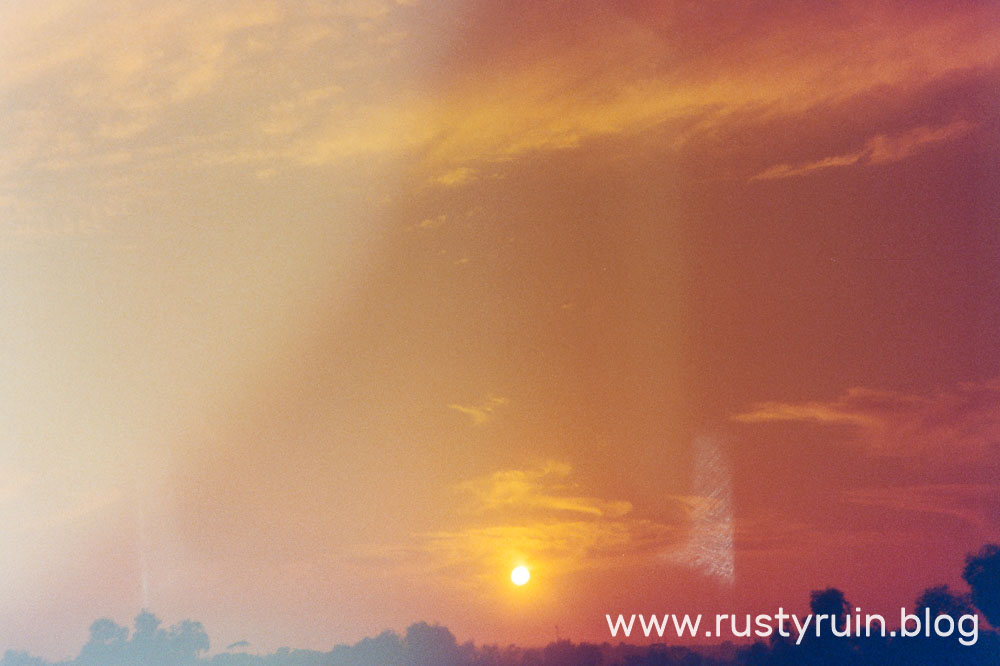
Very Orange Sunset – Smena 8 with home-made redscale film

When digital cameras came along, I was pretty excited. Though my first was a Kodak with a measly 1 megapixel and terrible battery life, I loved the immediacy of the experience. There’s something to be said for waiting for film to develop and unwrapping it like a gift, but digital offered me the chance to learn how to make better photos through immediate feedback. That’s when things started to really make sense to me and my, up to that point, nebulous and undefined interest in photography solidified.

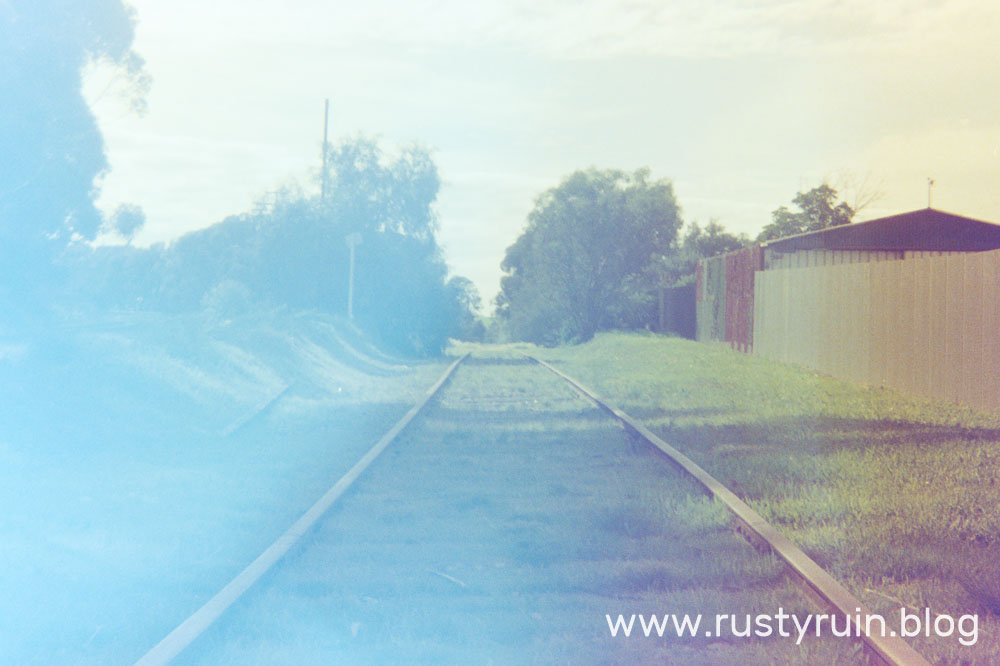
Blue light railway – Winpro 95 film camera

Photography blues: when things don’t go your way

I rushed out yesterday with the Olympus E-1, but it wasn’t a great photo session. The sun was out but I just didn’t see much that struck me as an interesting photo. This, of course, happens from time to time. While disappointing, it’s all part of the experience with the camera. You can’t force it.

Blue beams on blue – Olympus E-1

Despite my previous positive experiences with the E-1, this time there were no epiphanies. The sun was high and hot and controlling dynamic range with such an old camera isn’t always the easiest. There’s a point at which exposing for the highlights creates shadow noise and the in-built contrasty tone curve of this camera is a detriment at such times. Still, just look at all that blue! This camera does love plenty of blue.

So, I was left with just two photos from my session that piqued my interest. On the way home, I ran across some new house constructions and just loved the way that all the blue steel beams looked on such a sunny day.

Some days are just not going to be full of great photos. Some days, the eye just isn’t attuned. And that’s perfectly OK. I’ve learned not to worry about my mistakes and missing moments. I’ve learned that on some days the photographic mind is elsewhere and all that remains is forcing a moment. At those times, it’s best to accept the moment and look around. Not everything is for the camera.

Steel blue and deep sky – Olympus E-1

More photos from Wycliffe Well

In my previous post, I spoke about the eerie ruins of the accommodation complex at Wycliffe Well. To the best of my knowledge, the large bush-fire in this area still rages uncontrolled. Such is the creation and destruction cycle of life in outback Australia. One day you’re listening to tourists recount stories about Min Min Lights and the next you’ve sold your long-term outback business and it now lies in ruins at the feet of new owners, unlikely to be repaired. Life moves on quickly and time is uncaring.

Anyone for the Ladies Toilets? – Nikon Z5

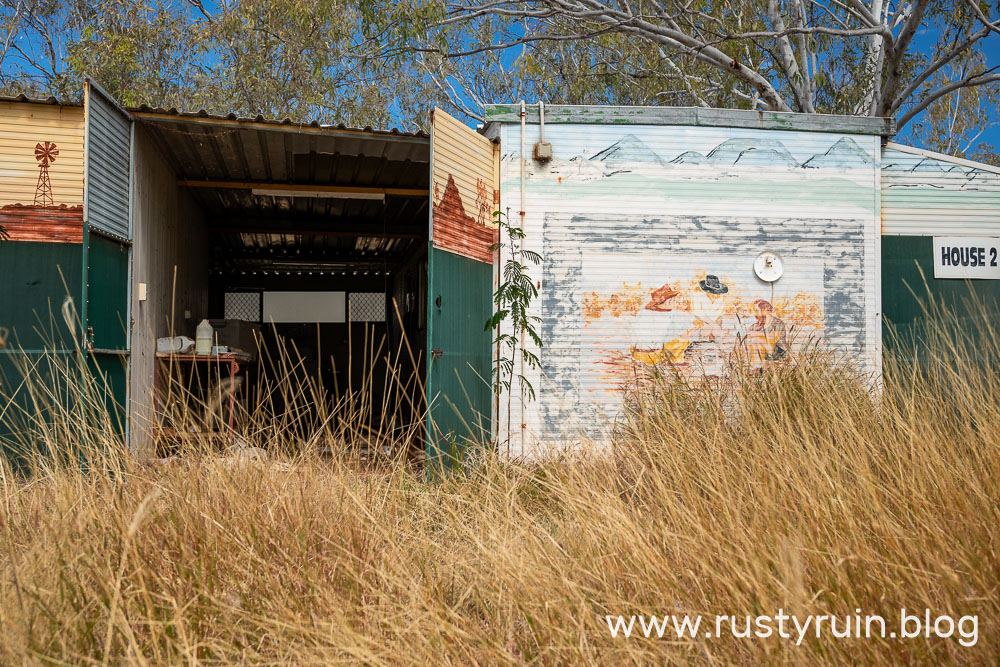
At this point in the road-trip, I was still getting used to the Nikon Z5. It’s a lovely camera, without doubt, but I need to get into the habit of choosing smaller F-stops to create a deeper depth of field when close to my subject. For many of these photos I used the excellent Nikkor 40mm F2 lens. I’m a sucker for prime lenses and this one is certainly good bang for the buck, despite the all-polycarbonate mount. It’s one sharp lens for sure!

House 2 – Nikon Z5

I also used the 52mm B+W Circular Polarising Filter. This helps to cut stray reflections and saturate the colours so editing isn’t so burdensome. But using the CPL is not for every occasion. It’s great for cutting reflections, deepening the colour of foliage, and good if you want to photograph water, but it does tend to make photos look a bit flat and unnatural at times. I find that I always need to add contrast during the editing process just to cut that flatness.

Your caravan awaits – Nikon Z5

As you can see, the skies also really come alive when using the CPL. Sometimes it’s a bit too much, honestly. One year, I remember using it extensively around Alice Springs and the skies looked so dark they were almost purple. Now, I twist the brass ring of the CPL until it hits maximum effect and then dial it back a little to add some natural reflection to the scene. I think I used it quite judiciously on this outback journey.

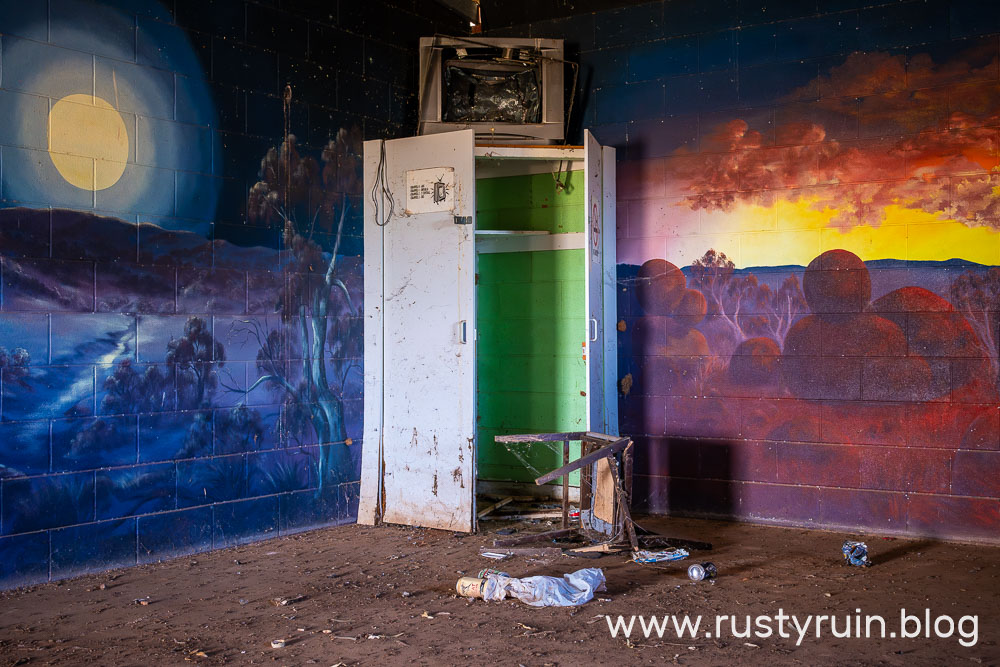
Welcome to the TV Room – Nikon Z5

The Z5 is very comfortable at ISO 6400 and I’m comfortable using it when required. I think I got away with ISO 3200 in the above photo and used Lightroom’s great AI-based noise reduction to smooth it all out. That’s a good use of AI technology, as far as I’m concerned. Really love that artwork too, though the TV has seen better days.

From UFO sightings to dilapidation: Wycliffe Well

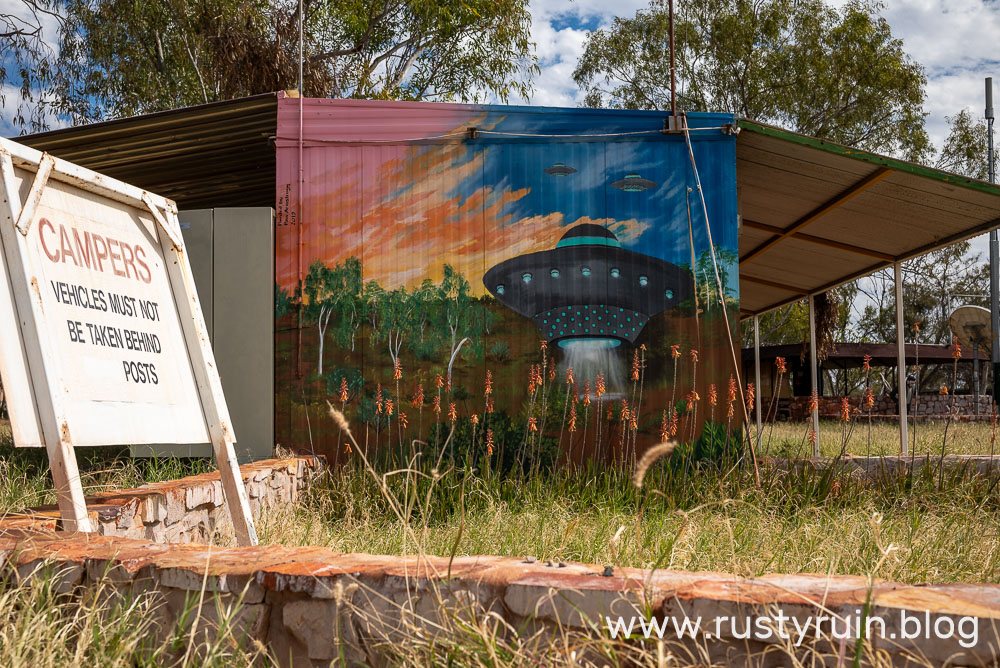
Sometimes, on those long and lonely roads through outback Australia, you come across things you don’t expect to see. Burned out cars flipped on the roadside are commonplace. So too are the broken bottles, campfire ashes, and plastic rubbish that litter desolate truck stops. What you don’t expect to see is an old campground and motel that lies in ruins, featuring an alien and UFO theme. This is Wycliffe Well – once known as Australia’s UFO sighting capital.

Attention Campers – Nikon Z5

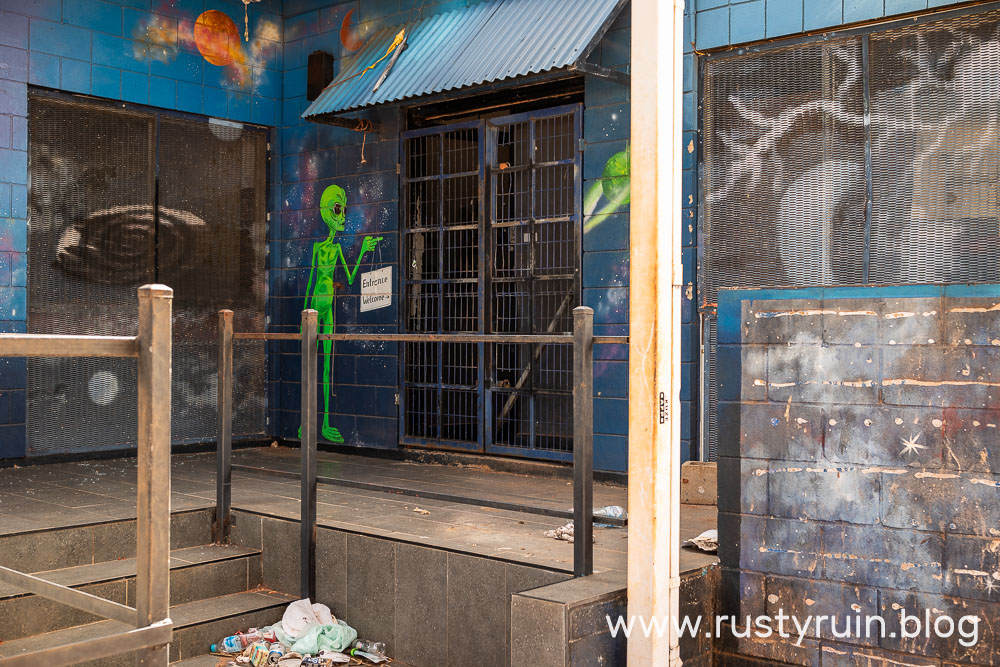
In this ruined complex of dormitories, recreation rooms, and offices, we found the remains of glory days, when the site was home to a thriving community looking for their first UFO sighting. The signs are everywhere, including alien murals and painted UFO landings, as well as enigmatic depictions of Karlu Karlu (otherwise known as Devil’s Marbles), providing the geological majesty that perhaps fired the imaginations of UFO spotters who saw lights in the sky around here decades ago.

Welcome – Nikon Z5

The story of the site is a familiar one from a business perspective. It was owned for a long time by one family and managed by an ambitious man who drew upon the UFO mystery to market the facilities effectively to tourists. There were glory days, as the bar and large on-site restaurant provided rollicking evenings of food and music to guests. Finally, they decided to sell up and less enthusiastic owners took the reins whilst promising to repair and maintain the place. It now lies in ruins after flood waters ravaged the site. And there’s little doubt that tourism dried up in the wake of the Covid pandemic.

House 1 – Nikon Z5

It’s an eerie place to explore on the way to somewhere else. Though vandals have long since taken plenty of souvenirs, the site remains a strange and melancholy tribute to outback Australia’s tourist economy and the challenges of surviving in remote locations. Sadly, it’s now at risk of further damage, as huge uncontrolled bush-fires are currently sweeping through the area.

Detritus in Coober Pedy

I mentioned the town of Coober Pedy in a previous post. Going through my file folders tonight, I found some more ruins and the remains of dreams from this famous outback town. I often wonder how these places and things come to be abandoned and decaying.

No driver – Nikon D7100 with 35mm AFS Nikkor 1.8

Who once drove the bus? How did it get there? At some point, I imagine it will be nothing more than a pile of rusted metal, merging with the earth, gears and pistons embedded in thick soil. Perhaps a few blue paint flecks will provide some clue to a future explorer?

Decolonise – Olympus OMD EM5 Mark 2

Old walls become a canvas for political statements, the remains of a broken window framing the tension painted in bright pink. Thinking of photography as a voyeuristic pursuit, as Susan Sontag once wrote, such images can lend themselves to such consideration. Is there some voyeurism at work when photographing places like this? Perhaps. I certainly feel some drive to frame the political statement and focus on the socio-cultural tensions. Do I engage with it by recording it or do I step away from it by framing it as artfully as I can?

Homes not Tails – Olympus OMD EM5 Mark 2

Photography can only frame the world for others to view. Once out in the world, the audience applies their own values and beliefs. By providing the framing, the photographer must step aside for a moment to engage in the act of viewing rather than participating. But in the framing is the delightful devil – a story told by the photographer in cutting out a single view from the whole. What lies beyond the single frame and does it matter?

Making photos or taking photos?

For a while now, I’ve taken some issue with the use of the word take when it comes to describing the making of photos. After all, we don’t take photos. We make photos in collaboration with the camera and the environment. It’s pedantic, I suppose, and it doesn’t truly bother me when someone uses the term. It’s just a word I try not to use.

The other bothersome term is shooting photos. The camera isn’t a gun, is it? Maybe I’m just a bit cranky because I’m not feeling the best at the moment!

Angel & Tina – Nikon Z5

So, why do we make photos? Why do we use cameras? What is it about photography that keeps us coming back for more? I can only speak for myself of course.

Photography allows me to see the world differently. It’s not always relaxing, as I might be prioritising Aperture values and the exposure over framing a scene, but when I see something that speaks to me, it feels as though I can frame it and place a focus on it to remind myself of details in the world that we often miss. It can remind others too.

The old glass still glows – Olympus E-1

Susan Sontag once said that photography is a voyeuristic activity that removes us from the meaning of events and diminishes their importance. I can see merit in that thinking even if others think of it as inflammatory. When behind the camera, how close are we to the events around us? Arguably, we immerse ourselves in a scene more fully when we focus on it through the lens, but the goal is also to frame that scene in a specific way so it follows the rules we deem personally important – rule of thirds, art of photography, light and shadow, marketability, appeals to social media followers, and so on. A photograph may have an audience with their own set of values. In this sense, a photo is like a cut-out of a small part of the world, presented for viewing and criticism.

Ladder pathway – Sony RX100 Mark 1

Consider the photo above, for example. Is it voyeuristic? The photo of a home, possibly abandoned, but likely still owned by someone, is a deliberate cut-out of the entirety of the home that creates a separate reality. What does it say? What was my intention in making the photo? Am I merely highlighting the abandonment of buildings where people once lived and loved? Am I doing so callously and without regard for those who may still live there?

Late night contemplation in orange and blue – Nikon D7100 with 50mm 1.8 AF-D

Street photography has a long and rich history of provoking thoughts along these lines. Is it ethical, for example, to make photos of vulnerable people on our streets? In some photography classes, it’s made clear that photographers are best-advised to ask for permission first. Yet, there is nothing surer to diminish spontaneity than to create a contrived street scene through such permission seeking.

If we are to document human life across a wide range of experiences through time, then street photography is an important tool. The photographer may, at the time, be vilified for lacking ethics, but as time relentlessly moves forward from the event, new audiences may view those photographs as historical artifacts. Perhaps there is no right or wrong in these cases – merely changeable thoughts and beliefs that drive culture.

A few more from the Olympus E-1

The Olympus E-1 is quickly becoming one of my favourite cameras. There’s a certain solidity to the photos from it. The mid-tones are strong and the tone curve applied in-camera produces really attractive images. If there’s anything to the CCD versus CMOS sensor argument, the E-1 is likely one of the best arguments for CCD being inherently superior. None of this is to suggest that modern cameras can’t produce amazing images, of course.

Crystal Lake – Olympus E-1

With my time currently limited, the fact that the RAW files from the E-1 require far less editing than expected is a big positive. And I still think that people are overpaying for cameras like this. It may be a really nice camera, but it lacks many of the niceties we’ve become accustomed to on our modern cameras. The limited dynamic range can be a problem in difficult lighting conditions and there’s no Histogram or highlight blinkies to check exposure. This does lead me to more carefully consider the tonal range of a scene and whether I use ESP or Spot metering, so it’s a good thing for learning, really.

Mine also has a few issues – a missing eye-cup and the mode dial is stuck in either Program mode or Manual mode. The eyepiece is not an issue but the mode dial is frustrating. I can live with it though. It does serve to remind me that this is an old camera now and it won’t last. Yet another reason not to overpay for old tech!

Table for Three – Olympus E-1

I’d also taken out the Finepix S5600 along with the E-1 in my camera bag, but once I opened up the Finepix files at the end of the day, I was disappointed. If I hadn’t been using the E-1 all day, the Finepix would likely have pleased me enough. But looking at those photos side by side, the E-1 completely blows the Finepix out of the water.

I feel a sense of melancholy when I use the E-1 though. Olympus isn’t the company it used to be, with the imaging arm now sold off and owned by OM Digital Solutions. The E-1 is every bit a lovely camera from a different time. It was a time when digital photography wasn’t quite yet mainstream and venerable companies like Olympus were putting every effort into the new digital market – enticing film shooters with the promise of not having to pay for film development.

I can’t help but feel that the E-1 contains as much technical mojo as Olympus could pour into it. The collaboration with Kodak represents the shared vision of two traditional companies focussed on surviving in a rapidly changing photography landscape. Ultimately, neither company managed to escape a brutal market where smartphone cameras defined the new rules, with severe decline causing them either to be sold off piece by piece or handed over to new owners divorced from company tradition.

Antiques – Olympus E-1

Editing Olympus E1 files – What’s happening here?

It seems that every weekend is cloudy lately, but that’s not a bad thing when you have an old camera that doesn’t handle high dynamic range scenes well. I took out the Olympus E-1 recently and found it a really interesting device – it feels great and has the gentlest shutter sound I’ve ever heard. I had another opportunity to use it yesterday and set it to record RAW and JPG. The results surprised me.

Old Methodist Church – Olympus E-1

I’ve questioned the idea of CCD sensors rendering colour differently to their CMOS counterparts, but ultimately I couldn’t be entirely sure there was nothing going on. There really shouldn’t be, as digital imaging sensors themselves are colour-blind and it’s only the Colour Filter Array atop them that could influence colour, apart from usual suspects like White Balance and lens quality.

Imagine my surprise when I found that the RAW files from the E-1 look almost identical to the JPG and TIFF outputs, apart from some extra sharpening. Normally, you’d expect RAW files to look flatter and less saturated when contrasted to processed JPGs from the same camera, but this is not so with the E-1.

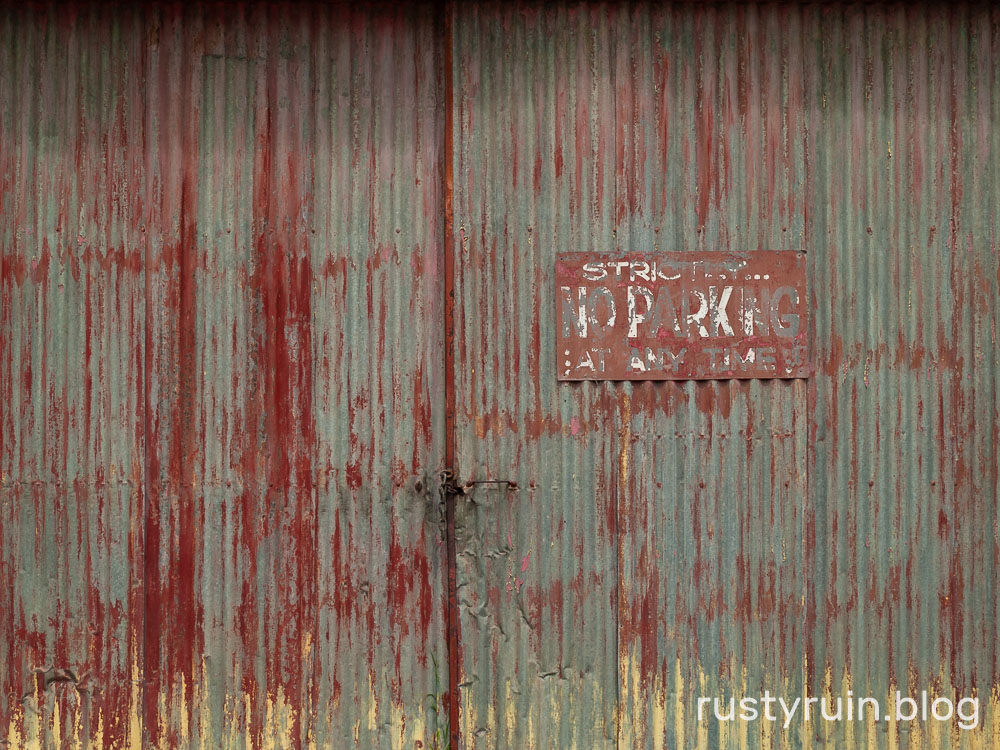
Strictly No Parking – Olympus E-1

I know that Lightroom applies a colour profile to each import, of course. I know that it does some sharpening and processing up-front to create a workable image. But what I’m finding with the E-1’s RAW files is that I don’t actually need to do much additional processing at all. The RAW files already look good and don’t look as flat as you’d expect a demosaiced file to look. So, what’s happening? Why do the E-1’s ORF files (Olympus’ naming convention for RAW files) look so similar to the processed JPGs?

Keep Clear – Olympus E-1

I have a theory – I think the E-1 is not doing much JPG processing at all, apart from some sharpening. Where we’d normally see a flat RAW image and a punchy JPG file, I suspect the E-1 is converting the ORF and applying minimal processing. This may be why the files look similar.

Please bear in mind that none of this is scientific. I’ve not sat for hours and tested side-by-side photos. I also know that processors like Lightroom make substantial changes when importing photos. I write all this knowing that it’s simple first impression and could be an error in my perceptions/technical set-up. This is a journal and sometimes my thoughts meander, so please be kind!

Restricted – Olympus E-1

Back to Kodak Colour Science

I have my doubts about CCD sensors and their supposed inherent colour superiority. As I’ve said before, there are plenty of old junk CCD cameras out there too, so it may not be a property of the CCD sensor at all. Yet, I can’t help but think that there’s something interesting happening inside the Olympus E-1. There’s no doubt that in the right lighting conditions it can produce superb images.

So far, and I may be completely wrong here, the Olympus E-1 is the only digital camera I have that even comes close to the output of my Sigma DP2 Merrill camera (now with a sticky leaf shutter, sadly). That’s high praise, considering the Sigma uses a Foveon sensora very different image recording technology. Of course, when I say close, the E1’s photos are still not really like the Foveon produced images, but the E1 does have the feel of needing to be treated like a camera with old slide film loaded, where you have to really look after wide tonal ranges.

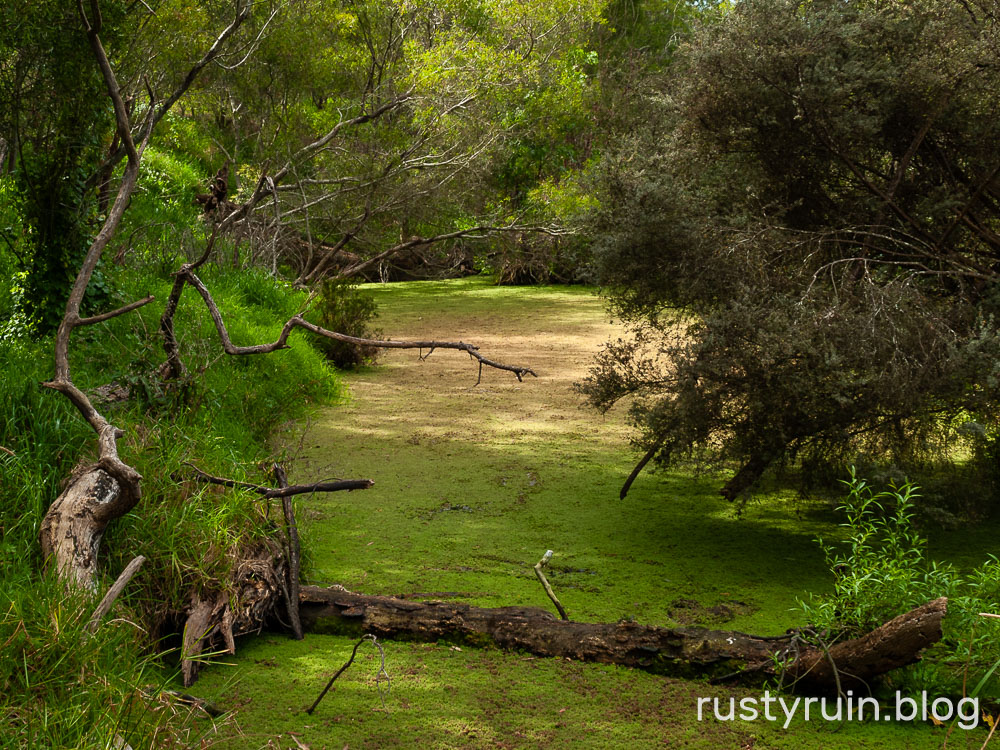
Old town waterways – Olympus E-1 with Zuiko 14-42 mm kit lens

It’s not as though my E-1 sports a spectacular lens that makes the photos look great. It’s the old Four-Thirds system Zuiko kit lens – 14-42 mm 3.5 to 5.6. Not that Zuiko lenses are poor at all, as even the so-called kit lenses are truly respectable. So, is there some Kodak colour science happening here? At the very least, it looks like a tone curve is being applied to create a punchier image and this is translated to the demosaicing process. I really don’t know what it is, but I’m certainly happy to keep using this camera. It may not replace my faulty Sigma, but it’s very satisfying to use.

Blasted landscape – Mad Max country

There’s no place quite like Coober Pedy. Long-known as one of the major opal capitals of the world, Coober is also a town where some people go to disappear from mainstream society. Others try their luck at opal mining, desperate to hit the jackpot and retire. Some do and the majority don’t. It’s tough work out there in the heat, underground, drilling into the sediments of an ancient seabed. There’s always someone to buy any opal finds at the end of the day and always someone who’s at the end of their luck.

Abandoned by the hole – Nikon Z5

The first time I visited Coober, I was 15 or 16 years old. I remember it being a pretty rough frontier-type settlement, with dust in the air and people living underground, away from the stifling heat of summer. I also remember walking around, unaware that I was trespassing on someone’s land, and a lady suddenly emerging from a hole in the ground with a shotgun in hand. She wasn’t too keen on opal thieves it turns out. Lucky for us, we were just clueless tourists.

Sunset scorch – Olympus EM5 Mark 2 with 16mm Zenitar Fisheye lens

Out around Coober Pedy, they recorded parts of the Mad Max films. If you’re familiar with those movies, you’ll appreciate that this ancient landscape provides the perfect post-apocalyptic backdrop. There’s an eerie beauty to the Australian outback and I love those places where there’s no-one for miles around.

Mechanical digger – Olympus EM5 Mark 2 with Zenitar 16mm Fisheye lens