Wending my way through photo edits on a quiet day ~ curation, technical considerations, and personal growth

It’s a public holiday and I’m working my way through old photos in hopes of finding some stray winners I’d forgotten about. I’ve always been my own biggest critic, editor, and curator. I think it’s good to develop our own tastes as photographers over time. It’s important to connect to our own photos without judgement, reflect on the image and the subject choice, consider the chosen settings, and remember our original photographic vision for the scene versus the actual image.

The key is to do this without judgement. Not every photo is going to meet your developing creative tastes. Not every photo is going to work at a technical level – some will be blurry, some will be rushed, some subject choices will seem odd, and some photos will seem dull. All this is absolutely OK. It needs to happen for growth to happen.

Sundial on a cloudy day – Olympus EM5 Mark 2 and Zenitar 16mm 2.8 Fisheye lens

I love the way the sunlight hits the sundial to reveal the texture of the metal in the photo above. All of the rust spots, built-up debris, weathering, and patina is visually interesting. The old Zenitar Fisheye would be a specialist lens on a 35mm camera, but on the half-sized sensor of the Olympus it works out to an equivalent focal length of 32mm and functions as a nice wide lens with a sharp centre and mushy corners. In situations where I want to get close and get in as much of the scene as possible, it’s a great lens.

There’s a little blown out highlight right up the top, but blown highlights and blocked shadows are not necessarily bad things, and in the above photo it’s very small and not distracting. There are so many other elements that make up a photo! Consider these questions: is there any detail in the highlights/shadows that you want to preserve? Will preserving those details add to your photo? If you make a photograph and part of the image features a glowing light bulb, for example, should you decrease the exposure to bring down this highlight so that the filament inside the bulb can be seen? Will doing this compromise other elements in your photo? How integral are those highlights and shadows to your photographic vision? Instead of the sensor having to manage dynamic range that exceeds its capabilities, can you simply reframe the image instead to include less heavy highlights/shadows?

Cheapo Mad Max – Olympus E1

In the photo above, my decision to focus on the car door was made easy by the fact that the window at the top was allowing in a lot of light. The E1 has an old sensor that doesn’t manage high dynamic range so well, so it made sense for me to cut out most of the light from the window in my viewfinder composition so as to preserve the details in darker areas and on the car door. In effect, the old sensor didn’t need to work so hard to contain all of the dynamic range in the scene.

The red paint on the left, the curved red painted area to the bottom right, and the window at the top all serve to frame the weather-beaten door and its message. It may not be the most exciting photo in the world, but it works for me and it’s a good example of connecting a scene to a photographic vision through careful composition and technical knowledge. I’ll be the first to admit that I’m not always good at that and plenty of photos don’t meet my own tastes, but I keep learning.

A local photo walk with the Nikon D70S ~ rust, wood, and vegetation in the suburbs

I’ve previously written about the Nikon D70. As I seem to have some affinity for older Nikon cameras, and as my D70 is also pretty beaten up, I couldn’t resist a good deal on a Nikon D70s with an attached Nikkor lens that has long been on my list: the Nikkor 35-70mm 3.3-4.5 AF lens. First released in 1986, the 35-70mm is most definitely a lens made for film cameras of the time as a cheap walk-around unit.

Some detractors say the focal length of 35-70mm isn’t especially useful on an APS-C sized sensor, but I disagree – 35mm is a popular wide, not not too wide, focal length, and 70mm can most certainly get you close or give you a decent portrait. Even if you consider equivalence (and a 50mm lens is still a 50mm lens on any sized sensor), the lens gives us 35mm eqivalent focal lengths of 52mm, 85mm, and 105mm – all three of them very useful lengths on any camera.

Snapping plant monsters in the suburbs – Nikon D70s

As for the D70s, it was announced in August 2005 and came hot on the heels of the original Nikon D70. The differences between the two models are minor, with the back-screen of the S iteration being 2 inches rather than the 1.8 inches of the original. The other features remain the same really: a 6.1 megapixel CCD APS-C-sized sensor, a top LCD screen with settings information, and an array of useful external controls, including ISO and White Balance, among others. Though it’s an all-black-plastic affair and has that familiar hollow feel of Nikon’s cheaper offerings, it definitely has a prosumer feature-set. Sure, the Nikon D200 is the professional upgrade, with a solid magnesium-alloy skeleton that feels like a giant warm buttered scone in the hand, but the D70s still remains a competent DSLR even in 2025.

Just quickly, if you like this post and want to read more of my words on photography, old cameras, and such, just fill in your email below. I’m grateful for every connection in this digital abyss!

The old blue van – Nikon D70s

All the photos were made using the lens at F-stops 5.6 – 8. As you can see, the photos are sharp and punchy, even using a 6.1 megapixel sensor from yesteryear. Need I go on about the competent image-making capabilities of these older cameras?

Covered in cactus – Nikon D70s and Nikkor 35-70mm 3.3-4.5 lens

I was helped by heavy cloud-cover, as there wasn’t a lot of dynamic range for the old CCD sensor to manage. Even though you can print pretty large from a 6 megapixel camera easily without much loss, the lack of cropping room makes one slow down and compose deliberately – there’s no running and gunning here. No lazy composition and fix it in the edit mentality. Old lenses, lack of high ISO, and fewer megapixels is good for getting back to the basics of photography: seeing clearly, connecting to the world through imagination, subject choice, composing deliberately, correct settings to suit scene and intent, and good hand-held technique.

If you print a 1 megapixel photo at billboard size, it will look like badly made bricks up close. If you stand 50 feet away instead, where just about everyone will be viewing it from, that 1 megapixel image will look pretty good. Viewing distance makes all the difference, and this is what we also need to consider when it comes to resolution and print sizes. Are you standing two inches away to view your photo prints? Even so, I don’t want to needlessly toss pixels away if I can help it, especially on these old cameras. I slow down, look, reflect, imagine, think through settings, check the histogram for exposure, and adjust if necessary.

All wooden levels – Nikon D70s

Digging deeper into a cache of unedited photos ~ thoughts on subject and composition

In my previous post, I revealed a cache of old photos I’d discovered on a hard-drive backup. Apart from giving me an excuse to go into Lightroom and do something that isn’t related to my day job, it also provides me an opportunity to reflect on why I made those photos. What was my intent? What did I find interesting at the time? What scenes and subjects caught my eye and why?

Painting in the details – Olympus EM5 Mark 2 and unknown vintage lens

I really like the way the painter seems to blend in with her mural. She’s leaning forward at just the right angle so that her body almost becomes part of the skin tones and the angle of limbs on the wall. Her bright yellow hair also contrasts well against the blue paint. There’s colour, shape, contrast, and detail – all providing a visual feast for the viewer’s eyes.

Ripples and shadows – Olympus EM5 Mark 2

There’s something wonderful about the way water reflects and bends light. In the photo above, the setting sun provides gloomy and interesting light that plays across the surface of the water. The ripples themselves form an interesting pattern, leading the eye in a circular motion to the silhouette of the duck and the tree stump. I also love the way that the shadows of these subjects are distorted by the ripples and lead away and out of the photo to the edge of the frame.

I discovered a cache of unedited photo files ~ backups and bad sectors

Do you remember waiting for a roll of film to be developed? I used to enjoy going to the photo lab and collecting those envelopes filled with photos. I’d sit down on a bench somewhere and pore through them excitedly. Sometimes, they’d be from rolls of film I’d been sitting on for a few years, so looking through them was a joyous exercise in reliving those memories. If I had the extra money, I might even pay for 7×5 prints or even a grainy 8×10 enlargement. We don’t experience any of that with digital photography, of course, but there is a close cousin: finding unedited RAW files on drive backups.

View of the Lighthouse 1 – Olympus EM5 Mark 2 and unknown vintage lens

I’m not especially organised when it comes to my photo backups. I’ve even lost a bunch of photos from one particular holiday due to my lack of foresight. Admittedly, I’m also a bit burned out on the tech and the multiple passwords and the platforms and…well you get the idea. In short – my fault for not listening to the hard drive that was burping and farting to let me know it was living its final days. So, it’s always nice to discover a maverick folder full of photos files I’d forgotten about.

Rusty grille and green concrete – Olympus EM5 Mark 2

I use One Drive a lot for backups now. I usually save a DNG version to the cloud and save a web-ready version for this journal and for sharing (1000 px on the long side and 60% JPG quality, if you’re interested). You might also have noticed that my photos now have a neat black border with some EXIF information on the side and a URL for this place. It’s an unobtrustive way to watermark the photos, record some useful EXIF data, and make the photo pop a little more against the black border. It’s a slightly convoluted process to install and configure, but once set up, the Mogrify 2 plugin works well in Lightroom. I have a license somewhere, but it probaby went down with another bad hard drive incident.

View of the Lighthouse 2 – Olympus EM5 Mark 2

More photos from the Pentax K10D

As disappointed as I was in my last post about the Pentax I recently acquired, I managed to make some decent photos on the day. The small backscreens on old cameras aren’t good enough to determine much of anything about sharpness or focus, so I usually make a few photos of the same subject to have some redundancy in case of faults and errors.

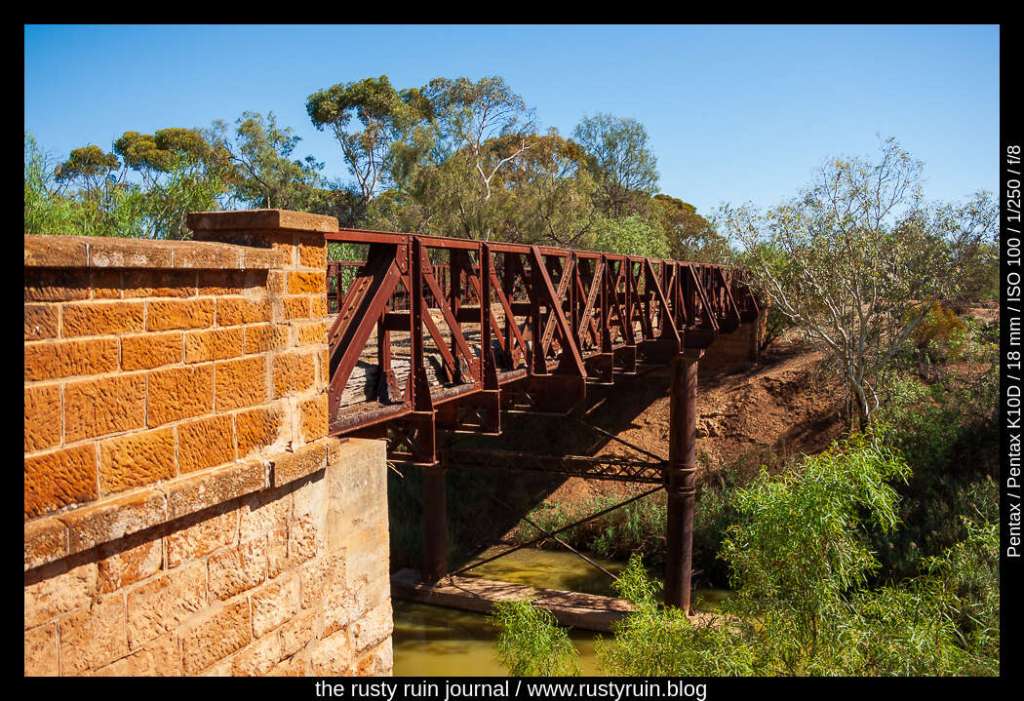
Old bridge over the Broughton River – Pentax K10D

I think sometimes we get too used to the idea that every photo should be as sharp as possible. It’s a common criticism in photography groups, of course. But what constitutes sharpness in a photo? Good focus is one primary ingredient – something I struggled with on the Pentax. Contrast is another characteristic that contributes to the perception of sharpness. Aperture size is also important, as this determines depth of field and just how much of a photo is going to be in focus and acceptably sharp. A fast enough shutter speed if a tripod isn’t being used is also key to avoiding blurry photos.

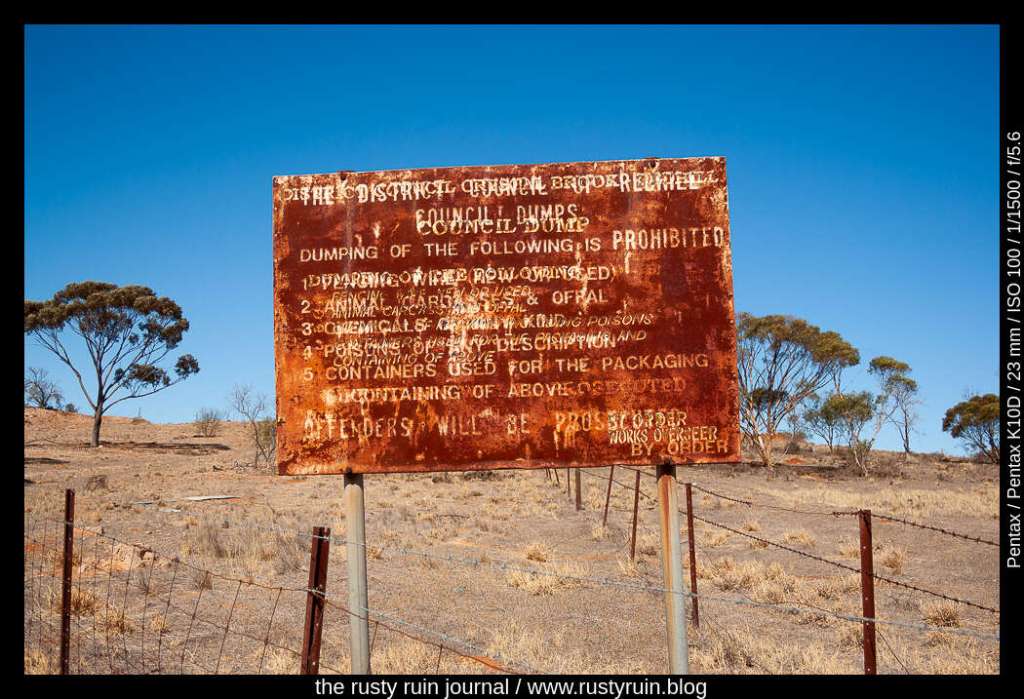
The old dumping ground – Pentax K10D

I don’t know about you, but my eyesight isn’t good enough to see the world like the best lenses. I can zoom in on a super sharp photo in Lightroom and see all the details. That’s a wonderful thing and I’m often amazed at how much detail modern lenses and sensors can resolve, but acceptable sharpness is also a range within which a photo looks good to our eyes. There are well-known lenses from every manufacturer that aren’t known to be super sharp, yet I’m sure many excellent photos have been made with them.

Free book library – Pentax K10D

Inexpensive kit lenses often receive criticism from people who view the technical quality of gear as primary markers of status and image quality. If you’ve chosen the correct aperture, correct ISO, correct shutter speed, and the correct point of focus for the scene, the rest is down to technique, content, and composition. A lens that’s not super sharp can certainly produce wonderful photos of subjects that are a good fit for the glass. Great content and compostion will always beat out slightly soft photos every time in my books. As I’ve said before, amazing photos were made over a century ago with equipment we’d consider primitive when contrasted to the camera gear of today.

A day with the Pentax K10D ~ my short time as a Pentaxian

When I was growing up, we’d spend time with another family on special occasions. They’d emigrated at the same time as us to Australia, and we’d maintained the sort of cultural bond with each other that immigrants often do when they’re finding their feet in a new country. Even though my brother and I didn’t have much in common with their two girls, we always found a way to have fun, whether it was hide and seek, boardgames, or exploring the nearby school on weekends.

I have a vivid memory of going to their home one day and looking up to see a large camera I’d never seen before sitting on a shelf in the dining room – a Pentax. Bigger and more professional looking than the usual plastic film cameras I was used to seeing, it seemed to suggest that someone in their family was a bit more serious than most about making photos. I never had the courage to ask, but that bold white Pentax font was burned into my memory.

A few weeks ago, I came into possession of my own Pentax – a K10D. Released in late 2006, it was a nice semi-pro DSLR with some interesting features ~ weathersealing, sensor-based shake reduction, and the same well-regarded CCD sensor as the Nikon D200. It even came to me in a Lowepro Nova 160 AW camera bag that still looks to have plenty of life left in it as a daily shoulder carry. As Ricoh-Pentax has, to me, always seemed a brand doing it’s own thing regardless of the trends, and bearing in mind the curiosity stoked in me since seeing that serious looking camera on the shelf, you can imagine I was quite excited to take it out for a day of use.

Closed up in Redhill – Pentax K10D with Sigma 17-50mm lens

We should be cautious about rushing into what seems like a good deal, especially online. I’ve been pretty lucky with my purchases, but sometimes old gear comes with problems. Despite a body in good condition and a shutter about a third of the way through its average life, my K10D isn’t in the best shape internally. Mine seems to have front and back focus problems, likely related to the dreaded mirror drop issue that plagued so many of these units. It took Pentax ages to own up to the problem officially.

Of course, the soft and slightly out of focus photos could also be due to the Shake Reduction system not playing nice, bad glass, or user error – though you’d expect that making a photo at 1 / 750th of a second in good light with plenty of depth of field wouldn’t be the cause of visual mush. And I know of no Sigma glass that’s so poor as to make everything soft even at an F-stop of 8. Given the inconsistency of the focal plane from photo to photo, I suspect one side of the mirror has tilted downwards slightly, thereby affecting sharp focus. I think this because every single photo comes out with the same tilt no matter how well I frame it: the right side tilted down. It’s easily corrected in Lightroom, but still annoying. The only other culprit could be the interchangeable focus screen being slightly askew – something that’s easier to adjust. Disappointment aside, these are some of the best photos from the day…

Inside the old farm-house – Pentax K10D

In some ways, I don’t mind slightly soft photos. Whilst I had to do more than my usual sharpness adjustment in Lightroom to compensate, they remind me a little of photos from a cheap old film camera.

Abandoned garage – Pentax K10D

The K10D is a nice camera to hold. The body seems to have more organic curves than the upright and serious looking Nikons I’ve grown accustomed to. The LCD screen is nice and bright, as is the optical viewfinder. It has a different hand-feel to my Nikons – slightly more refined in some ways, but lacking the external controls of the D200. If Nikon is the serious-looking man at the local bar drinking only tap water and green tea in the corner, Pentax is the loose fellow pressing buttons for fun on the jukebox after a few exotic beers.

Shipping container patina – Pentax K10D

Problems aside, it was good to finally use a Pentax after all those years of wondering about the camera on the shelf. Will I get another Pentax? I definitely won’t be rushing to do so. One of the hazards of picking up old cameras is that sometimes there are unreported faults. I have a Nikon D70 that’s very worn, but still makes great photos. The Pentax looks great and clean, but it’s not a trustworthy companion I’m afraid. I was a Pentaxian just for a day, and it was kinda nice. I’ll keep the nice Lowepro shoulder bag though!

A contemplative wander at sunrise with the camera

I think contemplative photography has always appealed to me at some level. As photographers, we’re sometimes too focussed on making photos that announce our presence to others. That makes sense when looking at things through an economic or self-marketing lens. There’s a space for that, of course. But photography is about more than the next Like or Follow on the latest social media platform.

Illuminated – Sony RX100

I’m not so interested in mass appeal, exposure, ego-stroking, or money. I’m certainly interested in people and ideas and connections, but the idea that I’d need to specialise and market and propel myself in front of others just feels wrong. It goes against my grain, I suppose. The foundation of my practice finds expression through wandering, seeing, imagining, and purpose in the moment. Seeing the world differently in a single moment is at the heart of photographic practice, for me.

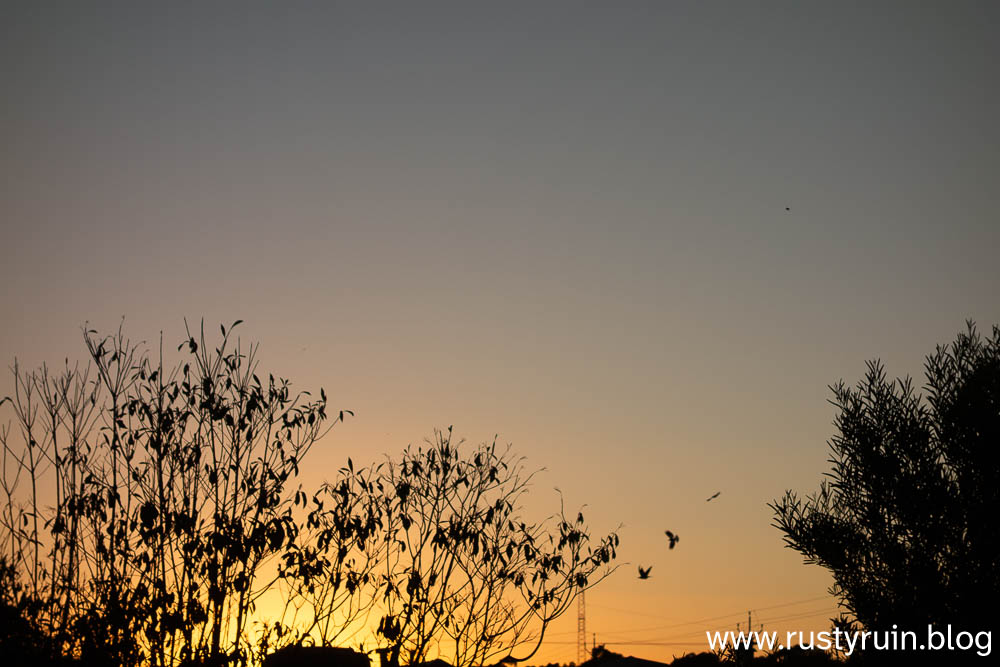
Sunrise and silhouettes – Sony RX100

It’s not always an easy thing to enter the mind-state of reacting instinctively to a scene. We so often judge what we see: is it a good photo? How can I make it better when editing it? How can I crop it? What camera settings should I use? When such thoughts take over, like a virus, they interrupt the flow of the moment and remove some of the joy. Is it truly important that we frame a scene so precisely that it attracts comments? Is it truly important that we even make the photo in the first place? Do we really need the camera to see the world?

On this last point: it’s true that we require no camera to experience the joy of the moment. And I think that as photographers, we’re prone to feeling as though we must capture everything and see the world through the lens. Still, the camera is integral to photography and there’s some consideration to be afforded technical settings. It’s the tension between the camera and inhabiting the world in the moment without distraction that can be the tricky tightrope for me to walk at times.

Sunlight and shadows – Sony RX100

Tjoritja aglow ~ The West MacDonnell Ranges

The West MacDonnell Ranges stretches west of Alice Springs (Mparntwe) for 161km. The area is known as Tjoritja to the local Arrernte people, and includes magnificent natural wonders like Ormiston Gorge, Standley Chasm, and The Ochre Pits. It’s a huge area that rewards exploration and requires more than a single day.

West MacDonnell Ranges aglow 1 – Nikon Z5 and Nikkor 40mm F2 lens

Upon driving back to Alice Springs after a long day on the road, the sun hit the ancient earth just right, and we pulled the car over to a patch of gravel. Like a long red serpent from The Dreamtime, stretching across the land, the rocky ridges were awash in the sun’s eventide glow. The photos here really don’t do it justice. How can one encapsulate over a thousand million years of geological history? It’s a land that feels as old as Time itself.

West MacDonnell Ranges aglow 2 – Nikon Z5 and Nikkor 40mm F2 lens

In a rush to exit the car, switch on the Nikon, and frame the scene before the light faded, I was amused by my scurrying about in the shadow of those ancient red rocky giants of earth. How many people had done the very same thing – catch the red glow of sunset across the hard-edged boulders, crags, and rocky outcrops? Many millions of sunsets across that land and there I was, one small thing in the vastness, fiddling with my camera, hoping to stop time.

My first digital camera ~ Kodak

My first digital camera was a Kodak DSC 3200, purchased in 2002, I think. It seemed like magic at the time ~ the fact that I could make photos and NOT have to pay to have film developed was pretty amazing. Even better – I didn’t even need to go to the trouble of using a flatbed scanner so I could transfer them to my computer! In a world saturated by digital imagery and modern cameras that can almost see in the dark, this all seems rather quaint.

My Kodak camera might have been magic in my hands, but it was also really frustrating to use – AA batteries that seemed to be good for only a dozen photos, limited internal storage, and a serial cable connection that took an age to transfer files. Still, I was pretty happy with it, and 1 megapixel seemed like a lot at the time. Here are some old photos made by the Kodak DSC 3200 I happened to find:

Machinery near the old quarry – Kodak DSC 3200
Spikes in my sky – Kodak DSC 3200
Kodak DSC 3200
Kodak DSC 3200

More photos from the Nikon D200

In my previous post, I sang the praises of the Nikon D200 – first released in 2005. Back then, I could barely afford a decent digital point ‘n’ shoot, let alone a premium DSLR like the D200 ! Even RAW photos from this Nikon feature similar contrast, punch, and compressed dynamic range to those from the Olympus E1yet another widely respected antiquarian among cameraphiles and CCD sensor enthusiasts. I’ll not expand fervently on that in this entry, as I’ve done previously! Just some more photos from the hefty and reassuringly solid Nikon D200:

A rusty old shed somewhere – Nikon D200 and Tamron 17-50mm F2.8 lens
The green shed – Nikon D200

Notice the old tin shed theme so far? I won’t deny that lonely sheds make for some nice pictures, especially when they’re decaying into the sun-beaten soil.

The yellow shed – Nikon D200

Seriously, I was going to post something other than a shed, I really was, but I couldn’t help myself! Back to another angle of the yellow shed you saw in my last post. Looking at these photos, I can’t help but wonder again about the image quality perfected in some of these old cameras. Makes you also wonder about the role of marketing and what we believe.