If only the machines of war would exhaust and collapse. Of all the things we’re good at, it seems that war is the thing we’re most committed to perfecting as a species. After all, entire civilisations are built upon the sundered ruins of the vanquished and the displaced. There’s no point in hiding it. Despite our lofty achievements, it’s the tireless machinery of war that seems to power the forward momentum of human civilisation. Or so it seems…
I despair…
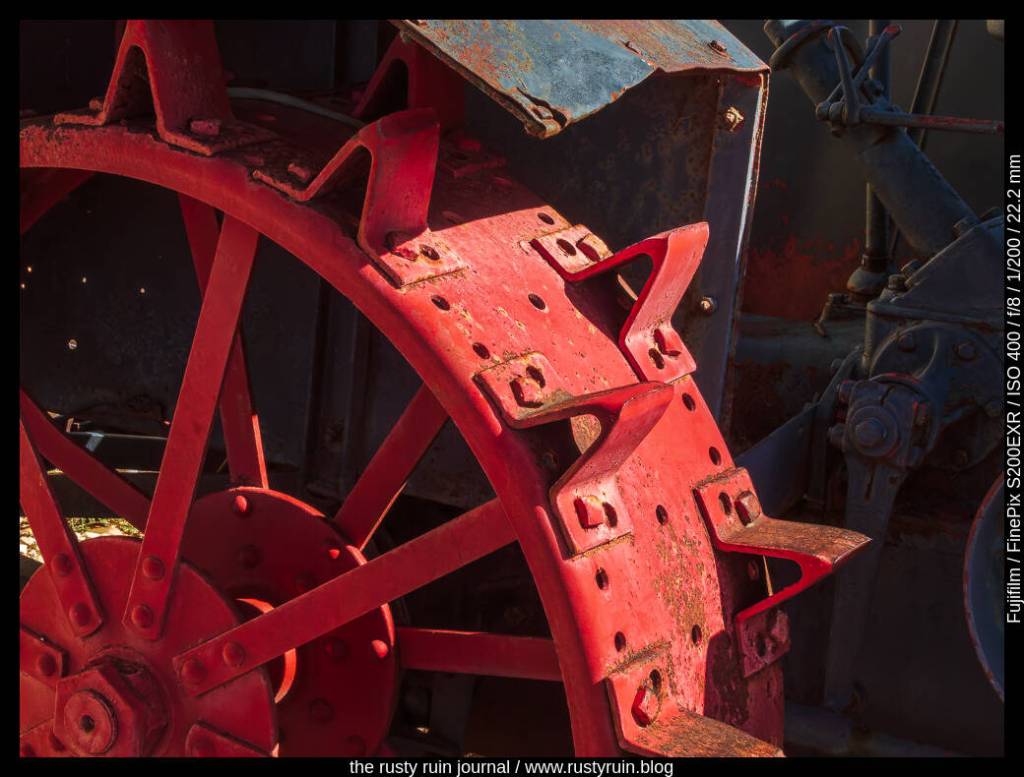
Farm machinery – Finepix S200 EXR
Wars are easy to start but never easy to finish. It’s harder yet to manage the consequences. Nations and civilisations may be destroyed and created under fire, but we continue to be slaughtered under the watch of smug billionaires, delusional leaders, and corrupt statespeople who funnel money into filthy pockets while cheering on the carnage.
The beliefs that drive war are as illusory as the power structures that support it, yet we fall for the charismatic snake-oil salesperson who offers simple answers to complex questions – as though simplicity taps into our need for control in a world we know, deep down, we can’t control – in a universe that terrifies our mortal core.
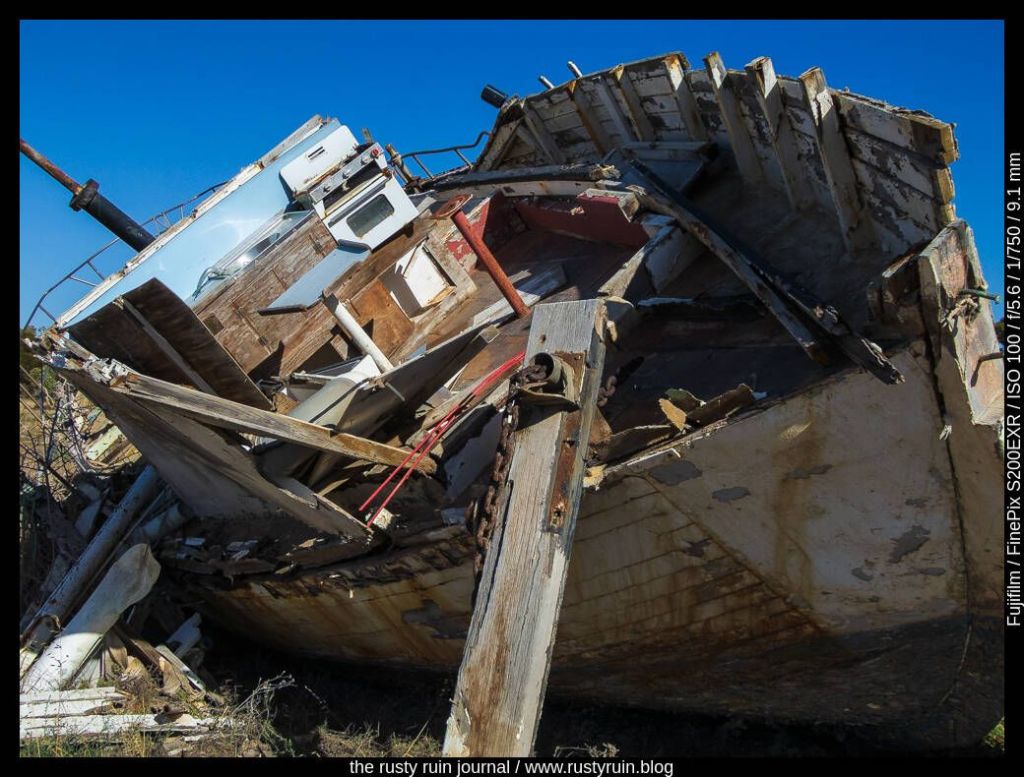
Run aground
Just imagine – a person so rich they need not worry about their next meal for the equivalent of thousands of lifetimes. They are so divorced from the common current of daily humanity they lack the meaning that adversity generates. With insides like a dark abyss, they suffer extreme boredom. To alleviate the boredom, they indulge in games of power, status, accumulation, and cruelty. They are weak-minded, emotionally stunted, and psychologically defective. They are wrecked ships run aground on the island of hollow souls.
These are the people who should never be allowed near power, but are the ones who seek it most strongly. And, as the ancient Romans always understood, the leaders backed by the soldiers always have the power.
Much of human history is a relentless lesson in how often we succumb to the lure of corrosive beliefs. The illusion of nationhood turns quickly to the poison of patriotism ~ small minds warped by politicians and billionaires seeking votes or power or dominion over poor lives so disenfranchised, so crushed beneath dull meaningless work in the small hours that they look for any simple answer to complex problems – even if those simple answers are bloodthirsty and divisive.
George McGovern, the late American diplomat, historian, and politician, once said: “I’m fed up to the ears with old men dreaming up wars for young men to die in…” – that quote seems all too familiar, like a broken record, and all too relevant in 2026, as the skies over the Middle East blacken with missiles, smoke, and drones. This ancient region, once home to the great Achaemenid line of Persian Kings, is on fire once more – just as Alexander’s soldiers set fire to Persepolis in 330 BC. It’s a place I’ve wanted to visit since I was a teenager. I’m not sure I’ll ever have the chance.
And so, I vainly edit photos from my Nikon Z5 and remember that even though the skies are clear and blue in my view, the skies are dark and violent for others.
If you hang around in online photography forums, especially where beginners flock, you’ll come across people proclaiming that the best and only way to really learn photography is to set the camera dial to Manual Mode and endure the suffering until it makes sense. I think this is one of the worst pieces of advice that anyone can give to a beginning photographer!
To be clear, I’m not suggesting that Manual mode is bad or inferior. Of course it’s not. Some beginners might even learn well by pushing through the disappointment of fumbling with sweaty command dials whilst missing photographic opportunities. It’s just one way of learning, and everyone learns differently.
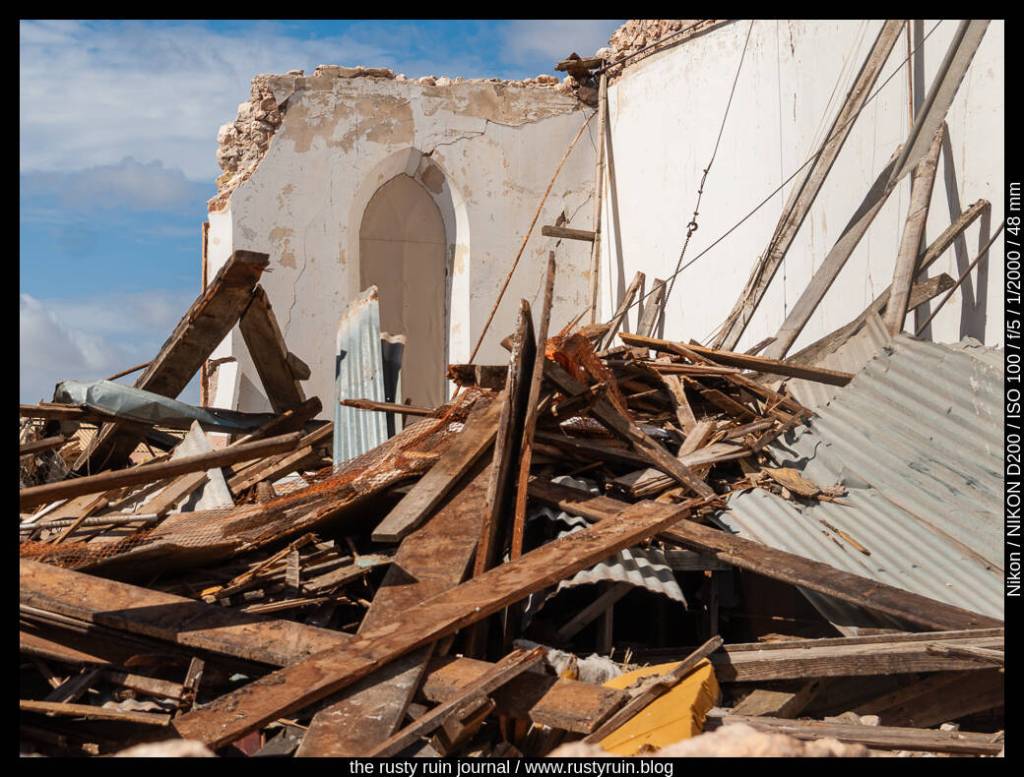
Through the busted window I see – Nikon D200
In fact, I heartily recommend Manual mode and night photography to any beginner who wants to learn all about the role of light in photography and how it can be controlled through shutter speed. What I object to is the stubborn declaration by some photographers that Manual mode is the Holy Grail and will enlighten even the most confused beginner. Let me tell you, setting that dial to M is more likely going to frustrate an eager beginner and turn them sour.
Learning about the exposure triangle – how Shutter Speed, Aperture, and ISO interact to control light – is essential in the journey, but it’s not a mad race to the finish line. Rather than stopping stubbornly at M and staying there, set the camera to Aperture orShutter Priority mode and take the gentler path. There’s no shame in using any of these modes. Set it to Auto or Program mode, even, and concentrate on developing the eye and the imagination and living in the moment. There’s NO rule that states a photographer must use Manual mode all the time, every time. Cameras are tools that provide options and we use the best tool for the job to produce a result.
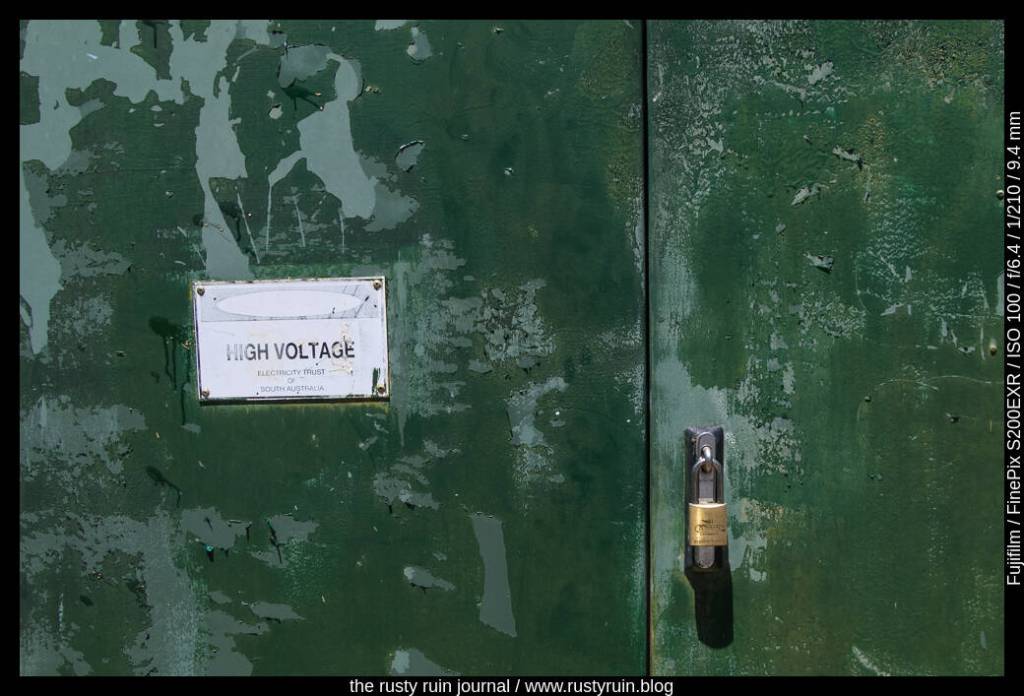
High Voltage – Finepix S200EXR
Photography is about more than gear. It’s about more than the money you spend. It’s about more than how sharp a lens is or how proficient you are at reading a light meter – and lets face it, insecure ego-driven types who are stuck in M are likely still glued to their camera’s inbuilt light meter anyway – even old film professionals use a light meter as a starting point.
The truth is that lots of mediocre photographs are made in all camera modes. There are people obsessed with sharpness and eradicating all digital noise, but forget that an interesting composition is key. There are also people justifying the thousands spent on gear, hoping their next pro camera body purchase will make them a better photographer. Let me tell you something: if you make mediocre photos on a 16 megapixel camera, that 45 megapixel camera on the shop shelf isn’t going to suddenly make you better. Getting better is not just about becoming technically comfortable. It’s also about learning to see the world differently.
If you’d told me 15 years ago that my 1 megapixel Kodak would become a vintage digicam fetish item for Gen Z, I might have been amused. At the time, I was looking for tech-upgrades I could afford. It was all about more megapixels, as that seemed to be the measure of a digital camera in the 2000s – a time when companies thought they had a chance to revive their fortunes after the film era.
I might not be Gen Z, but it’s nice to use these old cameras again. Exploring macro modes, slow start-up times accompanied by bell chimes, and outdated storage media (XD card, anyone?) reminds me of how exciting the digital camera market was back then. Even a company like Casio – largely known for calculators and watches –was dipping their toes into a market that was fresh and ripe for innovation.
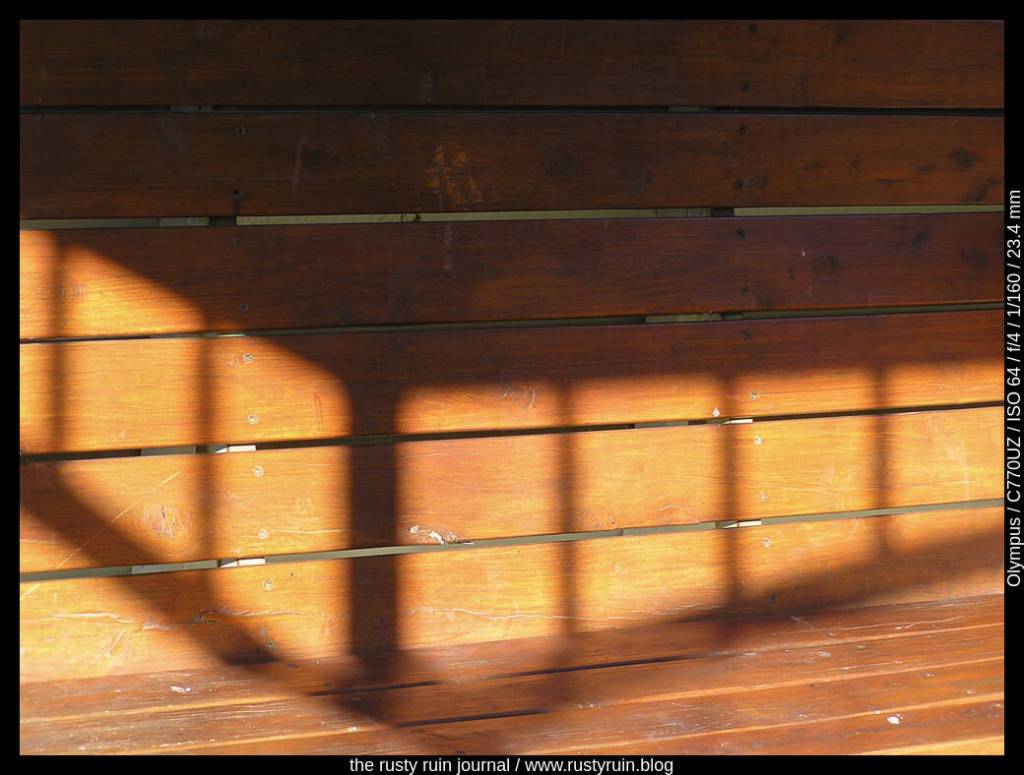
Soft shadows on wood #1 – Olympus C-770
For those of us who lived through it, this particular past doesn’t hold the mythical gold that Gen Z thinks it does, but it’s also perfectly natural to yearn for brighter yesterdays, especially when today is so obsessed with both the perfection of the image and the kind of moral purity testing that accompanies a technology layer that weaves relentlessly through our lives, recording our thoughts and feelings so that we’re not allowed to ever forget or forgive.
Despite the nostalgia, there are other benefits to reviving old digital cameras:
Save the environment by not chucking out a perfectly usable old camera. Companies tapping viciously into the dopamine hits that reliably ensure we hit the technology upgrade treadmill and spend spend spend don’t help our planet.
Use limits to learn – it might only have a maximum ISO of 400, no image stabilisation, and a sensor that goes blind as soon as a sliver of a highlight hits the photosites, but those old camera limits will teach you patience. They’ll teach you to consider dynamic range. They’ll teach you to slow down and compose each frame properly because the camera doesn’t have the same easy conveniences our modern cameras do.
An old digital camera will also teach you that photography is about more than expensive camera gear. I’ve said it before – people have been making wonderful photos for more than a century. Great photos are not restricted to the 21st century and camera gear that makes your bank account weep. If you’re not making good photos with a cheap camera, you’re not going to make good photos with a $6000 camera.
Reading that a Dell bigwig recently admitted consumers aren’t buying new computers for their AI capabilites and features makes me wonder about the future of AI. For many people, AI dominance seems a foregone conclusion. It foreshadows a near future where, depending on the job you do, days will either be filled with AI prompts to increase your efficiency, or days filled with dread about when your job will be totally replaced and where, upon the employment scrapheap, you’ll end up.
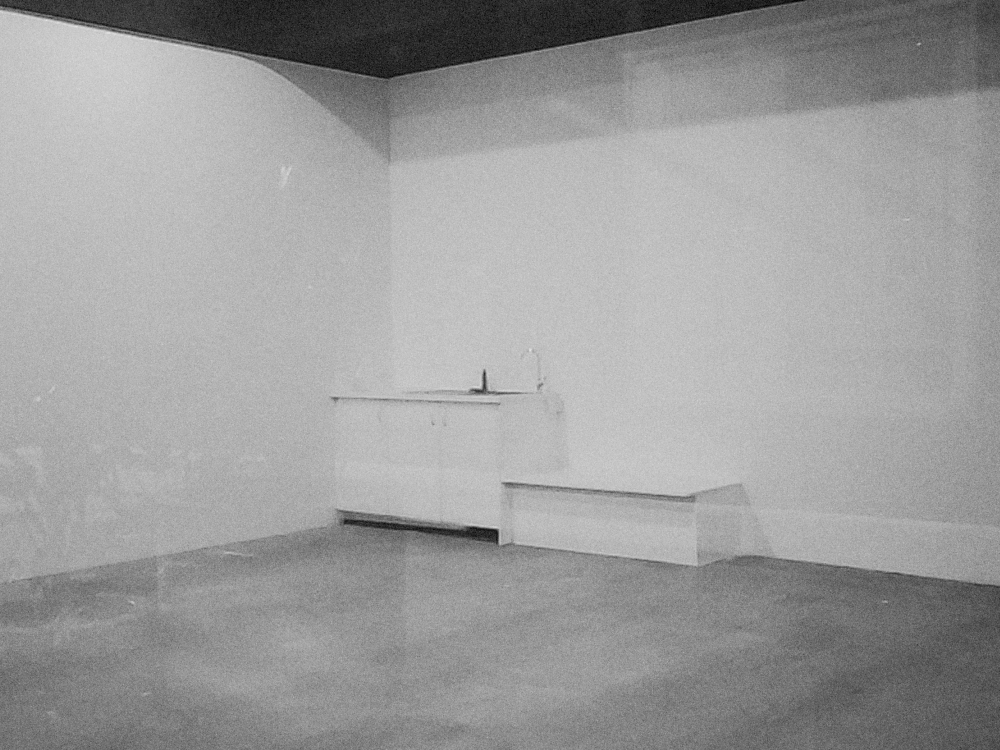
Empty room – Kodak Charmera
Likely, the truth is somewhere in the middle – AI may indeed prove to be a lot of hot air, but it’s certainly not vanishing overnight. We nurture a negativity bias, after all. The etchings of doom may be on the wall, but AI already has real foundations in the form of steel, glass, and silicon. The hype may be over the top and we may not see quite the transformation imagined by the most opulent of the Silicon Valley CEOs, but AI will likely continue to play a role – it’s a matter of how big and disruptive that role is. It’s also telling that vast profits in AI are yet to surface. Speculating and gambling certainly are the pursuits of the repulsively rich and bored, but in this case it’s a global game involving all of us.
The money being invested in AI datacentres alone is eye-watering, and if it’s any indication of the impact on other markets, Micron also announced it will cull the Crucial memory brand because it has decided to supply memory chips to massive datacentres instead – this is where the money leads. Too bad if you want to build that perfect gamer PC with cheap RAM!
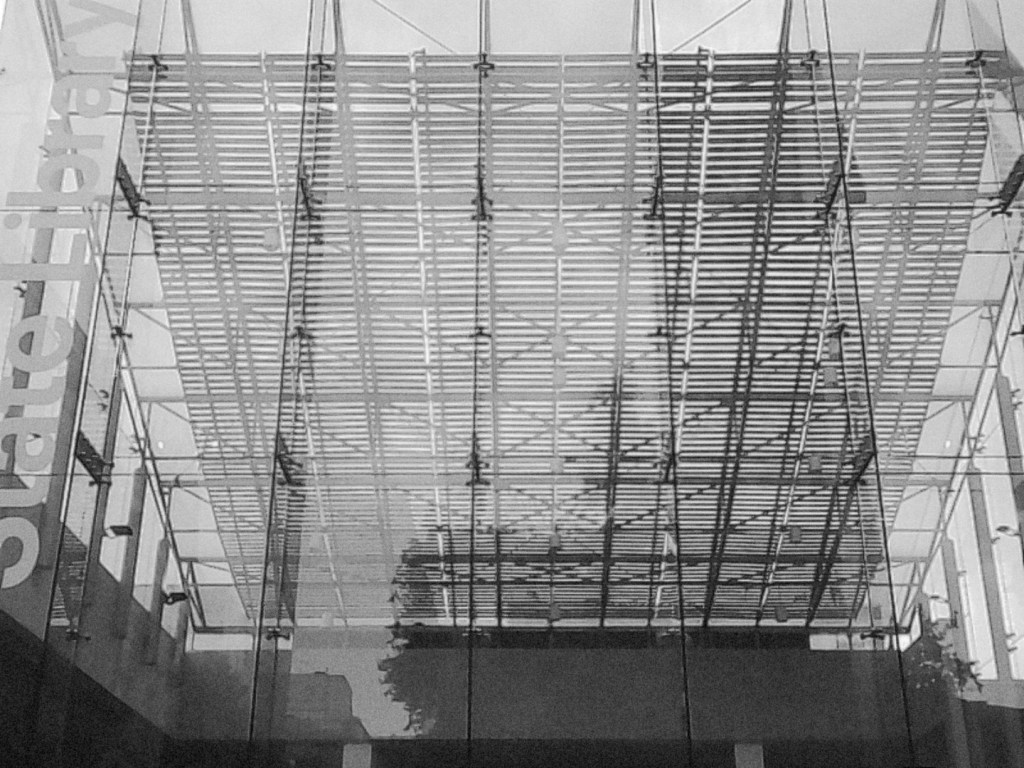
Steel and glass and sky – Kodak Charmera
Even in a relatively small market like Australia, Amazon announced in June 2025 that it would invest $20 billion in building new cloud computing and AI datacentres. As with all supposed cultural shifts, the language around it is both compelling and driven purely by economics: generational transformation, economic opportunities, empowering Australians. Better that we place more focus on ethics, stewardship, responsibility, and trust – not so much on generating flying purple pigs with the latest AI model just for shits and giggles.
Grime and graffiti and bird shit – Kodak Charmera
No doubt the billionaires in the tech sector will get their way. They already are. Huge datacentres are set to impact not just the job market but also the rivers and waterways in places that likely don’t feature in the dreams of any of the techpreneurs driving the whole show. They largely don’t care, of course. When has a capitalist ever cared about poisoning rivers and soil?
Rather than idly believe the bright speeches from wild-eyed execs about economic opportunity and exciting opportunities at work (when was the last time more tech in the office actually reduced your hours so you could focus on family and leisure, I ask you?), we should be looking at the real and measurable impacts – mind boggling water use, environmental damage, the amplification of misinformation and growing concerns over AI Psychosis – and examining ways we can implement the best parts of AI ethically and responsibly – if that’s even possible.
The end of year holidays have provided rare opportunities to explore city, country, and local suburbs. It’s nice to throw the Kodak Charmera into a pocket and walk around an unfamiliar neighbourhood, keeping an open mind and allowing the small things to catch my attention and focus. The unobtrustive nature of the little Kodak also means that I can largely remain unnoticed on suburban streets.
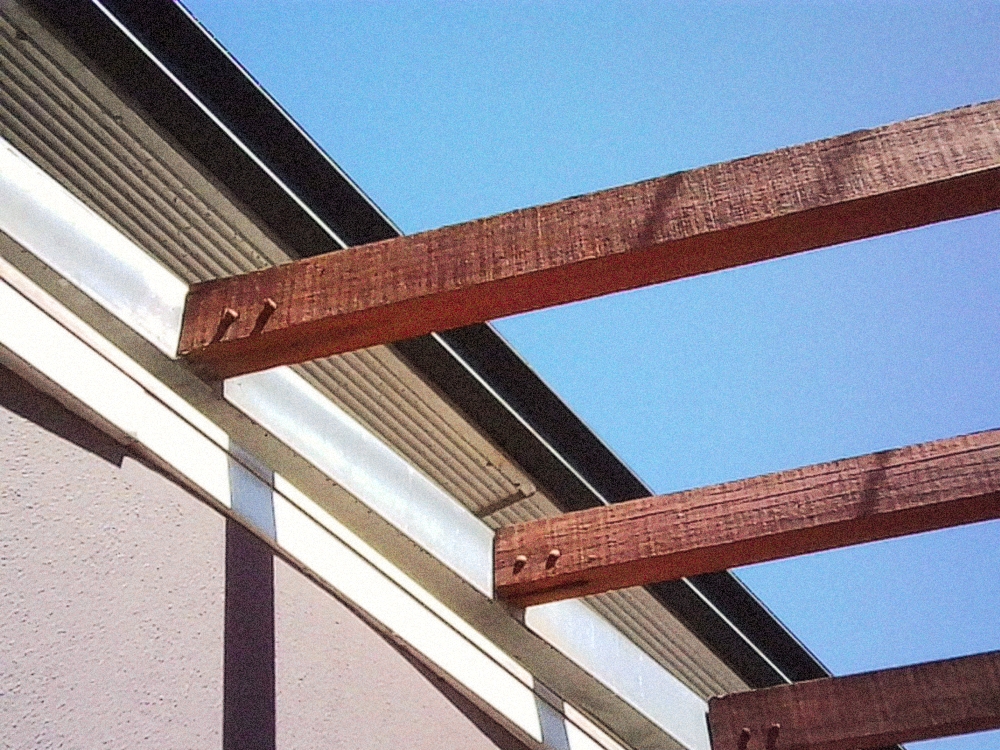
Brown beams and blue sky – Kodak Chamera
The fantastic Community Hub and Library in this suburb stands as a testament to the vision and efforts of locals and politicians to ensure that the area, known to have many endemic social, economic, and health problems, provides community, resources, recreation, and safe places to gather. Walking through tall glass doors, the immediate quiet and calm stands in stark contrast to daily incidents of drug-affected raging at the air and the sad turmoil of embattled relationships that seem to define the street corners.
Crossing and counter-balance
Standing before the prize-winning photographic prints adorning the gallery space in the library, I think of the steep expense of the listed camera gear used by the photographers versus the social conditions and poverty outside.
A small photo of a nine year old girl, brandishing a Nikon Z9 and a giant lens, thicker than her arm, stares back at me from an artist card placed under the runner-up picture she entered into the competition – a photo of a dead shark on a tropical beach. Her hands curl around a camera body that cost thousands and a lens that cost even more. And here I am with my $50 Kodak Charmera, looking out of the library window at the old cemetery that was here before the shopping centre, pondering the absurdity of it all.
I purchased the Olympus C-725 Ultra-Zoom sometime in 2004, excited by the prospect of the included manual modes and extra features as a step-up from my Kodak. At the time, I was eager to improve my minimal knowledge and explore the mode dial and learn the basics of photography. As it turns out, this silver all-plastic Olympus proved to be my bugbear. It would not be until 2013 that I picked up another camera more complex than this one.
Through the use of various cheap film cameras in the 1990s, I came to realise I had more than a passing interest in visual artforms. As digital photography started to take-off, I decided to nurture this growing interest and paid a lot of money for the Kodak. It was fun, but I decided I needed a more capable camera so I could brush up on the technicalities.
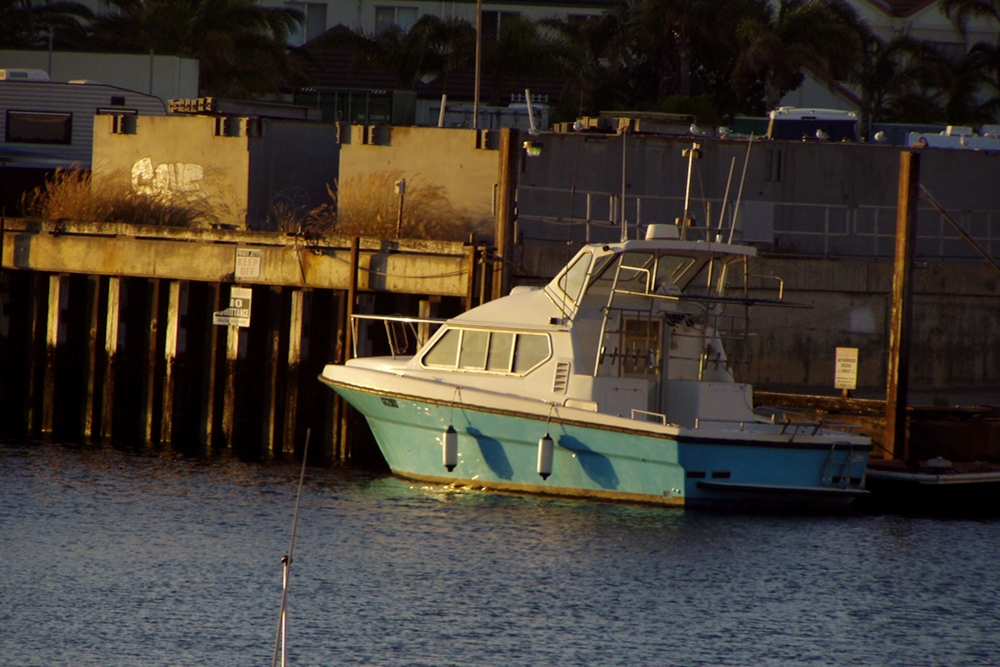
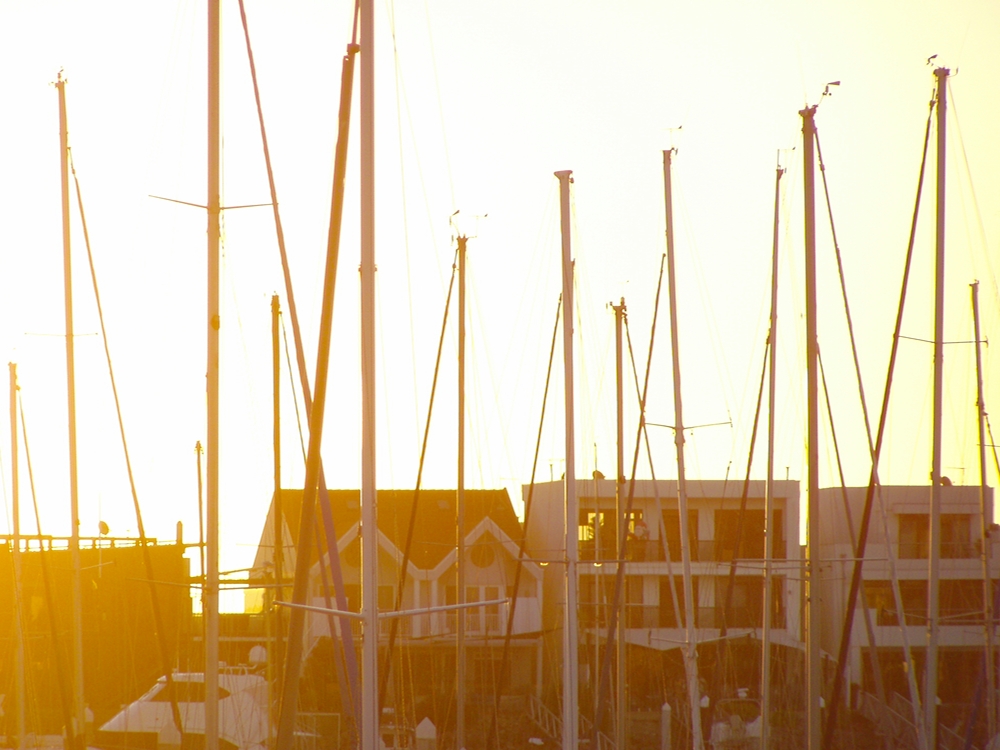
Homes and masts at the marina – Olympus Camedia C-725 Ultra-Zoom
I remember going out with my father, in mid-2004 perhaps, with the express intention of us both buying a new digital camera. He was always keen on new technology. As we browsed the shelves, we picked up every model from Fujifilm to Olympus to Kodak to Sony to Minolta. The model number particulars of the 4 megapixel Fujifilm camera that he purchased escape me now, and I’ve been unable to locate it in his boxes of things. It was the Olympus that appealed to me though.
The Olympus name resonated with me. It spoke of quality and longevity – something that seems both trivial and naive now in the context of the sale of their imaging arm in recent years and the rebrand under OM Digital Solutions. But 2004 was a different time in photography. It was the weird and confusing intersection of more than a century of film culture and the new digital kid on the block.
A silver finish, a boxy plastic design that would make modern mirrorless camera users weep, a mere 3 megapixels, PASM modes, and a huge 8x zoom caused me some excitement. Here, I thought, was a camera that could really teach me about photography! As it turns out, my father had a lot more easy fun with his pale gold plastic Fujifilm Finepix camera.
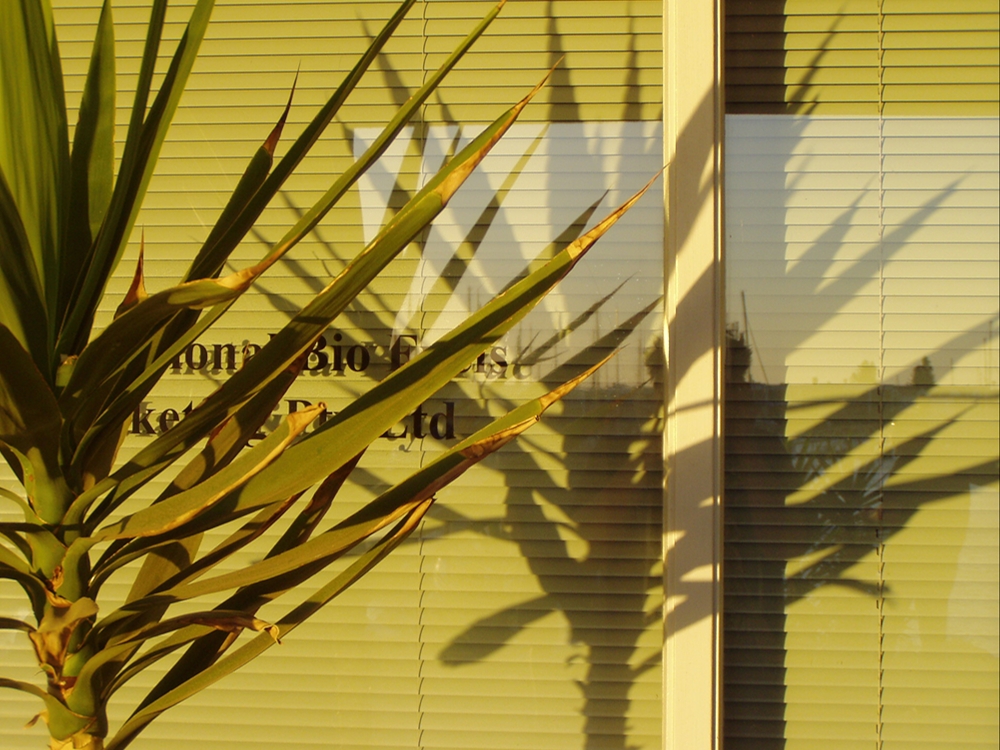
Sunset colours reflected in office windows – Olympus C-725 UZ
The heart of the problem is that I didn’t allow myself to have fun with this camera. Rather than focus on playful image making and the development of my eye and imagination, I placed enormous pressure on myself and turned the mode dial to Manual and left it there. That’s where I thought I had to be to learn properly. Not only did some early web forums demand this practice of newcomers, but I was also wont to be overly harsh with myself at the time. It may be that I used the mode dial to sabotage my learning.
After struggling for a week or two, all the fun drained away and my initial enthusiasm turned sour. I put the Olympus in a drawer and told myself sternly I’d never be able to learn proper photography. I limited myself to easy one-button point and shoot cameras until I purchased a Nikon DSLR in 2013 – almost a decade after buying the Olympus.
The Olympus was synonymous with my failure until I dusted it off last night and made some photos. I finally made my peace with myself and the camera. Maybe the experience also taught me I wasn’t ready for that type of learning at the time and that using easy cameras for a while was the best thing I could do because it was fun.
So, I’ve come back to the boxy silver Olympus and, having once discarded it in the throes of self-disgust and wasteful gadget buying that speedy technological transitions in consumer societies encourage, I’m finding it a joy. It may be a cumbersome and slow thing, with a design that speaks to the early 2000s, but the photos are quite pleasing I think.
Blue boat at sunset
Limited to a maximum shutter speed of 1/1000th of a second and ISO that tops out at 400, it demands the right conditions for the best results. My fingers fudged over the various buttons without the benefit of muscle memory last night, but I think the photos have a nice quality about them. I set the Sharpness and Contrast to Low, so as to provide maximum editing flexbility. I don’t mind the softness of the images though. The lens gets pretty mushy around the edges of the frame, especially at maximum zoom, and there’s plenty of chromatic aberration in backlit scenes, but after using so many cameras in the twenty years since I hid the Olympus away in self-despair, I’ve broadened my aesthetic sensibilities enormously.
Here’s a photo that’s overexposed. I like the dreamy look of it and that the optics picked up the nice veiling orange flare from the setting sun:
Dreams of the marina by the sea – Olympus C-725 UZ
I can’t get enough of this toy camera right now. There’s creative freedom in making photos of things I might not notice when using a more serious camera. Maybe I’ve developed a touch of snobbishness when using a Nikon or a Sony or an Olympus, as though only select scenes are worthy of the effort to pull pricier cameras from my shoulder bag.
Toy cameras, very far from the realms of technical perfection, allow a broader and more playful view of the world. They turn ordinary scenes into immersive moments: “That reflection in the window really is interesting and worthy of my time and attention!”. In this way, the eye is developed – the imagination fired – and the less serious camera becomes a tool that leads to the present moment playfully and without internal pressure and the solemn rituals surrounding serious gear.
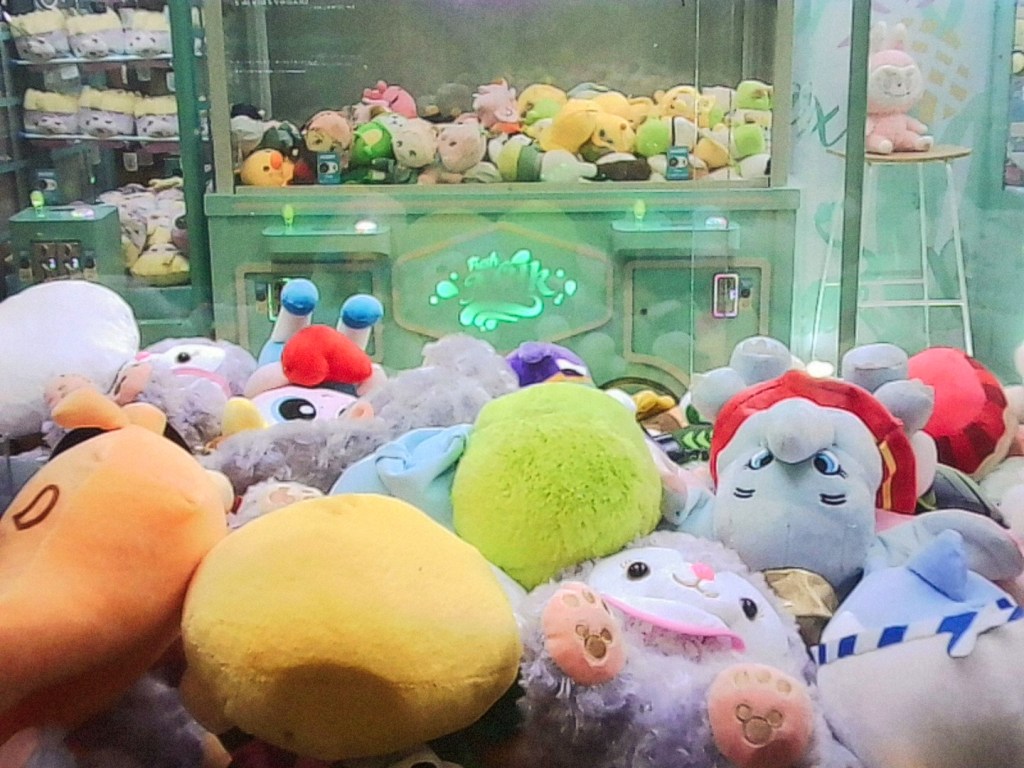
Mounds of cheerful cheap fluff – Kodak Charmera
Once again, I’m experimenting with my custom Exposure X7 colour preset to add some film grain, enhance the washed out colours, and blur textures and digital sharpness.
Brick wall with blue graffiti
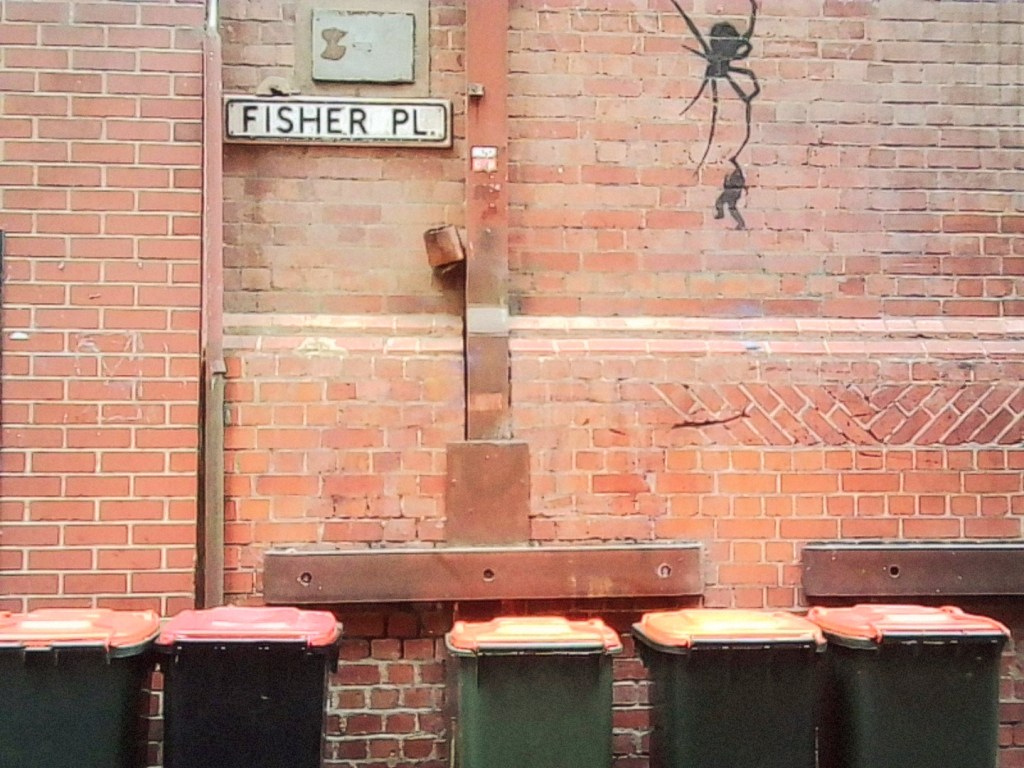
Admittedly, geometric arrangements like this always catch my eye, toy camera in hand or not. Dirty laneways in the city, home to rubbish bins, brown puddles, and the ugly backdoors of mall-way businesses that prefer to present a prettier face to the public, are ripe for wandeing on cloudy days with a camera ready.
Doc Martens from the back
I think sometimes we’ve forgotten just how amazing it is that we can record a unique slice of time. Maybe our image-obsessed and image-saturated culture has turned precious moments into tired throwaway pixels to be shared on social media – cheaply tossed atop the digital mountain for endless scrolling and potentially harmfulsocial comparison.
When you’re walking down a long road, it’s good to sometimes look back to see how far you’ve journeyed. Looking at the road winding behind can provide motivation to continue placing one foot in front of the other, even when you’re tired and the landscape seems to look the same in every direction. Similarly, reflecting on one’s photographic journey can generate new insights ~ where did it all begin? Why do I make photos of the things I do? How have I changed?
A Nikon camera, open doors, and self-compassion
I purchased my first DSLR – a Nikon D5100– in 2013. I’d known for some years that I had an interest in visual arts but I’d never been confident enough to do anything about it. In fact, for many years I told myself that I didn’t have the mindset to learn photography, citing my lack of mathematical and technical skill as reasonable obstacles to personal growth. In 2013, I decided to toss those limiting thought processes in the bin. In deciding to open the door to a new world of creativity and experience, I needed to be kind to myself. I needed to nurture self-compassion. I needed to allow myself to make mistakes so I could learn without the harsh self-judgement that so often foils personal growth.
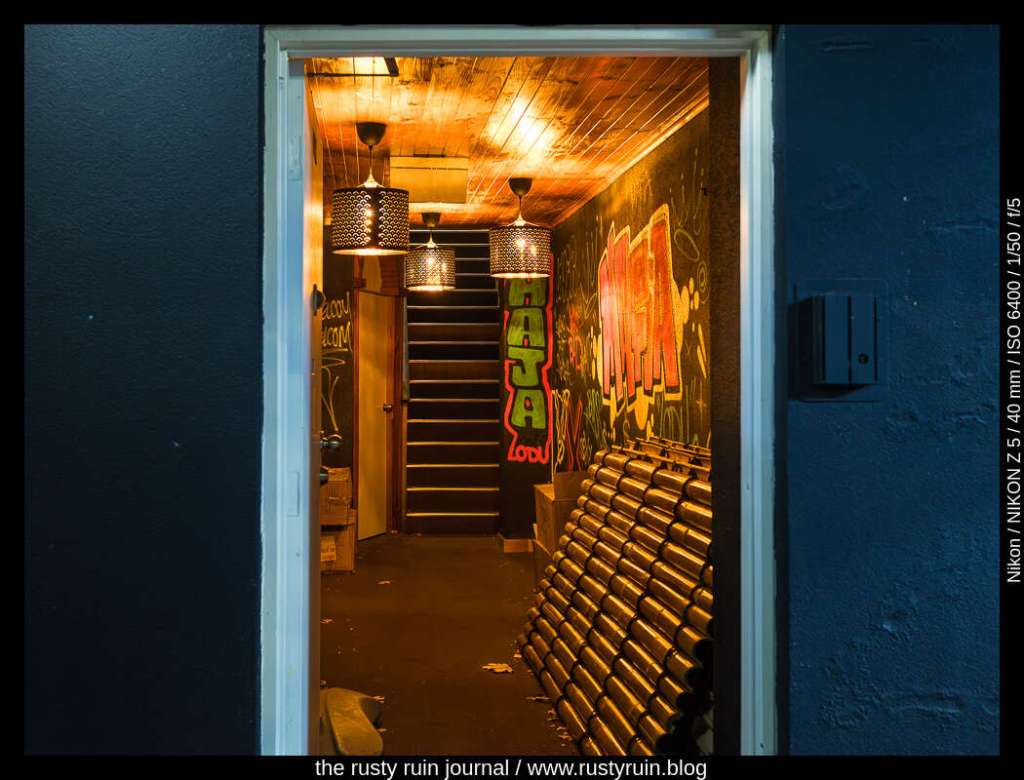
A warm invitation, an open door – Nikon Z5
We’re often kinder to strangers than we are to ourselves. We grow up learning that we should treat others as we would like ourselves to be treated (do unto others as you would have them do unto you), yet we’re regularly too hard on ourselves and the mistakes we make. It’s wise to recognise that we’re all human, vulnerable, and in need of care and love, including self-care. Being kind towards others is only half of the story – we need to learn to be kind to ourselves, too.
Rather than seeing ourselves as isolated individuals competing with others for attention and acceptance, it’s healthier to see ourselves as we truly are: vulnerable human beings on a tiny blue dot, huddled together for warmth, love, and community with other human beings. Rather than our sense of self springing from the high levels of self-esteem that are often encouraged in us by the education system, our jobs, our families, and our society, it’s healthier to develop a sense of self-compassion – self-kindness rather than self-judgement, community rather than isolated individuals, and mindfulness rather than overidentification.
Fighting the little demon
I used to worry if I missed a moment with my camera. I’d curse myself for forgetting a setting or being too slow or not being brave enough. But the worry is misplaced. Those negative feelings increased stress and fed into a personal story that I wasn’t any good at photography – that it was all too hard and I should give it up.
There’s a negative part of us, a tiresome inner demon composed of trauma, fear, self-doubt, suffering, and anxiety, that actively wants us to fail and fall over because growing and learning isn’t easy at all – it requires energy, motivation, self-acceptance, and self-compassion. Part of growing is journeying into our inner world and confronting the little demon. That can be scary and difficult. It’s easier and safer to avoid the confrontation and focus on distractions.
Giving up is easy but walking down the road and dealing with self-doubt, pain, fear, and anxiety in your exhaustion so you can look back to see how far you’ve come is hard. It takes time and energy and the sort of motivation that isn’t easy to muster in a stressful world. It’s easier to remain rooted to the spot, sticking to your beliefs and self-beliefs, than it is to change. Change isn’t easy, but all of nature is change. Resisting change is like living in a sandcastle with the tide rolling in. The great Abstract-Expressionist, Jackson Pollock, once said “I am nature!”, when faced with criticism about his creative approach.
Hotel now closed – Nikon Z5
Not only do we have to fail so we can learn, we also need to permit ourselves to fail and make mistakes. Allowing our mistakes to limit us leads to personal stagnation. I’ve said for many years that I don’t want to place a full-stop on the things I do – better to pause to catch my breath and then move on. It may be one of the toughest things to do in a world where our mistakes are often saved on social media platforms and remote servers around the world. They can come back to haunt us and remind us of our self-perceived incompetence.
Sparkling in the dark – Olympus OMD EM5 Mark 2 and Yongnuo 25mm 1.7 lens
Perhaps the old saying should be: We should treat ourselves kindly and treat others as we treat ourselves (do unto others as you would do unto yourself).
How many cameras do you pack when you go on a road-trip/holiday/vacation/adventure? If you’re not a photographer, you might pack one camera. Or maybe you just pocket your smartphone and use that for all photos?
In my previous post, I was thinking aloud about what camera gear to pack for our impending road trip. In the comment section, another blogger, Disperser Tracks, asked me why I’d pack as much as I’m planning to if the goal is to pack light? It’s a great question and one that has often crossed my mind.
Bags everywhere – Nikon D5100 and Tamron 17-50
If my ultimate goal is to pack lightly, why not just pack the smallest and lightest camera I have and be done with it? Why bother packing anything else? Why cram gear into bags that are bursting at the seams?
Is it about ego and vanity? Am I trying to look impressive in the field? I don’t think so. I rarely meet other photographers on my travels. I’ve used all kinds of cameras, crappy lenses, and pieces of plastic when standing near photographers with expensive lenses and cameras. I’m interested in what they’re using and what they’re doing, but I don’t think about how I look next to them. Feeling insecure was an issue when I first started with a DSLR, but not now. I’m comfortable with my photographic approach. I make vast efforts to be aware of my inner world, my motivations, my reason for doing something, my intent, and my beliefs.
What about being prepared? Photo opportunities on the road are often last-minute stops. There isn’t much time to swap lenses and fiddle about. Having two camera bodies with different lenses mounted allows me to choose the best option quickly. Do I need a fast prime lens? Got that on my Nikon Z5. Do I need a telephoto? Got that mounted on the Nikon D3400 today.
It’s about the game of mounts. I actually don’t have a telephoto lens for my Nikon Z5 in the native Z mount but I do have one in F mount for my older Nikons. It makes sense to use the right lens for the right body. Likewise, I have a wide 20mm Z mount lens for my Nikon Z5 but not one for my older F mount Nikon cameras.
Yes, I’m a bit of a novelty seeker. I love cameras and I love photography. I enjoy all of my cameras and like to have options when on the road. Sometimes a Nikon Z5 will serve the moment and other times a Nikon D40X will bring me joy. If something makes a photo, I’m interested. I’ll also pack the Campsnap for some lo-fi fun.
Unfortunately, cameras have failed on me. Last year, I had my amazing Sigma Foveoncamera fail me in the field as the shutter mechanism malfunctioned. Several years ago, my Olympus EM5 Mark 1 failed me on a day-trip. Call it bad luck, I guess. I pack other cameras just in case something breaks. Call it paranoia!
Surrounded by stuff – Nikon D7100 and Nikkor 50mm 1.8 lens


















 The Rusty Ruin Journal