
It seems that every weekend is cloudy lately, but that’s not a bad thing when you have an old camera that doesn’t handle high dynamic range scenes well. I took out the Olympus E-1 recently and found it a really interesting device – it feels great and has the gentlest shutter sound I’ve ever heard. I had another opportunity to use it yesterday and set it to record RAW and JPG. The results surprised me.

I’ve questioned the idea of CCD sensors rendering colour differently to their CMOS counterparts, but ultimately I couldn’t be entirely sure there was nothing going on. There really shouldn’t be, as digital imaging sensors themselves are colour-blind and it’s only the Colour Filter Array atop them that could influence colour, apart from usual suspects like White Balance and lens quality.
Imagine my surprise when I found that the RAW files from the E-1 look almost identical to the JPG and TIFF outputs, apart from some extra sharpening. Normally, you’d expect RAW files to look flatter and less saturated when contrasted to processed JPGs from the same camera, but this is not so with the E-1.
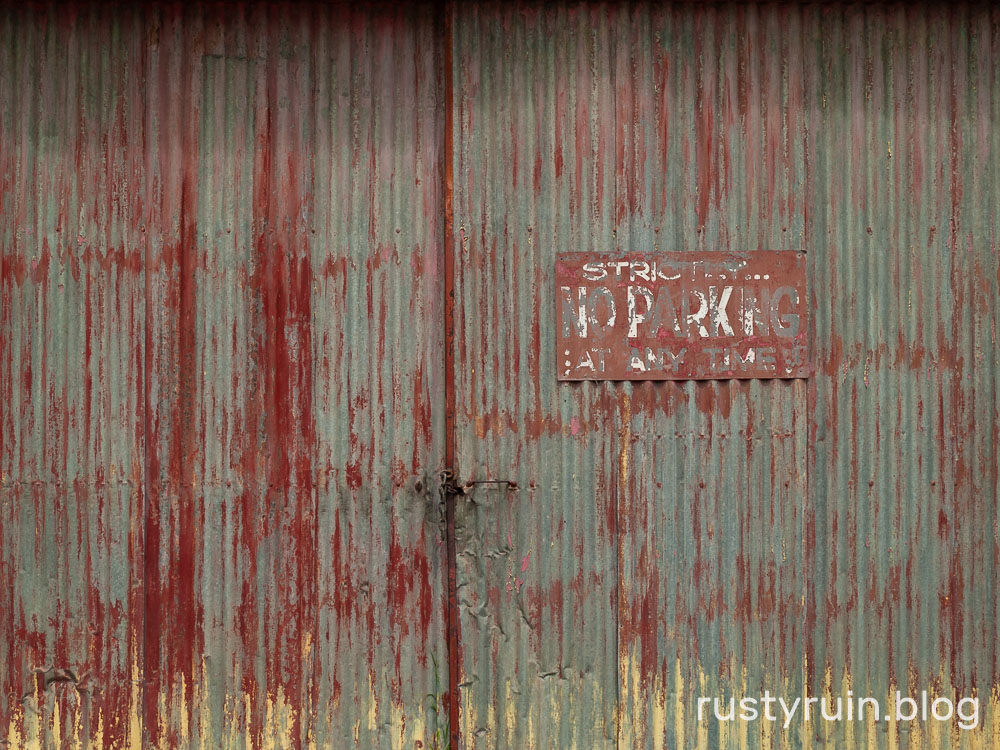
I know that Lightroom applies a colour profile to each import, of course. I know that it does some sharpening and processing up-front to create a workable image. But what I’m finding with the E-1’s RAW files is that I don’t actually need to do much additional processing at all. The RAW files already look good and don’t look as flat as you’d expect a demosaiced file to look. So, what’s happening? Why do the E-1’s ORF files (Olympus’ naming convention for RAW files) look so similar to the processed JPGs?

I have a theory – I think the E-1 is not doing much JPG processing at all, apart from some sharpening. Where we’d normally see a flat RAW image and a punchy JPG file, I suspect the E-1 is converting the ORF and applying minimal processing. This may be why the files look similar.
Please bear in mind that none of this is scientific. I’ve not sat for hours and tested side-by-side photos. I also know that processors like Lightroom make substantial changes when importing photos. I write all this knowing that it’s simple first impression and could be an error in my perceptions/technical set-up. This is a journal and sometimes my thoughts meander, so please be kind!

Back to Kodak Colour Science
I have my doubts about CCD sensors and their supposed inherent colour superiority. As I’ve said before, there are plenty of old junk CCD cameras out there too, so it may not be a property of the CCD sensor at all. Yet, I can’t help but think that there’s something interesting happening inside the Olympus E-1. There’s no doubt that in the right lighting conditions it can produce superb images.
So far, and I may be completely wrong here, the Olympus E-1 is the only digital camera I have that even comes close to the output of my Sigma DP2 Merrill camera (now with a sticky leaf shutter, sadly). That’s high praise, considering the Sigma uses a Foveon sensor – a very different image recording technology. Of course, when I say close, the E1’s photos are still not really like the Foveon produced images, but the E1 does have the feel of needing to be treated like a camera with old slide film loaded, where you have to really look after wide tonal ranges.

It’s not as though my E-1 sports a spectacular lens that makes the photos look great. It’s the old Four-Thirds system Zuiko kit lens – 14-42 mm 3.5 to 5.6. Not that Zuiko lenses are poor at all, as even the so-called kit lenses are truly respectable. So, is there some Kodak colour science happening here? At the very least, it looks like a tone curve is being applied to create a punchier image and this is translated to the demosaicing process. I really don’t know what it is, but I’m certainly happy to keep using this camera. It may not replace my faulty Sigma, but it’s very satisfying to use.
 The Rusty Ruin Journal