In my last post, I wrote about experimenting with the Focus module in Exposure X7 to add slight blur and bloom. This goes some way towards reviving the look of old soft lenses that lack modern anti-glare coatings. It’s potentially a great fit for the low resolution results from toy cameras like the Camp Snap and others because it reduces the ugly haloes around edges that have been aggressively sharpened.
You can see in the photo of the Tree of Knowledge above that the Soften and Diffuse preset in the Focus module adds glow around the highlights, giving it an ethereal quality that contrasts well against the sharply angled boughs of the tree and the descending wooden timbers.
Old car in the shade – Camp Snap
Here again, the highlights take on a nice soft glow. Everything seems ever so slightly blurred and the sharpened edges are softened considerably.
I think the glow effect in some of these photos is more pronounced because I’d used the Camp Snap with two filters attached: a Photape Warming filter, and a cheap diffusion filter that adds glow and softens highlights. I’ve since removed the filters and will experiment further.
The red lantern – Camp Snap
You can see how the Camp Snap struggles to handle the strong red colour of the lantern. The result is a blown out mess where the details are lost.
A rocky coastline – Camp Snap
The Camp Snap is great for scenes like this, where there are more mid-tones than bright highlights – sky, sea, and cloud in distinct layers. It’s the kind of seascape that I might have snapped with my old Kodak 110 format film camera as a teenager.
One of my biggest issues with the Camp Snap is the aggressive noise reduction and oversharpening. The latter results in ugly haloes that are especially visible in backlit scenes. Adding film grain to the image in Exposure X7 combats this to some extent, and also effectively breaks up oversmoothed areas, but it’s not an ideal solution. But I think I might just have found a better way.
Old machinery in outback Queensland – Camp Snap plus softening and warming filters
The Focus section in Exposure X7 contains a useful preset called Soften – Diffuse Glow. This module mimics vintage lenses that are softish and bloom the highlights. I have now created a preset that adds blurring and blooming, slight vignetting, and fine film grain.
Even though the Camp Snap is a toy camera, it features good sharpness and resolution when compared to other toy cameras like the Kodak Charmera, the G6 Thumb Camera, and the Chuzhao. More importantly, Camp Snap photos don’t seem to feature obvious interpolation artifacts because I don’t think it’s resizing images beyond the native resolution of the sensor. Both the G6 and the Chuzhao feature these unattractive digital artifacts.
Transport museum window – Camp Snap
Tonight I went back and edited a bunch of Camp Snap photos. The Focus module seems to effectively soften the hard edges and sharpening haloes. I’ll be playing with this a lot more.
When wading into the plastic-strewn waters of toy cameras and weirdly branded scameras, you’d be foolish to expect image quality. I certainly don’t! What I’m looking for in cheap cameras like this is fun factor. The Kodak Charmera works not because it makes high quality images, but because it’s small, pocketable, easy to use, and fun. At the very least, the Charmera makes consistently dodgy photos, so I know what to expect.
The Chuzhao is a tiny plastic TLR-inspired digital toy camera. It has no menu system, a nice colour screen shaded by a flimsy plastic hood, and a bunch of awkwardly placed buttons that seem to operate according to cryptic laws – hold down one button to access the photo album then twist the tiny silver crank on the side of the camera to select a photo, then press another button to delete. Like I said, it’s cryptic. It’s a good thing the basic operation of the camera is easy enough.
Sunset, wood, and wire – Chuzhao camera
My first impression is that the Chuzhao TLR-inspired camera can make surprisingly detailed photos in good light. In low light, it’s an impressionist painter’s worst nightmare – more oversmoothing than exists in half a dozen Kodak Charmeras combined. They’re not even worth salvaging in the best photo editing programs. I don’t believe all the AI in the world could save the worst of these photos without significant insertion of generated content. But as you can see in both the photos above and below, the detail possible can be surprisingly good for such a toy.
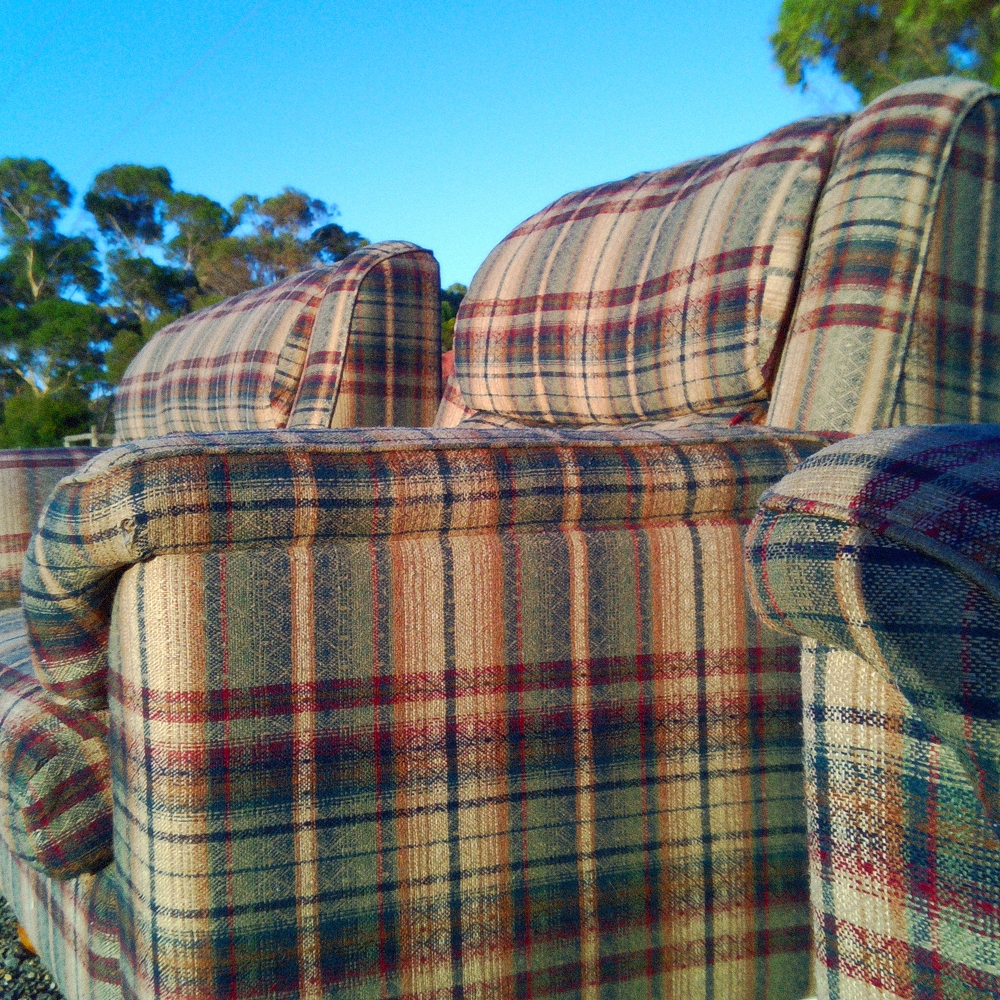
Furniture on the side of the road – Chuzhao camera
I need to make an admission: all of these photos have been ever so slightly edited. As with my Charmera pictures, I’ve added film grain to break up the oversmoothing, reduced the Clarity to make it look less sharp, and added some extra warmth.
Growing in the window light – Chuzhao
The Chuzhao camera is a strange device. It’s not as unobtrusive as the Kodak Charmera because it’s not really small enough to fit into a pocket comfortably without it feeling like you’ve stuck too many Mars Bars in there. And because it features the classic TLR top-down view, it takes time to compose pictures and isn’t going to be your friend when you want to use it in other positions and angles. I can quickly grab a photo with the Charmera, but the Chuzhao demands more attention, making it not quite as fun or as convenient.
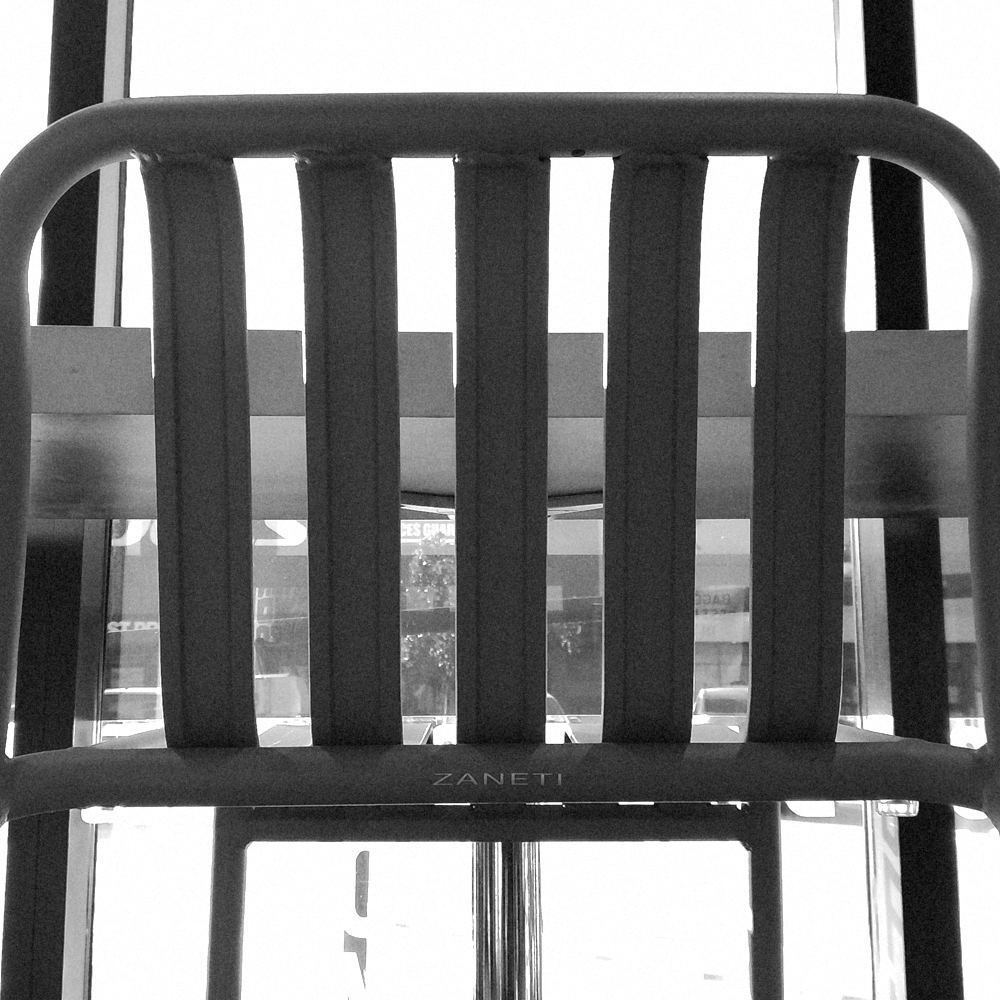
Zaneti in monochrome – Chuzhao
I do think there’s something positive to be said for using the Chuzhao in good light in the included black and white filter mode (mine is actually sepia tinted, so I just desaturated it during editing). And the inclusion of auto-focus (yes, auto-focus in a toy camera) means that it’s capable of close-focussing and blurring backgrounds. That in itself is pretty cool. Being fixed focus only, the Charmera can’t do that. Neither can the Camp Snap.
The Chuzhao is worth a look if you buy it cheaply. It’s available on a wide range of sites and I wouldn’t be surprised if quite a number of those listed are just copies of copies with different innards – so you take your chances with something like this.
A few days ago, I received the G6 Thumb Camera ~ a knock-off version of the Kodak Charmera available from cheapo plastic junk merchants like AliExpress. A copy was always going to happen when it became clear that the Kodak would sell-out quickly.
As I tore the box open to reveal the toxic green G6 keychain toy camera, my contribution to environmental pollution gnawed at me. It’s a feeling that grows with each passing year. We might have cherished our expensive mechanical film cameras for many years in decades gone by, valuing their form and function in a much slower and less product-addicted world, but now it seems as though we can’t get enough of the next thing and the next thing and the next…
Under the table – G6 Thumb camera, edited in Exposure X7
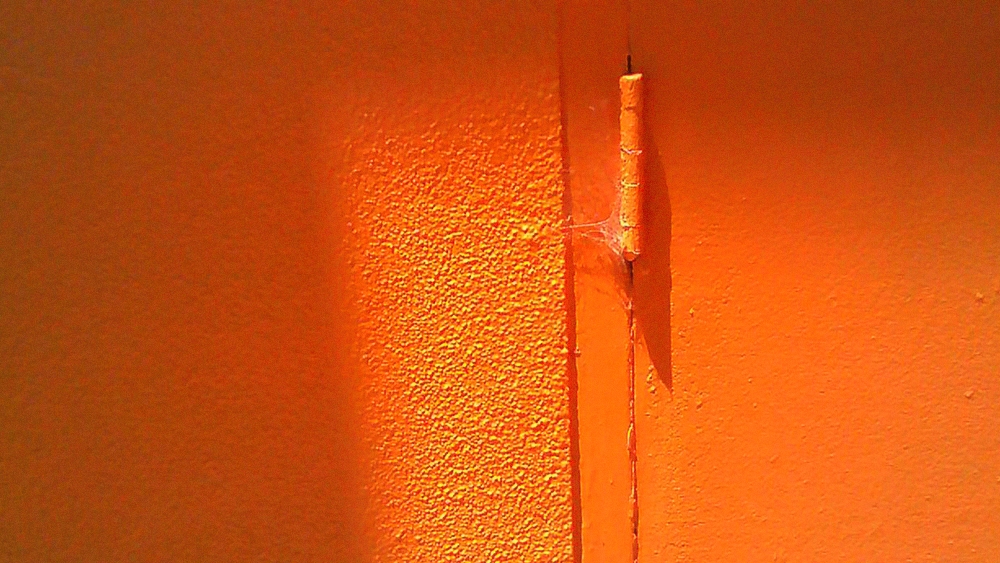
I edited all of the photos in Exposure X7 using settings that disguise the mushy and detail-bereft shadows, the blown highlights, the oversharpened edges, and the oversmoothing – though the G6, despite clipping the red channel as soon as even a hint of red appears in a scene, doesn’t seem to sharpen or smoothe things quite as much as the Kodak Charmera. Consequently, the images are bad in a different way, weird banding artefacts included.
Just quickly, if you like this post and want to read more of my words on photography, old cameras, and such, just fill in your email below. I’m grateful for every connection in this digital abyss!
Yellow wall and webs – G6 Thumb Camera
The G6 can do a few extra things – I can set the EV, the image quality, and even the White Balance. I have mine set to -1 EV, 2 megapixels, and Daylight WB. Even though the image quality settings extend to a whopping 12 megapixels, I’m not even going to bother as I imagine things would only get worse if an almost useless image resizing algorithm were to be engaged.
Blue trolley on a hot day – G6 Thumb Camera
The focal length is too wide to be really comfortable, and the 16:9 aspect ratio is not ideal. However, this does encourage different thinking around framing and composition – not a bad thing at all. Oh, and if I long-press the up-button on the back, the LED flash turns on and the G6 becomes a torch…
Feeling sentimental, I recently took the newly revived Olympus C-725 to a local marina on New Year’s Eve. It was a lovely night with friends and family. I also packed the Kodak Charmera of course, having been my 30 gram pocket companion since Christmas. Since the ageing 16 megabyte XD cardin the Olympus only holds a maximum of 21 photos at the High Quality setting – a storage concern sure to vex many modern digital camera users – I reached for the Charmera once I received the dreaded Olympus Card is Full message in bright orange text.
Stacked for the evening – Kodak Charmera
Encouraging a playful mindset, the Charmera encourages photos that are both ordinary and atypical. Divorced from the need to create a worthy image with a worthy camera, there are no gorgeous sunsets or beautiful portraits. There are instead worn chairs stacked against a blue wall and orange chairs stacked atop a weathered table. Beauty in the ordinary – liberated from the gear – Kodakwabi-sabi – the appreciation of the imperfect and the impermanent.
Orange chairs chained to a wooden table
The glow of angled orange plastic at sunset, set against the wood and brick, with a hint of blue wall – an ordinary scene recorded by a distinctly ordinary toy camera.
The size of the camera doesn’t matter. The quality of the digital sensor is just another tool to be used wisely. What matters is the encouragment of the eye and the imagination in the moment.
It’s the last day of 2025 and there are plans afoot for the evening. I’ll be taking a bag of cameras, including the Kodak Charmera. There has been a certain freedom in using such plastic junk– dropping all pretense of aspiring to image perfection and controlling the light. It promotes presence in the moment:
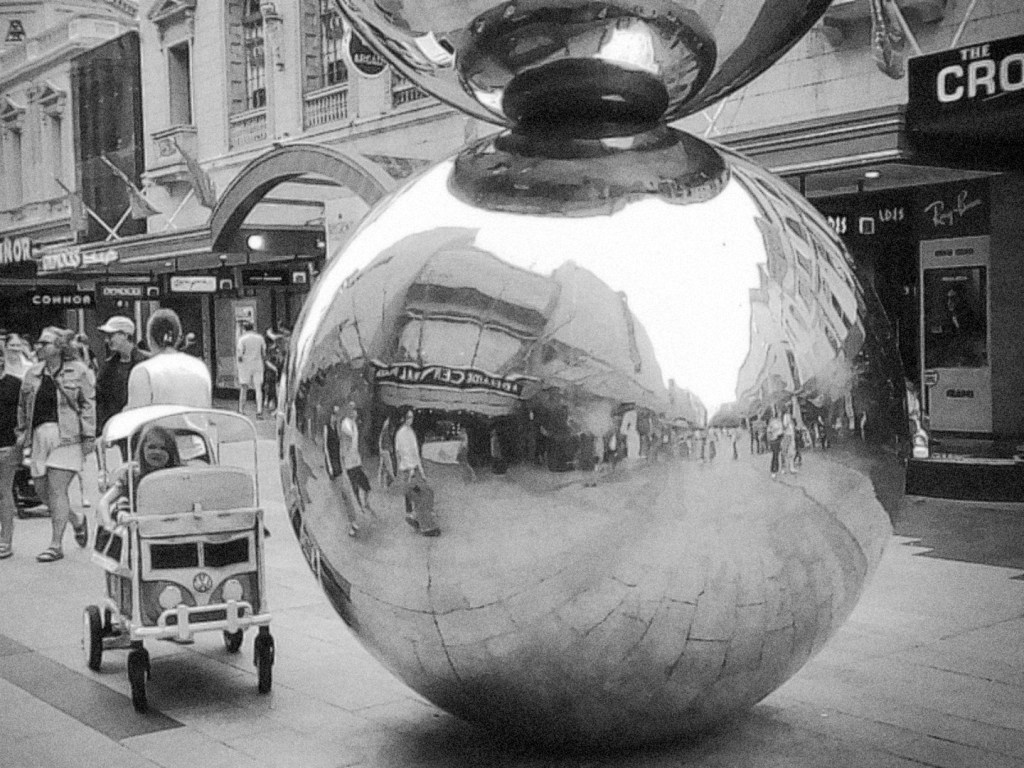
Food court ceiling geometry – Kodak CharmeraReflections and observations in the shopping mallShadow spears and a surveillance camera
An installation of spears, made by the First Nations people of this country, provided an interesting moment of juxtaposition in the Art Gallery: the shadows of spears on the ceiling, criss-cross where a security camera is mounted. A nearby art piece makes the point that all such colonial governments stamp their mark strongly on things – land, water, stuff – as if to say their word is the only word that counts and they get to have the final say in all matters.
I can’t get enough of this toy camera right now. There’s creative freedom in making photos of things I might not notice when using a more serious camera. Maybe I’ve developed a touch of snobbishness when using a Nikon or a Sony or an Olympus, as though only select scenes are worthy of the effort to pull pricier cameras from my shoulder bag.
Toy cameras, very far from the realms of technical perfection, allow a broader and more playful view of the world. They turn ordinary scenes into immersive moments: “That reflection in the window really is interesting and worthy of my time and attention!”. In this way, the eye is developed – the imagination fired – and the less serious camera becomes a tool that leads to the present moment playfully and without internal pressure and the solemn rituals surrounding serious gear.
Mounds of cheerful cheap fluff – Kodak Charmera
Once again, I’m experimenting with my custom Exposure X7 colour preset to add some film grain, enhance the washed out colours, and blur textures and digital sharpness.
Brick wall with blue graffiti
Admittedly, geometric arrangements like this always catch my eye, toy camera in hand or not. Dirty laneways in the city, home to rubbish bins, brown puddles, and the ugly backdoors of mall-way businesses that prefer to present a prettier face to the public, are ripe for wandeing on cloudy days with a camera ready.
Doc Martens from the back
I think sometimes we’ve forgotten just how amazing it is that we can record a unique slice of time. Maybe our image-obsessed and image-saturated culture has turned precious moments into tired throwaway pixels to be shared on social media – cheaply tossed atop the digital mountain for endless scrolling and potentially harmfulsocial comparison.
I’ve been working on Exposure X7 film-look settings for my Kodak Charmera photos. Who would have thought not too many years ago that adding scanned film grain to a photo and deliberately reducing clarity would become so popular in certain photographic quarters?
We’re nothing if not nostalgic – perhaps for a golden past that may exist only in desperately imagined and questionable memories. The so-called analog revival is, perhaps, a marker of our yearning for deeper connection in an increasingly fragmented world where we work from home, communicate online, develop relationships with AI partners, and are befuddled by the profit-driven machinations of big technology companies.
In the context of the Kodak Charmera’s low resolution, oversmoothed, and oversharpened photos, adding random noise in the form of film grain is about not only disguising aliased edges and digital harshness, but also providing more interesting visual textures for the eye and brain. When painting, varying brush stroke, texture, shape, line, and colour helps to guide the eye around the canvas. I’m applying the same principle here.
My settings: film grain effect at 38 percent with low roughness setting, slight increase in push processing to add a bit of contrast, slight increase in warmth to simulate a daylight balanced film, -40 reduction in clarity to soften texture and lower mid-tone contrast, slight increase to vibrance to enhance the weaker colours.
Burner – Kodak Charmera with edits in Exposure X7Oats – Kodak Charmera with edits in Exposure X7Dick and balls and surrounding scribble
Once synonymous with photography and the venerable Kodak Moment, the Kodak company has undergone multiple transformations over the last century. Having once dominated the film era, Kodak found itself in a war with Fujifilm in the 1990s whilst it awkwardly straddled the analog and digital imaging worlds.
It’s too simplistic to say that Kodak struggled because it didn’t adapt quickly enough to digital photography. Having researched and invented early digital imaging in the 1970s, the common view is that failure to invest in digital technologies caused their downfall. But Kodak did, in fact, produce many consumer digital cameras in the early 2000s and did manage to gain reasonable market share for a while. Even industry titans like Nikon and Canon struggled to devise a winning strategy in the digital imaging market as smartphones rose to prominence, so Kodak wasn’t alone.
Kodak may not have been agile enough to pivot completely from a huge historical investment in chemicals and film production, but in recent years, after Chapter 11 Bankruptcy, they have managed to make some headway in a difficult market. It helps that the Kodak brand is still so strong and sought after by their partners and licensees.
Just quickly, if you like this post and want to read more of my words on photography, old cameras, and such, just fill in your email below. I’m grateful for every connection in this digital abyss!
And so, we come to the intriguing Kodak Charmera ~ a teeny tiny digital toy camera that can live with the car keys in your pocket or get lost down the back of your couch. I received one as a Christmas gift this year. It’s made by RETO Production Ltd, who have a license from Kodak to use their well-known name on products.
Even though image quality from the 1.6 megapixel sensor isn’t anything special, it also records choppy video with sound, has a LED flash, a hole-in-body optical viewfinder, and features the cutest and smallest colour LCD on the back I’ve ever seen, making it a real charmer of a camera.
Structures in lo-fi ~ Kodak Charmera set to Black and White, with added Tri-X grain
The Charmera features a number of filters and frames. I like using it in black and white mode, if only to disguise some of the worst noise. Adding some film grain in editing leans into the lo-fi aesthetc and also covers up some of the oversharpening and oversmoothing that toy cameras aggressively apply. Of course, pixel peeping is not what this camera is about, and even adding some simulated film grain in post-processing feels like a bit too much effort! The Kodak Charmera is, if nothing else, a neat fun toy. It’s also stealthy enough to take out for some gritty street photos.
Corrugations and blown highlights in the coffee shop
The Kodak Charmera reminds me of seeing pictures for the first time from cheap old phones and early digital cameras. Maybe it’s not quite the same as seeing an image appear after washing chemicals over a long strip of film, but it does take me back to the early days of digital imaging when we realised we didn’t need to use flatbed scanners anymore to save images of film prints to hard drives so we could email them.
Some years ago, I made another blog that was about film cameras, vintage lenses, and digital cameras. That blog is long since gone, but having discovered a few recent archived posts, I’m resurrecting some of them:
Before the digital camera takeoff, before Adobe Photoshop, before the Holgawas a thing, before Lomography, and before plastic lenses were considered trendy, there was the Sima Soft Focuslens. It’s a 100mm f2 all plastic affair with a versatile T-mount (for maximum compatibility), deeply recessed single plastic lens element, and a manual trombone type focussing mechanism (otherwise known as – two cheap plastic tubes sliding over each other).
Mine is in pretty good condition but didn’t come with the original aperture disks. Still, they’re easy enough to make out of black card and can be slotted into the screw on plastic ring at the end of the lens. Sliding in smaller apertures will increase depth of field and cut out some of the dreamy effect of the soft focus shenanigans. But where’s the fun in that? The real retro charm of this lens is in using it for wide open dreamy photos that can’t be easily (if at all) reproduced in a program like Photoshop. Here are some gorgeous sunset photos from a garden:
That glow and bleed is pretty gorgeous, right?Sima lens on the Nikon D7100Yeah, kinda hankering to use the lens again after seeing these!Definitely not a multiple exposure. The lens created foliage ghosts.
The photo above almost looks like a multiple exposure doesn’t it? The highlights bloom and bleed and contrast is low, but the thin depth of field, chromatic aberration and ghosting lend this image an unusual character.
Resurrecting this post makes me want to use the Sima lens again!My apologies for the smallish example photos.







































 The Rusty Ruin Journal