Green machines, rusty bolts, and dynamic range

The clouds are slowly dissipating after several months of grey days. This weekend provided an opportunity to drive around the vibrant towns of the Murray River. I packed my bag with the Olympus E-1, Nikon Z5, and the Sony RX100.

I continue to be impressed with the output from the old E-1, but dynamic range is limited, and careful consideration of a scene is required before clicking the shutter button, I’ve discovered.

Shadows on emerald metal – Olympus E-1

Window of opportunity

Every digital sensor (and film, of course) has a limited performance window within which it can optimally render the dynamic range of a scene. If the dynamic range (brightest and darkest areas) of a scene exceed the window, then an exposure decision must be made: crush blacks or burn highlights? Modern sensors have a bigger window, so provide more latitude. The E-1, not so much.

Scenes with plenty of mid-tones and minimal strong highlights / deep shadows are good for this camera. Evenly lit scenes are great too. With excessive tonal ranges, I usually crush blacks because it’s less distracting for the eye, but it depends on how numerous the extreme tonal ranges are and the composition I’ve decided on.

Unused, catching dust and webs – Olympus E-1

The onboard tonal response of the Olympus is contrasty. Again, great for evenly lit scenes that could use a contrast bump, but not so great for extreme tonal ranges where pushing them further causes distracting visual elements. The more I use this camera, the better I get at evaluating scenes before picking the camera up. And if I can frame a scene and limit the extreme tonal ranges, I’ll do that. I also commonly dial in some negative Exposure Compensation to protect highlights but only when I want to preserve better gradation of tone over areas where distracting highlights could be a problem. Evenly lit scenes don’t need it unless that’s the look I’m going for.

Beneath the old machine – Olympus E-1

Calibrated for the old film pros?

It’s clear to me that the RAW files from the Olympus E-1 are different to the RAW files we get from modern cameras, but I don’t think this is a CMOS or CCD issue. The native tonal response of the E-1 produces files that are already contrasty and punchy. The images on this page are essentially the RAW output with barely any editing at all.

Some people might say I should use OM Workspace to get the colour goodness from this camera, but the software remains awful to use. And the few RAW files from the E-1 I’ve loaded into OM Workspace produce much the same initial result as the Adobe Standard profile in Lightroom, though my testing isn’t extensive enough to warrant strong views.

So, back to my speculation on the punchy files from the E-1. In 2003, when the camera was released, digital photography wasn’t mainstream. It’s entirely possible that early cameras like this were internally calibrated to produce images that were as close to certain film types as possible in terms of punchiness and also required less editing in software. Remember,  there wasn’t a lot of RAW editing software around at the time.

None of that means these old cameras make filmic photos, but it may explain why there seem to be differences in output compared to our modern cameras. I think this is less about the inherent properties of a CCD sensor and more about what kinds of photos the film companies wanted us to see from their cameras via internal calibrations. Now that photo editing programs are numerous and commonplace, modern cameras that have more dynamic range than the E-1 are calibrated to output flat RAW files that can easily be edited. Just speculation, of course.

Around the emerald machine – Olympus E-1

Is film photography special to me?

I’ve briefly mentioned elsewhere that I used film cameras growing up. They were nothing too special though. I think my last film camera was an APS (Advanced Photo System) camera from Fujifilm. I liked that this format offered features like extra frames, easy-loading, and panoramic view. In some ways, it was the easy-to-use precursor to digital. It didn’t last long in the camera world as photographers didn’t like the reduction in frame size or the noticeable grain due to the crop. The market take-up of digital was not too far behind either, so APS remains the last turn of the millennium gasp of companies trying to squeeze every final buck out of film.

Sometimes, photographers say they have a relationship with film. I suppose that you might have a fondness for it if photography had been a big part of your life growing up. For me, film cameras were just there for special occasions. I knew exactly one person who had any professional camera gear, and I never saw them use it. My parents were certainly never interested in cameras, other than to document birthdays and other events. Rarely, I might receive a 110 format camera, the aforementioned APS camera, or go out and buy one of the cheapo plastic disposables. The best 35mm film camera I ever owned was given to me by my late father – a Chinon with a tiny lens and auto-rewind. I used it for a while until the film motor broke down.

Red Tree – Winpro 95 film camera, made by Webster Industries

I didn’t nurture a passion for photography from a young age, partly due to not having the financial means or the inspiration around me. Some of it also has to do with the fact that I’ve never been very technically minded or confident in my ability to learn such things. I always saw high-end photography as the pursuit of those who could afford it and those who could understand the numbers behind it.

When I was gifted my first APS camera, I enjoyed the ease of the exercise. I probably made more photos with that camera than with any other previously. I’ve since lost those photos, but I do remember becoming very interested in framing scenes and doing so in a way that pleased me. I think this is when I really started to develop an interest in the wider world of photography, though my bank account wasn’t always up to the challenge.

Very Orange Sunset – Smena 8 with home-made redscale film

When digital cameras came along, I was pretty excited. Though my first was a Kodak with a measly 1 megapixel and terrible battery life, I loved the immediacy of the experience. There’s something to be said for waiting for film to develop and unwrapping it like a gift, but digital offered me the chance to learn how to make better photos through immediate feedback. That’s when things started to really make sense to me and my, up to that point, nebulous and undefined interest in photography solidified.

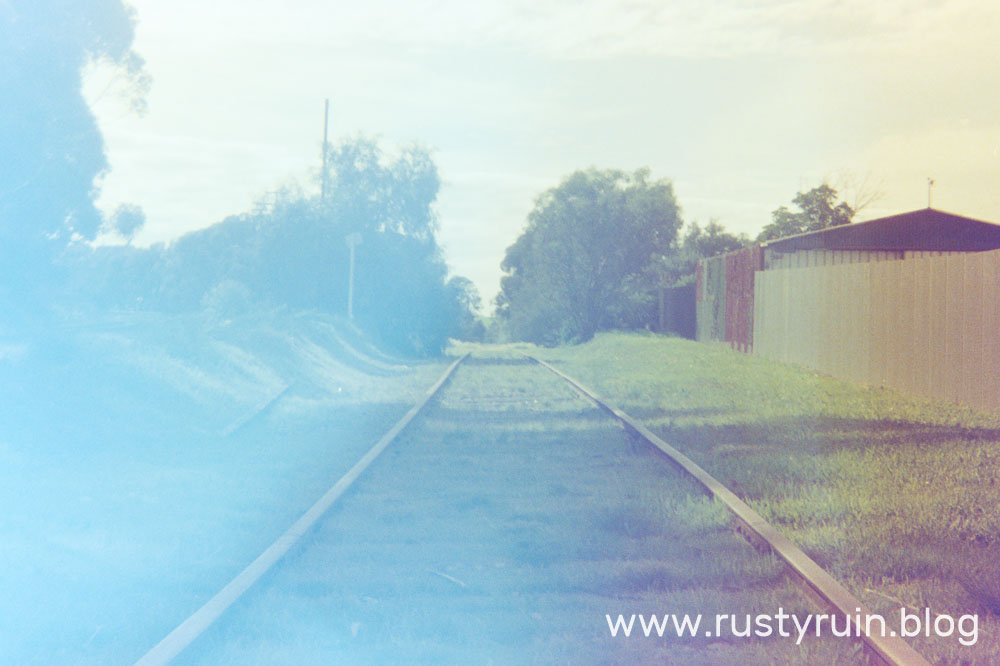
Blue light railway – Winpro 95 film camera

Photography blues: when things don’t go your way

I rushed out yesterday with the Olympus E-1, but it wasn’t a great photo session. The sun was out but I just didn’t see much that struck me as an interesting photo. This, of course, happens from time to time. While disappointing, it’s all part of the experience with the camera. You can’t force it.

Blue beams on blue – Olympus E-1

Despite my previous positive experiences with the E-1, this time there were no epiphanies. The sun was high and hot and controlling dynamic range with such an old camera isn’t always the easiest. There’s a point at which exposing for the highlights creates shadow noise and the in-built contrasty tone curve of this camera is a detriment at such times. Still, just look at all that blue! This camera does love plenty of blue.

So, I was left with just two photos from my session that piqued my interest. On the way home, I ran across some new house constructions and just loved the way that all the blue steel beams looked on such a sunny day.

Some days are just not going to be full of great photos. Some days, the eye just isn’t attuned. And that’s perfectly OK. I’ve learned not to worry about my mistakes and missing moments. I’ve learned that on some days the photographic mind is elsewhere and all that remains is forcing a moment. At those times, it’s best to accept the moment and look around. Not everything is for the camera.

Steel blue and deep sky – Olympus E-1

A few more from the Olympus E-1

The Olympus E-1 is quickly becoming one of my favourite cameras. There’s a certain solidity to the photos from it. The mid-tones are strong and the tone curve applied in-camera produces really attractive images. If there’s anything to the CCD versus CMOS sensor argument, the E-1 is likely one of the best arguments for CCD being inherently superior. None of this is to suggest that modern cameras can’t produce amazing images, of course.

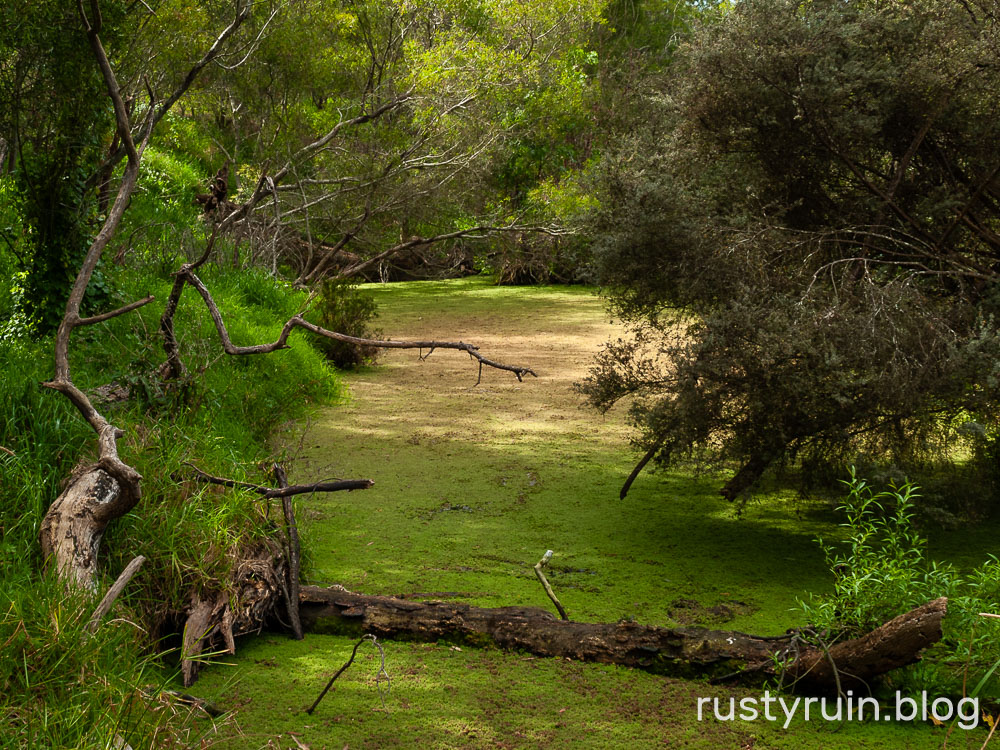
Crystal Lake – Olympus E-1

With my time currently limited, the fact that the RAW files from the E-1 require far less editing than expected is a big positive. And I still think that people are overpaying for cameras like this. It may be a really nice camera, but it lacks many of the niceties we’ve become accustomed to on our modern cameras. The limited dynamic range can be a problem in difficult lighting conditions and there’s no Histogram or highlight blinkies to check exposure. This does lead me to more carefully consider the tonal range of a scene and whether I use ESP or Spot metering, so it’s a good thing for learning, really.

Mine also has a few issues – a missing eye-cup and the mode dial is stuck in either Program mode or Manual mode. The eyepiece is not an issue but the mode dial is frustrating. I can live with it though. It does serve to remind me that this is an old camera now and it won’t last. Yet another reason not to overpay for old tech!

Table for Three – Olympus E-1

I’d also taken out the Finepix S5600 along with the E-1 in my camera bag, but once I opened up the Finepix files at the end of the day, I was disappointed. If I hadn’t been using the E-1 all day, the Finepix would likely have pleased me enough. But looking at those photos side by side, the E-1 completely blows the Finepix out of the water.

I feel a sense of melancholy when I use the E-1 though. Olympus isn’t the company it used to be, with the imaging arm now sold off and owned by OM Digital Solutions. The E-1 is every bit a lovely camera from a different time. It was a time when digital photography wasn’t quite yet mainstream and venerable companies like Olympus were putting every effort into the new digital market – enticing film shooters with the promise of not having to pay for film development.

I can’t help but feel that the E-1 contains as much technical mojo as Olympus could pour into it. The collaboration with Kodak represents the shared vision of two traditional companies focussed on surviving in a rapidly changing photography landscape. Ultimately, neither company managed to escape a brutal market where smartphone cameras defined the new rules, with severe decline causing them either to be sold off piece by piece or handed over to new owners divorced from company tradition.

Antiques – Olympus E-1

Editing Olympus E1 files – What’s happening here?

It seems that every weekend is cloudy lately, but that’s not a bad thing when you have an old camera that doesn’t handle high dynamic range scenes well. I took out the Olympus E-1 recently and found it a really interesting device – it feels great and has the gentlest shutter sound I’ve ever heard. I had another opportunity to use it yesterday and set it to record RAW and JPG. The results surprised me.

Old Methodist Church – Olympus E-1

I’ve questioned the idea of CCD sensors rendering colour differently to their CMOS counterparts, but ultimately I couldn’t be entirely sure there was nothing going on. There really shouldn’t be, as digital imaging sensors themselves are colour-blind and it’s only the Colour Filter Array atop them that could influence colour, apart from usual suspects like White Balance and lens quality.

Imagine my surprise when I found that the RAW files from the E-1 look almost identical to the JPG and TIFF outputs, apart from some extra sharpening. Normally, you’d expect RAW files to look flatter and less saturated when contrasted to processed JPGs from the same camera, but this is not so with the E-1.

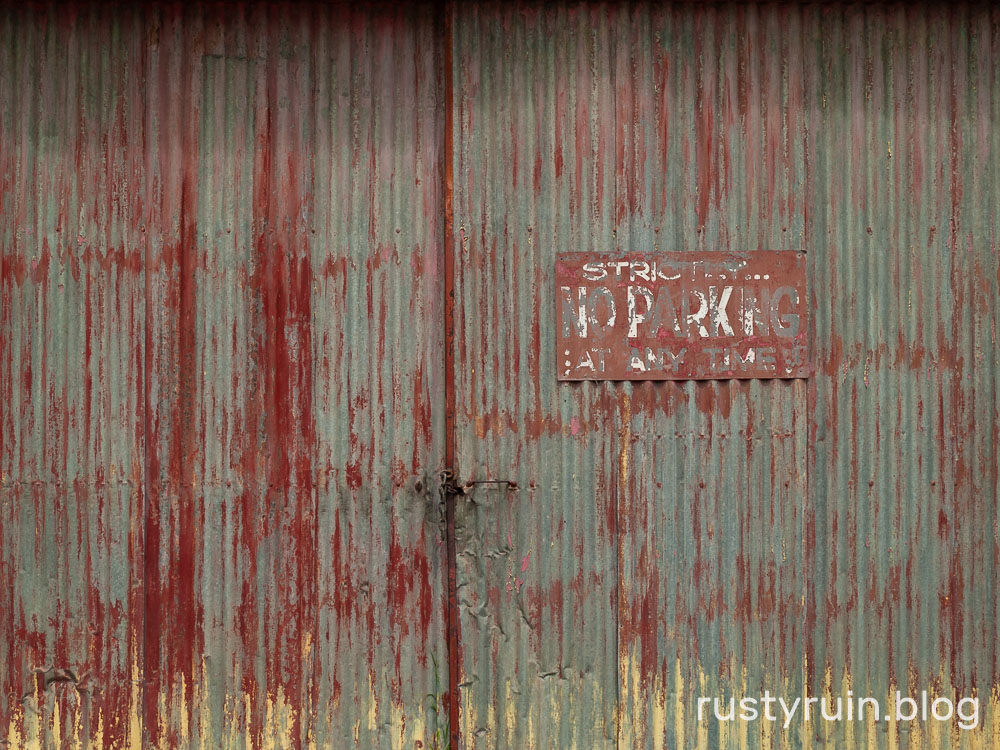
Strictly No Parking – Olympus E-1

I know that Lightroom applies a colour profile to each import, of course. I know that it does some sharpening and processing up-front to create a workable image. But what I’m finding with the E-1’s RAW files is that I don’t actually need to do much additional processing at all. The RAW files already look good and don’t look as flat as you’d expect a demosaiced file to look. So, what’s happening? Why do the E-1’s ORF files (Olympus’ naming convention for RAW files) look so similar to the processed JPGs?

Keep Clear – Olympus E-1

I have a theory – I think the E-1 is not doing much JPG processing at all, apart from some sharpening. Where we’d normally see a flat RAW image and a punchy JPG file, I suspect the E-1 is converting the ORF and applying minimal processing. This may be why the files look similar.

Please bear in mind that none of this is scientific. I’ve not sat for hours and tested side-by-side photos. I also know that processors like Lightroom make substantial changes when importing photos. I write all this knowing that it’s simple first impression and could be an error in my perceptions/technical set-up. This is a journal and sometimes my thoughts meander, so please be kind!

Restricted – Olympus E-1

Back to Kodak Colour Science

I have my doubts about CCD sensors and their supposed inherent colour superiority. As I’ve said before, there are plenty of old junk CCD cameras out there too, so it may not be a property of the CCD sensor at all. Yet, I can’t help but think that there’s something interesting happening inside the Olympus E-1. There’s no doubt that in the right lighting conditions it can produce superb images.

So far, and I may be completely wrong here, the Olympus E-1 is the only digital camera I have that even comes close to the output of my Sigma DP2 Merrill camera (now with a sticky leaf shutter, sadly). That’s high praise, considering the Sigma uses a Foveon sensora very different image recording technology. Of course, when I say close, the E1’s photos are still not really like the Foveon produced images, but the E1 does have the feel of needing to be treated like a camera with old slide film loaded, where you have to really look after wide tonal ranges.

Old town waterways – Olympus E-1 with Zuiko 14-42 mm kit lens

It’s not as though my E-1 sports a spectacular lens that makes the photos look great. It’s the old Four-Thirds system Zuiko kit lens – 14-42 mm 3.5 to 5.6. Not that Zuiko lenses are poor at all, as even the so-called kit lenses are truly respectable. So, is there some Kodak colour science happening here? At the very least, it looks like a tone curve is being applied to create a punchier image and this is translated to the demosaicing process. I really don’t know what it is, but I’m certainly happy to keep using this camera. It may not replace my faulty Sigma, but it’s very satisfying to use.

First time out with the Olympus E-1: Kodak Colour Science?

When the Olympus E-1 was introduced in 2003, it was the first time a company had designed a camera exclusively for digital photography from the ground up. And the Olympus E-1 was, in every way, a camera designed for the pro digital photographer. Not only is it the best feeling camera I’ve ever held, it also features a dampened shutter sound that has been described by some as a soft hug. The sweet mechanical kiss of the, clearly over-engineered, shutter mechanism adds positively to the experience of using this chunky and well-made device.

Beyond grassy edges – Olympus E-1

Kodak Colour Science?

There’s some thought that the Kodak-made CCD digital sensor in the E-1 has some magical properties that produce amazing photos and amazing colour. It’s hard to comment on that, as I haven’t enough experience with it yet. However, I’m pretty certain that Olympus tweaked the on-board software to make some great looking photos so as to appeal to the professional film shooters of 2003 who were stubbornly holding onto their film stocks.

The photo above does look good after editing the TIFF file in Lightroom, and I didn’t need to do a lot of editing at all. You’ll see that highlights are easily burned out, so using negative Exposure Compensation to protect those highlights is a must-do in certain kinds of light. I recorded in-camera to TIFF format just to see if I could recover more detail from shadows and highlights. I was certainly successful at recovering plenty of shadow detail so it’s best to expose for the highlights and recover the shadows later.

Mostly in shadow – Olympus E-1

The Olympus E-1 is a very satisfying camera to use, and that’s mostly down to the ergonomics. Sporting a weather-sealed, thick magnesium-alloy body, the E-1 absolutely feels like a pro camera. Mine came with the old 14-45mm kit lens and it’s certainly a pretty good performer. They really don’t make cameras like this anymore!

It’s clear that Olympus threw everything at this camera and likely hoped it would attract the pro film crowd over to their Four-Thirds digital system. This makes me wonder what we’re really paying for these days when we spend thousands on a camera body and it’s not even built to the same specifications as this old E-1! Not that this camera was cheap at the time.

Built to the edge – Olympus E-1

Is the magic real?

In some ways, it doesn’t much matter if the Kodak sensor has some inherent superior colour properties or not. The E-1 is just a joy to use. That’s as long as you don’t mind limited dynamic range, and the need to protect highlights and do some editing. The camera does churn out some great looking photos and I look forward to trying it in many more scenarios. And lastly, no other shutter sounds this gentle!

The Nikon D40 – a perfectly small classic

In the days between film and the mainstream take-up of digital, traditional companies like Nikon were doing what they could to persuade people to finally make the jump to Digital SLRs. We’re now a long way from the days of the Nikon D40 – featuring 6.1 megapixels and an APS-C sized sensor – but it can still surprise with excellent image making. And after going out with a number of Finepix cameras recently, the D40 feels fantastically Nikonian, which is to say that the ergonomics are comfortable and familiar.

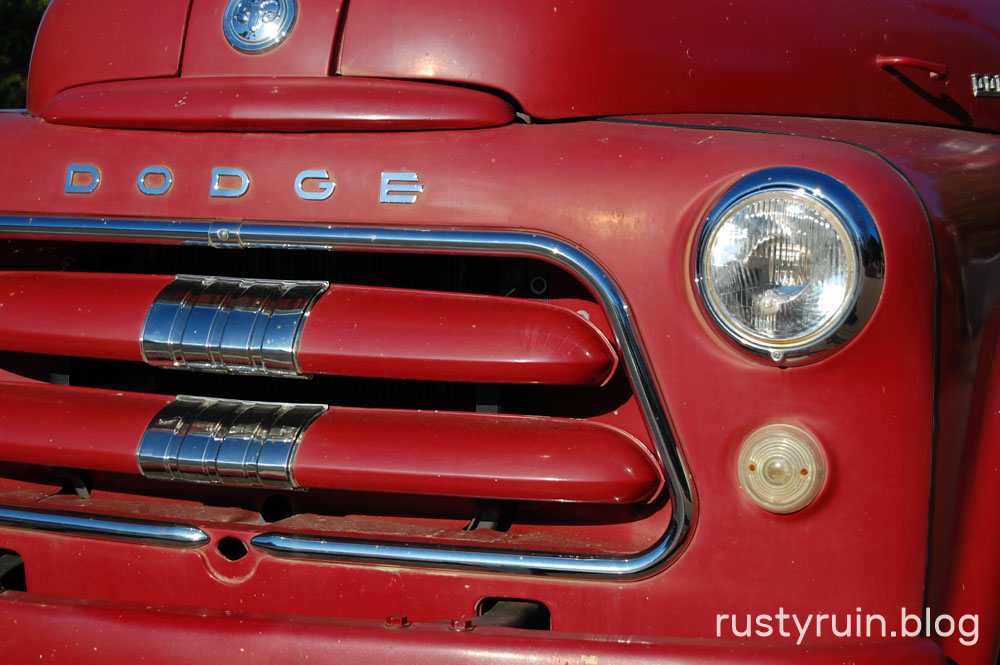
Dodge and polished chrome – Nikon D40

Note the lovely reds of the car body and the blue of the chrome preserved in the above photo. Plenty of detail with this old sensor too. I was using the 18-55mm 3.5-5.6 Nikkor kit lens, version 1. Plastic feel for sure, but decent optics, especially for a 6.1 megapixel sensor, where any shortcomings of the glass aren’t a deal-breaker. It turns out that the shutter mechanism isn’t faulty at all, as I thought last week, just my inability to note that the Exposure Compensation goes in reverse on these Nikons! That’s some good news at least, and rather makes up for the Finepix 602z I recently purchased, with a bent CF pin and non-working EVF. At least it was cheap!

Garden of colour – Nikon D40

I was fortunate to have some great sunlight late in the day. These old CCD cameras definitely love the light, and I’m looking forward to also receiving my Olympus E1, even if it does have some usability issues. I’d heard a lot about the colour of the D40 and it doesn’t disappoint in this kind of light. I won’t say there’s something magical about CCD colour, like others do, but these photos do make you wonder whether image making has really advanced as much as we’re told?

As the leaves catch last light – Nikon D40

My Nikon D40 settings: JPG Fine, base ISO of 200, Exposure Compensation often set to -0.3 or -0.7, and Vivid picture mode. There’s barely any noise at 200 ISO and reputation has it that noise is not much of an issue up to 800 anyway. Old forums also suggest that the D40 has a tendency to overexpose, so I did often dial in a touch of negative Exposure Compensation just to preserve highlights.

The above photo was one that I made in Nikon’s native NEF Raw format. The Raw files from the D40 definitely have more latitude than the JPGs and it’s easier to tame highlights and shadows, but there’s certainly less editing potential in these files compared to the NEF files from modern Nikons. Nevertheless, the photo is pleasant, and working with NEF does provide the option to use a different White Balance setting and fine tune any sharpening.

The D40 was one of Nikon’s most popular early consumer cameras and I can understand why. I like that it’s so small and fits easily in a smallish camera bag. I’ll have to seek out the G version of the 50mm 1.8 lens for it, as the D version requires a screw drive motor, and the D40 lacks this feature. Really, the D40 proves that picture quality wasn’t a problem for digital cameras even in 2006.

Sunsets and uncomfortable confrontations

Yes, it was another cloudy day and I was out with the Finepix 6500fd. Driving around tiny old towns, largely forgotten and left to people with desires to escape the rest of the world, can be surprising sometimes. Yes, there are plenty of interesting ruins to look at and photograph, but occasionally there are also encounters with unfriendly locals.

Old Post Office – Finepix 6500fd

Admittedly, not an awesome photo, but the old Post Office above is an interesting building. I’m always careful when it comes to remaining in public areas, as there’s largely few restrictions on what can be photographed as long as it can be viewed from a public area that one is occupying. I can walk along any public road or path and photograph buildings and most other things without a problem.

The confrontation

So, there I was in the middle of an old dirt road, pointing my camera at an old Post Office. A car pulled up and out hopped a local. She asked me in a very pointed manner: “Why are your taking photos of my house?”. A little surprised, and somewhat curious, I replied, “You live in the Post Office building?”.

It turns out she didn’t live there, but in the house next door. I assured her I had no interest in photographing her home, but only the old building because it “looks cool”. She clarified and told me that she only uses it for storage. I tried to de-escalate the situation and asked about the history of the building and when it was closed down. She responded but still was very unhappy and asked me again why I was making photos of her home. At this point I politely fare-welled her and left, knowing that it was pointless to continue the conversation.

Mangroves at sunset – Finepix 6500fd

Reflecting on feelings and laws

I knew I wasn’t doing anything illegal and this was simply a case of an unhappy and suspicious local. That’s perfectly understandable, of course. There’s a difference between what I can legally photograph and how someone feels about it. I’d tried to cool things down and assure her that I wasn’t interested in photographing her home, but rather just a nice old building with some history. Rather than argue any legal point about public land, it was simply better for me to leave.

I’m often in two minds about these, thankfully rare, situations. On one hand, I understand that someone might be suspicious of a stranger coming to town and having an interest in their property. Would I also react similarly if someone was camped outside my home with a camera pointed at it? I may, though I’d likely be mostly interested in the camera gear. On the other hand, it’s certainly not illegal to photograph things from the vantage point of public land.

If the person is open to a conversation, I think it’s reasonable to explain what you’re doing and why you have an interest. I don’t think it’s helpful to start a conversation about legalities around the act of photography because this may be more likely to cause more upset. There’s an understandable emotional response involved that does cause some personal dilemma but I think it’s wise to consider both sides.

It’s certainly perfectly reasonable to photograph the world around us, yet remain aware of the private and public boundaries that are sometimes difficult to define. It’s also reasonable to consider the potentially strident reaction that a person might have to the act of photography in an area they consider, legally or not, their turf. Despite the dilemma, I remain on the side of photographing the world within legal limits, and if there’s a confrontation, explaining why I’m there in hopes this will provide context and calm the situation.

In the end, we finally saw a great sunset:

A welcome sunset – Finepix 6500fd

Another cloudy day and another Finepix camera in hand

In a previous post, I rushed out with the Fuji Finepix 6500fd and was impressed by the camera’s ability to hold onto detail. Fast-forward to a cloudy Sunday and a last-minute invitation from family friends, and once more, the Finepix 6500fd is in my hands. It has the feel of a mini-DSLR and the manual zoom, unlike most other Finepix cameras from the 2000s era, really adds to this feeling.

Pink scrawls – Finepix 6500fd

At this point, I’m trusting the Automatic White Balance of the 6500 because it does an admirable job, even on a really cloudy day. At some point, there’ll be some sun, I hope! As you can see in the above image, out of cameras JPGs are nice and colourful. Of course, I have it set to JPG Fine, ISO 100, and the Fujichrome picture setting so that there’s more saturation of certain colours and extra contrast. I’ve yet to use the F-Standard setting.

Roadside groceries – Finepix 6500fd

Like most older digital cameras, it’s not great when it comes to preserving strong light and shadow areas. There’s a bit of a focus on preserving highlight and shadow detail in modern photos, but it really depends on the subject and the type of photo it is. Is there anything you really want to preserve in the highlights/shadows? Do strong highlight and shadow areas add punch and drama to your photo? These are really the questions that should be asked, and not just an assumption that these areas need detail all the time. In many cases, clipped highlights and blocked out shadows don’t matter and add visual interest.

Bees and butterflies – Finepix 6500fd

I did also take out my Nikon D40 but I ended up bagging it because it seemed to be overexposing. As it happens, I think it was my error entirely. I’ll take it out again and check to see if it’s a mechanical issue with the shutter speeds or just me being completely stupid.

The cactus takes over – Finepix 6500fd

Because I set the Finepix to Soft sharpening levels, all of the JPGs benefit from some light extra sharpening in Lightroom. Using both Texture and Clarity in small amounts also brings the best out of this camera. I’d go so far as to say that the lens on the Finepix 6500fd is superb for the time, and it wrings the most out of the sensor to the point that a higher resolution sensor would likely be a better fit for the lens.

A cloudy few hours with the Finepix S6500fd

Previously, I admitted to having developed a thing for the old Fujifilm Finepix bridge cameras from yesteryear. I didn’t have the money to buy them back when they were new and I’ve often heard good things about Fujifilm cameras in general. Given the recent fetish in the more feverish and magical corners of the internet with CCD cameras of a certain vintage, I think it’s a good time to explore their capabilities and features.

Blossoms – Finepix 6500fd

Where the S7000 is a bit clunky and shows its age, despite some amazing image making capacity for the time, the S6500 feels more modern and sleek. Start-up time is quicker, menus are cleaner and more responsive, and the nice histogram that overlays on the, slightly disappointing, EVF when the Exposure Compensation button is pressed is really useful for looking after highlights and shadows.

I set it to JPG Fine and the Chrome picture mode. This pushes contrast and boosts saturation, especially in greens. Unfortunately, the day was thick with cloud cover, but the Auto White Balance did an admirable job when photographing flower blossoms on the side of the road. Even in this grim light, there’s lots of detail.

Speaking of detail, can you believe that the above photo was made with a small sensor bridge camera from 2006? Even under heavy cloud, there’s amazing detail in the foliage and on the sign. I set Soft sharpening in-camera, preferring to sharpen up in Lightroom. At ISO 100, there is no discernible noise. Unlike the JPGs from the S7000, where pushing them even a little during editing shows plenty of digital noise and tonal fragility, the JPGs from the 6500 preserve a lot more noise-free detail in shadows. The photo above was pushed to +30 in shadow areas! Apart from that, there were small boosts to mid-tone Contrast and Clarity.

Machinery in the yard – Finepix S6500fd

More than megapixels and sensors

The quality of these photos is not just about the sensor. Though the sensor is the same one that’s in the much-loved Fuji F31fd camera, a great lens also makes a big difference. A quick trip out under heavy clouds and rain isn’t ideal for testing a camera, but just looking at the detail in the foliage from a 6.3 megapixel Super CCD sensor and lens combination from 2006 is something of a revelation.

Beauty on the side of a back-road

I think this camera is worthy of setting to record in native Raw file format at some stage, just to see how much detail can be pulled from shadows and highlights. What’s clear is that the Super CCD sensor in the S6500 handles higher dynamic range scenes much much better than the older and clunkier S7000. Two years of digital camera advancement makes a big difference, and I can only imagine how thrilled I would have been to have had this camera way back when!