The Helios 44 lens ~ a Cold War legend

Some years back, I made another blog that was mostly about film cameras, vintage lenses, and digital cameras. That blog is long since gone, but I’m resurrecting some of the better posts here:

Like most Soviet-era lenses, the venerable Helios 44 is built like a tank! One great thing about them is that they’re pretty easy to dismantle and clean. You can’t say the same about modern Nikkor lenses, can you? Helios lenses were manufactured in the millions by innumerable factory workers. Notwithstanding recent problems and bloodthirsty geopolitical games, I’m still quite fond of my Soviet-era lenses and cameras.

I took the Helios out for a spin on my little Olympus E-PM1 digital camera. There’s nothing quite like seeing a big old heavy Soviet lens sticking out of a sleek modern Japanese digital camera. It’s all glorious manual focus of course, but with the chunky metal ring on this example moving so smoothly, nailing focus was easy. All photos are JPGs straight out of the camera without additional processing.

Night Buddha – Olympus EPM-1 and Helios 44-2 lens

As I was walking down the street, I noticed Buddha gracing the hallway of a Chinese restaurant in town. I like the way the door frames it and the combination of colours. It was quite a challenge because of the lack of light. I had to hold very still in order to make this one. It was either that or push ISO to a place I’m not comfortable with on this camera.

Look closely and you can see an ant nestled amongst the white petals. For a mass manufactured lens from 1978, it’s pretty sharp. The combination of old and new technology can yield some interesting results, don’t you think? At a wide aperture, the background is softened nicely, even on a smallish sensor Micro 4/3 camera.

Helios 44 lens flare

Finally, here’s an example of the famous Helios 44 lens flare. Many photogs would cringe and cling to their modern multi-layered ED glass, but I love this effect! See how it softens the image? This veiling flare is an effect that some people spend time recreating in their fave photo editor. I’m getting it with a cheap lens from 1978. Of course, flare, like sharpness, is just another tool in your photo kit-bag. Sometimes you want it and sometimes you don’t.

In use, the Helios 44 is reassuringly heavy and solid. If you’re going to source one on eBay, it’s best to buy one that has either been recently serviced or is in good working condition. Though taking it apart is more straightforward than other lenses, it’s still no easy task. Fortunately, the Helios lens was produced in such great numbers that finding one in decent working order shouldn’t be too hard. The most common problem with the Helios 44 is that the original cheap wax used to grease the innards and focussing helicals tends to seize up after several decades.

The Meyer-Optik Gorlitz Lydith lens ~ 30mm of vintage sharpness

Some years ago, I made another blog that was about film cameras, vintage lenses, and digital cameras. That blog is long since gone, but having discovered a few recent archived posts, I’m resurrecting some of them:

When Hugo Meyer founded his optical works in 1896 in the town of Gorlitz, little did he know that many of his lenses, including the 30mm wide-angle Lydith lens, would become cult classics in the years following the digital camera revolution. These days, Meyer-Optik Gorlitz lenses are very popular amongst legacy lens enthusiasts and often go for high prices on well-known auction sites. After 1971, Meyer lenses were branded as Pentacon. You can even buy a new and up-to-date Lydith from Meyer-Optik ~ same name but not the same company…that’s brand acquisition and marketing for you.

The Lydith 30mm 3.5 lens is not a fast lens. Nor is it especially resistant to flare, due to the early glass coating methods in place at the time of manufacture. But what it lacks in speed and light dispersion qualities, it makes up for in excellent acuity and sharpness.

Olympus OMD EM5 Mark 1 and Meyer-Optik Gorlitz Lydith lens with an adapter

The Lydith lens is well-made and solid, whilst not being overly heavy, and the zebra pattern adorning the aperture and focus rings on my version make it an attractive lens. The wide 30mm focal length translates to a 60mm field of view on Micro Four Thirds cameras, and a 45mm equivalent field of view on APS-C sensor cameras.

The floral image above demonstrates the centre sharpness of the Lydith. On a crop sensor digital camera, like Micro Four Thirds, the sharpness of the lens will be immeditealy apparent due to the fact that the sensor uses only the central area of the lens. Using such a crop sensor camera with old lenses like this is an advantage if you’re the kind of photographer to whom sharpness is important.

Whilst the Lydith is not especially fast, with 3.5 being the widest aperture, it still produces pleasant and smooth out of focus areas. Edge acuity is generally impressive for such an old lens at the widest aperture setting. The bokeh could be considered distracting, but there’s enough subject seperation to make it acceptable, I think. It’s smooth enough, and background highlights are well rounded. The 10-bladed iris helps. There is also no serious chromatic aberration to speak of from the 5 element Lydith in these samples. These photos are all straight out of the camera JPGs on the Natural colour preset from the Olympus, without additional editing.

The Sima 100mm f2 Soft Focus Lens ~ photos from your dreams

Some years ago, I made another blog that was about film cameras, vintage lenses, and digital cameras. That blog is long since gone, but having discovered a few recent archived posts, I’m resurrecting some of them:

Before the digital camera takeoff, before Adobe Photoshop, before the Holga was a thing, before Lomography, and before plastic lenses were considered trendy, there was the Sima Soft Focus lens. It’s a 100mm f2 all plastic affair with a versatile T-mount (for maximum compatibility), deeply recessed single plastic lens element, and a manual trombone type focussing mechanism (otherwise known as – two cheap plastic tubes sliding over each other).

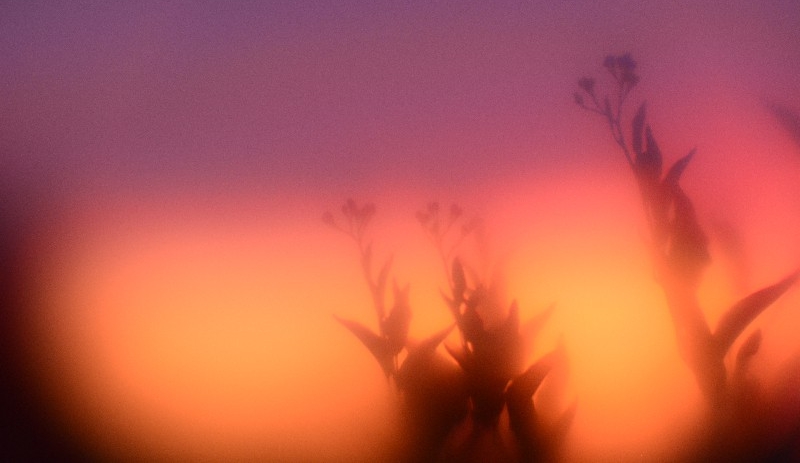
Mine is in pretty good condition but didn’t come with the original aperture disks. Still, they’re easy enough to make out of black card and can be slotted into the screw on plastic ring at the end of the lens. Sliding in smaller apertures will increase depth of field and cut out some of the dreamy effect of the soft focus shenanigans. But where’s the fun in that? The real retro charm of this lens is in using it for wide open dreamy photos that can’t be easily (if at all) reproduced in a program like Photoshop. Here are some gorgeous sunset photos from a garden:

That glow and bleed is pretty gorgeous, right? Sima lens on the Nikon D7100
Yeah, kinda hankering to use the lens again after seeing these!
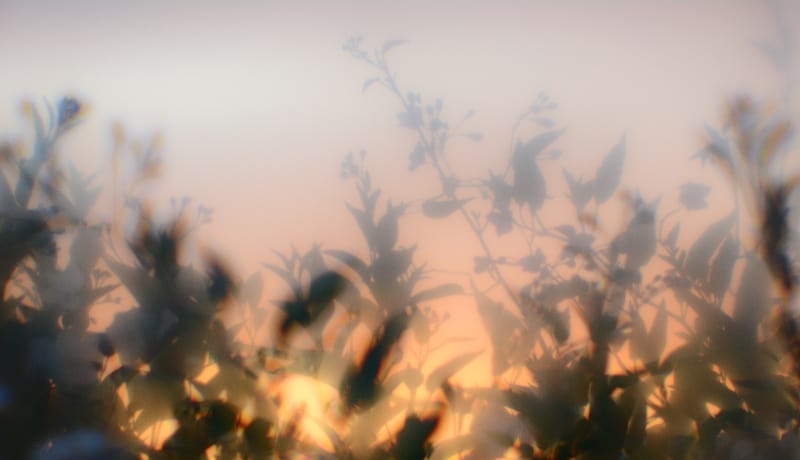
Definitely not a multiple exposure. The lens created foliage ghosts.

The photo above almost looks like a multiple exposure doesn’t it? The highlights bloom and bleed and contrast is low, but the thin depth of field, chromatic aberration and ghosting lend this image an unusual character.

Resurrecting this post makes me want to use the Sima lens again! My apologies for the smallish example photos.

Squeezing the most from old lenses ~ the Clubman 28mm 2.8

I’ve used many old manual lenses on my Olympus EM5. It’s a great way to explore old glass, even if the lenses weren’t made for modern mirrorless digital cameras. One of my favourite lenses is the Clubman 28mm 2.8 – a mass-market cheapo lens that was made by a Japanese optical manufactuer and then rebranded to be sold in camera shops and department stores at the height of 35mm film photography in the 70s, when colour film rose to prominence and new artistic styles found voice. It can also be found under the Ensinor name and likely some others. Many cheap lenses from that era were equally cheap in performance, but the Clubman is surprisingly good.

Like all of the lenses from back then, it’s an all-metal build and features an aperture ring and manual focus – quite hefty when compared to the plastic lenses we often find today. One of the best things about it is that it has a kind-of macro mode where you can focus down to about 30 cm at a 1:5 ratio. The other surprising thing about the lens is that it’s quite sharp after stopping the aperture down to f 5.6-f 8.

The lens also benefits greatly from the small sensor size of the Olympus because the softer edges and corners are mostly chopped out on the Micro Four Thirds format. This lens wouldn’t be so good on a larger format, like APS-C or 35mm, because those mushy edges and corners would form a bigger part of the visible frame. On the Olympus, I get the central part of the lens, where it’s sharpest.

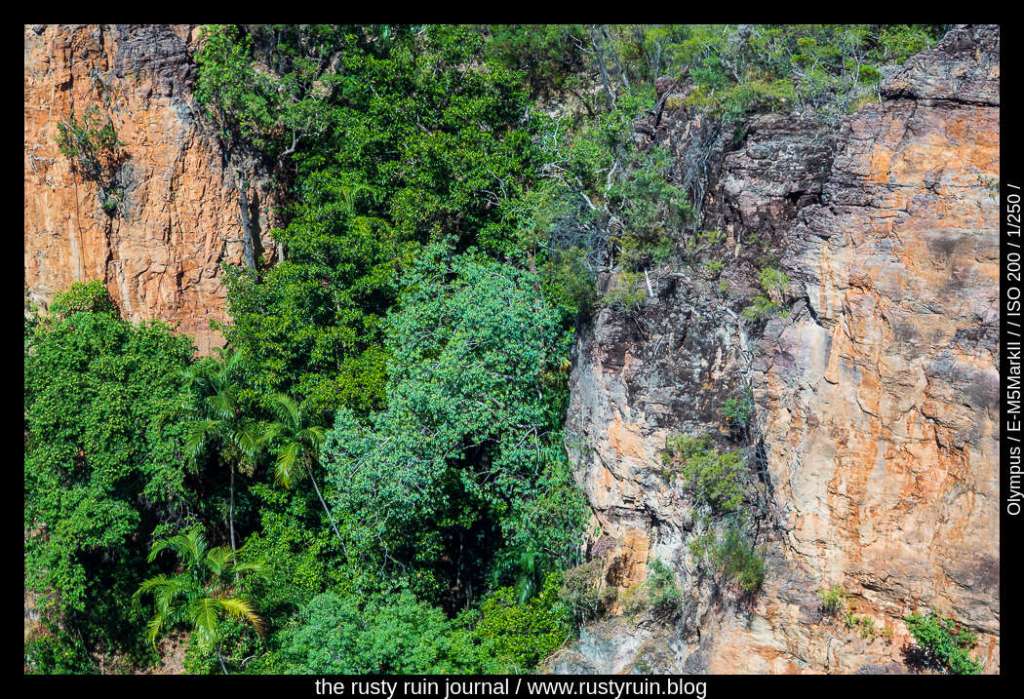
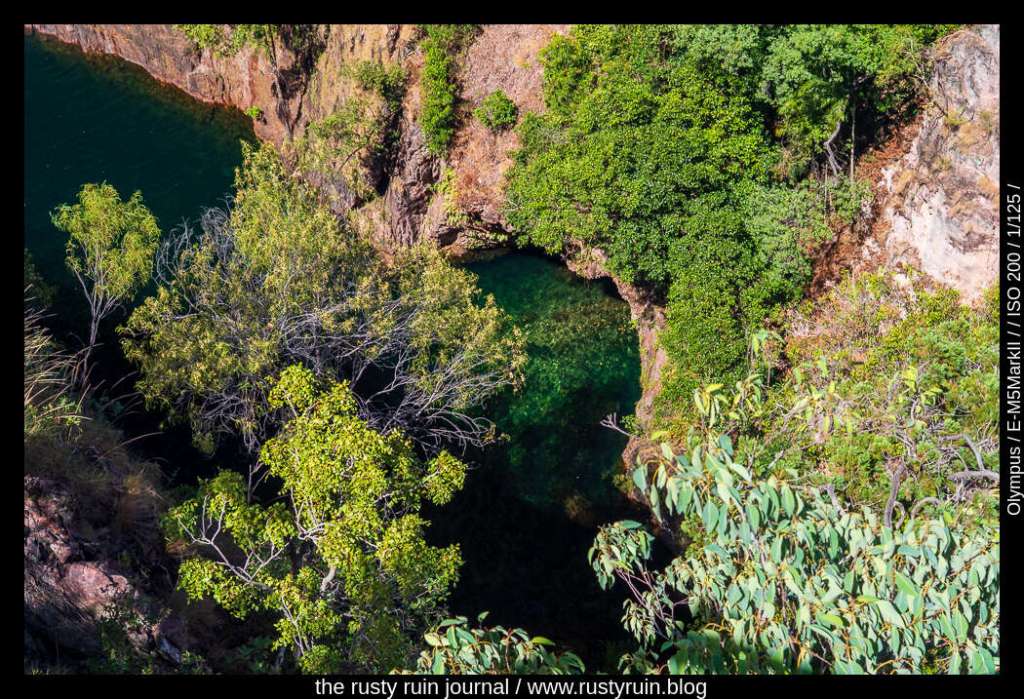
On a hike , Litchfield National Park – Olympus EM5 Mark 2 with Clubman 28mm lens and Circular Polariser

For the photo above, I stopped the lens down to F 5.6 – the sweet spot for this lens/camera combination. I also used a circular polariser to cut out stray light reflections on the rocks and the foliage. This also deepens the colours.

The effect of the polariser is obvious in the above photo when you look at the water. The reflections have been minimised, creating transparency and deeper colours. You can even see the cliff visible below the water’s edge and some of the rocks on the riverbed. This is when a circular polarising filter is most useful and helps to maximise the optical properties of older glass.

Here are some of my other most-used manual focus lenses:

  • Takumar 35mm 3.5
  • Takumar 28mm 3.5
  • Macro-Takumar 50mm F4
  • Fujinon 55mm 1.8
  • Petri CC Auto 55mm 1.8
  • Micro-Nikkor 55mm 3.5
  • Nikkor 50mm F2
  • Zenitar 16mm 2.8 Fisheye
  • Minolta Rokkor MC 50mm F2
  • Minolta Rokkor 55mm 1.7
  • Vivitar 28mm 2.5

Seeing in 2025 quietly

As city revellers were ushering in the new year, we were driving with good friends through silent streets around the wharfs and docks. Earlier, we’d had dinner at a pub on the edge of the marina and witnessed a sunset full of delicate hues.

The Marina at Sunset – Nikon Z5

Once again, the opacarophile strikes! Low in the frame, the masts were like trees – but stripped back, orderly, severe, and made by human hands. Tiny streaks of boat fuel and chemicals on top of the water, iridescent in the fading light, reminded me of how these places are underpinned by our need to exploit the environment for reasons of vanity and leisure. I gazed at expensive apartments across the water, with expensive boats moored nearby, and thought about the very few who could afford that kind of life.

Some mundane reflections

I’m learning how to handle the Nikon Z5 better. I have no complaints about the hand-feel of the camera. The grip is typically nice in that Nikonian way – though not up to the high standard of the Olympus E1. The Z5 doesn’t have all the external button control of higher models in the Z lineup, but it’s the entry level camera, after all. That’s no bother to me.

I once wondered about the role my tiny Olympus OMD EM5 Mark 2 would play in the aftermath of my Z5 purchase. Admittedly, I don’t take the Olympus out as much as I used to, but on days when I want to carry less weight, it’s the better option. I’ve also become so used to using old manual focus lenses on the Olympus, just for the central sweet spot of the glass, that it seems a missed opportunity not to use it.

Reeds at Meningie, SA – Nikon Z5

I should explore the use of vintage glass on the Nikon Z5 this year. I invested in a good quality M42 adapter, so now I can use all of my old Soviet, German, and other glass. Pleasingly, the Z5 automatically detects a non-CPU lens and switches to Focus Peaking mode. No longer do I need to go into a menu and turn it on!

It’s a new year. We’ll see what happens. Some things will change and some things never will.

Flower fantasy with the Helios 44-2

The 58mm Helios lens is one of those pieces of old glass that was made in the millions over numerous decades in shady factories in Soviet-era Russia. Rumour has it that quality control varied greatly, partly due to the unique properties of authoritarian communism and loads of freely available Vodka. What I do know is that they’re fun lenses to use, if you get a good one that hasn’t seized up due to cheap lubricating grease. Luckily, they’re also fairly easy to dismantle and clean up. In this sense, they have a certain utilitarian charm.

Modified Helios 44 lens with inherent swirls

The Helios is already known for chromatic aberrations that result in swirly bokeh with cat’s eye shaped out of focus highlights at the edges of the frame. You’ll get that mostly on larger sensors, but on my Olympus Micro Four Thirds the effect is not as noticeable. However, if you remove the front element and reverse it, the result is what you see above in the photo – softness, ghosting, and dramatic swirlies!

Ghostly flower

It’s also possible to reverse the front element in a Zenitar 50mm f2 lens, so I hear, but I don’t have one myself. The reversed lens Helios produces a look that suits colourful subjects, like flowers and botanicals, so it’s pointless if you want to preserve detail.

Red flower bokeh swirl

As you can see in the photo above, the swirl can be dramatic and really bring attention to a central subject. I admit that I haven’t used it for a while, so it might be time to try it out again.