Lately, I’ve been contemplating ethical questions in photography. According to Wikipedia, ethics is the study of moral phenomena and “…investigates normative questions about what people ought to do or which behaviour is morally right.”
At the risk of being ultracrepidarian, I’ll just say this: I’m not an expert in ethics or philosophy, but I believe that self-reflection is an important part of not just photography, but also generally. It’s crucial to ask questions and seek answers to discover what drives our photographic practice. What beliefs inform our behaviour? What do we consider to be right and wrong and why? Where are the moral lines for us?
Bruce Gilden and Mark Cohen – well-known street photographers who hold the camera in one hand, the flash-gun in the other, and get right into the personal space of their subjects – may be at the behavioural far end of what street photography encompasses. Here’s a great video of Gilden at work: Bruce Gilden.
This in-your-face methodology has variously been called innovative, invasive, bullying, and unethical. There’s no denying it can produce some amazing photos of people doing everyday things on the street, but is it ethical? Ethics is about what behaviour is morally right. But just because something is legal, like making photos of people in public spaces where the law says there is no expectation of privacy, that doesn’t make it ethical.
Consent and ethical frameworks
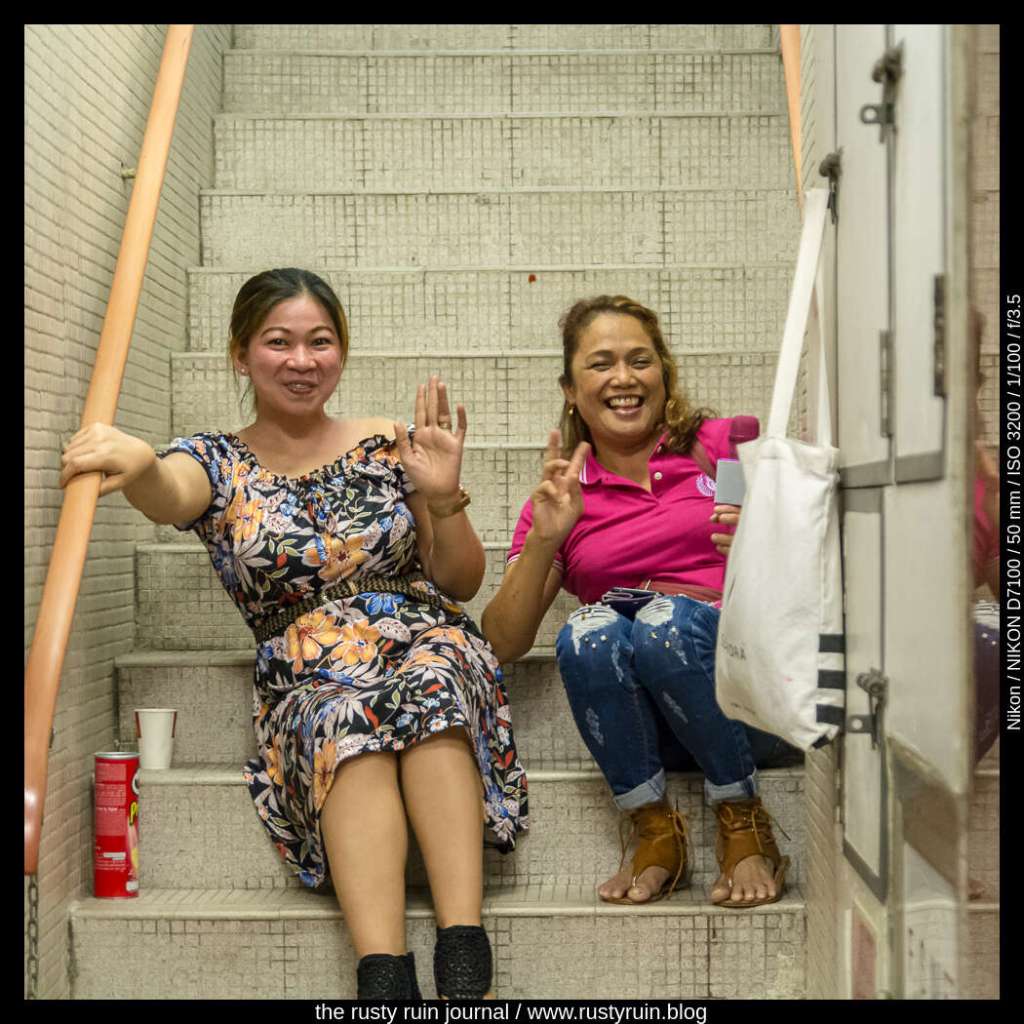
Consider the photo of the two ladies above. You can see they’re happy and smiling. In fact, they saw me with the camera and posed for me, thereby providing consent. There aren’t too many people who’d have an ethical issue with this photo.
What complicates matters is that what we consider to be ethical, or morally right and wrong, is based on our ethical framework – a set of core beliefs, culturally embedded and varying across time and place – that inform the way we behave, the way we think and feel, and what we consider to be right and wrong. If all of my street photos were made with consent, such as the one above, my ethical framework might be Care-Based, where I consider the feelings of others, care for others, and my relationship to others.
Street photographers like Bruce Gilden may be considered unethical by a majority, but the truth is that their thoughts, feelings, and behaviours are driven by belief systems that may not be in accordance with the mainstream. One might argue they work to a type of Utilitarian ethical framework that values a good outcome above questionable methods – art as the good outcome in this case. But if people that Gilden photographs are startled, offended, or unhappy with his method, is it a good outcome from their perspective? Should one set of ethics override another?
Perhaps it’s the goal of making good art that drives the photographer’s impulse to shove a camera into personal space. Or the goal to be well-known, with money in the pocket and exhibition space for the work. Would you think differently if you thought of Gilden’s work as great art? Or if you didn’t like his photos, would you find his practice unethical instead?

I thought for some time before posting the photo above. I photographed a vulnerable person and for many people, making photos of vulnerable people on the street is a big no-no and crosses an ethical line. What drove my behaviour here? Obviously, I feel uncomfortable posting the photo but do I feel discomfort because I fear possible bad reactions to it? I’m certainly not one to dive into conflicts.
The idea of a person with nothing, surrounded by people in a busy city, appeals to my sense of exploring the effects of capitalism and urbanisation – a fragile human being in a concrete and glass city, looking to survive the grinding day. The potential cruelties of modern life appeal thematically and drive an aesthetic. I’m driven to this as I’m driven to photos of decaying buildings and ruin.
It’s easy to be seduced by photo opportunities on the street in a big city where few people care about others with cameras. It’s easier still to exercise power as a photographer and frame a vulnerable person who gave no consent, telling a momentary story about them that can’t represent them in totality. Perhaps in making this photo, I also touched the edges of what I’m comfortable with. That, in itself, is a valuable lesson and self-reflection.

It’s important to understand that ethical frameworks vary across culture, time, geography, and individuals. The behaviour that one person feels comfortable with will not be in accordance with the ethical framework that drives someone else. We may argue that some ethics are universal, and perhaps they are, but prior civilisations have believed it a good thing to sacrifice virgins to appease deities, or have seen fit to expose weakling babies to create a stronger society.
Ethical frameworks are, in this context, subjective. The law seeks to be universal and pragmatic, but ethics remain separate and personal. And when my ethics disagree with yours, conflict may ensue, even though neither of us is wholly right or wrong. According to Descartes, we can never truly know if other minds exist since we can only truly know our own minds. We’re trapped within our own minds, and for all we know, other people are zombies, illusions, or mindless automatons. Slipping into Solipsism for a moment, we can never know another person’s ethical framework because we can never know if other minds exist beyond our own and we are therefore doomed to cross ethical boundaries at every moment and every step. In this context, it may be more relevant to depend on laws rather than subjective ethics.
Diving into Solipsism is, perhaps, at the deep end of the pool, but it serves to illustrate a simple point: ethics are indeed personal and subjective and we often can’t know the ethical framework of another person. We may minimise this confusion by seeking consent, and this is a perfectly reasonable solution, but we also change what street photography is by doing so: it then becomes a set of poses and forced half-smiles for the stranger’s camera, thereby losing the interesting spontaneity that defines the genre.
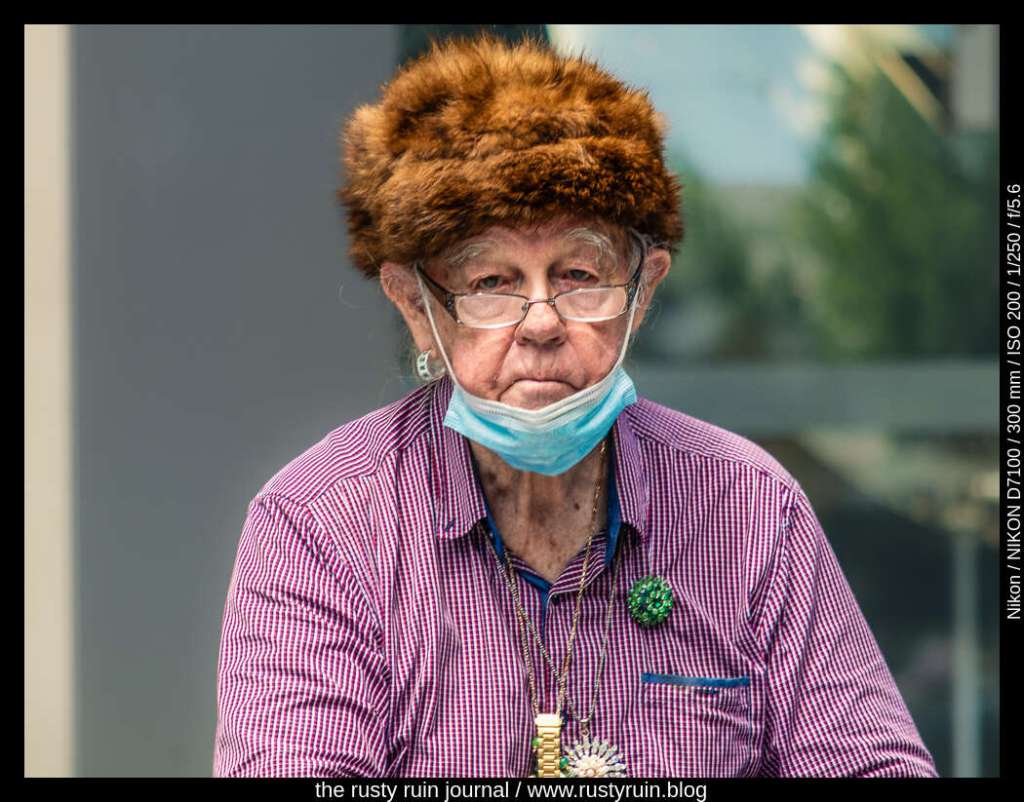
It’s clear the person in the photo above isn’t very happy. Was he unhappy with me pointing the lens in his direction or was he unhappy with something unrelated? I found his look interesting and decided to make the photo before moving on. I admit it’s not an especially good photo but I share it in hopes of provoking thought about the ethics of street photography.
If a person isn’t comfortable with me making their photo but I’m ethically comfortable doing so, should one ethical framework override the other? Should there be an expectation that within a time, place, and culture, where photographing people in a public place may be legal but sometimes morally questionable, the ethics that favours asking consent or not making the photo at all should always take precedence?
Ethical choices and geological wonders
In a previous post, I posted photos of Uluru – a magnificent natural wonder that started to form over 500 million years ago. There are parts of Uluru where clear signs forbid photography based on the cultural beliefs of the local indigenous Arrernte people. I didn’t make any photographs in the aforementiomned signed areas, choosing instead to pay respect to those local beliefs.
My belief system allows me to view the world around me as not owned by any single person or group. It allows me to view nation-states, governments, and fortunes as illusions in the sense they are consensually understood and agreed-upon narratives. These beliefs inform my ethical framework, but I understand that such frameworks are purely subjective and personal. For me, Uluru is an amazing example of geological processes that existed millions of years before any human being set foot on the shores of the ancient inland sea. Yet, despite my belief, I chose not to make photos anyway, partly because I also respect the value of indigenous culture.
Ethics in photography is like a huge bowl of spaghetti on a first date – you’re probably going to spill it on yourself and look awkward while slurping up the pasta. It’s a messy and often uncomfortable area that’s filled with subjectivity and declarations of universal moral truths by stubborn individuals. Perhaps the best we can do is our best in understanding other people, occasionally override our own ethics to get along better with others, and hope that we find people that share some of our own ethics.
Discover more from The Rusty Ruin Journal
Subscribe to get the latest posts sent to your email.
 The Rusty Ruin Journal
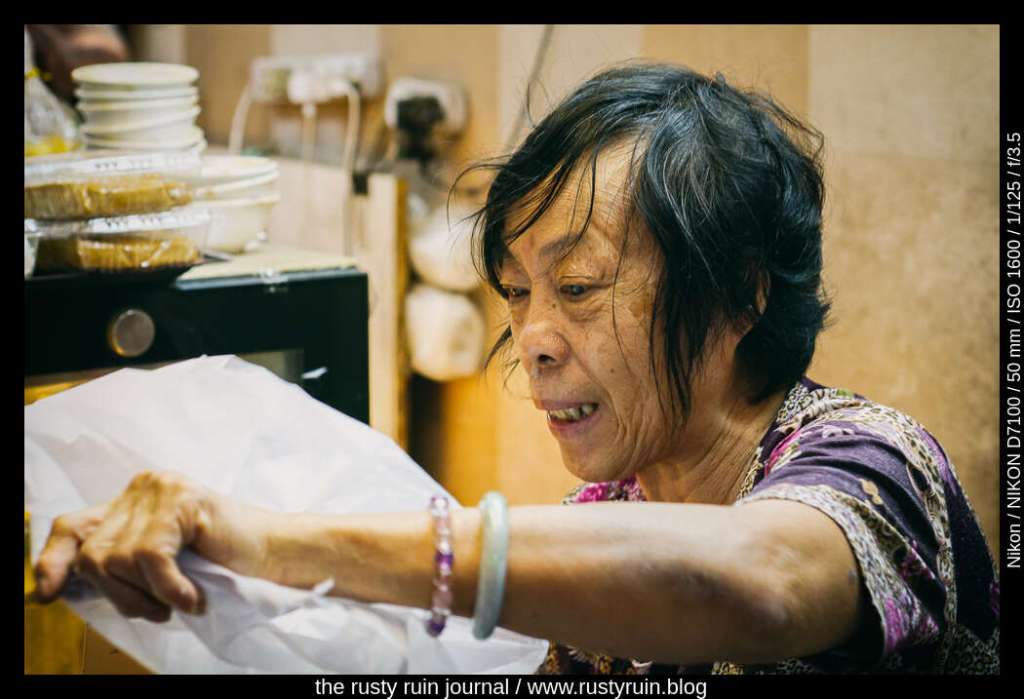
It’s a fine line of what we see and what we think. You explain the ethics which are all important for photography of people or situations. The last photo shows real emotion, you can feel the sweat.
LikeLiked by 1 person
Thank you. It is a fine line, for sure. It can’t be denied that great photos have been made in this way. It’s a thorny issue!
LikeLiked by 1 person
It is quite a thought provoking post. I often have passed people in New York City sleeping on top of cardboard boxes in the middle of the day with all of their belongings in heaps around them. All the while, beautiful people dressed in natty attire walk by as if the unfortunate person does not exist. The scene created by this dilemma is a strong social statement. Despite this, I have never found the desire to capture it with my camera. Even though the subject would never know the image was taken, in my heart I feel taking a picture would be taking advantage of grievous misfortune. I encourage you to listen to a recent interview of Jamel Shabaaz on the Photo Work podcast. His approach in interviewing prostitutes on the street was to approach and learn about the person before taking the picture. This bold approach is a hard bridge to cross for many, me included. I did approach a homeless person a few weeks ago, without a camera in my hand, and asked him how he became homeless. He waxed on about all sorts of terrible things. I gave him some money for food, something I have never done before. I don’t know what he did with the money. If I did have my camera, I would have felt comfortable asking to take a picture. My street images suffer from the fear of engagement. That is the solution to the dilemma, at least for me. I will work to overcome this with baby steps.
LikeLiked by 1 person
As always, thank you for your considered thoughts. I think it’s something of a fine line – the voyeurism of the photographer, taking advantage of the unfortunate, versus the social statement. Maybe it’s a well-worn argument that can’t possibly hold water any longer? I do think there’s an element of personal fascination in this type of photography. There’s a curiosity in it driven by the fact that we’re social beings. We’re curious about the lives of others and street photography serves this curiosity. As to ethics – that’s a separate issue to whether it’s legal or not. It may not feel good or comfortable, and that’s completely down to personal views of right and wrong. I like the idea of approaching people to learn more about them. It may lose the impact of being candid, but it reveals more about the person and serves us much better as social beings. I don’t think I could stick the lens in someone’s face, and I’m sensitive to how surveilled we all are these days, but there are some interesting photos made in this way. Still, I’d guess that the majority of street photogs never go on to become well-known names, but is that the only reason to do it? It’s tricky.
LikeLike
Bresson certainly harnessed the power of “street” photography. His work was powerful and artful. I have listened to many talks by street photographers. I cannot get my arms around the genre. The central thought for me is the images we make, even though of our surroundings, are mirrors of the self. Our eyes are drawn to our essence.
LikeLiked by 1 person
Oh, absolutely. Bresson was masterful! And it’s perfectly natural that this art would inspire others to do the same. Should we judge others so harshly when they decide to follow in those footsteps, even if the results are more mundane than masterful?
LikeLike
He is an impossible act to follow! Any person who enjoys taking pictures with a real camera is a friend of mine!
LikeLiked by 1 person
To be honest, I need to take more of my “real” cameras off the shelf and do something with them other than stare at them! I have film cameras just piled up in boxes just sitting there.
LikeLike
It is all about what you enjoy and care to express. Your experimentation is a similar form of expression in a digital sense. Your love of the CCD sensor means your preferred palette is film-like. I love shooting film, especially since I can develop the BW at home, and I have a great lab for color. I sometimes develop color, but the chemicals are noxious and it is very temperature sensitive. There is nothing like unfurling the roll from the film reel and holding it up to the light to see the exposures. The cliche that film slows one down is a truism in a good way. I am a better digital photographer from exercising the craft with film. I have not shot it in a while, but a favorite is the Pentax Spotmatic F. Mine was modified by an outfit in Maine to use modern batteries. The Takumar M42 lenses are sex and sugar. That camera is sitting on my night table and I hope to shoot it tomorrow in overcast conditions. I am out of black and white film though – that is where the Takumars shine. The cost of film is a big downside. Kodak Gold is a reasonably priced film and some consumer Fujifilm stock are still sold here and yield good results. A clunker is Lomo 92. A friend gave me 12 rolls of 120 and I can’t get that film to work. Muddy shadows with a green cast. I suppose it was meant to have a retro vibe. My friend commented without prompting that if the film was frustrating me she would take it back. I am going to send some of it back to her, along with a few packages of rare Fuji Pack film. The cost of the Fuji Pack film is ridiculously high today despite it all being long expired. She has a polaroid or 4X5 back that she can make best use of the stuff. Her name is Tracey Nixon Bos, great photographer. The hope is that she will send me a signed print of an image made with the pack film. L.
LikeLiked by 1 person