How often do we think that no photograph can ever record the majesty of a sunset? Rather than record an accurate scene, the best we can do is render an approximation that allows us to, perhaps, amplify certain attractive qualities during the editing process.
During this endeavour, liberal use of the tone curve – Highlights, Lights, Darks, and Shadows – may provide the tonal characteristics that produce a pleasant enough photo that one might imagine themselves, just for a moment, watching the sun in real-time as it illuminates the sky.
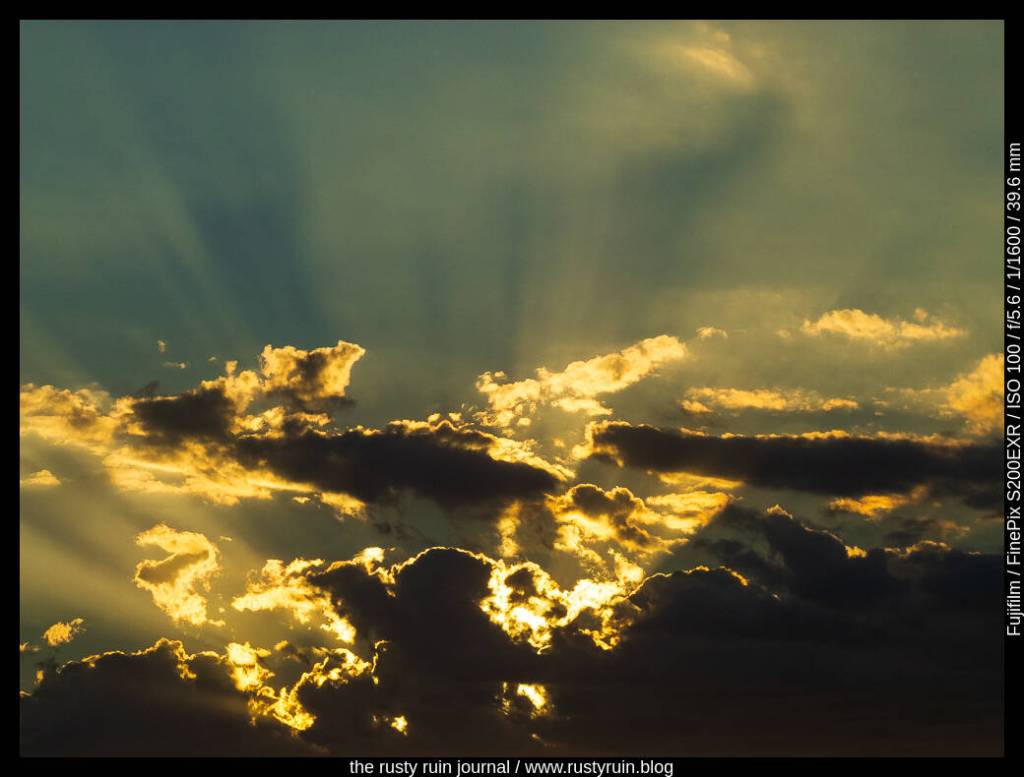
As charcoal clouds largely obscured the sun, underexposing this photo at the moment of recording deepened the colours, revealed the delicate sun rays, and rendered a sky full of contrast and dynamic light. Though possible to adjust exposure settings during editing, having a final vision for the image in my mind – moody and dark – necessitated a faster shutter speed and, therefore, slight underexposure.
Visualising the final look of a photo and adjusting exposure accordingly is like scribbling in a notebook of ideas that informs the editing process many months later – oh, the clouds are moody and dark, I’ll go with that look! In this way, ideas for editing begin before pressing the shutter button.
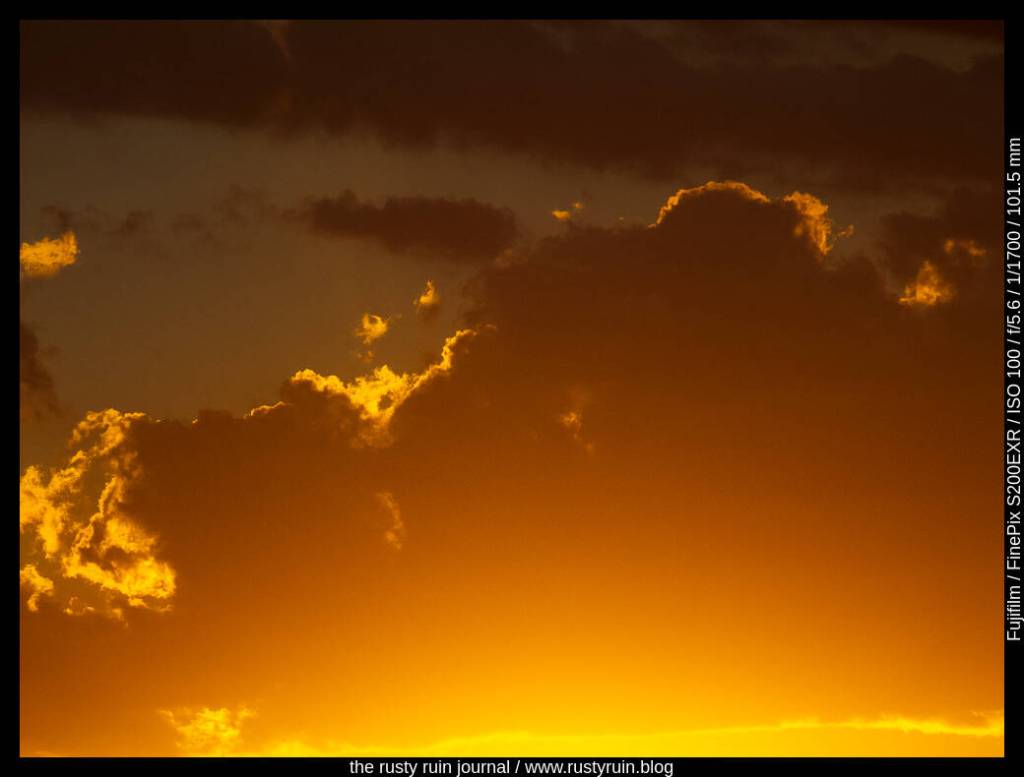
Retaining the moody clouds through a careful decrease in Darks and Shadows, and increasing White Point and Light to amplify the sun’s aura produces an approximation of the golden illumination I witnessed at the time.
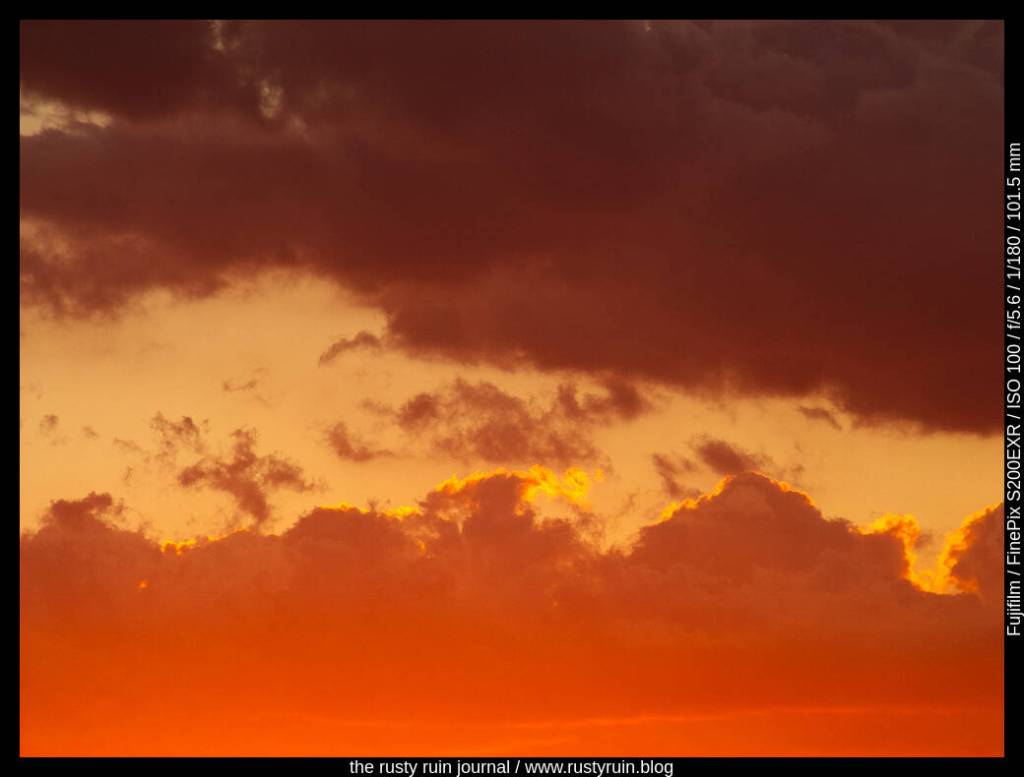
Here, I wanted to focus on the orange yellow, and pinkish hues that defined this section of sky. Less contrast produces a more harmonious rendering – my feeling at the time of recording.
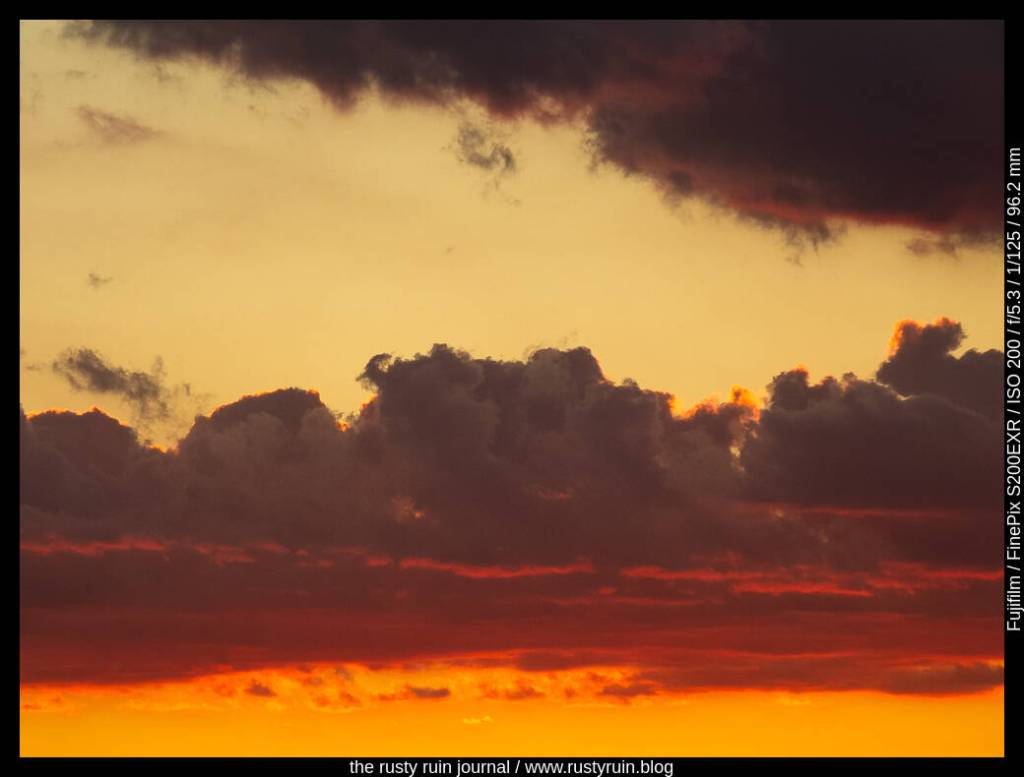
As the sun moved below the horizon, the clouds absorbed night’s early shadow and languid bands of amber, magenta, and vermillion brushed the edges.
Discover more from The Rusty Ruin Journal
Subscribe to get the latest posts sent to your email.
 The Rusty Ruin Journal
Very beautiful photos! ❤️
LikeLike